
Your people problems? Gone.
The 4 Management Disciplines Newsletter delivers proven ways to be your best and lead a championship team.
Every championship sports team runs proven plays.
Every Monday morning - I give you four proven plays great leaders use to solve problems in how you Hire, Manage, Develop, and Retain great people.
2 minute read. No fluff. No ads.
Trusted by over 10,000 leaders.
NOTE: David is no longer writing this newsletter. Visit www.simpleliberty.com to read his latest posts.
All Newsletters
ROI of Breaking Negative Patterns
Opportunities to improve your company exponentially increase based on the longer your firm is in business and the more it grows. However, just staying alive does not equal high profitability. I have talked with plenty of business owners who have been in business for 10-20-30 years and yet they only understand how to survive, not thrive.
The foundation of profitable longevity is a strong company culture led by leaders who understand why they are in business, how to effectively and efficiently do business, and where they want the business to grow. The key to growth is how you spend. These decisions needed careful assessment of the Return On Investment, or ROI.
Let me share a secret with you. The highest ROI is achieved when you break the negative patterns in your life. Do you want to solve the water shortage? Change your water-related processes so you use less water. Do you want to solve the energy crisis so foreign countries have less control over America's future? Change your activities that use energy so that you use less energy. Do you want to solve the problems you are having with your employees? Change your leadership habits so great employees thrive and weak employees leave.
First, let's consider the ROI Of Doing Nothing.
Robert E. Hall wrote an article titled The Disengagement Economy on March 25 of this year. One of the shocking statistics is that 35% of workers say they would forgo a significant pay raise in exchange for having their boss fired. Pause to consider that for a moment. One third of workers are so actively disengaged and unproductive that they would sacrifice a significant pay raise to get a new boss.
Hating your boss, employee tardiness, sloppy work, not taking full ownership for results, rudeness, low productivity, low morale, poor coworker relationships, etc... These employee issues are all symptoms of what we might call, "Bad Boss" disease. A "Bad Boss" is one who is intentionally or unintentionally not doing one or more of the attributes of a 3strands Leader:
- Demonstrate Systematic Leadership as you inspire others in
- Meaningful Work, and consistently express
- Sincere Gratitude to people around you.
You might be very wise and prudent in certain areas of your business, but when it comes to hiring, managing, developing, and retaining great employees... you are weak. How many more years do you need to go through the agony and expense of employee issues?
Dr. Henry Cloud shares a lot of wisdom in his new book Never Go Back, 10 things you'll never do again. The reason you will never do these things again is because avoiding these behaviors are some of the key reasons why other people are "successful" or "fruitful." His first Never-Go-Back Awakening principle is "Never go back to what hasn't worked".
This sounds simple, but how many of us have repeated dysfunctional and/or unprofitable behaviors for years, if not decades? These behaviors hurt us and other people. It is time for us to man-up or woman-up to make some tough decisions so we can truly enjoy our lives to their fullest potential.
Personally or professionally Dr. Cloud recommends you should not re-enter a relationship unless one or or more of three things have happened to confirm you are going forward.
Why? There is a reason it did not work. Before you go back, you have to make certain to the best of your ability that the prior reason the relationship failed no longer exists. You need to be able to verify something has changed... which is possible... but often not the truth. Instead too often we allow our employees to behave unprofitably because it is easier for us to do so, and we let our hope for a better outcome blind us to the truth that nothing has changed.
For instance, I have had clients with sales people who have not closed a significant sale in one, two, or even three years. Yet it was "easier" for them to retain that employee than to go through the pain and temporary expense to replace them.
Dr. Cloud recommends we consider three categories of possible change by asking these questions (page 18 of his book):
- Am I different in some way that would make this work?
- Is the other person or persons different in some way that would make this work?
- Is the situation fundamentally different in some way that would make this work?
The ROI is huge and quick when you follow this advice and actually commit to invest the time and short-term money to remove a long-term, financially draining, profit sucking, money wasting leadership mistake. Let me give an example of a friend and client who decided it was time to change the strategy, management, process, and tactics of their sales organization.
About three years ago my friend's company was doing $3 million in revenue. He was hoping to just match that number in the new year because there were some extraordinary sales that had been achieved which he did not expect to repeat. I recommended he contact Roy vanNorstrand of The Leren Group, whom we have just recently established a partnership. My friend checked references and went with my recommendation. Now they are closing over $7 million in sales and considering acquisition opportunities.
What is the ROI of outsourcing sales management (or getting help in another area of leadership) even when your company is doing well? "...even when your company is doing well" is the key. Your company might be doing reasonably well, but how can you get it to leapfrog your competition and grow SIGNIFICANTLY.
You only have so much time. Don't wait another 6 months, 1 year, or, god forbid, 5 or 10 years. Invest for the highest ROI now while you can:
- Commit to replace your negative leadership patterns with new, more positive habits. Your issue might be sales leadership, service delivery, overall company vision, financial stewardship... whatever!
- Get short-term help. You cannot develop new habits on your own.
- Take the short-term pain of making changes and make the short-term investment to get help so your long-term is more FUN and profitable than ever.
Realize the benefits of taking action far outweigh the cost of doing nothing. You will be glad you did.
Buddy System
PLEASE NOTE: The following does not describe one of my Clients, but it does relate to the effectiveness of your leadership.
Graham woke up tired, but that was typical. He went through his morning routine and landed at his desk with a fresh cup of coffee. He was focused, he was productive, he was... hungry about one hour later.
You see, Graham has a habit of having a huge sugary Danish about one hour after starting work. He regularly eats enough daily to feed 2-3 average-sized people.
Graham tries several times a year to lose weight, but as illogical as it sounds, it is easier for him (in his mind) to carry an extra 100+ pounds than it is to change his eating and exercise habits.
Graham is risking diabetes, heart disease or failure, and a variety of other health challenges. He knows the risks. He even acknowledges that any of these weight-related health setbacks are permanent, yet his behavioral patterns still do not change.
Why?
It is complicated. Graham's behaviors stem from a variety of different possible causes. Some might be from his childhood. Others might be triggered by adult relational wounds. That might be the reason he avoids fully considering the effects of his decisions, although he can analyze the technology environment as well as the best people in the industry.
Graham is risking death, or permanent disability...
Again, we ask WHY does he continue to live out these destructive behaviors?
At least 2-3 times a year Graham summons all his willpower to begin a new diet. Sometimes exercise is involved. Every time he attempts a program for a few weeks, but fails to develop a new habit.
The symptom or consequences of Graham's problem is weight. It negatively affects his professional and personal performance, opportunities to fully enjoy life, and makes it challenging for people to fully believe in him.
The disease is the bad habit.
The symptoms of your primary behavioral issues may not be your weight or physical health. It might be poor financial stewardship, follow-up or follow-through, leadership, negativity... The list goes on. The bottom line is we all have issues. No one is perfect.
This article is not to explore the reasons behind your unhealthy behaviors. My focus is how to change your bad habits and negative patterns.
Two things hold us back from overcoming our toxic habits:
(1) Willpower is not enough. Do you realize that bad habits never go away? This is the conclusion of a variety of experts and Dr. Henry Cloud's comments recently at Willow Creek Church,which are part of the focus of his latest book, Never Go Back.
Let me say that again: BAD HABITS NEVER GO AWAY.
My understanding is willpower alone consistently loses its wars against bad habits. Willpower can win some early battles, like Graham starting a new exercise program or diet, but it always loses the war when it tries to overcome bad habits rather than be a catalyst to replace them.
It is illogical then to focus our efforts primarily on increasing our willpower. (Just TRY HARDER...) Instead we have to create new, more healthy and positive habits that replace and overpower our bad habits.
This is why Alcoholics Anonymous and similar groups encourage people to attend meetings regularly and hold each other accountable. The habit of attending a meeting and actively participating replaces the bad habit of the addiction.
Do you have a bad habit that could be called an addiction or negative pattern that is hurting you or others in some way?
If you do, then Dr. Cloud recommends is a three step process to initiate a change of behaviors. It takes willpower to initiate a positive change, but focuses on developing new, more powerful habits to sustain positive change over time:
- Realize the mistake and commit not to go there again.
- Get help.
- Demonstrate positive change.
You may have apologized regularly for your worst leadership habit. We all have... and then we do it again anyway. Unfortunately, if the habit continues for years, sometimes decades, then you are missing HUGE opportunities. Significant rewards are being left behind forever.
How Do Successful People Do It?
Dr. Cloud's research concludes that "successful" people, however you define success to be, make a mistake and/or realize they have a negative behavior, and then commit to Never Go Back there again.
The successful people do not have an edge, or something you are missing. Studies indicate their intelligence, resources, and opportunities are about equal to the people who do not experience similar rewards.
The difference between being successful or not is simply replacing negative behaviors with positive ones.
The sooner you develop the positive habits the better, but it is never too late for anyone to experience transformational change.
Dr. Cloud tells what he says is a common story about addiction that I think applies to ongoing bad leadership habits. I am quoting an online version by Portia Nelson, but there are others:
Chapter 1
I walk down the street. There is a deep hole in the sidewalk. I fall in. I am lost... I am helpless. It isn't my fault. It takes forever to find a way out.
Chapter 2
I walk down the same street. There is a deep hole in the sidewalk. I pretend I don't see it. I fall in again. I can't believe I am in the same place. But, it isn't my fault. It still takes a long time to get out.
Chapter 3
I walk down the same street. There is a deep hole in the sidewalk. I see it is there. I still fall in... it's a habit. My eyes are open. I know where I am. It is my fault. I get out immediately.
Chapter 4
I walk down the same street. There is a deep hole in the sidewalk. I walk around it.
Chapter 5
I walk down another street.
Developing new, positive, powerful habits that overcome and replace our bad habits is walking in a new direction. Anything less than that repeats your decision to fall in the hole again.
You have to commit to Never Go Back there again.
(2) Commit to a Buddy. Alone we are weak. Without a support structure or some form of accountability, our chances of replacing our old bad habits with new ones are slim to none. However, we are stronger when we work together with others.
In a study of married couples who exercised, John Raglin, Ph.D, MS and exercise physiologist Janet P. Wallace found that only 8 percent of the participants who exercised with their spouses quit compared to half of the participants who exercised independently of their spouses.
Work together with one or more buddies on developing better habits and you will have more success than if you go it alone.
Keep in mind, depending on your situation, if you have a really bad habit or negative pattern you might want to seek professional counseling. There is nothing wrong with this. Asking a friend or family member to join you in your efforts might be a life-changing option too. Regardless, every approach will make you stronger and more successful when you commit to work on your new habits with one or more "buddies" for accountability.
For example, I am 57 years old. Part of my exercise routine is swimming. It is incredibly boring for me to swim laps alone. My favorite swimming is to play water polo with the local high school boys team, which is coached by my old friend Carl Lundgren.
When I am not playing water polo, then I try to schedule my lap swimming with Carl, Danny, or Jimmy. Alone I swim about as fast as a slug on salt, but with friends to keep me going and banter between sets I get a great workout.
Do not allow yourself to slip into a deep depression because you finally deal with a toxic habit. Remember Robin. Robin Williams made a bad decision recently and ended his life. There is abundant life after failure. Depression is not the purpose of this process. You can overpower any toxic behavior and experience the full potential of the life you have been given.
One proven way to accomplish this goal is to follow Dr. Cloud's simple process.
Start Developing Those New Habits
In conclusion, consider what would happen to your life if you changed your worst bad habit, or at least one of them.
Try this 3strands approach to overcome bad habits or negative patterns that have plagued you for years:
- Buy a copy of Dr. Henry Cloud's new book, Never Go Back, and read it with a highlighter so you can remember the key points that jump out at you.
- With great vulnerability accept responsibility for a bad habit that has hurt you, people you love, and others. Then make a commitment to Never Go Back.
- Commit to one or more buddies. Engage with your spouse, family and/or friends who will reliably, respectfully, and encouragingly walk with you through this transition and beyond. Demonstrate progress daily and never stop believing in yourself. (If you need professional help, then identify a highly recommended resource and give him/her a try.)
I work with clients on a regular basis who have one or more bad habits. They all have the capability to replace them with better habits. Too often they rely on new ideas and apply willpower just to jump from one idea to the next. They think if they just push themselves harder or jump to a new idea then things will change.
Things do not change unless you consistently work on developing and sustaining your new habits with your buddies.
There's an old saying that goes:
Watch your thoughts, for they become words.
Watch your words, for they become actions.
Watch your actions, for they become habits.
Watch your habits, for they become character.
Watch your character, for it becomes your destiny.
Habits are learned, so only spend time with people of strong character because they will help you become your best.
One of the greatest challenges I have with Clients is to get them to believe in themselves as much as I believe in them. Believe in yourself and your future!
Be a 3strands Leader
Demonstrate Systematic Leadership as you inspire others in Meaningful Work, and consistently express Sincere Gratitude to people around you.
David Russell, CEO
MANAGEtoWIN
DO IT RIGHT. The Importance of Performance Reviews Webinar
We had good attendance and interaction on our webinar yesterday morning titled:
DO IT RIGHT: Motivational Employee "Halftime Reviews" vs. Once-a-Year-Agony.
You can download the PPT or view the 30 minute video.
If you want to learn more, then forward this email to us (info@MANAGEtoWIN.com) to confirm you would like me to do 1-4 more brief training webinars:
- Step-by-Step Review Process for Managers & Employees
- 360 Reviews: Positives & Pitfalls (Some people like them, others do not.)
- Goals That Work: Learn from Specific Examples
- Documenting The Good, The Bad, and The Ugly ("log events")
Learn. Ask questions. Gain insights. Let me know...
In this brief webinar, CEO David Russell discusses the importance of performance reviews and their effect on company culture.
Upcoming Webinar - DO IT RIGHT: Motivational Employee Reviews
How would you like to have motivational employee performance reviews instead of a once-a-year agony?
Register here to attend this less than 30 minute webinar at 8:30 a.m. PDT on Thursday, August 28th, 2014.
As you know, ConnectWise recently endorsed MANAGEtoWIN as the platform they have used the past year to do annual employee performance reviews, and confidential 360 peer feedback.
Do you hate your annual review process, or at least think it could be more consistent and/or efficient?
In less than 30 minutes I will explain why ConnectWise and thousands of employees working for our other clients automate their performance reviews and MANAGEtoWIN. You will learn:
- The 7 Warning Signs your current employee review process is a risk and a burden, rather than a benefit
- The 7 Reasons you must do written employee performance reviews to maximize profitability and growth
- How ConnectWise and other companies use MANAGEtoWIN to automate their employee performance review process
Learn. Ask questions. Gain insights. Space is limited. Register now.
I will send you a link to the recorded webinar after it's done.
A happy customer and a special deal! ConnectWise using MANAGEtoWIN
I am excited to announce that ConnectWise, the premier business operating system for IT solution providers, has endorsed MANAGEtoWIN after using the software over the past year for employee performance reviews.
Special Offer: We are celebrating this endorsement by providing ConnectWise partners with two free Talent Assessments with Summaries ($498 value) with every new MANAGEtoWIN subscription and purchase of Premium Setup. Orders may be placed on our Pricing page.
“MANAGEtoWIN enables us to easily and accurately conduct annual reviews across our entire organization,” said David Bellini, COO of ConnectWise. “The software allows HR to initiate robust, confidential 360-degree reviews of colleagues from top to bottom to shed light on where improvements need to be made. We’ve experienced great customer service from MANAGEtoWIN and look forward to using the software in an even greater capacity in the future.”
We have served the ConnectWise community since 2008 and appreciate David Bellini’s endorsement of our software. To celebrate this affirmation of MANAGEtoWIN we are offering special pricing to ConnectWise Partners during September Provide detailed guidance 2014:
Extra Value: Any company ordering MANAGEtoWIN with Premium Setup through midnight, August 27th, will also receive (at their option) one hour of free consulting with David Russell, the Leadership Guy for IT companies.
As part of the Premium Setup service, MANAGEtoWIN Consultants train ConnectWise Partners on best practices for setting and tracking goals, and completing employee reviews. They do the heavy-lifting to fully optimize each ConnectWise Partner’s MANAGEtoWIN account, including a time-saving, streamlined annual review process that includes:
- Define Work-Related Competencies for each position from MANAGEtoWIN’s library of over 200 pre-written competencies.
- Train how to create their own behavioral competencies and design custom review forms.
- Create annual performance review forms for each person in their company.
- Create 360 peer review forms for each person in their company to use six months away from each annual review.
- Provide detailed guides for managers and employees how to give and receive annual performance reviews.
- Teach how to set and track goals, plus employee behavior outside of goals, in MANAGEtoWIN.
- Help them understand how to use any other part of the full MANAGEtoWIN HR suite to fully engage their people.
Please contact us with any questions.
Bad Bosses & Suicide
The world lost a wonderful man, Robin Williams, this past week due to an apparent suicide. Anyone who has seen Robin perform has experienced the joy of deep, healthy laughter.
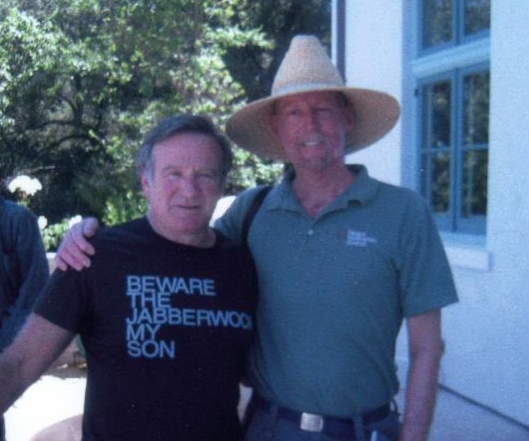
I had an added benefit: 46 Years ago Robin was my brother Phil's best friend. Robin was over at our house often for 3-4 years. Phil stayed in touch with Robin until Phil's death from cancer in February 2013. Above is a photo of them in 2011. Phil and Robin remained friends throughout the years because they just laughed together and enjoyed each other's company.
I cannot count the times that I laughed so hard that I cried. In retrospect Phil did a great job of keeping the banter going with Robin, but even he at times was laughing too hard to continue. However, Robin also had a quiet, very sincere side to him. He was not "on" all the time. He was a great guy.
Unfortunately Robin got sad this week and made a bad decision. It is really a bummer. Although I was not close to Robin, he was always nice to me whenever our paths crossed. He also came to my brother's funeral last year... and made us all laugh. He talked to me about how much he appreciated Phil's friendship.
I encourage you to celebrate Robin's life this week. Experience one of his movies or shows to laugh hard, or appreciate his brilliant dramatic acting, and be deeply thankful.
"Bad Bosses" and suicide have some things in common:
Both are selfish. Suicide is a selfish decision, although I believe most of the time the selfishness is unintentional. You just get so tired and depressed that you forget about everything you love, and you just want an easy way out. Bad Bosses are the same - taking the easy way out rather than working to develop new habits so they become the leaders they are designed to be.
Lifetime impact. Suicide hurts those you leave behind. That is not the intention of most people making this mistake, but it is the truth. Bad Bosses hurt people too, even if it is unintentional, and those hurts can negatively affect people for years or a lifetime.
It is a choice. When it comes down to it, suicide and our decision to just retain our Bad Boss habits are a choice. Too often we are deceived into believing it is just easier and thus is acceptable. It is not.
I have nothing but love and sorrow for Robin and his family, and others who have made the mistake of suicide. I am not judging them. They just made a mistake and need our grace.
The rest of us should not miss this opportunity to be challenged again: What is the cost of our Bad Boss habits? What can we start doing differently TODAY, even if it is just in one area, to be the leader we are designed to be?
It is Friday. ACCOUNTABILITY TIME!
- How are you doing on your 3strands this week?
- Is the work remaining to complete this week's 3strands scheduled in your calendar so you can work uninterrupted?
- Have you scheduled your Sanctuary time later today or over the weekend for personal accountability and focus?
Stay on track.
Easy to Ride Ideas
Big Coach Al Endriss of Redwood High's baseball team back in 1975 was a constant season winner. He was a great guy and a class act.
Over a decade later I took a baseball coaching clinic from him. I was particularly concerned about my young team's ability to hit. He said hitting the ball is easy, and then taught us how. It was fascinating. The best defense in baseball cannot win without hitting.
The same goes for your business. The best defense is base hits - IDEAS that help advance your team around the bases to score.
I do not have time to give you a full explanation of how to come up with great ideas, but IDEAS ARE EASY. If that is your problem, then call me. I always have ideas.
For instance, you are about to FINALLY see a storm of cargo bikes invade relatively flat American cities. Denmark has had them for decades. Instead of riding pulling your young children perilously behind you out-of-site, a cargo bike puts them in front of you. Check out the new Kangaroo Bike - totally cool!

Is your business stuck in a rut? Are your service offerings boring?
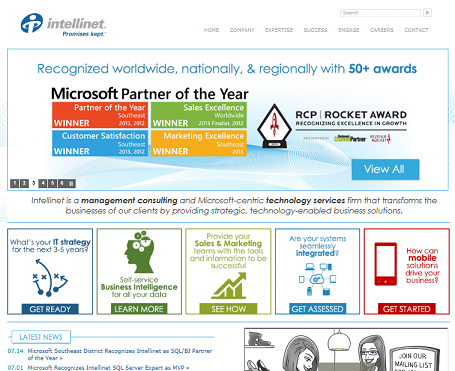
Have you seen Intellinet's website? It is very busy, but they do a great job of speaking about business problems instead of I.T. issues. Most I.T. / managed service providers really struggle in this area.
Let me keep it simple. Here are three quick ways to NEW IDEAS that can spark a new revolution in your company culture:
1. Cook up your idea recipes
- Start with your own ideas "with ingredients" from others
- Ideas from your employees with ingredients from others
- Hire a catalyst - an idea generation factory like me to help create an environment where your people are self-motivated to come up with and improve upon ideas.
2. Pilot ideas based on my 3strands Test:
WHAT IS TRUE?
Does it complement our current work?
What is the potential vs. the risk?
What would a pilot's effect be on employees and Clients?
WHERE IS GRACE?
How does this bless others?
How is this a miracle?
How will this glorify God (or a cause bigger than me)?
HOW CAN WE PILOT PART OF THE IDEA?
Low risk to everyone
Limited time investment and short test schedule
Limited financial cost
3. Never stop testing new ideas - WHY?
- You must constantly evolve to remain competitive.
- Ideas are a learning factory for unexpected gains.
- Ideas are FUN, and the lifeblood of an Ownership Culture.
GREAT Leaders love ideas.
BE a 3STRANDS LEADER
Systematic Leadership; inspiring others in Meaningful Work; and consistently expressing Sincere Gratitude to people around you.
Finish Well
One Client has an equal partner, but in their mind the partner is not working as hard as they are. The business has grown, but it has been a series of growth, setbacks, growth, setbacks...
Another Client owns all of his firm. He now wants to transfer the Company he has built with his sweat, blood, and money to a family member. He wants to let go, but needs to make certain the family member does not lose part or all he has worked for.
A third Client is the only owner and that will never change. His company has consistently grown, but at a smaller rate than some competitors and how he would have liked. His company culture is split, with people loving what they do but not feeling fulling part of the team.
A fourth Client is a wife-husband team. This is more common than you realize. They work well together and their company has grown strongly, but also had setbacks.
How will they finish (the race of achieving "success" in their current business)?
These leaders share something in common with you: They are in a race against time, but focus most of their attention on tasks rather than the time that is lost forever. When our focus is tasks then we may not get to choose how we finish the race of our current business.
Unforeseen business problems force a closure... Cancer takes us out... We die unexpectantly... it does happen. Scott Mallet, CEO of Network Technology Solutions in Florida died on a scuba diving trip although he seemed to be in great health. (He was a nice guy - I knew him.)
What if instead of focusing first on tasks each week as you define your 3strands / key priorities.. FOCUS FIRST on reminding yourself how you want to finish this race (your current business)?
How much would that change how you spend your time this week?
SUGGESTION: Pilot a one-month test of thinking first of how you want to finish when setting your week's priorities and each morning. You may find your work more fun and fulfilling than you have in a very LONG TIME... even if you already enjoy your work.
P.S. It is coming up fast - sign-up now for one of our final two LEADERSHIP Essentials Academies. The first is in Belmont, New Hampshire on September 11-12 and the other in San Rafael, California on October 2-3. Don't miss this opportunity to work with me in-person. Learn more here or click here to grab a seat before its too late.
It is Monday. ACCOUNTABILITY TIME!
- Did you take Sanctuary time over the weekend to improve your focus?
- How did you do on your 3Strands last week?
- Have you defined your 3Strands for this week?
- By 9:00 a.m. this morning you should have 3Strands emails from each of your direct reports.
Stay on track.
Holacracy: Fad or Truth?
According to Vox and other media, "holacracy" is the latest management trend to sweep the tech industry.
What is it? According to the article,, "Holacracy is management by committee with an emphasis on experimentation. The CEO formally relinquishes authority to a constitution and re-organizes everyone into decentralized teams that choose their own roles roles and goals."
Is it a fad that will fade? Is it enduring truth that demands our attention because its potential is too big to ignore? Should you immediately drop everything and leap on the holacracy bandwagon - if you can pronounce the word...?
Yes, it is a fad.
Yes, it has some truth, but so do the best lies.
No, you should not drop everything to pursue holacracy.
The truth is that most if not all of the positive aspects of holacracy are just reworded leadership systems of an Ownership Culture.
Yes, immediately and continually invest in developing an ownership culture where employees are passionate about their work and gain personal meaning from taking responsibility for achieving results.
In brief, an ownership culture achieves all the benefits of holacracy where employee:
- Authority matches their responsibilities
- Ideas are encouraged, explored, and piloted
- Opinions are considered for major decisions
- Roles are clearly defined and measured
- Accountability comes from peers, not just managers
This is how Nucor Steel, Amazon, Netflix, Nordstrom, The Ritz-Carlton, and many other companies have grown and keep growing.
There is always work to do to improve your company culture, but pilot ideas that may come from reading about fads like holacracy rather than abandon what is true to gamble on its entire premise.
My concern is not just wasting time. Holacracy could encourage some employees' entitlement mentality. It is potentially a socialistic fantasy for large companies to attempt to overcome bureaucracy that could fail miserably. Zappos can afford to play with holacracy for a period of time. Most small companies do not have that luxury.
Look at holacracy. Learn from it. Just do not drink the Kool-Aid...
BE a 3STRANDS LEADER
Systematic Leadership; inspiring others in Meaningful Work; and consistently expressing Sincere Gratitude to people around you.
My suggestion is simple. Read the article. Then think about or discuss as a group:
Here is a quick test:
- I supplied a list of holacracy benefits above. Use mine or create your own.
- Go through the list item-by-item. Where are we strong and where are we weak?
- What can we do to make our strengths even stronger within an ownership culture?
- What can we do to make our weaknesses competitive, not the best, within an ownership culture?
- What would require us to move to a holocracy? Why?
- Do we need to schedule a conversation with Dave?
4Q Push into 2015
There are 20 more business days in August. Now is the ideal time to finalize your strategy and schedule for a strong 4th quarter and leap into 2015 growth. What are the key areas to focus on?
Here are some common choices:
- Sales push through networks, referrals, events, and marketing
- Service delivery improvement
- P&L analysis to build on strengths and remove weaknesses
What about LEADERSHIP? What about employee engagement? What about developing more of an Ownership Culture?
None of the 3 common objectives above will achieve their maximum potential unless you first or simultaneously invest time on improving your 3strands LEADERSHIP systems to better engage employees so they think like owners.
Therefore your time, energy and resource investment in becoming better leaders of a stronger company culture is more important than the 3 efforts above. It does not replace them, but stronger leadership and culture significantly increase the upside of your success.
It is like Abraham Lincoln said, "Give me six hours to chop down a tree and I will spend the first four sharpening the axe."
A "dull" culture led by leaders who are not as "sharp" as they could be is rarely going to win against competitors who invest in people first and activities second.
P.S. Don't forget, our final two LEADERSHIP Essentials Academies are in Belmont, New Hampshire on September 11-12 and in San Rafael, California on October 2-3. Don't miss this opportunity to work with me in-person. Learn more here or click here to grab a seat before its too late.
It is Monday. ACCOUNTABILITY TIME!
- Did you take Sanctuary time over the weekend to improve your focus?
- How did you do on your 3Strands last week?
- Have you defined your 3Strands for this week?
- By 9:00 a.m. this morning you should have 3Strands emails from each of your direct reports.
Stay on track.
2 Biggest Failures of Leaders
Probably 8-10 years ago I realized the two biggest failures of leaders who otherwise operate with integrity in general:
- Not setting goals that are clear and measurable where each employee has the skills and authority to achieve them; and
- Not following-up systematically enough to make certain progress is being made to achieve each objective. (I am NOT advocating micro-management.)
I run into this scenario over and over again: A boss, often an owner, is frustrated that their people do not achieve more, take on additional responsibility, and do their best all the time... but the boss:
- Has not clearly defined what the employees are to do.
- Does not give employees authority that matches their responsibility.
- Wants every employee to act like them.
- Sees the negative of each employee crystal clearly, but not their positive contributions or POTENTIAL.
The list goes on, but the bottom line is the owner has not structured an environment where employees motivate themselves to do their best. The systems are not in place to achieve their company objectives. (We teach how to do this in our Ownership Culture program.
Sorry, but nearly every problem employee is the boss's fault. We hired them, manage them, develop them, retain them, and want to kill them (at times - figuratively speaking). They will do better when we do better as leaders.
WHERE TO START? Stop making the first two, most common mistakes of leaders. Set clear, measurable goals and then follow-up systematically.
It is Friday. ACCOUNTABILITY TIME!
- How are you doing on your 3strands this week?
- Is the work remaining to complete this week's 3strands scheduled in your calendar so you can work uninterrupted?
- Have you scheduled your Sanctuary time later today or over the weekend for personal accountability and focus?
Stay on track.
Converts or Disciples
One test of an Ownership Culture is whether your employees are converts or disciples.
Convert: Listens and might believe what is taught, but they are not passionate about those beliefs or make decisions based on them. Activity takes the place of taking responsibility for doing their best and having a passion for doing what is right.
Employees become converts to your company when they accept your job offer.
Disciple: Passionate about achieving results, goes the second mile, leaves things better than they found them, and does what is best for their company.
Disciples are followers who develop the behaviors and beliefs of their teacher and people in their group. This means to mature a convert into a disciple means you have to consistently set a good example, patiently teach, give them authority to achieve results, and surround them with other top performers.
Disciples change the world and their thrill is the experience of serving a cause greater than themselves.
Converts think they change the world, but make little lasting impact, but they want the full rewards for their activities.
REMINDER: An Ownership Culture is an organization of excellence, NOT a company that has a few superstar employees or pockets of excellence. We achieve this by helping "converts" develop to their full potential as "disciples."
Do you have a strong enough culture for your converts to develop into disciples?
Remember, your company culture is the only thing your competitors cannot steal or copy. It is defined by employee behavior.
Here is a quick test:
- What are the three biggest problems you have with employees - including everyone in leadership?
- What is the monthly and annual cost of each one of those problems?
- How much time would it take for you to resolve each problem - one your own versus working with a third party who has expertise working with companies like yours?
- Schedule these changes. If you are not willing to work on them NOW (that's my High D speaking), then what is the cost of waiting?
- Can you really afford to wait?
Ups and Downs
Don't forget, our final two LEADERSHIP Essentials Academies are in Belmont, New Hampshire on September 11-12 and in San Rafael, California on October 2-3. Don't miss this opportunity to work with me in-person. Learn more here or click here to grab a seat before its too late.
How was your week last week? I had some ups and downs. Here is a snapshot of mine for you to compare:
1. Hiring: I interviewed three candidates for Clients. One was a follow-up interview that went poorly because I had been too optimistic. The Client was saved from hiring someone who would have been a disaster, but it was disappointing that I let a recommendation from someone I trust motivate me to overlook early red flags.
REMINDER: Be systematic in hiring and Productively Paranoid (Jim Collins). An unsuccessful hire is worse than no hire.
2. Montana: I traveled to Bozeman, Montana to work with Pine Cove Consulting for a day. Before I arrived we did a full confidential survey of employees about their company culture. Their organization is growing quickly and doing a great job in many areas, yet a review of the survey and discussions with the leadership team revealed ways to develop more of an Ownership Culture that can help them better reach their dreams. They are great people with a bright future.
REMINDER: The best never stop striving to get better. We always have to focus on at least one idea that can help us break out of the pack rather than just run with it. (And face-to-face meetings with candor are incredibly valuable.)
3. Ownership Culture: I spoke with several people about our Ownership Culture program. The first group of five companies will be filled this week and a second group that may start on September 1 may fill-up quickly too. It is really interesting to hear how people I respect want to strengthen their sales management and improve their culture. They realize "ownership" and "control" are different. In our version of an Ownership Culture they retain control, but share ownership of decisions for powerful results.
REMINDER: Think of Zappos, Netflix, Amazon, and managed service providers you know who are growing rapidly. Their employees believe their company is the product (Jack Stack). The difference is stunning. They prove an Ownership Culture works. Your company can AND SHOULD do the same.
It is Monday. ACCOUNTABILITY TIME!
- Did you take Sanctuary time over the weekend to improve your focus?
- How did you do on your 3Strands last week?
- Have you defined your 3Strands for this week?
- By 9:00 a.m. this morning you should have 3Strands emails from each of your direct reports.
Stay on track.
Transparency
I was working with a client recently and their employees felt the company was making tons of money. It was profitable, but not making the massive sums of profit fantasied by the disgruntled employees.
At another client there was discontent because employees felt some senior people were not working as long as they were. These people, a mix of owners and senior employees, would leave work early to indulge in their favorite sport.
The list goes on, but your concern should be perception becomes reality in a mind that gets all mixed up and permanently set, like concrete, when an organization lacks the transparency of an Ownership Culture.
In the first instance, the employees needed to have more of their company's finances discussed with them. I am NOT advocating an open book company, but there are key financial metrics that are important. Their misunderstanding also pointed out they need personal financial training too. (We are creating a course on this as part of our Charm School. It will be available by the end of August.)
In the second situation, the client needed to take a few actions: (1) Allow everyone flextime, explain it, and better track it; (2) Within the laws of their state, post the hours everyone worked, including the owners. The employees did not remember the owners started earlier than them and worked in the evenings and weekends. Showing hours worked by all employees educates people on the facts, and adds accountability between peers.
Transparency removes bad feelings based on misunderstood facts and gossip.
Can you identify one area of your company, or your work behaviors, where transparency would help you build a stronger Ownership Culture?
It is Friday. ACCOUNTABILITY TIME!
- How are you doing on your 3strands this week?
- Is the work remaining to complete this week's 3strands scheduled in your calendar so you can work uninterrupted?
- Have you scheduled your Sanctuary time later today or over the weekend for personal accountability and focus?
Stay on track.
What do you hear?
You can do this anywhere, but as a leader of people, how often do you pause and just listen to the people who report to you?
Really. Just sip your water, coffee, tea... and listen while they talk with peers or your clients. Do they:
Provide good service, or personal service?
Speak professionally, or at least respectfully?
Listen to others and wait for their turn to talk?
The way your people behave demonstrates what they truly believe and defines your company culture. How well do you consistently meet these three standards?
REMINDER: An Ownership Culture is an organization of excellence, NOT a company that has a few superstar employees or pockets of excellence.
Your company culture is the only thing your competitors cannot steal or copy. It is defined by employee behavior.
If you want to take your company to the next level then:
- Listen, alone or with others, to confirm you meet your standards in the three areas above.
- Listen to others in your company without their knowledge
- GET REAL. If you catch your people violating your values and standards, the situation is much worse. Almost always you catch a fraction of the bad behavior.
- Decide what you want to do about any violations. The cost is too high for inaction.
Narrative of Promise
In our Upgrade to an Ownership Culture webinar last week, Roy vanNorstrand said the phrase "narrative of promise." I love the words... According to www.Dictionary.com:
Narrative is a story or account of events, experiences, or the like, whether true or fictitious.
Promise is a declaration that something will or will not be done, given, etc., or an express assurance on which expectation is to be based.
When you hire someone there is a narrative of promise that you will manage them encouragingly, develop their skills to do work they enjoy, and retain them by providing a work environment where they motivate themselves to become as excited about your business as you are.
The narrative of promise is that you will provide employees an Ownership Culture. (Everyone wants to feel like a valued member of a team.)
Here are three quick questions to confirm your employees are fully engaged in an Ownership Culture:
What percentage of your employees:
- Take full responsibility to complete work with excellence and make certain clients are satisfied like you do, as an owner? _____%
- Have the same amount of passion for your business as you do? _____%
- Balance efficiency, effectiveness, and maximizing profitability? _____%
There is always room for improvement so if your answers are an average of 90% or more, then you have a very strong company culture.
If your answers are an average of 75-89%, then I suggest your company culture needs more attention and investment to maximize your opportunities and profitability.
If your answers are an average of 50-74% then I suggest you are working too hard for the profit you are achieving. As scary as it sounds, your company culture is killing you.
I encourage you to invest a cup of coffee, tea, or a Jamba Juice smoothie to ponder just what is the actual narrative of promise you have made to your employees, and how well you are fulfilling it.
It is Monday. ACCOUNTABILITY TIME!
- Did you take Sanctuary time over the weekend to improve your focus?
- How did you do on your 3Strands last week?
- Have you defined your 3Strands for this week?
- By 9:00 a.m. this morning you should have 3Strands emails from each of your direct reports.
Stay on track.
Original vs. Copy
Your competitors can copy your services, pricing, sales website, marketing programs... they can even "copy" you by recruiting your employees.
BUT their copy of the best attributes of your company will never match the original if you have a strong Ownership Culture.
Why can't they beat you at your own game IF you are investing in your leadership skills and sustaining an Ownership Culture?
- An original Ownership Culture has a foundation of meaningful work that lives within every one of your employees, starting with you. It is not a task list.
- Every copy is less than the original because the copiers do not comprehend the depth of the original vision.
- Employees own every aspect of success for an original, whereas they rent themselves as contract labor to complete the tasks of a copy.
- An original is a first generation of passion that uniquely seeks to improve the world whereas a copy is always playing catch-up.
- A copy tries to be significant whereas an original looks beyond something cool to pursue a vision of something extraordinary.
Is your business an original or a copy? Are you doing everything you can to build your foundational culture? These are some thoughts for a life-changing weekend.
It is Friday. ACCOUNTABILITY TIME!
- How are you doing on your 3strands this week?
- Is the work remaining to complete this week's 3strands scheduled in your calendar so you can work uninterrupted?
- Have you scheduled your Sanctuary time later today or over the weekend for personal accountability and focus?
Stay on track.
Ownership Insights
Yesterday I did a webinar on how to Upgrade to an Ownership Culture. Click here to download the video, audio and/or presentation screens (140715 Ownership Culture files).
Employees in an Ownership Culture take responsibility for your company being its best. Do all of your employees do that?
Employees in an Ownership Culture are paid incentives, not bonuses. Are your people being rewarded and recognized consistently in ways they prefer?
Employees in an Ownership Culture understand how to generate wealth for your company and are fully committed to create profits every day. Are your people fully committed to profitability every day?
You can work on your culture on your own, but you have tried to make time to do this for years and for most of you the results are less than you would like. (There are lots of good ideas in my talk.)
I suggest you consider our Ownership Culture program. (We still have some openings in this program that kicks off the week of August 4.) You will see an ROI on our program in 3-6 months. Let's talk about how your company can be better.
Back in April I spoke twice for CCB, a recognized and respected national reseller to nonprofits that is now rapidly expanding its work with business clients. My talk was on the power of a leader. This talk was posted this week if you are interested.
PLEASE NOTE: An Ownership Culture is an organization of excellence, NOT a company that has a few superstar employees or pockets of excellence.
The profitability, client loyalty, growth rates, and FUN factor of an Ownership Culture are much higher than a typical entrepreneurial company.
So why do you spend so much time on "other stuff" rather than strengthening your culture?
Your company culture is the only thing your competitors cannot steal or copy. It is the foundation and crown jewel of your organization.
If you want to take your company to the next level then:
- Consider the free insights in my talks above.
- Think about what you need to have a stronger company culture.
- GET REAL. If your culture is not what you want and you have been in business for 5-10-15-20+ years, you need help to do a "business makeover" to an Ownership Culture. Let us help, or try working with someone else.
Judgement Deception
Everyone judges others, situations, and opportunities, but judgment is part of a leader's job description. Leaders are expected to realistically, wisely, and relatively quickly judge "facts" to make decisions that affect the lives of others.
The challenge is what you might call judgment deception. Let me suggest some thoughts to ponder:
- One Standard: We judge others more correctly, fairly and wisely when we first judge ourselves by the same standard to which we require of them. Before judging mentally or sharing judgment, first confirm you consistently demonstrate the behaviors you desire. DECEPTION: Too often the standard required of others is higher than the standard required by the person judging, yet we are deceived into believing our conclusions are fair.
- Foundation: The emotional foundation of our judgment is partially, if not primarily, motivated by our wounds in life. Take some time to study your wounds and heal, or at least learn to recognize how they affect your reactions and responses to others. DECEPTION: We all have them - childhood wounds, marriage wounds, career wounds... and often they deceive us from the truth, and tilt our perspective and conclusions more than we realize.
- Speed: He who is quick to judge often puts foot in mouth up to kneecap... offends others, makes mistakes, and hurts relationships. Simply keeping our mouth shut and developing a discipline of considering BOTH SIDES of an issue yields much higher results. DECEPTION: There can be a sense that we have to deal with something immediately rather than wait. Most of the time this is not true, but some evil force seems to pleasure in our quick decisions and the damage it causes (whether we realize it or not).
"Do not judge, or you too will be judged..." sounds great, but leaders have to make judgment calls. Please consider whether your approach to judgment could be improved by any of the three insights above.
It is Monday. ACCOUNTABILITY TIME!
- Did you take Sanctuary time over the weekend to improve your focus?
- How did you do on your 3Strands last week?
- Have you defined your 3Strands for this week?
- By 9:00 a.m. this morning you should have 3Strands emails from each of your direct reports.
Stay on track.
CCB Business Technology Showcase Keynote
CEO of MANAGEtoWIN, David Russell, speaks about leadership at the CCB Business Technology Showcase