
Your people problems? Gone.
The 4 Management Disciplines Newsletter delivers proven ways to be your best and lead a championship team.
Every championship sports team runs proven plays.
Every Monday morning - I give you four proven plays great leaders use to solve problems in how you Hire, Manage, Develop, and Retain great people.
2 minute read. No fluff. No ads.
Trusted by over 10,000 leaders.
NOTE: David is no longer writing this newsletter. Visit www.simpleliberty.com to read his latest posts.
All Newsletters

Practicing the Platinum Rule: How to Recognize Employees Using Wish Lists
Back in 2007 I was speaking at an Entrepreneurs Organization (EO) group meeting in San Antonio, Texas, when a question came up about employee recognition. How effective is cash?
I responded cash works with some people, but at least 75% of employees do not prefer cash. You see, giving someone cash is really easy. There’s hardly any effort or thought required. At most it’s a trip to the bank and an accounting entry. When a gift takes so little of time and effort to give, it becomes meaningless.
There are so many other ways to motivate and recognize people that are better than cash.
Back in 2007 I was speaking at an Entrepreneurs Organization (EO) group meeting in San Antonio, Texas, when a question came up about employee recognition. How effective is cash?
I responded cash works with some people, but at least 75% of employees do not prefer cash. You see, giving someone cash is really easy. There’s hardly any effort or thought required. At most it’s a trip to the bank and an accounting entry. When a gift takes so little time and effort to give, it becomes meaningless.
There are so many other ways to motivate and recognize people that are better than cash.
The Platinum Rule
Fortunately, I didn’t have to mention one of the recognition methods during my talk, because one audience member shared his solution, which is super easy:
“Every 6 months we send out an email to every employee asking for their wish list - how they want to be recognized. Then when we want to recognize the person, we give them what they want instead of what their boss thinks they want. ”
This is a great example of The Platinum Rule. You’ve heard of the Golden Rule, right?
Do unto others as you would have them do unto you. (Mathew 7:12 and Luke 6:31).
Well, using Employee Wish Lists to recognize people is a variation of the Golden Rule. It’s called the Platinum Rule.
The Platinum Rule is a different version of the Golden Rule that takes into account the fact we are all different. Treating someone the way you want to be treated isn’t always the best way to interact with other people. Instead, perhaps you should treat someone the way they want to be treated.

This principle is true when it comes to recognition. Your employees are all different. Why would you reward them all the same? It makes no sense. They value each reward differently based on their personal preferences.
Instead, the Platinum Rule encourages us to think about others first.
How can you treat them the way they want to be treated? How can you reward each employee in a way that is meaningful to them?
That’s where employee wish lists come into play.
Employees Understand and Appreciate Wish Lists
You might say, “But what if my employees ask for really expensive stuff? My people are hard to please!”
Well, you might be surprised.
The EO member went on to say the responses they received were surprising. Before they started asking for employee wish lists they were worried employees would ask for really costly things like jewelry or concert tickets.
But they were wrong. Virtually everyone’s wish list was full of things that cost less than they would have expected. For instance, some people asked for a Starbucks card. One employee wanted a one-on-one lunch with the CEO. Almost all of the items on people’s wish lists were low-cost or no-cost items.
The best part about it? Employees really enjoy filling out wish lists!
Everyone likes to think about rewarding themselves. The “wish list” process only serves to focus people on achieving more and getting rewarded for their efforts. Plus, you get the benefit of finding out how they want to be recognized. It’s a win-win.
Steps to Gather and Use Employee Wish Lists
Here’s a simple 3-step process you can follow to gather Employee Wish Lists:
Draft and send an email requesting wish lists from your team. It can be simple, like “Hey everyone. You’re doing a great job and we want to recognize you properly. Please make a list of five ways we can reward/recognize you and send it to HR. Thanks!”
Gather the wish lists and store them in each employee file. If you have an HRIS or Employee Performance Management system you can put the wish lists in there.
Reward employees using the wish lists. When someone does something awesome and you want to recognize/reward them, pull up their wish list and choose something from there. The employee will feel valued and appreciated.

Start Here. Now.
It’s the end of 2018. Did you achieve all of your objectives this year professionally and personally? Did you even have objectives for 2018? If you are honest with yourself, the likely answer is no.
The good news is, you get another chance in 2019.
The bad news is, your unproductive habits are ready to sabotage 2019.
It’s the end of 2018. Did you achieve all of your objectives this year professionally and personally? Did you even have objectives for 2018? If you are honest with yourself, the likely answer is no.
The good news is, you get another chance in 2019.
The bad news is, your unproductive habits are ready to sabotage 2019.
In the 1999 science fiction film, The Matrix, Morpheus awakens Neo to the real world. Neo’s reality was a ravaged wasteland where most of humanity have been captured by a race of machines that live off of the humans' body heat and electrochemical energy. Human minds are imprisoned within an artificial reality known as the Matrix.

Is your mind stuck in a Matrix of bad habits that have you imprisoned in mediocrity? Everyone has a mind matrix of their own making in at least one area of their life.
Perhaps you procrastinate on doing something different because the status quo is too comfortable. You are in a pit, on a snowy day, with a lion. Although it's scary at times, you have convinced yourself the lion will not eat you.
Most of your focus is just getting through each day rather than getting out of your pit.
Or perhaps you believe the Big Lie, that you're doing everything you can and things are okay. When you started your business, was your objective to be "okay"? When you got married, was your objective to have an "okay" marriage? When you decided to get in better shape, was your goal to be in "okay" shape?
"Okay" sucks. You are meant for more. But you must have the courage and the discipline to stop lying to yourself.
Change your expectations. Stop having a goal to just get through the day. Stop allowing yourself to react your way through each day. Stop letting your bad habits control your days.
Instead, focus on setting and achieving your career and company goals.
Start here, where you are, with a new commitment to be all that you can be. It doesn't matter how many mistakes you have made. Your age, finances, job title, knowledge, skills, and current opportunities, or lack thereof, cannot stop you if you commit to start here and now.
The most valiant warriors have wounds, but time and time again, they start here. They start now.
You can too!
Stop being a sucker for the Big Lie. In at least one area of your life you did not achieve significant progress in 2018. Rip the Big Lie from your conscious mind. Stop repeating it over and over. Stop using it as an excuse. Stop trying to feel comfortable when you know you can do better.
Do something different in 2019!
Here's a few things we are offering to help you get started:
Certified LEADER program - starting January 7 (register by Dec 31 to automatically save $250).
Dave’s Charm School - soft skills training, low cost, train 1-3 lessons each week.
Hire the Best system – you will spend $100,000 on new hires in 2019, invest a fraction of that to hire better people and avoid posers.
Talent Assessments – Improve your current employee productivity, and better match job candidates to your openings with our Talent Assessments. We have Clients who will not hire unless they consider our unique profiles and give our opinion of whether to hire or not.
LEADERSHIP Essentials – Work with me for 3-6 months to improve your leadership and company culture so your organization can thrive.
Start here. Start now. On your own, or with me.
Just do something different!
Merry Christmas! Happy Hanukkah! Happy New Year! Happy Holidays!

This weekend's homework: A Catalyst for Growth
Let's pickup where we left off last week...
From 1978 into the early 1980’s Lee Iacocca led an effort that saved Chrysler Corporation from bankruptcy. One of the leadership disciplines he credited for helping achieve that success was every Sunday evening he would separate himself from the family to spend two hours in his study.
Let's pickup where we left off last week...
From 1978 into the early 1980’s Lee Iacocca led an effort that saved Chrysler Corporation from bankruptcy. One of the leadership disciplines he credited for helping achieve that success was every Sunday evening he would separate himself from the family to spend two hours in his study.
He was alone. No interruptions. No email. Iacocca credited this weekly discipline as a major reason he was able to stay focused on what was most important each week, and ultimately led the way to achieve his mission: Restore Chrysler’s profitability and market share.
Basically, Iacocca had a map to get Chrysler from where it was to where he wanted it to be.
You also need a map to get you from Point A to Point B, which is where you are today to where you want to be. The discipline of setting aside time to review your map and adjust the routes to your destinations is what I call Sanctuary time.
We teach about Sanctuary in our Time Management training in Habitly.
The core agenda for Sanctuary follows the acronym “MAP.”
Metrics: Did I meet or exceed all the metrics for my performance this past week?
Adjustments: Where do I need help, should research information, or make adjustments to stay on track?
Plan: What is the plan for the upcoming week? Define a simple W.I.N., which means “What’s Important NOW?”, to accomplish something significant that leads to achieving your major objectives.
I call this time Sanctuary because it is without interruptions. During Sanctuary, you do NOT open your email, instant messenger, or other communication apps. Place your cell phone face down to avoid texts. Do not answer the phone. Eliminate all distractions.

Similar to Iacocca, your big accountability meeting or Sanctuary time is weekly. This might be 20-30 minutes, or up to two hours like Iacocca.
The discipline of Sanctuary time is crucial to your success because little things make a difference.
Consider our Point A to Point B metaphor: What happens if you are just one degree off-course on your map as you are racing ahead with your plans? Is it really that big of a deal?
After traveling one foot, you'll miss your target by 2/10 of an inch
After 100 yards, you'll be off by 5.2 feet
When you are a mile out from your starting point, you'll be 92.2 feet off-course
Look at it this way, if your goal is to travel from San Francisco to Los Angeles, which is about 400 miles, by the time you reach LA that one-degree mistake lands you 6 miles away from where you want to be
Iacocca is just one of many leaders who have proven the value of a focused, weekly accountability meeting to stay on track with the most important objectives.
Sanctuary time is when you pull out your plan to confirm you are on track to your destination. Being off track typically means you allowed yourself to be sidetracked into less important activities. This eats up your time, energy, and resources, which is deadly to your mission.
Slow down, ask yourself the following questions, and really pause to consider the reality of last week:
Where have I been tempted to take a shortcut or compromise my values this week? Do I need help from someone I trust to stay on track?
Am I doing what I love to do and is my strength, or spending too much time on areas of less interest, related to my weaknesses? Was this past week fun? Am I looking forward to this next week? If not, what needs to change?
Did I meet or exceed the expectations of others for my soft skills as I interacted with them and made commitments?
Was I a great role model for our company culture cornerstones - our mission, vision, and values? Can I state our mission, vision, and at least top-level values from memory? (Do it.) Am I living them out? (If not, why should anyone else?)
Did I recognize people in ways they prefer so they were reminded I value each of them as members of my team? Or, did I hurt someone this week and I need to restore that relationship?
Who did I overlook this week who might need my help? How can I check-in with them in a way that enables them to be candid about their need?
Are there any strategic initiatives that need more of my consideration, including the development of my own habits? When can I schedule “stealth mode” time in my calendar – right now - to do that work uninterrupted?
Daily and weekly Sanctuary meetings for self-accountability are a catalyst for hyper-growth, personally and professionally.
Start this weekend!

The ONE Thing Webinar Series - Part 4 - 3 Commitments and 4 thieves
The fact is you are your biggest obstacle. Gary Keller believes there are 6 lies and 4 thieves holding you back from pursuing 3 commitments that lead to a meaningful life without regrets.
The fact is you are your biggest obstacle. Gary Keller believes there are 6 lies and 4 thieves holding you back from pursuing 3 commitments that lead to a meaningful life without regrets.
Considering Gary's wisdom takes no time.
While you commute or workout, listen to my four podcasts that share highlights fromGary's book, The ONE Thing. If you hear something intriguing, then look at my presentation decks and/or buy Gary's book.
The ONE Thing will improve your life. Possibly in significant ways.
Anyway... You will be glad to know that today we wrapped-up our review of The ONE Thing. As I hinted in the subject line of my email, two of the five chapters covered were The Three Commitments; and The Four Thieves. However, there was much more than that:
PART 3 – EXTRAORDINARY RESULTS | UNLOCKING THE POSSIBILITIES WITHIN YOU
14.- Live by Priority
15.- Live for Productivity
16.- The Three Commitments
17.- The Four Thieves
18.- The Journey
The ONE Thing webinar #4 of 4: Video | Audio | PDF |
Check out our discussion of earlier chapters below. You can also consider our folder of recent webinars.
----------------------------------------------------------------------------
On February 5th, the 1st webinar of this series discussed:
1.- The ONE Thing
2.- The Domino Effect
3.- Success Leaves Clues
PART 1 – THE LIES | THEY MISLEAD AND DERAIL US
4.- LIE #1 – Everything Matters Equally
5.- LIE #2 – Multitasking
The ONE Thing webinar #1: Video | Audio | PDF | PPT
----------------------------------------------------------------------------
On February 12th, we discussed LIES #3-6:
PART 1 – THE LIES | THEY MISLEAD AND DERAIL US
… We discussed LIE #1 (Everything Matters Equally) +LIE #2 (Multitasking) last week
6.- LIE #3 – A Disciplined Life
7.- LIE #4 – Willpower Is Always on Will-Call
8.- LIE #5 – A Balanced Life
9.- LIE #6 – Big is Bad
The ONE Thing webinar #2: Video | Audio | PDF | PPT
----------------------------------------------------------------------------
On February 26th, we produced our The ONE Thing webinar #3 of 4:
PART 2 – THE TRUTH | THE SIMPLE PATH TO PRODUCTIVITY
10.- The Focusing Question
11.- The Success Habit
12.- The Path to Great Answers
PART 3 – EXTRAORDINARY RESULTS | UNLOCKING THE POSSIBILITIES WITHIN YOU
13.- Live with Purpose

Dealing With Shame
What decisions have you made recently based on your shame?
Probably more than you realize.
What decisions have you made recently based on your shame?
Probably more than you realize.
One of the definitions of shame on Dictionary.com is, “the painful feeling arising from the consciousness of something dishonorable, improper, ridiculous, etc., done by oneself or another.”
Shame is a painful emotion responding to a belief we have failed in some way. It can motivate us consciously, for instance if we become embarrassed. This is a relatively minor form of shame.
I am writing to challenge you to go deeper.
The shame that blocks us from being our best is typically more subversive. It is buried deep behind strongholds (false beliefs based on emotional wounds) and affects our decision-making subconsciously.
Brené Brown shared an interesting story from her book, Rising Strong, about shame on her blog this week.
If you are willing to face the shame of your past mistakes, or current belief in yourself, one option is to go through the process of a RAIN meditation.
Here is a 4-step process and link to the Mindful website offering this advice:

The key reason we experience shame is because humans were designed with a sense of right and wrong. Otherwise, anything goes and shame would not exist.
We have shame because our brain constantly assesses our self-worth against the standards existing in our DNA, established by our parents, and/or developed through our life experiences.
Shame can be resolved in a healthy manner, such as the RAIN process above where you acknowledge the shame; stay with it for minutes or hours; forgive yourself, and if applicable, ask for forgiveness from others; and then move forward learning from the experience and not repeating the mistake.
Is shame potentially motivating some of your decisions, behaviors, and actions?
I suggest the answer is, yes.
Here are some examples of how shame could be negatively affecting you:
Anger / Blame Others
We may understand someone else's mistake and how it hurts others because we have made similar errors ourselves. One common response is for us to project blame and anger onto them, partly as a scapegoat for the punishment we feel we deserve. This is a defensive response to our disgust or disappointment with ourselves.
Anger is more comfortable to experience than shame. (Psychology Today)
Unfortunately, transferring our shame to another person is a form of self-deception. This decision, which is often unconscious, relieves some of the symptoms of shame-based pain and discomfort temporarily, but does not heal the disease of our shame.
Addiction
Unresolved shame can motivate some people to medicate their pain with alcohol, drugs, overeating (physically abusing yourself), obsessing about your image through over-exercising or other harmful activities.
Feeling Not Good Enough
Another common response to shame is intense competition to prove you are good enough. Unfortunately, the goal of achieving peace and inner joy by being the best can only be temporary. They need to prove yourself never ends until you take the time to go through the process to "peel back the onion" to the point where you reach your shame and resolve it.
Anticipating the Pain
People with unresolved shame may anticipate, rightly or wrongly, that they are about to be judged as inadequate. This motivates them to strike first before being hurt (again).
This may drive them to manipulate the self-esteem of the person they expect will hurt them. They may use insults or other actions intended to hurt that person so they can feel equal or superior to them.
Once again, these behaviors do not eliminate the shame. This meanness only distracts the shamed person away from the pain of their past mistakes. There is no resolution, restitution, or healing.
Low Self-Esteem
One way to consider shame is as an example of powerful deception. Remind yourself the best lies are based on a shred of truth. Yes, you made a mistake. However, was it really a wound that feels like it can never heal?
The intent of shame is to take you out of the game by making you feel inferior and motivating you to live in the mistakes of your past. This keeps you from focusing on the meaningful experiences of your past, the blessings of today, and the potential available in your future.
What should you do?
Shame is a rattlesnake in your garden. Kill it.
Invest time to candidly identify past mistakes that cause you shame.
Spend time alone in a safe place to consider each mistake, remind yourself of how you were trying to do your best at that time, and own each mistake.
Focus on where to go from here, including how to stop allowing shame to dictate your decisions, relationships, and results.
One option is to work with a professional to help you through this process. That is not my expertise. The advice in this article is based on what I have experienced personally and observed in others throughout my life. This commentary is for informational purposes only.
You can win this battle against shame. Start with a reality check. Work through the process. You will emerge stronger, but it is a process you must journey through. It is similar to a caterpillar that has to work its way through the process of emerging from a cocoon on its own to experience the joy and fulfillment of being a butterfly.
Painful. Difficult. Yet, life giving.

You can overcome shame. I cannot help you as a therapist or professional counselor, however I am encouraging you as a fellow leader.

Win the battle against your Army of Orcs
Every day we have too many options. However, the more you focus your time, the clearer you see the masses against you.
Every day we have too many options. However, the more you focus your time, the clearer you see the masses against you.
There are the urgent tasks and requests screaming at you for attention.
There are the family and health requirements that you want to do to experience love, joy, and good health.
There are friends who struggle to find time in your calendar for fun and laughter.
There are projects and tasks to improve something in your career, team, and/or organization.
And then... there is your ONE Thing, that special opportunity to accomplish something to make everything else easier or unnecessary.
Yet, this activity gets pushed aside most easily.
Why?
(warning: spoiler alert!)

The photo above is Aragorn, the man who would be king of Gondor, in the final episode of the movie trilogy, The Lord of the Rings. He is making a final stand against the army of Mordor, a foul horde of orcs and goblins and trolls.
Aragorn and his allies have fought long and hard over many months against the evil that seeks to keep them from living a long, fulfilling life.
Are you in a similar battle, consciously or subconsciously?
Is your schedule overflowing, yet unfulfilling?
Are too many days lost to fighting fires, rather than building something meaningful that lasts?
Are you driven by past wounds to prove yourself or somehow compensate for one of your mistakes?
These are some of your "orcs". These are the challenges, put in front of you by yourself or others, consciously or subconsciously for one purpose: To destroy you.
How do you fight your orcs?
Aragorn leads his allies into battle against insurmountable odds. There are tens of thousands of orcs, yet only a few thousand men with him.
Not exactly stacking the odds in his favor, eh? Sometimes leaders have to make tough decisions.
In this case, Aragorn is trying to distract the army of Mordor while Frodo and Sam climb Mount Doom in an attempt to destroy the One Ring.
But let's assume that Aragorn is not trying to become the poster child for suicide missions.
How could he possibly win a battle against such odds?
Notice one thing: Aragorn and his men can only fight one orc at a time. Yes, he may slash two with his sword, moving in an arc from one to the other. However, his focus has to be on what is in front of him.
One at a time. One foe must be down before he can move on to another.
So it is with you, as a leader. (If you are breathing, you are a leader). The challenges you face cannot be tackled successfully all at once. You must focus on one domino at a time.
Try this approach:
- Pause at a time when there are no distractions from people, email, etc.
- Focus this daily time in brief Sanctuary - confirm you are focusing on the most urgent task
- Make it a habit by scheduling regular time in your calendar to reflect, evaluate, and focus
Pretty soon you will find that Sanctuary is a longer look at your battlefield, and a boon for your productivity. Are you heading in the right direction? Are you pursuing the "flag" you really need to capture, or are you chasing an illusion of achievement that is actually less important?
To win your daily battle against your unique army of orcs, it takes focus, commitment, and comprehension of what is truly most important.

A smile at Christmas
The holidays are a wonderful time to celebrate with family and friends.
Dale Carnegie decades ago wrote about the value of a smile at Christmas.
The holidays are a wonderful time to celebrate with family and friends.
Dale Carnegie decades ago wrote about the value of a smile at Christmas.
Let's consider Mr. Carnegie's wisdom as our holiday brings many of us our deepest lows, as well as some of our warmest moments.
The Value of a Smile at Christmas
It costs nothing, but creates much.
It enriches those who receive, without impoverishing those who give.
It happens in a flash and the memory of it sometimes lasts forever.
None are so rich they can get a long without it, and none are so poor but are richer for its benefits.
It creates happiness in the home, fosters good will in a business, and is the countersign of friends.
It is rest to the weary, daylight to the discouraged, sunshine to the sad, and Nature's best antidote for trouble.
Yet it cannot be bought, begged, borrowed, or stolen, for it is something that is no earthly good to anybody till it is given away.
And if in the last-minute rush of Christmas buying some of our salespeople should be too tired to give you a smile, may we ask you to leave one of yours?
For nobody needs a smile so much as those who have none left to give!
From Dale Carnegie's book: "How To Win Friends & Influence People," which will always be on one of my bookshelves.
May you and your people be blessed this holiday season, and in the year ahead.
Thank you for allowing me to share some thoughts with you!

Surprise Book Recommendation
My wife wanted me to read Chip and Joanna Gaines' book, The Magnolia Story. They got famous by their HGTV show, Fixer Upper.
I did not want to read it.
My wife wanted me to read Chip and Joanna Gaines' book, The Magnolia Story. They got famous by their HGTV show, Fixer Upper.
I did not want to read it.
I have stacks of business books I'm trying to work through. The Magnolia Story might be fun, but at the moment I need to learn, not just read for enjoyment.
However, I made "her book" a priority because my wife Terry is important to me. I just finished on Monday of this week.
To be candid, I finished the book at 11:13 p.m. and started crying. I was in my hotel room, by myself, on a successful business trip. My tears were for the mistakes I have made in life. Too many mistakes, which for that moment, crowded out my many successes.
Chip and Jo have not lived flawless lives. Their book is reasonably candid about mistakes they have made along the way. Some of them are similar to mine, however they avoided some of my big mistakes.
How about you? Made any mistakes in your life that still hurt?
Let me share four lessons from The Magnolia Story that hit me the most. There was a lot of other material in the book that made me think, but these are the biggies. These life lessons apply to everyone who wants to be an effective leader in their homes, careers, and community.
#1 - Stay Close
When the going gets tough Chip and Joanna work closer together, rather than hide the facts in hopes that things will improve or play the blame game.
(Joanna - page 84) "Chip and I started working more closely together than ever...
(Joanna - page 86) "... we seem to grow stronger the more time we spend together..."
(Chip - page 149) "When things come against us we can either turn on each other, or we can come together and turn on it."
How is your relationship with your spouse affected when times get tough?
I learned a long time ago that you find out just how good a youth sports coach is by watching them when their team is losing. Any coach looks great when they are winning. How well does the losing coach hold it together and remain an encourager and mentor?
It is the tough times where you really find out what type of leader you are. You also confirm your priorities, integrity, and depth of love for others. It is not how your spouse reacts. When a situation is headed downhill, it is how you respond.
How can you improve your relationship with your spouse when times get tough? What strengths do you have during the tough times that you can build on so your bond with your spouse gets stronger no matter what life throws at you?
These questions can also be asked in consideration of your work relationships. Replace "spouse" with "partner" or "co-worker" and ponder the answers.
#2 - Find Balance
As irritating as it may be at times, humans are designed to often choose spouses with opposite behaviors and motivators. Joanna had the following revelation after one of Chip's mistakes that we all need to comprehend:
(Joanna - page 73) "I have a naturally conservative nature, and Chip and I were supposed to balance each other out, not concede to each other's strengths and weaknesses."
Balance in a partnership requires respect, open communication, trust, and a confidence that you are safe explaining a mistake. Although Chip makes a lot of business decisions on his own, my sense is their best decisions are made together.
If one or both partners play "whack a mole" when the other makes a mistake, then communication breaks down. Chip and Joanna keep the conversations flowing.
Where can you improve communication with your spouse?
What strengths can you recognize and encourage?
Again, these questions can also be asked in consideration of your work relationships.
#3 - Good Stewardship
Joanna and Chip try to be careful money managers, although their approach is quite different. Joanna is very risk adverse, whereas Chip is comfortable with what he believes is reasonable risk. The bottom-line is they both are willing to work hard and smart to earn what they gain.
(Chip - page 98) "My parents didn't teach me the value of a dollar - and of hard work too."
(Chip - page 99) "One thing my dad would preach to us when it came to money was, 'I'll provide your needs, but you have to take care your wants.'"
Husband-and-wife need to be equally committed to achieve financial goals. The standards for spending and saving need to be the same. Financial boundaries, reporting, and budget discussions need to occur at least monthly, if not more often. Money is the number one cause of divorce. Therefore it requires more attention than it typically gets in a marriage.
What are 1-3 improvements you and your spouse can agree to improve the way you manage finances so that stress is lowered, and long-term financial security is attained and retained?
Where are your collective strengths in finances today, and how can you build upon them?
Consider two similar questions in regards to your work relationships.
#4 - No Regrets
There are two voices in our heads. The one screaming at us is evil or a fool who encourages destructive behavior. The one softly speaking to us is wisdom. Couples who make important decisions together typically have better listening skills and consider the soft voice. This leads to less regrets.
(Joanna - page 148) "I didn't want to look back at this experience and regret how I handled it."
It is okay to make mistakes, even though some are foolish. Repeating mistakes is what really hurts. According to Dr. Henry Cloud's book, Never Go Back, the difference between successful and average people is that successful people do not repeat mistakes.
What mistakes are you and your spouse repeating, and what new habits can you put in place to stop this tragedy?
Where are you and your spouse strongest at avoiding mistakes? How can you expand this capability to strengthen your marriage and protect your family?
I guess you figured out that I recommend you read Chip and Joanna Gaines's book, The Magnolia Story.
It was fun, but more than that, it was a learning experience.
Thank you Chip and Joanna! May you be blessed in all you do, and protected from the dangers success often creates.
Are You The Tortoise or The Hare?
Who gets there faster, the person who has some of the information and starts the journey earlier; or the person who collects all the information and waits to start the journey until everything is just right?
Neither of them are faster. In a moment, let me explain why
Which person are you? The proverbial hare or the tortoise? (Written fable or 1934 Disney movie)
Based on my coaching with hundreds of leaders, let me give you 1 QUICK TIP on how a hare or a tortoise can be more productive and improve relationships with others by being a better listener.
THE HARE
This person has a high sense of urgency. They may have a psychological motivation to overcome an internal belief that they are not good enough. They move too fast as part of an ongoing effort to prove others wrong and be "good enough."
The objective to prove yourself "good enough" is as impossible as finding the nickel in the corner of a round room. The reason is, the target always moves. When you reach one level of being good enough, then you have to go to another level. It is an evil, torturous game.
ADVICE FOR THE HARE: Who you are is not defined by your worst moments.
Your current approach is to get just enough information and then jump to conclusions. You have a passion to solve the problem and a fear of damage if the issue is not resolved quickly. This is good, when actions are taken in balance with complete information on the situation.
Unfortunately the hare can jump too fast... What can you do?
Change your strategy. Here is one option:
- Recognize the trigger that ignites your fear and desire to prove yourself.
- Redirect your fear of the cost of doing nothing, to the fear of the cost of the damage you cause when you make a wrong decision or deliver an incomplete solution that will not last.
- Slow down. Stop doing all the talking. Stop driving. Start investigating.
- Engage with others. Do not fly solo. There is wisdom in many counselors.
- You have two eyes, two ears, and one mouth. Observe with your eyes. Listen with your ears. Wait to communicate solutions. Speak less, and at this stage, only to ask questions.
- Develop your plan of action. Get feedback from others.
- Now you have complete information, full assessment of the risks involved, and a step-by-step strategy to success. Play to your strengths: Apply your passion and sense of urgency to drive the process forward to fully complete one step and move to the next. Repeat this cycle until the process is complete, solution in place, and testing of the solution can begin.
I have been the hare and battle its re-emergence on a daily basis. Why? Because bad habits never go away. You have to overpower them with new, better habits. The battle between the old and new never ends.
THE TORTOISE
As the proverb suggests, the tortoise is the opposite of the hare. This person would rather make no decision than a wrong decision. Even if the status quo is flawed, it is more comfortable to them because the risks and pain are understood.
The objective of this person is often to avoid pain because they have not fully dealt with the pain of their past. Therefore details, analysis, and thought delay action as "Rome burns."
ADVICE FOR THE TORTOISE: Who you are is not defined by what you know, but by what you do.
Your current approach is to research all possible information, consider and reconsider possible solutions, discuss issues and options, develop a thorough plan, and then implement the plan methodically... and often behind schedule.
Unfortunately the tortoise can move too slow... What can you do?
Change your strategy. Here is one option:
- Recognize the trigger that ignites your lack of trust in others and new solutions.
- Redirect your fear to trust in something that might fail, to focus more of your fear on the cost of doing nothing.
- Set a deadline to draft a solution that is sooner than you would typically define. Play to your strengths: Begin research and conversations to fully understand the issues and options for resolution.
- Engage with others. Do not fly solo. There is wisdom in many counselors.
- People may disagree with you. Hear them out and hold them / their ideas to the same standards you demand of yourself. Avoid asking the same question multiple times in only slightly different ways to try to get a different answer. This irritates people.
- Develop your plan of action with feedback from others. Divide the responsibilities fairly. Define the schedule for deliverables and accountability.
- Initiate action. Meet deadlines. Have meetings to communicate with others who are involved as often as necessary. Start and end the meetings on time. Be a role model for quality, quantity, and timeliness of work. Have accountability as a group.
The tortoise does a great job of getting to the right destination, but needs to better balance initiating action and speed with quality of work and communicating with others in ways they prefer.
In contrast, the hare does an excellent job of initiating action, but lacks information and thus solutions are incomplete or incorrect.

Most of us are more of a hare or a tortoise. Acknowledging this we can work to improve our habits so we can leverage our strengths better and avoid the pains of our weaknesses.
Neither the tortoise nor the hare is better.
They are just different.
One of our key responsibilities as leaders is to help them work and communicate more effectively together.
Do you move too fast, or too slow? Could you be a better leader?
Why not work with me and a small group of your peers to improve? Our next Certified LEADER class starts on July 15.
Sign-up to work on specific weaknesses you have in your leadership, and to further build upon your strengths.
Leaders must change to stay ahead of the game and grow. I help leaders like you become better. We work on leadership skills and systems to hire, manage, develop, and retain top performers, and your systems to grow a thriving company culture. Contact us if you, other leaders you know, and/or your company wants to be better.
Here is what you should do to be a fully engaged leader
Last week I suggested you assess your leadership habits against the low standards of an Arrogant Spaced-Out Boss.
This begs the question, "Well then, what is an example of a leader who is fully engaged in developing themselves and their company culture?"
I do not believe leadership models are set in concrete. Everyone is different. Nevertheless the following can be a guideline for you to consider how to better apply yourself in a leadership role:
#1 - Sanctuary
Schedule a recurring event in Outlook or your other calendar program to spend at least 30 minutes weekly in self-accountability.
Consider this baseball metaphor when planning to set aside this time. You are competing to win. The team fighting against you are your bad habits, broken systems, and people.
The name of the opposing team is the Interruptions. You need to stop their offensive threat (get three "outs" to retire their side so you can return to offense).
Schedule Out: Enter your Sanctuary time in your calendar. Make certain others know this is a time when you are not to be interrupted.
Shut Out: Close your office door. Put a sign on the door that you are in Sanctuary time, or some of our clients like to call it Stealth Mode: You may be in the office, and continue to be highly dangerous, but for a period of time you need to be invisible.
Tech Out: Turn-off email, instant messenger, do not answer your desk phone or mobile phone, and respond only to emergency texts.
Why is this important? According to www.ScienceDirect.com...
You have an
Average of 87 interruptions per day
22 external interruptions
65 triggered by you
It typically takes over 23 minutes to get back on task
18% percent of your interrupted tasks are not revisited that day
Here is a simple Sanctuary agenda:
- How did I do on last week's W.I.N.? What's Important Now - My 1-3 most important objectives for the prior week.
- Where am I on my goals this year? Am I on track? What action is needed?
- What is my W.I.N. for this upcoming week? Schedule time during Monday-Wednesday to complete these activities in your calendar. Why early in the week? So when you have to fight fires you have time to catch-up on Thursday-Friday and still advance your objectives.
- Who am I responsible for, and how are they doing? Follow a similar 3-step process for your direct reports that you did for yourself above.
#2 - Leadership
Schedule a 1-2 hour investment of your time weekly to develop your leadership skills, knowledge and/or habits. Develop your soft skills. Carefully plan your calendar. Confirm you are maintaining a balance within your work responsibilities. Confirm you are balancing your career and personal life. Consider major decisions.
This time is a priority. Schedule this work during Monday-Wednesday.
The best leaders invest in developing themselves weekly. It is an ongoing process. The excuses of being too busy, no options, or whatever, are bogus. The excuses are all lies we tell ourselves so we can stay in our comfort zone. Get out of your comfort zone!
Training and professional development have one of the highest ROI's of any business expenditure. You have to set the example by first investing in yourself.
#3 - Culture
If you do not invest in your culture, then who will? If you do not make culture a priority, then why should anyone else?
Leaders are role models. You have to set the standard through your behavior, not just talk a good game of leadership and company culture. Demonstrate good character by first being the leader and company culture example you want others to be.
Schedule a 1-2 hour investment of your time weekly to develop your company's culture. Here are two quick ideas:
- Ask everyone in a weekly or monthly team meeting to explain how they lived out one of your company culture cornerstones (mission, values, vision). Focusing on this is good for the individual, and hearing how others have lived them out is also inspirational.
- Work on a project that strengthens an aspect of your 3strands LEADERSHIP. For instance, improve the efficiency of 1:1 or team meeting schedules; spend time individually with employees to confirm they are doing meaningful work in your organization; and/or improve or implement your recognition program.
This time is a priority. Schedule this work during Monday-Wednesday.
Sanctuary + Leadership + Culture = Growth
It takes 90 days or longer to develop new habits, but first you have to define what you want to change. Then schedule the activities to bring about the improvement in your leadership and company culture.
Do this on your own. Do it together with a peer or a mentor. Do it with a coach like me.

This will be one of the best decisions you ever make in your career. If you want my help 1:1, or you want to reward a manager with training on becoming a better leader, then consider our next Certified LEADER class that starts the week of July 11.
Clone your best people
First I will share some exciting news. Next, I will give you a couple of freebies if you want to try it out.
Ask yourself these questions:
Have you ever wanted to clone a great employee? (I regularly work with clients to do this successfully.)
Have you ever wished you could get new insights about how to improve the productivity of one or more employees? (We do this every week with our Clients.)
Have you ever wanted to help to employees stop being in conflict so often? (There is a way to better understand each individual so this objective is achieved.)
ANNOUNCEMENT: We now can provide our Clients with side-by-side comparisons of people whom have had taken our MANAGEtoWIN Talent Assessments. (We cannot compare people based on reports you have done with other providers.)
For the month of April 2016, we will give you up to five comparisons per Client absolutely free. Click here to email us the names of employees whom you would like to compare. Send us up to five combinations of two people for free. Order additional comparisons here.
Click here to see a sample Comparison Report. It's really cool.
Here are a few sample screens of what the report looks like:
Consider how this helps two employees consider the differences in their communication styles, and then adapt to each other's style to improve their working relationship.

Consider how this helps two employees better comprehend the differences in their behavioral styles so they can focus on work that best aligns with their strengths.

Consider how this comparison helps each individual better understand what motivates the other person, and then relate to this as they work together to achieve results.

Here are two free offers that are irresistible:
#1: If you have used MANAGEtoWIN Talent Assessments, then you can compare up to five pairs of two employees, or employees and job candidates, at no charge through April 30. Email us to place your request, listing up to five pairs of names. After that, the cost for each comparison is $29 (order here).
#2: We offer our MANAGEtoWIN Talent assessments in two versions:
NOTE: Our regular Clients do receive a discount, and you will too starting with your second order. Just ask!
(1) Our standard Talent Assessment includes behaviors (DISC) and motivators/driving forces (PIAV). We believe the combination of these two aspects of a person's capabilities on the job are crucial. DISC alone is misleading.
The retail price for our standard Talent Assessment reports, including a written or verbal discussion of the results and hiring recommendation is $219 each. You can order a General or Sales version. You can add a Summary (see example) for an additional $50 (order here).
(2) The second report we offer is the MANAGEtoWIN TriMetrix DNA (General or a version for Sales people) Talent Assessments, which does an amazing job of blending a person's behaviors (DISC), motivators/driving forces (PIAV), and competencies or skills. I go into greater
The retail price for our TriMetrix DNA reports, including a written or verbal discussion of the results and hiring recommendation is $299 each. You can order a General or Sales version. You can add a Summary (see example) for an additional $50 (order here).
Here are some ways to use these comparison reports:
- Promotion: Compare a junior employee with a senior employee to consider whether the junior person can be developed into a more senior position.
- Cloning: Compare a job candidate with a top performing employee in that role to consider where they are alike, how they differ, and whether the results indicate the job candidate can be successful in the position.
- Conflict: You have two employees who are not working productively together, or are in conflict. Compare the two to help them understand how to work more effectively and/or get along better.
- Mentoring: Mentors are not bosses. They are other seasoned people inside or outside your company. Have the mentor and mentee discuss their comparison report as part of their orientation meeting and apply it as they move forward on their journey of growth.
- Adaptation: To help any employee better understand how to adapt their behaviors so they work more effectively with another employee; they understand what motivates the other person; and they do their best to focus the other person on work aligned with their greatest skills.
- Performance: Between a leader and an under-performing employee so the individual's performance improvement plan has the greatest possible opportunity for success.
- Teams: As part of a team-building session to give each individual greater depth of understanding of how to work effectively with the other members of their unit.
The MANAGEtoWIN TriMetrix DNA assessment reinforces the power of our proprietary 3strands LEADERSHIP principles because all three work together to achieve more than any individual aspect of leadership can on its own.
The MANAGEtoWIN TriMetrix DNA report provides you crucial insights in the following areas:
Behaviors
Behavioral research suggests that the most effective people are those who understand themselves, both their strengths and weaknesses, so they can develop strategies to meet the demands of their environment. This report measures the four dimensions of normal behavior: dominance, influence, steadiness and compliance.
Our TriMetrix DNA report tells you how this individual will perform.
Motivators / Driving Forces
Knowledge of an individual's motivators help to tell us why they do things. The Personal Motivation & Engagement report measures the relative prominence of six basic interests or motivators (a way of valuing life): Theoretical, Utilitarian, Aesthetic, Social, Individualistic and Traditional.
Our TriMetrix DNA report illuminates why this individual acts the way he or she does.
Competencies
An individual's hierarchy of competencies is key to their success, and knowing what they are is essential to reaching their goals. This report is designed to assist managing and developing a career. For many jobs, personal skills are as important as technical skills in producing superior performance.
Our TriMetrix DNA report describes what this individual "has done" in 23 research-based capacities related to the business environment.
Comparing yourself to another person to feel superior to them is unproductive. However, comparing two people to sincerely help them be their best and improve working relationships is wonderful.
We offer you an opportunity to compare people for free. I hope you give it a try. You have nothing to lose and everything to gain. Let me know if you have any questions.
Have an awesome week!
Your most important homework
The woman was speaking of her life experiences to a packed house. Her energy and F-bombs fully engaged the audience in laughter and thoughtful consideration of how she was growing.
Then she mentioned a man she met who did something remarkable, and then died unexpectantly two weeks later. He wrote a list of things he would never change about himself.
I was jolted by the thought and had to hold back tears. I've never been asked to do that. Have you?
This is not a typical list of your strengths, but something deeper. Amidst a holiday message barrage that you are not good enough unless you buy something... as you close out the year striving to achieve goals that if not achieved imply you are good enough... as you rush around shopping and preparing your home and/or other activities to prove you care enough...
It will be incredibly powerful for you to write a list of the things you would never change about yourself, and I suggest, the reasons why.
Yes, we all are told to make lists of things to change, improve, fix, GET BETTER... As a matter of fact, people hire me to improve as leaders (and people). Our first meeting is to define lists of behaviors and processes that need to be improved. This is important, but we are missing the balance of recognizing our deepest strengths.
 STRENGTH. Dr. Karyn Marshall, DC, is an American Olympic weightlifter of Norwegian descent who is notable for being world champion in 1987.
What if I started each engagement with a new Client by requiring them to write a list of things they would never change about themselves, and why? Unfortunately too many of us have life experiences where a boss, coworker, "friend," or family member believe they have the spiritual or intellectual gift of correction. And we are their target.
During this season of love, I encourage you to do what might be the most important homework you have to complete before year end: Write a list of the things you would never change about yourself, and why.
There is a lot of good there. And it is very healthy to remind yourself of it not just now, but often.
I would love to read your list if you want to send it to me. If you cannot think of anything to write, then contact us and let's work together to remind you of what a special blessing you are. Our conversation can be totally confidential.
Last week I talked about how forgiveness leads to gratitude.
This week, please accept my sincere encouragement to forgive yourself because no one is perfect, and be grateful for what you do best. Appreciate your deepest strengths. You are unique, just as you were designed to be, and that's a wonderful fact.
P.S. This is also a very powerful exercise to do about someone else. The list of things you would never change about them may be short, but it will help you better focus on areas you can appreciate in them. Think of a Christmas gathering where everyone shared one thing they would not change in each of the other people? It would be incredibly powerful.
Quick time saving tip
Would you like to have more time in your day? It is relatively simple. Consider these challenges from Anthony Iannarino:
There is an old Buddhist saying that goes like this: "If you don't have time to meditate for one hour, meditate for two hours." Here are a few other ideas along this same line.
If you think that someone else is the problem, thinking that is your problem. If you think the problem is external, your problem is not recognizing that it's internal.
If you believe that something or someone is preventing you from being or having what you want, you don't yet recognize that you are the only person that can prevent you from being or doing what you want.
If you think that you don't have time to do the things that you want, your problem has nothing to do with time. It has everything to do with your priorities. (Dave's boldface...)
Anthony reminded me of our LEADERSHIP Essentials approach to creating more time in your day by:
#1 - Take time in Sanctuary (no distractions) weekly for 1-2 hours to review your TARGET goals and key objectives, and then set your priorities.
#2 - Remove emotion. Set aside "wants" and focus on needs - what will really build your career / company / wealth to have more freedom to positively impact others. Remove less important activities from your calendar so you have time to do what you do best.
#3 - Plan weekly in Sanctuary. Hold yourself accountable daily in a shorter Sanctuary each evening or early morning.
Now here is the rest of Anthony's advice from yesterday:
If you think you can't have more money unless or until someone gives you more money, then you don't understand that the only way to earn more is to create more value for others.
If you think you will be happy when something happens, or when you move to some new location in the future, then you misunderstand happiness. Happiness is a decision you make in the present moment. The present moment is the only one you have. The past is only pictures and movies, and so is the future.
If you think that your clients or prospects are your problems, that belief is your problem. Until you change your approach to them, they cannot change their approach to you.
What limits do you believe you have because someone or something is imposing those limits?
What would you do if you didn't believe you had those limits?
Time management and focus are key skills of effective leaders. Sign-up your leaders, including yourself, for our Certified LEADER program that starts the week of October 5 and runs through March 2016. Tell me what you want them to learn and will work with them to develop those habits.
Trim your vines
This past weekend I did a "honey do" project of clearing dead vines off part of our fencing.
As leaders, are you clearing the dead vines from your organization throughout the year, as needed? They choke out profits like crazy...
 This is a picture of the vines before I cleared them out. They were actually much worse than it looks.
Leadership "Dead Vine" Examples
1. Sanctuary
If you are allowing other activities to crowd-out your ability to have a quiet time weekly (preferably daily), then you are less focused on your most important priorities each week. Clear out the "dead vines" crowding your schedule and your freedom will allow you to better achieve your growth objectives.
2. People
All of your employees have some value, or you would not have hired them in the first place. However, some might not be performing at an optimum level, or worse. You may even have one (or more) that are toxic. You will waste hundreds of thousands of dollars hoping for miracle behavioral change in a poor performing or toxic employee. I have never seen it happen in a toxic employee. This is particularly true after you have tried to work with them to improve and they have failed.
The #1 hated job of a manager is to fire anyone... even someone who is toxic. However if we do not remove toxins and growing viruses from our body (company) then we die, or exist in a severely weakened state. Respectfully, empathetically, quickly, and properly terminate employees when it is clear they are hurting your organization. These "dead vines" choke out productive workers, and in some cases, motivate some of your good team members to leave.
NOTE: Letting a poor performing employee go is often the best thing for them too!
3. Process
When you know a process is weak or broken, work with your team to schedule its improvement. Do not procrastinate. Do not put it on the to-do list that lives forever. Schedule/delegate the work now, or put it in the "fridge" (better analogy than a "parking lot") with a specific date to schedule its repair. Set a reminder to check your fridge on time and bring it out to be "cooked" and fuel your growth. Missing or poor processes allow your people to get tangled up unnecessarily. Clear them out.
4. Habits
We all have habits that are unproductive. The challenge for most of us is not acknowledging them, but defining and committing to a step-by-step action plan with accountability to overpower a bad habit with a new one. If you are not working on overcoming a bad habit then you are allowing at least one to thrive. It is stealing time, money, health, relationships, everything from you. Bad habits are dead vines crowding out your ability to live your dreams. Focus. Clear them out one-by-one. Get help if you need it.
5. Relationships
Most people do not have many, if any, deep, caring friendships. When we die, the ONLY true asset we have is our relationships. If this is a challenge for you there are options, but you have to comprehend your relational habits and overcome fears. There are church and secular adventure groups. Nonprofits involved in causes that are meaningful to you. Exercise clubs of all varieties. (One of our developers is a CrossFit fanatic BECAUSE it is a group activity.) Get rid of the dead vines (unhealthy relationships) and work on building deeper relationships before it is too late.
TIP: If you want to build a relationship with someone, then serve them. If they are the leader of a nonprofit, then serve the nonprofit. It may take some time, but your service creates the opportunity for a healthy relationship to sprout, grow, and mature.
Do what makes more profits. Profit more from what you do.
We help leaders like you succeed more profitably and joyfully. We provide coaching, consulting, tools to better understand the strengths and motivators of your team, plus inspiring keynotes / workshops for your conferences, customer events, and internal gatherings. Contact us if you would like to learn more.
Fear. You got it. Know it.
Yeah, I know, you feel very capable. However, EVERYONE has fears. If you can be candid enough to understand your fears then you will be a better leader.
Our fears affect everything we do. Often subconsciously. Therefore taking time to better understand them can be incredibly valuable.
Let me just give you three examples to consider:
Trust
You do not trust someone. The problem is not trust. The main issue is fear. Without the fear you would trust them, so the fear comes first. You are afraid they will... whatever.
You have two options: (1) Remove your fear. For instance, if you believe God will protect you, then you do not have to be afraid. You just have to be humbly discerning. Or, you can choose to make the behavior of others that you fear an expectation rather than a fear. Then because you expect the behavior it is no longer a surprise and you can design systems to limit or eliminate any negative impact. (2) Remove the person from your business or personal life if their behaviors are unacceptable.
Winning
You want to win so bad that you fear failure, which paralyzes your ability to make timely decisions. Too often you suffer from "analysis paralysis" and it bottlenecks the growth of your team.
Again, you have two options: (1) Delegate more, but not all decisions. Focus on asking questions to confirm risk and how to shut out competition. This plays to your strengths, but then require a one-page summary of the opportunity. You make your decision based on that information. Decide overnight, no more. (2) Organize a four-person team to make decisions. You only get one vote and may not hold up key decisions that have reasonable risk.
Esteem
This is another version where you fear failure. You have an internal voice telling you, "I'm not good enough." Therefore you are sensitive when competitors succeed while you struggle. You do not quit activities that fill your schedule and move on as long as the "patient is still breathing." If you stop something it feels like confirmation you are not good enough. Another failure.
Yet again, you have two options: (1) Set deadlines with accountability partners. These are people you trust. When you want to extend the deadline let them decide, not you. (2) Narrow your focus. Often one of your key problems is that you are over-extended. Win in one thing rather than try to stay in the game in multiple activities. Cut way back, and then expand slowly with accountability from others.
Fear affects everyone.
I hope you take a moment in your Sanctuary time, driving in the car, or working out, to consider your fears. Mastering them is important for fully living your dreams.
Let me know if I can help in any way. Do what you love. Love what you do. Lots of people have said this (it is a slogan of Life is Good apparel). But it takes action to achieve.
Now are you mad?
Do you wish your company was growing faster or more profitably?
Too often I talk with leaders whose companies are stuck. Their sales or profits grew, but fell back to prior levels. They are in a rut and... surprisingly they have accepted it.
Does that shock you? It shouldn't. A pity party accepting less than your dreams - and your TRUE CAPABILITIES is often comfortable. It is an almost evil temptation that is allowed to fester into a major mistake that steals years of your positive impact on the world around you.
You need to get mad about it. "Mad," as in enraged; greatly provoked or irritated; angry. (Dictionary.com) I am NOT recommending you lash out at others, but rather you are what I call "turning point mad" - you are unwilling to accept the status quo and will make the tough decisions necessary to create your new reality.
I often get hired by leaders who are frustrated. They are sick and tired of dealing with the same employee drama over and over again, and want to discover a better way to grow their business. I help with leadership systems, company culture, and business focus. Email me if you want to discuss your challenges.
Watch this clip from one of the weirdest movies ever made, Network. I do not recommend the movie, but the clip about a newscaster encouraging others to refuse to accept the lie that we must accept mediocrity and evil might remind you of your true potential. He wants people to say, "I'm mad as hell and I'm not going to stand for it any more!"
How about you?
The reasons you are stuck vary, but only YOU can make a decision to get unstuck. Here are 7 questions that might help you embrace your next bold move :
#1 My Dreams - 5-10 Years ago, where did I dream my company would be today?
Very few people dream of just maintaining their sales at current levels indefinitely. Maybe you have been stuck for 25 years. I know people who are there today and will never grow. You do not have to be like them.
What was your dream? Where are you today in relation to that dream?
Do not think of all the excuses why you are not there. Just remember the dream and decide to dream again.
Now are you mad enough to not stand for "it" anymore?
#2 The Cost - How long have I been stuck at this level and what has it cost me?
Let's say your company grew to "X" and then grew beyond that, but returned to "X." Maybe your revenue or profits, or whatever you focus on, has gone up and down, but you are stuck in the range of "X."
How much additional profit would you have had each of the past 5-10 years if you had grown to 2X, 3X... or 10X?
What have you lost? You will lose that much and more if you continue to accept your current company's state of affairs.
Now are you mad enough to not stand for "it" anymore?
#3 New Dream - What should my dream be today?
You need to start anew today. The past is past and cannot be relived, BUT where do you want to grow now?
This takes work, but not necessarily a long time. I engage one or more outside experts to help me see "beyond the trees." Working on my own would only have me run fast and hard... but circle back again to where I am.
Get someone to help you define your next bold moves. Involve your team. Run ideas past your spouse, and appropriate close friends, and trusted advisors. But often you need an outside catalyst who has "been there, done that." Your opportunities are still HUGE. You just have to get the full picture of your paradise and then...
Now are you mad enough to not stand for "it" anymore?
#4 My Weaknesses - What are my 3 most significant weaknesses and how have they delayed my dreams?
Do not use this time to beat yourself up. The key is to discern reality. We all have weaknesses and make foolish decisions. You need to comprehend your mistakes and make a decision to NEVER GO BACK to them. (Read Henry Cloud's book, Never Go Back, if you want a broader perspective on this.)
List your 3 biggest weaknesses. Then list 1-3 major failures as a result of each weakness and realistically what each failure cost then, and if appropriate, on an ongoing basis.
Possibly ask others to confirm your assessment. Be open to their opinion. You may not agree with their conclusions, but your actions made them feel that way. Take ownership for your actions so you can delegate out your weaknesses or overpower them with new systems / habits.
Now are you mad enough to not stand for "it" anymore?
#5 My Strengths - What are my most significant strengths?
This is not an ego trip, but an engine check. List your 3 most powerful strengths that can help you achieve your career dreams.
List 1-3 ways each strength can help you achieve your dreams. What specific results can you expect from each strength? Realistically how much additional profit is available to you today, tomorrow, and in the future when you effectively focus on your strengths?
If you asked others for input on your weaknesses, simultaneously discuss your strengths. They may be partially correct, but embellishing to compensate for some really negative feedback. Do not believe them if they compliment you for traits you do not have. Just politely ask questions, carefully consider their thoughts, and thank them for their candor.
Now are you mad enough to not stand for "it" anymore?
#6 New Plan - What is my new plan, my new dream, the prize that REALLY excites me?
Your new plan needs these attributes:
- Simple - one page.
- Applies lessons learned to make your next years your best years.
- Focused on how your company will uniquely add value.
- Systematically removes or overcomes your weaknesses.
- Systematically builds on your strengths.
- Has clear, simple metrics to achieve on a schedule.
- Commits to accountability
Consider what you could have achieved up until now if you followed this type of plan...
Now are you mad enough to not stand for "it" anymore?
#7 New Accountability - How will I hold myself accountable to achieve my new dream?
You should be afraid of falling back into your old ways. Therefore have the wisdom to define and commit to accountability in your new plan. In brief:
- Self accountability must be daily, with longer review weekly and quarterly in "Sanctuary."
- Further define your dream and how to achieve it with your team, and throughout your organization. Build mutual accountability throughout your organization - NOT just at the management level. Build an ownership culture where a part-time employee can respectfully question the behavior of the CEO if it might not match your values and pursuit of your dream.
- Get inspiration, focus, systems, and accountability from a consultant or coach who has been there, done that. Chet Holmes International says 75% of Fortune 500 CEO's (the top dogs) have an outside expert to guide them in their business. If those smart, incredibly wealthy people need an outside expert, then you should have one in your budget too.
- If comfortable to your spouse, then define how you will submit to their accountability in a mutually respectful, encouraging way - and follow through on it!
In some ways this is so simple. We make our lives complicated and trap ourselves in no growth activities...
Now are you made enough to not stand for "it" anymore?
Don't wait. Take Sanctuary time this weekend to answer these 7 questions and act upon your answers. Why be stuck NOT pursuing your dreams when you have the freedom to live the life you want?
Starved for time? Diet tips here
Everyone who contacts me needs more time in their day. Here are some tips that are helping me.
Prepare. Each week I define up to three key objectives and schedule time to complete them during Monday-Wednesday. I call these the 3strands of my "rope" to climb to the next crevice of my life's mountain. My 3Strands are derived from my clear, measurable, annual T.A.R.G.E.T. goals that I set at the beginning of this year. Each 3Strands list is defined every week sometime between late afternoon Friday and 6:00 a.m. Monday. During this time, I commit to no interruptions - it is my Sanctuary time. I focus on what is most important to achieve my goals.
I commit to completing my 3Strands Monday-Wednesday because if I wait until Thursday-Friday then they do not get done. If I have to shift my focus to other priorities early in the week then I can still complete my 3strands on Thursday-Friday.
Why do I set a maximum of three? Because 3 is realistic. It's not a long laundry list of things I would like to do. My 3Strands are tasks I intend to complete this week. I stop at 3 in order to focus my time on the activities that matter most.
Say "No." This is so simple to say, but challenging to do. The longer you are in business, even if you are not successful, the more requests there are for your time. You do not have to be rude. A simple "no" will suffice. Most of the time when you decline something right away you will save yourself the time and energy of having to say no later.
But, there are some great opportunities out there, right? Yes, there are. However, if you do not have time for an opportunity you must learn to decline, and engage at a later date. I write down ideas and organize them in lists on Word documents or iPhone notes. I also create folders on my laptop to save articles, websites, documents... anything that relates to the idea. I quickly save ideas for later, and save myself plenty of time in doing so.
If I come across a great idea or opportunity that cannot wait, I schedule it for later. "Later" could be tomorrow, or it could be in 1-2 weeks. Then I work diligently to complete my priorities so I am available to engage with the new opportunity.
Daily Task Management. I review my calendar daily to optimize my time. With all my responsibilities it is crucial for me to monitor my daily activities and move things around to free-up time, or shift a responsibility to a following day. Does it have to be daily? Only if you want to achieve maximum productivity. Self-accountability is critical to success. At the end of every day I review my calendar to confirm my productivity. This is an example of the Systematic Leadership strand of my 3strands LEADERSHIP system.
What if I do not complete the scheduled tasks on my calendar for a certain day? Welcome to reality. Occasionally that will happen. Complete as much as you can each day with excellence. Then move those uncompleted items to new dates.
What if there are no openings in my calendar? Try to keep one day as a meeting-free day. Do not schedule anything except project work without interaction with others. Ideally 25-50% of the day should be unscheduled. You can shift important work that got delayed due to "firefighting" to Friday. I guarantee the time will be well spent.
Start doing these three things well and it will positively affect everything else you do as a leader.
Bad Bosses & Suicide
The world lost a wonderful man, Robin Williams, this past week due to an apparent suicide. Anyone who has seen Robin perform has experienced the joy of deep, healthy laughter.
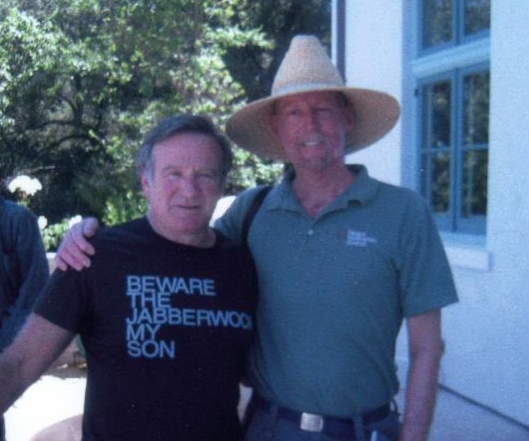
I had an added benefit: 46 Years ago Robin was my brother Phil's best friend. Robin was over at our house often for 3-4 years. Phil stayed in touch with Robin until Phil's death from cancer in February 2013. Above is a photo of them in 2011. Phil and Robin remained friends throughout the years because they just laughed together and enjoyed each other's company.
I cannot count the times that I laughed so hard that I cried. In retrospect Phil did a great job of keeping the banter going with Robin, but even he at times was laughing too hard to continue. However, Robin also had a quiet, very sincere side to him. He was not "on" all the time. He was a great guy.
Unfortunately Robin got sad this week and made a bad decision. It is really a bummer. Although I was not close to Robin, he was always nice to me whenever our paths crossed. He also came to my brother's funeral last year... and made us all laugh. He talked to me about how much he appreciated Phil's friendship.
I encourage you to celebrate Robin's life this week. Experience one of his movies or shows to laugh hard, or appreciate his brilliant dramatic acting, and be deeply thankful.
"Bad Bosses" and suicide have some things in common:
Both are selfish. Suicide is a selfish decision, although I believe most of the time the selfishness is unintentional. You just get so tired and depressed that you forget about everything you love, and you just want an easy way out. Bad Bosses are the same - taking the easy way out rather than working to develop new habits so they become the leaders they are designed to be.
Lifetime impact. Suicide hurts those you leave behind. That is not the intention of most people making this mistake, but it is the truth. Bad Bosses hurt people too, even if it is unintentional, and those hurts can negatively affect people for years or a lifetime.
It is a choice. When it comes down to it, suicide and our decision to just retain our Bad Boss habits are a choice. Too often we are deceived into believing it is just easier and thus is acceptable. It is not.
I have nothing but love and sorrow for Robin and his family, and others who have made the mistake of suicide. I am not judging them. They just made a mistake and need our grace.
The rest of us should not miss this opportunity to be challenged again: What is the cost of our Bad Boss habits? What can we start doing differently TODAY, even if it is just in one area, to be the leader we are designed to be?
It is Friday. ACCOUNTABILITY TIME!
- How are you doing on your 3strands this week?
- Is the work remaining to complete this week's 3strands scheduled in your calendar so you can work uninterrupted?
- Have you scheduled your Sanctuary time later today or over the weekend for personal accountability and focus?
Stay on track.
What They Need Most From You
On Sunday we start the final month of the second quarter. How are you doing on your 2014 goals? Consider this question in your Sanctuary time of self accountability and reflection this weekend:
What do they need most from me?
Take a step-by-step process to consider each "they." Work through this exercise in an order that makes the most sense to you based on the different definitions of "they." Identify the one most important thing each "they" wants from you and assess how well you are doing in that area with them. Take your time...
- God
- My spouse or girlfriend/boyfriend
- My kids
- My extended family
- My closest friend(s)
- My employees (first because without them you cannot serve others)
- My clients
- My vendors
- My community
- Me
Just gauge how well you are doing in one area with each "they." Do that one thing exceptionally well and it will positively affect the other aspects of the relationship.
My suggestion: What they need most is you, just fully you.
Unfortunately to do this well we have to focus on personal development, engage with accountability, and develop a discipline of Sanctuary. This is easy to write, but challenging for most people to accomplish.
Email me if you want to learn leadership skills. (That is how we pay the bills.) Today is the last day of the special offer on our All-In LEADERSHIP program.
It is Friday. ACCOUNTABILITY TIME!
- How are you doing on your 3strands this week?
- Is the work remaining to complete this week's 3strands scheduled in your calendar so you can work uninterrupted?
- Have you scheduled your Sanctuary time later today or over the weekend for personal accountability and focus?
Stay on track.
Are You The Best...?
As you complete the week, why not reflect on this question, BUT do not let it fool you!
Are you the best at what matters most?
Look under the surface. Your company may be more profitable than ever, but your marriage is failing. You may be doing incredible work, but you are physically unhealthy, or your relationships with your children is not what you will wish it was 10-20 years from now.
To be the best at what matters most requires us to slow down and think before each communication, action, and time commitment.
Everyone struggles in this area. Only a few realize it. And even fewer are truly the best at what matters most.
Email me if you want to talk. We do have a special offer on our All-In LEADERSHIP program this month if you are interested.
It is Friday. ACCOUNTABILITY TIME!
- How are you doing on your 3strands this week?
- Is the work remaining to complete this week's 3strands scheduled in your calendar so you can work uninterrupted?
- Have you scheduled your Sanctuary time later today or over the weekend for personal accountability and focus?
Stay on track.