
Your people problems? Gone.
The 4 Management Disciplines Newsletter delivers proven ways to be your best and lead a championship team.
Every championship sports team runs proven plays.
Every Monday morning - I give you four proven plays great leaders use to solve problems in how you Hire, Manage, Develop, and Retain great people.
2 minute read. No fluff. No ads.
Trusted by over 10,000 leaders.
NOTE: David is no longer writing this newsletter. Visit www.simpleliberty.com to read his latest posts.
All Newsletters

It's the Experience, My Friend!
Ask yourself, what are your biggest problems - employee or Client issues? Why do you have these problems?
Regardless of what they are, I’m willing to bet your problems are occurring because the experience your employees have working for you or the experience your Clients have buying and receiving services from you is not meeting or exceeding their expectations.
Ask yourself, what are your biggest problems - employee or Client issues? Why do you have these problems?
Regardless of what they are, I’m willing to bet your problems are occurring because the experience your employees have working for you or the experience your Clients have buying and receiving services from you is not meeting or exceeding their expectations.
Bill Clinton's famous 1992 campaign line was, "It's the economy, stupid!"
Now, I do not think you are stupid. But I have a similar response to your complaint about employees or Clients, and that is: "It's the experience, my friend!"

Examples of Great Client Experiences
Let's look at the key attributes of some winning companies who consistently meet or exceed their customers expectations for quality, ease-of-use, friendliness, and value.
Chipotle Mexican Grill
Counter to other fast food leaders, Chipotle developed a "food with integrity" mantra that has developed an insanely loyal clientele.
Hampton Inn
This is the hotel brand I typically stay at because they do not nickel-and-dime me, but guarantee me a great experience every time.
In-N-Out Burger
Freshly made burger food served with smiles in a consistently clean environment at low prices has created almost cult-like loyalty.
Jamba Juice
You cannot get a fresher, healthier, better tasting fruit smoothie than by picking a Jamba - my favorite road snack.
The Ritz-Carlton Hotel Company
Where ladies and gentlemen are serving ladies and gentlemen, and employees can spend up to $2,000 to solve any guest problem. There’s a reason we now use the term “ritzy” to describe a luxurious experience.
Starbucks
The Starbucks experience is so consistent no matter what city you're in that it has integrated itself into millions of customers' routines.
Create An Incredible Experience for Clients and Employees
So, if you want to compete for the best employees or the most profitable customers, focus on each aspect of the experience and start improving one piece at a time continuously.
THE STARTING POINT: Your employees.
If your employees are not fully engaged then it is impossible to provide the best experience to your customers.
How do you get there? Embrace a company culture that practices 3Strands Leadership. Practice Systematic Power, Meaningful Work, and Sincere Gratitude.

Meeting Ideas
Here’s a few ways you can discuss your client experience with your team.
Discuss the companies I listed above or consider additional companies that your employees feel are The Leaders in providing an excellent client experience.
Get everyone involved and discuss how you can be the best you can be.
If you just chose one part of your employee experience and one part of your Client experience to improve monthly, then you will be much more competitive a year from now.

Dave's Dirty Dozen Email Rules
It’s been four years since we launched Dave's Charm School’s online platform and many people have benefited from the courses, not least of which is the Communications 101 course covering active listening, body language, communicating respectfully, and more.
One of the lessons in the course is titled “Email, IM, Texting Standards” and includes my Dirty Dozen Email Rules. These rules are incredibly helpful for any executive, manager, or front-line employee that wants to present themselves professionally and communicate effectively via email.
Every rule may not apply to you, but most of them probably do. Feel free to copy and edit my list to create your own list that works at your company.
It’s been four years since we launched Dave's Charm School’s online platform and many people have benefited from the courses, not least of which is the Communications 101 course about active listening, body language, communicating respectfully, and more.
One of the lessons in the course is titled “Email, IM, Texting Standards” and includes my Dirty Dozen Email Rules. These rules are incredibly helpful for any executive, manager, or front-line employee that wants to present themselves professionally and communicate effectively via email.
Every rule may not apply to you, but most of them probably do. Feel free to copy and edit my list to create your own list that works at your company.
Without further ado, here’s Dave’s Dirty Dozen Email Rules:
#1 Communicate based on their preferred style
The best way to get your message across in a written medium is to adjust your writing style to the way the recipient of your email prefers to receive information. If you don't know what that is, figure it out in advance, because it may determine whether your message is received properly or not.
For example, executives are often juggling multiple priorities at once and don’t have time for a lengthy story on why Employee A was having a problem with Employee B. When emailing them, you’ll want to be clear, concise, and to the point.
One resource that can help with communication is knowing someone’s preferred communication styles. Our Clients use our talent assessments for this and benefit greatly.
#2 No hiding behind email – speak, do not write negatives
When we are experiencing difficulty with others there is a high sensitivity to written words. There is no tone of voice, no visual cues as to the person’s feelings or intention, and it’s difficult to ask a quick question to clarify something.
If you have an issue with someone it is best to talk with them in-person or by phone. Avoid “flaming emails”. You know, those emails where someone just unloads all their frustrations in multiple paragraphs. Don’t do that.
When there is a problem, verbal conversations are best. Don’t hide behind your computer. If necessary, follow-up after the verbal conversation with a brief, respectful email to confirm key points.
#3 Make the subject line clear, updated, and catchy
Every email you send should have a good, relevant subject line. Be brief. Be clear. Motivate.
The subject line of your email can determine whether or not your communication is read at all. Do you need it to be a hook to motivate someone to open your email? Then try to grab their attention with something catchy, especially if the information is important/urgent. Then, as you go back and forth with someone and the length of the email gets longer and longer, update the the subject line to keep it relevant as the focus of your comments change.
#4 Only copy necessary people
If you use email a lot, it probably runs your workday. Don’t you hate receiving an email that you didn’t need to be copied on? It’s a waste of time for you and anyone else involved.
Make sure you only copy people on emails who absolutely need to be informed. Blind copies can come back to bite you, so use the BCC option discriminately. Forward emails to others only when appropriate, and only when you would be comfortable if they were doing the same thing with your communications. Consider the cost of a BCC becoming public.
#5 Be brief
There’s a time and a place for your full report. Email probably isn’t it, and if it is, you should attach the report, not put it in the text of the email.
Be brief. Be bright. Be gone. The vast majority of people, especially at work, don’t want to read your life story. We’ve all got work to do, people! Get to the point.
Use attachments and links to limit the length of email body copy. Schedule a verbal discussion when interaction is needed. Use email for notes, brief announcements, and confirmation of details, action items, and agreement.
#6 Format information for scanning, not reading
There is too much to do and not enough time. In addition to being brief in your length of content, you should also format your content for easy digestion.
Here’s how: Design your communication to be scanned rather than read. Take those big paragraphs and put them into bullet points. This will take you a little bit more time to compose your email, but it demonstrates respect to the recipient, increases the likelihood of a response, and improves overall productivity.
#7 Make it easy to take action
This is an easy one that is often overlooked. What’s the purpose of all this email? To get work done.
Therefore, if you want someone to do something in-person or online, take the time to provide accurate info and links.
NOTE: Check your links before sending.
#8 Never say anything you do not want in the newspaper
In a verbal conversation, people will forget an off-hand comment or joke in a matter of minutes. But email never dies, unless managed by an unethical politician (zing!).
Therefore, you should choose your words cautiously when composing an email. As my eighth grade English teacher used to say, "Peruse your verbatim carefully” before clicking the Send button. A wise person chooses to avoid risk and save some comments for a verbal conversation at another time, if at all.
#9 Use drafts, proofread, and auto spell/grammar check
Since email can be such a difficult medium for communication, you want to make sure you are sending the right email. You don’t always have to send the first version. If the text doesn’t feel right for an important email, let it sit in your Drafts folder for 30 minutes, then revisit. You may even want to wait until the next day to send a very important, non-urgent email.
When you do review your draft, proofread it multiple times. Do a spelling and grammar check. Draft a second version, if necessary.
Finally, if there’s a voice in your head telling you to get a second opinion, ask someone you trust to review your email and provide their opinion. Usually that voice encouraging you to get their opinion is trying to save you from unnecessary drama.
#10 Include a professional signature
This is easy. Have a consistent professional signature for everyone in your organization. There are many ways to do this, but the key components of a signature should be the following:
An end to your email, like “Sincerely, David”
Your full name
Your title
Your email address and possibly a phone number
Your company name
Your company logo
Links to social media, meeting scheduling services, or support (optional)
We use Calendly to help automate the process of setting appointments, so I include a link in my email signature for people to schedule appointments with me. Here is an example of my signature:

#11 Schedule time for email
I turned off notifications for every email coming into my Inbox years ago. I now limit my time each day to look at email, although at times I will pop in for brief bursts of Inbox review in between meetings.
The simple fact is email can be a huge distraction. I don’t have control over when my emails arrive, how urgent they are, or how many there are. But I do have control over myself and I can choose how much control my inbox has over me.
Unless you work in customer support, you don’t have to be on constant alert. Close your email program, focus all your efforts on work, then check your email at regular intervals.
#12 Respond quickly and clear Inbox daily
Your goal each day should be to clear your Inbox. For some of us it is a Herculean task. But it’s a really great way to keep you focused, clear your head for the next project, and make sure to tie up any loose ends.
Try to touch an email only once. Open it, respond to it or take action, then file it away. I like to use folders to save emails for future reference. Quick, brief responses are fine. Sometimes your quick reply may be only to commit to get something done at a later time.
No response is UNACCEPTABLE if the email is from someone you know.
——
And that’s it!
I could go on. The course is called Communications 101, after all, and there are so many unwritten rules to communicating effectively. However, this should give you plenty to consider. I hope you found these tips helpful and can apply them to save time, avoid drama, and improve relationships moving forward.
Teach Solving NOT Selling
We just launched our latest course, Solving NOT Selling, in Dave’s Charm School.
This 14-lesson course is designed for service technicians who are uncomfortable discussing unexpected problems that cost a Client additional money.
However, everyone in your organization needs the skills and habits to discuss difficult topics.
Although this training is focused on service techs, we encourage everyone in your company to complete this course. This includes owners, CEOs, executives, receptionists, maintenance workers, and warehouse staff. Everyone means ALL your people.
We just launched our latest course, Solving NOT Selling, in Dave’s Charm School.
This 14-lesson course is designed for service technicians who are uncomfortable discussing unexpected problems that cost a Client additional money.
However, everyone in your organization needs the skills and habits to discuss difficult topics.
Although this training is focused on service techs, we encourage everyone in your company to complete this course. This includes owners, CEOs, executives, receptionists, maintenance workers, and warehouse staff. Everyone means ALL your people.

Back to our wonderful service technicians… One big concern of service techs is they don’t want to be perceived as selling anything. The good news is you do NOT have to sell. You just have to solve problems.
The lessons are:
Fear
Cost
Time
Our Clients Pay For…
Solving With a Sales Team
Solving on Your Own
Communication Soft Skills
Problem and Presentation
Selling Behaviors
Buying Behaviors
Driving Forces / Motivators
Why Speak Up
Let’s Talk Money
4 Common Outcomes
Explain a Problem, Propose a Solution
Each of these typical outcomes reinforce the fact service techs solve problems and do NOT sell. Your primary responsibility is to promptly and competently explain a problem and your proposed solutions in a manner Clients can understand. Then, your Clients make the decision whether or not to act on your advice.
We encourage you to discuss these lessons with others on your team. Decide how each person can comfortably respond to these unexpected situations in ways that solve the problems and remove the pain, cost, and risk to your Clients.
Please note: This course discusses service technicians who are onsite and/or face-to-face with Clients. However, our advice and best practices still apply in similar situations where remote services are being provided.
Try 30-day free on Dave’s Charm School. Start with Solving NOT Selling, or another one of our popular soft skills courses.

What Are Soft Skills and Why Are They Important?
Soft skills. It’s a term you’ve probably heard before. From executives and consultants, to Seth Godin and Inc Magazine, people are talking about the importance of soft skills so much it feels like a new diet craze.
However, when you take some time to investigate, it becomes clear that “soft skills” just means “likeable”, “conscientious”, or “admirable”. It’s a broad term used to describe almost all non-technical skills.
Soft skills. It’s a term you’ve probably heard before. From executives and consultants, to Seth Godin and Inc Magazine, people are talking about the importance of soft skills so much it feels like a new diet craze.
However, when you take some time to investigate, it becomes clear that “soft skills” just means “likeable”, “conscientious”, or “admirable”. It’s a broad term used to describe almost all non-technical skills. According to Wikipedia, the term “soft skills” encompasses a combination of people skills, social skills, communication skills, character traits, attitudes, career attributes, social intelligence and emotional intelligence quotients that enable people to navigate their environment, work well with others, perform well, and achieve their goals with complementing hard skills.
These skills have always existed. They have been utilized and perfected in many successful organizations. However, their popularity has increased as the mass majority of people have caught on to the fact that these skills are super important and they can be taught to anyone.
Where did the term “Soft Skills” come from?
Soft skills have been around forever, they are not new. Before it became an official term, Dale Carnegie described many soft skills in his book How to Win Friends and Influence People.
However, we started using the term “soft skills” because of the US military.
Around 1959 the US Army started investing heavily in training procedures that utilized technology to improve workflow and learning efficiency. They created a regulation (a doctrine, a set of guidelines or rules) called Systems Engineering of Training (CON Reg 350-100-1) that laid the groundwork for designing and producing courses for specific Army jobs. According to author Dr. Paul G. Whitmore, the courses created under this regulation would cover job related skills involving people and paper – inspecting things, supervising people, preparing reports, or designing structures – skills that did not involve machines.

This was the catalyst for the creation of “soft skills” as a term. While the term did not appear in CON Reg 350-100-1, the regulation spurred the analysis of skills and skill development in the modern military.
The term “soft skills” eventually and formally appeared in a report on a 1972 CONARC Soft Skills Conference, or a 1972 US Army training manual (I believe they are one in the same).
At the 1972 soft skills conference, Dr. Whitmore and John P. Fry presented three papers dealing with skills analysis and training procedures. I was able to find a reference to Dr. Whitmore’s papers at the Defense Technical Information Center (DTIC). After giving them a call and speaking with a representative, they directed me to the National Technical Reports Library where I was able to download the March 1974 version of the reports. The three papers are:
“What Are Soft Skills?” by John P. Fry and Paul G. Whitmore
“The Behavioral Model as a Tool for Analyzing Soft Skills” by Paul G. Whitmore
“Procedures for Implementing Soft-Skill Training in CONARC Schools” by John P. Fry
These papers were presented at the 1972 CONARC Soft SKills Conference. Page II-7 of the conference report reads:

text highlight added by me
So that’s it. “Soft skills” (along with many other things) originated within the US Army.
Today these skills are also referred to as “people skills” or “emotional intelligence”. Seth Godin thinks we should stop calling them soft skills because the word “soft” makes them sound like they are not important. Regardless of what you call them, they exist, and they are so important that the US Army held a multi-day conference about them.
The question is: Why are they important?
Why are soft skills important?
Everything you do involves other people, directly or indirectly. Even if you are a programmer who never talks to another human being, your code eventually makes its way to the outside world and affects people. If you want to turn your creation into a business, you will have to talk to other people, in person, on the phone, or digitally.
Furthermore, if you want to get a job, keep your job, or advance up the career ladder, you will need to be personable, conscientious, and self-aware. Your whole career centers on the importance of soft skills. If you cannot smile at appropriate times, hold a conversation, or deal with conflict, your career potential is, on average, extremely low.
Soft skills are so important, we often instinctively value them too much. Ever wonder why or how a certain person became a manager or a director, when they don’t seem to have the required technical skills? It’s probably because they have great soft skills!
Technical skills are just half of the game. If you can fix a product, you have half the equation figured out. However, you will lose business if you don’t know how to connect with your customer on an emotional level, understand their needs, and make them feel valued.
The importance of soft skills cannot be overstated: To succeed, people need to be able to connect with you, and you need to be able to connect with other people in meaningful ways. Soft skills are important because they are the difference between being an engaged member of a team versus being just another cog in the wheel.
What soft skills should you master?
There are so many different examples of soft skills. Too much duplication, too much overlap. Let’s discuss the most important ones and why these are covered in our courses at Dave’s Charm School.
At the very least, these interpersonal skills should be on your radar:
Communication – the ability to speak, write, present, and listen, in person or on the phone.
Courtesy – a habit of observable manners, etiquette, business etiquette, graciousness, including saying please and thank you, and being respectful.
Flexibility – adaptability and willingness to change, adopting the mindset of a lifelong learner, accepting of new things, willing to adjust, and, in a word, teachable.
Integrity – practicing honesty, being ethical, valuing high morals, having personal values, doing what’s right.
Interpersonal skills – being kind and personable, having a relaxed sense of humor or ease, being friendly, nurturing, empathetic, displaying a strong sense of self-control, being patient, social, and slow to anger, appearing “warm” and considerate.
Positive attitude – choosing to be optimistic, enthusiastic, encouraging, happy, and confident.
Professionalism – recognizing and donning the appropriate look, manner, and poise, appearing businesslike, well-dressed, and adopting the proper attitude for the situation.
Responsibility – showing yourself to be accountable, reliable, able to get the job done, resourceful, self-disciplined, wanting to do well, conscientious with common sense.
Teamwork – being cooperative, getting along with others, supporting others, trying to be helpful, willing to collaborate.
Work ethic – hard working, willing to work, being loyal, taking initiative, being self-motivated and on time with a good attendance record.
Time Management – able to schedule your time appropriately, manage project flow and deadlines according to their due date, being efficient and following through on commitments.
Conflict-Resolution – ready and able to engage in problem-solving, displaying sympathy and empathy for others, practicing active listening, knowing and practicing effective crisis management and negotiation.
Leadership – taking initiative, coordinating efforts between team members, mentoring, inspiring others, making difficult decisions, having and pursuing a vision.
Balance – respecting boundaries, practicing self-care, managing your own expectations as well as your workload, maintaining focus on your purpose.
This may seem like a long list, but we practice or neglect each and every one of these just about every day. These skills are the counterpart to all of the technical knowledge we have, and they are just as important. Be mindful of these as you work.
Fixing a product should be followed by a smile, and perhaps a warm handshake. Collaborating on a design should include providing your technical knowledge and then being able to gracefully accept the input of others. Leading a team requires pursuit of your mission, but it’s also about being able to inspire your team to follow you on that mission.
You are using soft skills regardless of your position, and the higher you climb the job ladder the more important those soft skills become.
How to improve your soft skills
The best thing you can do to improve your soft skills is to learn and practice. Read books like How to Win Friends and Influence People. Review and rate yourself on each of the soft skills listed above. Then schedule some time each week or month to practice areas in which you feel deficient.
It takes time to improve soft skills, but it’s worth it. Focus on strengthening your strengths, and shoring up your weaknesses.
The benefits will last the rest of your life.

Start Here. Now.
It’s the end of 2018. Did you achieve all of your objectives this year professionally and personally? Did you even have objectives for 2018? If you are honest with yourself, the likely answer is no.
The good news is, you get another chance in 2019.
The bad news is, your unproductive habits are ready to sabotage 2019.
It’s the end of 2018. Did you achieve all of your objectives this year professionally and personally? Did you even have objectives for 2018? If you are honest with yourself, the likely answer is no.
The good news is, you get another chance in 2019.
The bad news is, your unproductive habits are ready to sabotage 2019.
In the 1999 science fiction film, The Matrix, Morpheus awakens Neo to the real world. Neo’s reality was a ravaged wasteland where most of humanity have been captured by a race of machines that live off of the humans' body heat and electrochemical energy. Human minds are imprisoned within an artificial reality known as the Matrix.

Is your mind stuck in a Matrix of bad habits that have you imprisoned in mediocrity? Everyone has a mind matrix of their own making in at least one area of their life.
Perhaps you procrastinate on doing something different because the status quo is too comfortable. You are in a pit, on a snowy day, with a lion. Although it's scary at times, you have convinced yourself the lion will not eat you.
Most of your focus is just getting through each day rather than getting out of your pit.
Or perhaps you believe the Big Lie, that you're doing everything you can and things are okay. When you started your business, was your objective to be "okay"? When you got married, was your objective to have an "okay" marriage? When you decided to get in better shape, was your goal to be in "okay" shape?
"Okay" sucks. You are meant for more. But you must have the courage and the discipline to stop lying to yourself.
Change your expectations. Stop having a goal to just get through the day. Stop allowing yourself to react your way through each day. Stop letting your bad habits control your days.
Instead, focus on setting and achieving your career and company goals.
Start here, where you are, with a new commitment to be all that you can be. It doesn't matter how many mistakes you have made. Your age, finances, job title, knowledge, skills, and current opportunities, or lack thereof, cannot stop you if you commit to start here and now.
The most valiant warriors have wounds, but time and time again, they start here. They start now.
You can too!
Stop being a sucker for the Big Lie. In at least one area of your life you did not achieve significant progress in 2018. Rip the Big Lie from your conscious mind. Stop repeating it over and over. Stop using it as an excuse. Stop trying to feel comfortable when you know you can do better.
Do something different in 2019!
Here's a few things we are offering to help you get started:
Certified LEADER program - starting January 7 (register by Dec 31 to automatically save $250).
Dave’s Charm School - soft skills training, low cost, train 1-3 lessons each week.
Hire the Best system – you will spend $100,000 on new hires in 2019, invest a fraction of that to hire better people and avoid posers.
Talent Assessments – Improve your current employee productivity, and better match job candidates to your openings with our Talent Assessments. We have Clients who will not hire unless they consider our unique profiles and give our opinion of whether to hire or not.
LEADERSHIP Essentials – Work with me for 3-6 months to improve your leadership and company culture so your organization can thrive.
Start here. Start now. On your own, or with me.
Just do something different!
Merry Christmas! Happy Hanukkah! Happy New Year! Happy Holidays!
Leadership lessons from Reed Hastings and Netflix
You can make a great profit, maybe a HUGE profit. The project is legal. It is unique. Plus, the content could spill over into more revenue streams.
But... is it ethical?
You can make a great profit, maybe a HUGE profit. The project is legal. It is unique. Plus, the content could spill over into more revenue streams.
But... is it ethical?
In 2007, novelist Jay Asher published a book involving teenage suicide called 13 Reasons Why. I do not know why he thought it was a good idea, but darkness often sells in today's marketplace.
Here is the problem (from The Parent Resource Program):
More teenagers and young adults die from suicide than from cancer, heart disease, AIDS, birth defects, stroke, pneumonia, influenza, and chronic lung disease, COMBINED.
Each day in our nation, there are an average of over 5,240 suicide attempts by young people grades 7-12.
Actress Selena Gomez co-produced the Netflix series, 13 Reasons Why, based on Jay Asher's book by the same name. The focus of the series and book are 13 videos created by a seventeen year old girl to explain why she commits suicide, which she does in the last episode.
I have not read the book nor seen the series because I refuse to have full nude images of a teenage girl being raped and a teenager's bloody suicide in my brain. I still have images from the movie, The Exorcist, which I watched about 44 years ago (Not recommended). I don't need any more toxic waste in my brain.
Co-producer, Selena Gomez, blows off critics of the series in a NY Daily News article. It is disappointing that Gomez, who has been in rehab to overcome some of her life wounds, could not have the wisdom to kill the series rather than promote it. One of her comments is:
I just wanted it to come across in a way that kids would be frightened, but confused...
I have talked with leaders, parents and kids who have seen the 13 Reasons Why series. There is a growing wave of people, including many suicide prevention experts, who are upset about a television series available to young children that promotes suicide at any age.
In Central Oregon where we are visiting, people are deeply concerned about teen suicide motivated by the show - article in The Bulletin. We were told recently that two 12 year old children committed suicide in Redmond and Bend within the last two months.
Shame on Reed Hastings, Netflix CEO
In 2011 Reed Hastings was already four years into testing streaming video and changed Netflix subscriptions to separate DVD delivery and streaming subscriptions. There was a huge uproar over what people perceived as a price increase, whereas in truth he was adding a new service that had passed its market test. Part of the issue was also he was ahead of the trend.
I retained my Netflix subscription through that uproar.
This week's Harvard Business Review hails Hastings and Netflix as tied for #1 as a transformational business leader because of the revenue they generate from streaming content.
The article evaluates businesses based on three sets of metrics: (1) new growth, (2) core re-positioning, and (3) financial performance. I wonder, would they name a porn king as a transformational business leader because of phenomenal revenue growth in their new web business? I seriously doubt it, because it would be inappropriate. Yet a growing amount of original Netflix content is eerily inappropriate.
What is the more important standard for a truly "transformational business leader": ethics, growth, or a combination of both?
Wait... is this consistent with Netflix Values?
Netflix has 9 core values, each of which are defined more specifically by four statements. Here are some Netflix values that indicate why 13 Reasons Why and other objectionable content is exactly what Netflix CEO Reed Hastings wants of his people:
Passion| You care intensely about Netflix' success
Impact| You focus on great results rather than on process
Impact| You exhibit bias-to-action, and avoid analysis-paralysis
Selflessness| You seek what is best for Netflix, rather than best for yourself or your group
I regularly help companies define what I call "company culture cornerstones". They include a mission, vision, values, and accountability to live them out. Most people are aware of having a mission, vision, and values, however without accountability to live them out your company risks becoming an Enron.
I have used Netflix's values as an example. Nevertheless, there are two concerning flaws with Netflix's values that increase the risk of serious mistakes as Netflix grows:
#1- Each value statement starts with the pronoun "You," rather than "We" (my preference) or "I." "We" or "I" is a statement by an individual, or group of individuals committing themselves to behave a certain way. "You" demands others to live by your standards, which may be higher than the standards you exhibit in your behaviors.
#2- Every Netflix value is narcissistic towards Netflix, their growth and profit. None of their values commit a Netflix employee to be a good steward of the power they possess as a leading media company. None speak of integrity, ethics, empathy, serving others, values of moral character, or are outward-focused.
When it comes to Netflix values, they scream "It's all about me!" There seems to be a total, intentional, blind spot to communal responsibility. The standard is profit and growth without regard for how any negativity of their work could hurt others.
I have said for years that most of America and the secular, highly civilized world have three core values, consciously or subconsciously. Netflix sadly demonstrates them without remorse:
#1 - It's all about me
If it's good for Netflix, we do not care who it hurts.
#2 - It's not my fault
It's not Netflix's fault that teenage suicide rates are way too high in America and worldwide. It's not Netflix's fault that social media and Hollywood propagandize actors whose bodies and faces which have been edited to be thinner, younger, stronger... and who act out fake relationships no one will ever achieve.
It's not Netflix's fault that 5th graders are watching 13 Reasons Why episodes with repetitive scenes of hopelessness, a full nude rape scene of a young teen, and a blood-spurting teen suicide. Our local 5th grade classes are filled with kids who talk about the series, yet it seems many parents are not aware their kids are watching. In reality, younger kids probably are too.
#3 - It's not my problem
I was told a 12 year old Central Oregon girl committed suicide a few days after Easter this year... after watching 13 Reasons Why. But that's not Netflix's problem. It's a free country with free speech, unless of course, you have an opinion that disagrees with recognizing a third or fourth gender.
It's not Netflix's problem that people cannot appreciate the creativity of the 13 Reasons Why series without becoming depressed and killing themselves. It's not Netflix's problem that as a company they did not even provide a notice to parents about potentially objectionable content, or remind parents that the service includes parental controls.
But wait, Netflix IS selective about their content
Earlier this month, The Truth Seeker and other media reported Netflix banned the documentary, The Red Pill, from their service. Now, it's likely that Netflix simply decided not to list the movie on their platform. But it begs the question: Why? Is it too violent? Is it promoting death? It is inspiring rape? Is The Red Pill poor quality?
No. The Red Pill is an award-winning documentary on the Men's Rights Movement. I guess Netflix is more concerned about suppressing topics controversial in today's society than saving teenagers from despair, rape, and suicide. Wow... At least you can say Netflix lives out its values. It makes you wonder if Netflix can recover the next time its stock goes in the tank. Companies without ethics that are obsessed with profits do not last forever.
If you are interested, here is a Reddit post that provides a list of 18 video streaming platforms where you can watch The Red Pill instead of Netflix.
Time to cancel Netflix
I stuck by Netflix when they had their pricing debacle years ago. However, earlier this month I cancelled our Netflix account. I'm done with the company. Why support a company that puts profit above the safety of vulnerable kids and people who struggle with depression?
"Anything goes as long as you make money" is not the measure of a GREAT leader. It is the justification of a fool, and quite possibly, an evil person. I hope the Netflix team behind 13 Reasons Why is the former, not the latter.
Unfortunately keeping a Netflix subscription endorses content like 13 Reasons Why, and more dark media similar to it.
Consumer Reports offers five alternatives to Netflix. Find a company that has and lives out better values for the common good, not the selfish good. CR recommendations fail to endorse Amazon Video, which I have, or Hulu - the other two leaders. If you want DVD's, try Redbox.
What could Netflix have done differently?
First, they could re-evaluate their company values. Great leaders say "no" to immoral profits. Second, Netflix could have looked at teenage suicide rates and decided to use their power and influence to fight it, rather than exploit it.
People who contemplate suicide share one or more of a few attributes:
Second, some professionals conclude people who contemplate suicide may have a chemical imbalance. I don't believe this is 100% accurate. My understanding is the actual number of people who suffer from a chemical imbalance is less than many healthcare professionals would like us to believe. Still, it is a cause of the problem.
A 20 year old cousin of a friend of mine committed suicide this week. He was on antidepressants to help with a chemical imbalance. Too many people commit suicide when on antidepressants. I am not an expert who can join the debate as to whether suicide is a side effect of antidepressant drugs, or people who commit suicide were chemically going to make that decision anyway.
The bottom line is Netflix could have helped further the debate on the pros and cons of antidepressants. It could have reinforced solutions for life, rather than increase profits by dramatizing despair and death.
Third, my understanding is people who commit suicide want to end a story that is occurring in their life and start a new one. The intense emotional desire for change blinds them to the fact that suicide does not just close a chapter of their life story, it concludes the book of their life story.
Basically the desperation to close their current story makes them believe a fool's choice. A fool's choice is when you think there are only two bad options. In this case, a person can either stay in their unhappy situation or commit suicide, and anything is better than their current situation.
Russell Moore delves deeper into ending your story in a recent blog post. Instead of profiting from misery, Netflix could have creatively and effectively taught people how to comprehend the lie that suicide closes one chapter. They could have taught how it ends a life story, and they have other choices.
Fourth, it is common for people contemplating suicide to view themselves as victims. In life we consider ourselves a victim, villain, or hero; or a combination of two. The victim is narcissistic. No one has problems like mine. No one is as bad as me. It's all about me. It is an amazing dynamic of human emotions that a pity party can feel so good, so self-justifying, so right... when it is wrong.
The message of a victim is that others caused my problems, rather than I can take responsibility for my actions. Another victim message is, "I'm not good enough." Some therapists motivate patients to extend therapy by convincing them they are victims. The pity party sessions can be captivating.
This is wrong. Instead of encouraging people to feel like victims who can take an "easy way out" because they are not good enough, Netflix could have taught people how to overcome these feelings and better understand their worth as a human being.
Fifth, Netflix glorified suicide as a revenge strategy. Someone raped and/or otherwise abused you. You were neglected. You were bullied. Make them feel bad by killing yourself. Unfortunately that does not always happen. Even if it does, you paid too much to open the abuser's heart to their own mistakes.
Instead of encouraging suicide as a revenge story, Netflix could have exposed how this is a lie. Netflix could have empowered people, instead of encouraging them to kill themselves.
Sixth, this is a personal belief of mine: Netflix eliminated God, from 13 Reasons Why. No version of God is given. Jesus only gave one command - to love one another. Couldn't there have been at least one person in the series at least attempting to demonstrate this foundation of human meaning?
When I was 21 years old I had two best friends, in addition to my wife. One of them, Smitty, invited me to lunch one day. As we drove home I remember a moment as we crossed the Golden Gate Bridge when he asked me what I believed about God and who goes to heaven. I did not have a solid answer, and Smitty let the conversation move on to other topics. Thinking back, he was very troubled and trying to get answers.
Within one or two weeks of that lunch, Smitty committed suicide. It broke my heart. I had an emotional crater in my chest for years and still regret that none of us, his friends, perceived what he was planning.
It is so common for people contemplating suicide to question their spiritual beliefs about God and heaven. They also give hints. By leaving out God, Netflix avoided many of the reasons NOT to commit suicide such as: You are unique and valuable. God designed you. God has a plan for you. God ALWAYS loves you.
Unfortunately, Netflix had one objective in mind that massively overpowered any other: PROFIT. And people are taking notice.
If you want to hear more reactions to the series, I recommend reading articles in Family Life, Crosswalk, and the NY Post. Concerns are rising rapidly.
In Conclusion
Anyone can create trash TV with nudity and violence. It takes a truly great company, with truly great leaders, to say "no" to profitable, yet potentially dangerous content.
Decades ago I participated in cell-to-cell ministry in San Quentin State Prison and was the first volunteer director of Prison Fellowship in the San Francisco Bay Area. One inmate I met had done time for creating illegal pornography. Back then, more than just child pornography was illegal. I remember he desperately wanted to find a real job. He admitted to me that he could make a lot of money creating porn. He knew how to do it, how to sell it, but he did not want to hurt people anymore.
As I read about 13 Reasons Why and it's disturbing imagery, I could not help but recall my conversations with that inmate and wonder if media companies are exploiting people for profits. This guy took a stand. Too bad Reed Hastings did not do the same. What about now, Mr. Hastings? How many kids have to die for you to change your standards at Netflix? What if it was your child committing suicide after watching 13 Reasons Why? (I hope that does not happen.)
I understand the value of creative cinema and pushing the envelope. However, I completely disagree with the narrative, tone, and presentation of the character issues in this show. It is a sign that Netflix is headed in the wrong direction.
It is unfortunate that Netflix's leaders did not think twice before giving 13 Reasons Why the green light. If they had, perhaps a few young people might still be alive, and parents not wounded for life by the loss of a child.
What kind of leader will you be when you have to choose between easy profits and doing what is right?
Every leader has to make this choice, and some have to make it often.
United or Divided?
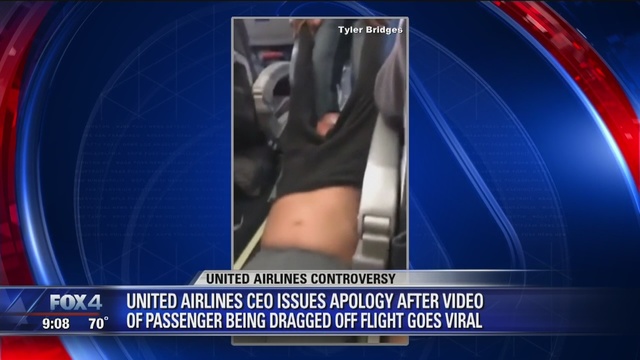
On Sunday, April 9th, United Express flight 3411 was about to depart from Chicago O'Hare airport, however, the flight was oversold. A passenger, Dr. David Dao, was told he had to give up his seat and refused. Law enforcement was called and he was dragged from the plane.
On Sunday, April 9th, United Express flight 3411 was about to depart from Chicago O'Hare airport, however, the flight was oversold. A passenger, Dr. David Dao, was told he had to give up his seat and refused. Law enforcement was called and he was dragged from the plane.
After reviewing a lot of the available information, I've got a few opinions on United Airlines, United's CEO, the police, the passengers, Dr. Dao, and the media. I will cover all of them. However, what I have to say next might shock you:
In general, United Airlines followed the proper course of action, and Dr. Dao was wrong.
Let's briefly review what happened:
United Airlines personnel boarded passengers despite the fact that Flight 3411 was oversold, apparently without first confirming volunteers to give up their seats.
It may not be the oversold situation that caused the problem. It may be that to keep other flights on schedule United needed four seats for their employees.
United asked for volunteers, offering $400 a seat. No takers.
United asked for volunteers, offering $800 a seat. No takers.
United then chose four people to give up their seats, most likely based on their United MileagePlus status. Those four people were notified.
Three passengers left the plane, disappointed but respectful of others, giving up their seats as requested by United.
Dr. Dao refused to leave the plane even though he was asked repeatedly to give up his seat.
When United's personnel could not convince Dr. Dao to leave, they followed policy and asked law enforcement for assistance.
Dr. Dao refused, even when warned by police that he would be dragged from the plane.
Law enforcement pulled Dr. Dao from his seat and dragged him from the plane because he refused to stand up. In the process, Dr. Dao's head hit an armrest and he suffered a blow to his face, causing bleeding, a concussion, and broken teeth.
Some of the other passengers were shocked. Videos were taken and later posted online.
A social media storm ensued in which many people raged at United for the incident, with some even cutting up their United mileage cards and posting pictures to Twitter.
The mainstream media further inflated the reach of the story to increase their viewers / readers, and justify the cost of their advertising.
United CEO Oscar Munoz responded at least four times about the situation. First he said that United was trying to "resolve the situation;" then described Dr. Dao as "disruptive and belligerent;" then he apologized two days later and said "no one should ever be mistreated this way."
United is now offering full refunds for every passenger on the flight. Accepting a refund may be pursuant to some restrictions.
Dr. Dao is considering a lawsuit against the airline and the city of Chicago.
At least three airport police officers have been suspended over the incident.
Now, let's consider some important questions because GREAT leaders ask the right questions.
First, is United Airlines the only airline that overbooks flights?
No. All or almost all airlines overbook their flights in anticipation of no-shows (passengers who do not show-up for their flights).
Second, why do airlines overbook flights?
Because people do not show up for their flights and airlines want to avoid flying with empty seats. To keep costs low, airlines can (a) over-book flights in the expectation that some people will not show up; (b) increase the penalty for no-shows; or (c) raise airfares. Which of the three would you prefer? The first option is the only one that does not raise your costs to fly.
Third, did United Airlines personnel follow company policy and the law?
Yes, it appears they did except in two areas:
They should have identified volunteers before boarding the plane. This is a Dept. of Transportation rule.
They could have offered the maximum reimbursement for volunteers ($1,350 per seat), which is also a DOT rule. See the same link above about flyer rights for details.
Overbooking flights is completely legal and United is within their rights to ask (and force) passengers give up their seats if a flight is overbooked.
We need to recognize that no United personnel touched Dr. Dao. Law enforcement removed him from the plane after asking him to leave and warning him of what they would do.
Based on the information above, I have a few conclusions and suggestions.
United Airlines
You may not like it, but solely blaming United Airlines for the incident is wrong. For the most part, United personnel behaved properly, respectfully, wisely, and followed procedure.
Could United Airlines have done anything different to avoid this situation? Absolutely! We don't know everything United personnel did, but it seems like they could have been a little more creative in their approach and less "by the book."
For instance, as mentioned above they could have offered the full amount for volunteer seats - $1,350. However, that may still not have worked.
They could have asked someone else to leave after Dr. Dao refused (he refused multiple times), appealing to their desire to help the doctor.
They could have simply told the passengers, "We're not leaving until someone volunteers to stay." Then they could have stood their ground until someone caved or someone called their bluff (they probably can't pull that trick for too long).
United personnel followed procedure for the most part. None of their mistakes justify Dr. Dao's behavior.
The primary mistake United personnel made was boarding people before confirming volunteers. It is much less difficult to remove people from a flight who have already agreed to do so. Demanding volunteers once people are in their plane seats can be much more challenging. United should know better.
United Airlines CEO Oscar Munoz
We can learn a lot about how NOT to behave as a leader from the jumbled responses of United CEO Oscar Munoz. Don't be surprised if he is replaced soon by their board of directors.
As a leader it can be difficult to understand what to do in a crisis. Then wait, if you can. Limit your response if you can't.
Develop a habit of asking questions to make certain you have as many facts as possible before making a decision. Reacting to a problem in which you only have one side of the story is foolish. It only gets you and your business into more trouble. Don't let the media, someone's emotional outburst, and/or your own feelings manipulate you into making a mistake.
Mr. Munoz fell prey to these common human failures. I can only imagine how the crisis unfolded itself to him. The pressure was probably intense and it was difficult to formulate a coherent response and steer his company through some rough seas.
Maybe he saw it first on social media, but most likely he first heard about it from a text or call from one of his lieutenants. Can you imagine being the CEO of a multi-billion dollar company and receiving an urgent message like this?
!! We have a problem. A flight was overbooked and United personnel had to ask police to pull a passenger off a plane. It's all over social media. It looks really bad. We're gonna get crucified. See for yourself.
If you are a leader and a crisis erupts, then do not react. Instead, consider a response process like this:
Stop
Ask questions
Confirm facts
Consider alternative responses
Delay a reasonable amount of time to formulate an empathetic decision and communication based on the facts
Consider how different recipients will respond to your explanation
Perhaps only respond to part of the situation, and promise a follow-up after more information is available
Mr. Munoz did not follow this system. He reacted, again and again. He ruined a perfectly good opportunity to stand up for his employees and make a clear change to United's policies. Unfortunately, he is now cowering in the corner after a serious media pummeling of his company.
United employees, shareholders, and law enforcement needed a strong leader. Mr. Munoz failed them.
It is a shame. I would have preferred Mr. Munoz emphasize what his people and the law enforcement folks did right rather than abandon them. I would have loved for him to fight for his people and the cops that supported them. He should focus on solutions to avoid similar situations rather than trying to buy public favor by reimbursing everyone's ticket who was on that flight, and changing his response multiple times.
I wish he had stood firm, while at the same time confirming reasonable actions that were being taken to avoid similar situations. His approach has encouraged and/or allowed the media to separate and manipulate his response into unattractive sound bites.
For instance, Mr. Munoz promised no United passenger will ever be forcibly removed from a plane again. REALLY? If you have a drunk who is trying to open a door of your plane, wouldn't you want him or her removed?
If you have someone claiming to have a bomb, wouldn't you want them removed?
If you have someone who is so sick they are projectile vomiting while your plane is still on the runway, wouldn't you want them off your plane?
I am confident everyone can come up with at least one scenario where they want Mr. Munoz to get someone off their plane. Unfortunately, he has painted his entire company into the proverbial corner of NOBODY gets kicked off.
It is interesting to note that I cannot find anywhere on www.United.com where the CEO could post a message like: "Here is what happened. Here is our apology. Here is why this happened. Here is what we are doing to avoid similar situations in the future."
The Police
Based on the information I have, the police did most everything right. Don't get me wrong, police brutality is a real issue in many cases around the country and the world. However, the airport police were only somewhat rough with Dr. Dao because he would not come with them willingly, or even stand to walk off with them.
I was raised to respect law enforcement. They are on our side, at least if you are a law-abiding citizen or foreign guest of America. When an officer pulls me over, I give the utmost respect including addressing the officer as "Sir." Even if I feel the cop is wrong, I am still respectful.
Police are human beings just like you and me, and their job can be very difficult and dangerous. When they are called on to perform a task, there are no guarantees the person they approach will respond peacefully. Remember: Police officers do get killed in the line of duty.
Does this exempt the police from treating people with respect? Absolutely not. However, it does mean they deserve our respect first and foremost. If we refuse to obey their lawful instructions, they are authorized to use necessary force to make us comply.
In this case the law enforcement personnel performed their job respectfully with Dr. Dao, clearly and repeatedly communicated the consequences of him not obeying them, and followed through as promised.
Could they have done a better job? Maybe, but Dr. Dao's injuries were his fault for not complying with the law. Have you ever had to remove a screaming passenger from a plane? It would be difficult, even if it was a relatively small, uncompliant adult. Although it is an uncomfortable situation to watch in the videos, Dr. Dao was in the wrong.
Dr. David Dao
Dr. Dao should have left the plane when United told him to give up his seat, just like the three others did. Why should he be treated differently than anyone else? He refused. He was given more opportunities to reconsider when law enforcement people boarded the plane. They asked Dr. Dao to leave, and then warned him they would drag him from the plane if necessary. He still refused.
What was he thinking?
Apparently he was stuck in a focus of only his wants. "I want..." over and over again. He gave no thought to the well-being of other passengers, the flight crew that needed to get to their destination, or the people who were planning to meet other passengers at their destination.
For Dr. Dao, it was: "It's all about me."
When asked why he refused to leave the plane, Dr. Dao responded along the lines of, "I have to work tomorrow." Well, guess what Dr. Dao? Everybody has to work tomorrow! The police are here. Get off the plane.
Would you feel comfortable with Dr. Dao as your physician after watching those videos? Not me. What type of advice would a physician give me if they believe they are above the law and are unwilling to consider the facts?
I am sincerely sorry Dr. Dao was hurt and that he had to give up his seat. Nevertheless, neither of these results justify him breaking the law.
WARNING: It would be unfortunate if any court of law rewarded Dr. Dao in a lawsuit because that decision elevates narcissism over what is best for the common good of all the people.
The Passengers
The reaction of some of the other passengers is very disturbing. Some might say their response of shock and dismay is typical of the zombie, me-first culture we live in today. Did you watch the videos? Dr. Dao screaming. A woman practically wailing, "This is wrong!" Multiple camera angles from cell phone videos.
REALLY? Lots of people sitting and watching the whole thing.
Why does this concern me? Well, if the situation bothered them so much, why didn't they give up their seat?
What would you do? If I was there, I hope I would have volunteered to give up my seat. None of them moved. None of them volunteered. Narcissism is not just embedded in the most vocal or violent of our population, it is often deeply ingrained in the judgmental folks who sit on the sidelines.
The entire scandal could have been prevented by one humble, empathetic person.
The Media
There has been a lot of hype and outrage from this incident. I hope at least we can agree on one conclusion:
People on social media and the mainstream media cannot and should not be taken at face value.
We live in an outrage culture that is often misled, unreasonable, and motivated by less obvious (hidden?) agendas. Many people who are outspoken and the media in general are too often looking for the "next big story." They rush to shove it in our faces with cries of outrage rather than doing their due diligence to gather and consider more of the information.
WHY? Because we pay attention to them, and sadly, too often they only provide information they want us to hear and leave out important facts.
I suggest you wait for more information to come to light before becoming convinced by a one-minute video taken by a mobile phone. Ask why something is happening. Ask why that person or media outlet is sharing the story. Ask if they have a bias. Keep asking and wait. Give a story a few days to materialize before getting all worked up about it.
There is a proverb in a 2,000 year old bestselling book that says: A fool shows his annoyance at once, but a wise man overlooks an insult.
I encourage us to be wise.
Was the BIG issue that a passenger had to be dragged off a plane? No, not really. The big issue is how many fools allow themselves to be manipulated by emotions in a brief cell phone video (that does not provide the whole story) rather than facts.
The bottom line
Dr. Dao was selfish and unwilling to obey law enforcement. Whether the police are right or wrong, our responsibility as individuals is to obey the law, and the police. Dr. Dao was wrong, he should have left the plane.
A lesser blame goes to United Airlines for making the mistake of boarding an oversold flight without first confirming volunteers. It's a lot easier to stop a person from getting on a plane than to get them off.
Hopefully everyone learns from this situation and similar issues are avoided in the future.
What can we learn from this mess that can help us make better decisions during a crisis? I suggest you use this incident, and the lessons learned, as a training exercise for your leadership team, if not your entire company.
Choose wisdom. Choose to be a role model. Choose behaviors that unite us for the good of the many, rather than divide us in the selfishness of the solitary.
NOTE #1: I am an A-List Southwest Airlines flyer, and a lowly Premier flyer on United. My impression is the burly, bearded, friendly guy who manages my United gate at Roberts Field in Redmond, Oregon for my 5:30 a.m. departure would never make this mistake. He asks for volunteers before an oversold flight. I know because I've volunteered.
Also, get this: This United representative - I can't remember his name - booked me on a competitor's flight and even walked down to the gate of that airline to make certain I got on the other flight. He was exceptional in his approach to serving United flyers.
One bad incident should not convince us other every other person of that company, group, or person of some heritage should be condemned.
NOTE #2: An airline pilot's wife posted a similar view to mine here. At the time of my viewing her post there were 1,437 comments, mostly rude, full of expletives, emotional "who cares about the facts" condemnations. Apparently the abusive, threatening comments were so bad that comments on that post are closed.
It is disappointing that in our narcissistic society people have lost the discipline of civility in debate. Too many people feel they have the right to bash others cruelly while requiring people with different views to leave them alone.
I hope you practice kindness, empathy, respect, and the Golden Rule in your interactions with others... even when they disagree with you, and yes, even on the internet.
You are mistaken if you disagree with me and believe you can shout down a different opinion than your own. Peaceful protest and perspective always wins in the end. Study Ghandi, Dr. Martin Luther King Jr., and others.
I do not expect this newsletter / blog post to be popular, however I was raised to hold everyone to the same standards and stand up to bullies.
Blind Commitment
Good intentions do not always make good law, policy, or even words or actions. Sometimes good intentions can lead to bad decisions, like going down a roller coaster without being fully secured in your seat.
Example: Airbnb is demanding their hosts and renters give up their First Amendment rights, or be dropped from membership.
On Saturday, October 29, 2016 at 8:37 a.m. PST, I received the following email from Airbnb.
The Airbnb Community Commitment
Earlier this year, we launched a comprehensive effort to fight bias and discrimination in the Airbnb community. As a result of this effort, we’re asking everyone to agree to a Community Commitment beginning November 1, 2016. Agreeing to this commitment will affect your use of Airbnb, so we wanted to give you a heads up about it.
What is the Community Commitment?
You commit to treat everyone—regardless of race, religion, national origin, ethnicity, disability, sex, gender identity, sexual orientation or age—with respect, and without judgment or bias.
How do I accept the commitment?
On or after November 1, we’ll show you the commitment when you log in to or open the Airbnb website, mobile or tablet app and we’ll automatically ask you to accept.
What if I decline the commitment?
If you decline the commitment, you won’t be able to host or book using Airbnb, and you have the option to cancel your account. Once your account is canceled, future booked trips will be canceled. You will still be able to browse Airbnb but you won’t be able to book any reservations or host any guests.
What if I have feedback about the commitment?
We welcome your feedback about the Community Commitment and all of our nondiscrimination efforts. Feel free to read more about the commitment. You can also reach out to us at allbelong@airbnb.com.
The Airbnb Team
Sent with ♥ from Airbnb
WHAT DID I DO?
Here was my reply via email to Airbnb on Sunday, October 30 at 12:15 pm:
Dear Airbnb,
I fully support your desire for people to “respect” one another. However, your demand that all hosts and renters “…treat everyone… without judgment or bias” is illogical, unreasonable, and unrealistic. It also violates America’s First Amendment free speech rights.
- Your Commitment requires your hosts and renters to lie, or lose their right to participate in your network. Everyone who signs your commitment is lying. It is so sad to see you strong-arming your community. The fact is hosts and people booking rooms ALWAYS are judging the hosts or environment they are renting. No one accepts a person into their home, or purposefully rents a room/home from someone who makes them uncomfortable.Our heritage and beliefs spill over into our lifestyles, and we ALL make choices – including EVERYONE AT AIRBNB.(“Choices” are a form of “judgment” with “bias” to what we like. Choices are not necessarily prejudice.)
- I did not join Airbnb to be part of a political movement. I find it offensive that you want to force your beliefs on me, and especially in a way that is false. Your broad statements are impossible for anyone to truly live out. I will drop from your network if this Commitment program is enacted as it is today.Unlike many of your members, I will not sacrifice my integrity to bow down to your demands. There are plenty of other businesses and networks where I can reserve a room without having to submit to your prejudices.
- Please note: I work and have friendships with people that meet all of your criteria. We have people of other races in our family. I am loving and respectful with all of them.
- Your Commitment requirement reminds me of Nazi Germany, not the idealistic standard you purport it to be. I hope it is well-intentioned, but the way it is currently written is arrogant, shocking, and disappointing. Part of the closing comments of your email states: “We welcome your feedback about the Community Commitment and all of our nondiscrimination efforts.” I don’t expect you to agree with me. Your Commitment verbiage indicates you will not be respectful of my thoughts. Either I kowtow to your demands, or I’m out. Can’t you see the judgment and bias in your own Commitment requirement? I hope you choose to edit your Commitment standard to only have the word “respect” in it. Please do not require people to lie. Drop the words “judgment” and “bias.”
FOOTNOTE: Please be leaders who bring people together in work that is both collectively and individually meaningful. Be careful to avoid Airbnb’s mistake. Never divide people based on a lie, even if your intentions are good. Only demand a standard when it is necessary, and your standards are based on truth.
In reality, Airbnb could have achieved its sincere objective with the word “respect.”
THURSDAY'S THRILL: Hold this trout...
Have you seen the old Saturday Night Live gag, Nick Burns, the company computer guy?

Rex Frank of Sea-Level Ops sent it to me before our discussion of soft skill training this past Tuesday. Compare Nick’s approach to the Charm School behaviors you teach your people… and the way they behave on the job.
Click here to learn more about how easy (and cheap) it is to use Dave’s Charm School in your organization.
What’s the “trout” I am talking about? Read on…
Why do we have relationships with our Clients?
I suggest the key reason is CONNECTION. Whether we are meeting with a prospective client for the first time, or at any time during our business relationship, one of the major reasons they work with us is connection.
What do I mean by "connection?"
#1 - Our services connect to solve business problems for them.
#2 - We connect new profits to their organization through innovative, reliable technology they did not realize existed, and/or knew how to fully use. (And we prove it.)
#3 - We set expectations realistically, and connect with their trust by consistently meeting or exceeding those expectations.
#4 - When things go wrong for them, we connect their desire for a solution to rapid resolution.
#5 - They like us. Yes, as silly as that sounds, it is true. Clients who connect with us personally stay with us longer.
We can give Clients a wise the IT strategy, deliver flawless project implementation, and/or provide competent technical support. Yet they can still have technology challenges due to competition, market changes, new government regulations, flawed manufacturer hardware or software, hackers, or another problem.
IT happens.
However, when it does, retaining Client relationships is relatively simple when we do the five things above consistently, correctly, and communicate well with our Clients.
But… When we fail in any of these areas, retaining our Client relationships is like trying to hold on to a newly caught trout in your bare hands.
What is my point?
Keep It Simple, Superstar. Get a better plan, and focus better on your implementation of it.
It actually is relatively simple.
A key leadership activity to improve your business is to define the key metrics of CONNECTION with your Clients as I have above. Then implement a new habit or discipline: Each week in your Sanctuary time, consider where your organization stands with each of your major Clients in these five areas, or a separate list of metrics you define.
Typically 3-7 metrics is plenty. Get those right, and the others take care of themselves.
The discipline of weekly self-accountability will save you millions in the long run and maximize Client retention / profitability / WIN-WIN’s.
Thrill rides are for amusement parks, not Client relationships. (Or employee relationships, but that’s a different conversation.)
Your Soft Skills Are WEAK, with Rex Frank of Sea Level Ops
Recently I spoke with Rex Frank, President of Sea Level Operations, discuss how important soft skills are for the success of your business.
After 3 years, he's back...
Consider these three things today:
#1
Are you debating whether to promote an existing employee or hire someone from the outside (a new employee)? Consider my column released today at Continuum's site:
3 Major Pitfalls & Profits When Promoting from Within
#2
In 2013, Rex Frank of Sea Level Ops gave one of the most insightful talks in the managed services industry during a MANAGEtoWIN webinar - The Top 5 MSP Operational Mistakes. Last week I invited him to share his wisdom again. So, after 3 years, Rex is back with information you need to know...
REGISTER NOW for Rex's new webinar at 1:00 PM PST on Wednesday, Sept 7, 2016:
Sea-Level's 4 Levers of Service Margin
This is a MUST-ATTEND webinar from Sea Level Ops and MANAGEtoWIN. I invited Rex Frank to share these insights because they are critical to the success of any MSP.
Service Delivery is all about Service Gross Margin. There are 4 factors that you manage that dictate the margin your company produces. Each of these levers relate to each other, if you move one lever without moving the others, your margin will be affected (good or bad, usually bad).
- Billing Rate
- Salary
- Billing Utilization
- Agreement Efficiency
This webinar shares specifically the relationship of each lever and their ultimate effect on Service Gross Margin. Don't miss it.
#3
Rex and I were talking about his webinar. We agreed that you can have the greatest plan in place to improve margins and it can fail.
Why?
Because your employees do not know how to behave like professionals. This makes Clients upset, less loyal, and a flight risk.
Therefore, Rex and I are returning two weeks later to explain how to develop your people into a magnet for Client retention and profitability.
REGISTER NOW for our second webinar at 11:00 AM PST on Tuesday, September 20, 2016:
Your People's Soft Skills Are WEAK - and what you can do about it.
The primary cause of customer complaints and employee issues is not technical skills. When your people perform poorly, it is because they lack soft skills. And it is killing your company's profitability.
According to Salesforce.com, 77% of employers say soft skills are just as important as hard (technical) skills.
Soft skills training is an ongoing process, not a one-time event. It involves knowledge transfer, habit development, and accountability. It is not only crucial to attain high profitability, but important for new employee recruitment, sales prospecting, and client retention.
In this webinar you will learn the 14 key soft skills that should be trained, the process of employee development of these crucial skills, and what you have to do as a leader to make certain your people's soft skills are competitive, effective, and sincere. Avoid creating unhappy clients.

Don't miss this webinar to learn how better soft skills can help your organization grow more rapidly... and profitably!
-----------------------------------------
During this Summer of Discontent, why not start working on your company culture and/or develop your leadership skills? If you have some gaps with your people, leadership systems, and/or culture, then reach out to us!
We can have a conversation about what's going on in your life. No cost. No meter will be ticking. We just have a conversation focused on your hurdles, and how to get over them.
Good or bad, you decide. A customer service story.
I am on two weeks of back-to-back business travel. I fly Southwest Airlines, and in general, love their people and service.
However, even the best-of-the-best can have weak spots in their training and/or policies that cause a bad client experience.
Has that ever happened in your company?
Here is a snapshot of my experience flying Southwest over the past two weeks. I'm still flying them this week. Keep score of the Good, the Bad, and the Ugly.
Tuesday, March 8: I arrive at the airport after facilitating a full-day workshop with an EO group. I am scheduled to fly from Charlotte, North Carolina to Los Angeles, California through Houston Hobby International Airport. I am notified via email that my flight from Houston to Los Angeles has been canceled due to weather.
I get in line at the gate to discuss options to get to Los Angeles because I am scheduled to lead three workshops at the XChange Solution Provider event the next day. The line is moving slow so I call Southwest on my phone while remaining in line.
After about 10-15 minutes, I reach someone by phone at Southwest Customer Service. He explains my only option is to fly to Houston that day, spend the night, and then Houston to Los Angeles the following day, arriving just before noon. My first session is at 1:30 PM so that cuts it kind of tight, but he says it is my only option. The Southwest guy confirms me on that flight. There is no added expense.
VOTE on my first Southwest Customer Service Experience: Was the Southwest Customer Service Phone Rep experience Good, Bad, or Ugly?
I still have to fly from Charlotte to Houston. After I get something to eat there is no longer a line at the customer service desk for my gate. I go talk with the guy. He says something like, "Oh, I was looking for you. You were one of only two people I was not able to confirm an alternative flight for."
This guy is positive, proactive, and respectful even though he has dealt with a lot of complaining people due to flight cancellations because of the weather.
I explained the flight I was given and asked if there were any alternatives. I was concerned I might not make it to the XChange event on time. He booked me on a nonstop flight out of Houston at 6 AM to Los Angeles. He also bumped me up to Business Class boarding at no cost because he saw that I had an Early Bird registration that would no longer be valid.
NOTE: It turned out the other Southwest Customer Service Rep, the one on the phone, had booked me on a flight that went through another city, but did not tell me.
VOTE on my second Southwest Customer Service Experience: Did the Southwest Customer Service Rep at my gate in Charlotte provide a Good, Bad, or Ugly experience?
Do you want to change your vote on the first guy?

The Charlotte experiences are now over. We don't have to talk about the cheap hotel I stayed at overnight on my own dime because the issue was weather-related. I do not blame Southwest Airlines for that cost. Weather problems are not their fault.
However the way an airline responds to travelers stranded by the weather is their responsibility. Any airline can look great when there are no problems. It is how an airline supports its customers when there are problems that define whether or not it is truly a great organization.
The same is true with your company and mine.
Let's move on...
Sunday, March 13: I am scheduled to fly to Providence, Rhode Island at 11:55 a.m. My flights leave from Oakland, go to Seattle, then Chicago Midway, and then land in Providence. Certainly not the best itinerary, but I try to keep airfare costs down for the sake of our clients.
I received an email before 8 AM saying my flights from Seattle to Chicago and Chicago to Providence are canceled due to weather. Online there are no other flights available that day. If I cannot fly out, then I miss a day of consulting with one of my favorite clients.
I call Southwest Airlines by phone. Their system gives me the option to have them call back. The estimated wait time is 35 minutes. I decide to stay on the line to make certain I do not miss their call and they do not call while my family is still sleeping.
Two hours and 58 minutes later a Southwest Customer Service Rep answers my phone call. That is not a typo. I have never waited that long on the phone for anyone. Nothing close. It was 2 HOURS and 58 MINUTES!
The woman who answered my call had a British accent and was very nice. I explained the situation. She empathized with my situation, but confirmed there were no other flights that day. I informed her because I could not go to Providence I now needed to go directly from Oakland to New York LaGuardia on Monday, March 14.
She explained their policy was that I could have a free ticket to go Oakland to Providence, but not to New York LaGuardia. I would now have to spend $200 more for that ticket although the distance is basically the same.
I asked her to appeal to her supervisor. She did, and was successful.
VOTE on my third Southwest Customer Service Experience: Did the Southwest Customer Service Rep (phone) provide a Good, Bad, or Ugly experience?
I did ask her if she could bump me to Business Class because I was B51 and B59 for boarding rather than my "A" status, but she said there was nothing she could do. Although I do not like this policy and think Southwest should change it, vote on how well she took care of me separate of this issue.
Monday, March 14: I arrive at the gate for my flight from Oakland to New York LaGuardia at 4:57 AM. Boarding begins at 5:30 AM. I get on the flight. I carry the second-to-last carry-on bag that gets to stay on the plane. After that all bags are checked.
In Denver I approach a woman at my gate to request that she upgrade me to Business Class because I'm worried I will have to check my bag. I briefly explained the situation. She could not care less. "$40..." was her response without any empathy. She even grimaced at my request.
Maybe she needs Dave's Charm School...?
VOTE on my fourth Southwest Customer Service Experience: Did the Southwest Customer Service Rep at my gate in Denver provide a Good, Bad, or Ugly experience?
And last but not least, to their credit Southwest did reply to an email I sent on Sunday, March 13 complaining about my 2 hour 58 minute wait on hold to speak with one of their customer service people. They replied promptly on Monday, March 14.
But do not be too quick to judge their response. Read their response below before you vote:
Dear David,
Thank you for contacting us. We apologize for this recent, less than ideal travel experience with Southwest Airlines on March 13, and we welcome the opportunity to respond.
I apologize that Flight #4552 was one of many flights that were cancelled due to the inclement weather in Chicago. Clear conditions would always be our choice for the sake of Customer goodwill and the cost to our operation when irregular operations ensue. When there is widespread, severe weather, the positioning of our aircraft and Crews across the country are affected, which causes additional challenges.
When a Customer wants to talk to us, we want to listen. We sincerely apologize that our hold times were long or if you received a busy signal when attempting to speak with an Agent by phone. We do everything possible to staff accordingly, and it seems that you attempted to contact us by phone when our call queue reached the limit. I am very sorry for your frustration, which is the last thing we want for one of our Customers to experience. Please know I have documented your feedback for our Senior Leaders via our monthly summary.
I am glad to see our Customer Service Representative made a one-time exception and reaccommodated you to New York today, March 14, at no additional cost. That said, we understand that irregular operations can be a frustrating experience, and we regret that you were unable to take advantage of the original boarding position associated with your EarlyBird Check-In purchase. I have requested a refund of $12.50 for the EarlyBird Check-In fee, which will be processed to the original form of payment within ten business days.
Clearly, you were disappointed with our service. We want to assure you that the overwhelming majority of our Customers depart our aircraft looking forward to their next Southwest flight. We hope that this experience has not permanently changed your feelings about Southwest Airlines. Please come fly with us again soon. We are confident that more favorable circumstances will prevail.
Sincerely,
...
VOTE on my fifth Southwest Customer Service Experience: Did the Southwest Customer Service Rep who emailed me provide a Good, Bad, or Ugly experience?
My perception is this response is a series of copy-and-paste paragraphs of sample text to respond to customer complaints. It is too long. It lacks sincerity and honest empathy. It could be grammatically better. It basically tells me to "go pound rocks" and they do not care that I waited 2 HOURS and 58 MINUTES to speak with one of their customer service reps.
You can probably tell I am disappointed. I expect more from Southwest.
Please understand, I do not expect Southwest Airlines or any other organization including my own to be perfect (flawless). We are not. They are not. I could complain about other things at Southwest, but I appreciate the experience they try to deliver.
However all of us must be aware that as our companies grow, maintaining a positive, effective, and efficient company culture is ongoing work. I hope that Southwest Airlines catches these errors and works with these employees to better represent the spirit their airline stands for.
As leaders, we must do the same daily in our organizations.
By the way, just in case it is not clear, I still believe in Southwest Airlines and continue to fly them whenever possible.
P.S. Another thing to keep in mind is that even a great company like Southwest Airlines makes mistakes. Do not get too bent out of shape when you and/or your people have an "oops" moment. It happens. Keep practicing. Stay in the game. Keep building on your strengths. There are more points to score and competitions to win.
We have to change to stay ahead of the game and grow. I help leaders become better. We work on leadership skills and systems to hire, manage, develop, and retain top performers, plus company culture, sales management, and strategic marketing. Contact us if you, other leaders you know, and/or your company wants to improve.
How to close a sale by demonstrating positive company culture
Sales is not an easy process, and it's definitely not an exact science. How do you demonstrate value to someone you may have never met before and then convince them to pay you at your stated price for that value? Or, perhaps you're selling to an existing Client who believes they know everything about you. That's a tough one.
Usually the sales process follows a pattern: (1) Find potential clients and introduce yourself; (2) Discuss their needs and demonstrate the value of your product or service; (3) Earn the relationship by submitting a proposal, making a demonstration, and negotiating terms; (4) Maintain the relationship through exceptional customer service and support.

Now, this is a vital process for every company in every industry. It is so important to your business that there are THOUSANDS of sales consultants waiting to help you close 100% of every deal you come across (hyperbole added). Will they be effective? Maybe. But sales isn't self-sustaining. Businesses don't just "sell". They create, install, maintain, support, fulfill, build, plan, advise, and a hundred other tasks that together provide a benefit to their customers. Want to know what a sales consultant will (probably) not help you focus on? ALL of those other things.
Remember the sales process above? #4 includes all of these other things you do to support your customers, and it might just be the most important piece of the process. Just about everything you do in your business can be used to demonstrate value in the sales process, and often demonstrates the most value. This is where company culture comes into play in a big way.
Let me give you an example. Think what would happen to your organization if you responded to a customer's pain by applying your knowledge from previous experience, or sharing the insights you gained from our Talent Assessments.
Brad Wilson of IRIS Solutions is one of my favorite Clients. Why? He works hard to apply what he learns. He emailed me yesterday to share a story. Here it is (my notes added):
Yesterday we are in this meeting with a prospect.
I am telling them about backup. All of a sudden they ask, "How long will we be down?" I told them what I thought, and they said "Well to our current vendor, they think 5 minutes = 1 hour. They tell me 15 minutes and we are down for 1.5 hours. They really fail to understand what the downtime means to us. They don't communicate well and we are always trying to drag something out of them to get the real expectation."
I let her finish and then said, "Techs are horrible communicators. We know this about our guys and do all we can to overcome this. We have a school that each tech has to attend once a year called Charm School for I.T. Geeks and it talks about expectations."
All of a sudden the conversation changed.
Brad was no longer just selling, he was sharing something about his company, specifically about the people this client would be working with. He continued:
A few minutes later she said, "I just can't get them to answer my questions." (referring to her current IT services tech)
I asked her if she did personality tests on her employees. She replied, "I would like to, but no."
I explained that we do and what we learn from this is that techs are poor communicators by nature of their personality. She might want to test the ones she is talking to. We tend to put these people in an environment where they don't have to talk much to clients, but still have impact.
Again a change in conversation.
Brad demonstrated a deeper knowledge of their people, which is impressive to any client. It shows he cares not only about his employees but also about the client experience.
The last thing I said was this: "We use the test to help educate the tech on their tendencies when communicating and serving our clients. This way they at least know they have a weakness and what to do about it. This helps us drive improvement."
Brad's very kind, closing words in his email were this: "David - YOU are the difference here. See the pattern. Thanks so much for your help." I greatly appreciate all of my Clients, and I am honored by Brad's praise. However, the fact is, our work with IRIS Solutions is not rocket science. They have simply embraced tools like Charm School and Talent Assessments to improve their company culture and achieve their goals.
I hope this story encourages you to look at your company and work on your culture. You, your employees, and your Clients will all benefit.
Client Experience Exercise
Be more competitive by improving the experience Clients AND prospects have interacting with your people. How?
"Live It" yourself. In other words, experience how the BEST companies serve others to be inspired how to improve your own team's Client interactions. ("Live It" is part of L.O.I.: Live It - Observe It - Improve It, one of the desired results of my original Success With People system.)
Steve Meek of The Fulcrum Group reminded me last week of my favorite exercise to improve the experience people have interacting with your company. Here it is:
Team Building Exercise
Have your people name businesses they feel provide an awesome customer experience. Identify twice as many companies as you have people participating in this exercise.
Although Zappos, Nordstrom, and other large companies may come to mind and are valuable to have on your list, we recommend your people include local firms known for providing great service. For instance, I have an auto mechanic who has serviced my cars to for over 20 years because I totally trust them. (They replaced a broken water pump just last week.) Maybe there are things to learn from great local companies too.
Agree on the two companies for which each person is responsible. The data on each company might include:
- Name of the person or people on your team who is responsible for gathering data from the company
- Date the report on this company is due
- Company name
- Website address
- Physical address
- Phone
- Contact, if you know one, who has provided great service previously (you may or may not want to involve them in this Activity)
- Expectation: What do they do differently with employees to build a strong company culture?
- Expectation: What do they do differently with clients to demonstrate their strong company culture?
Prepare to buy something from them
Each person's job is to creatively explore and fully comprehend why their "best" companies provide such a better customer experience. Give your people $50-$100 per company to purchase something and report back to the group on their experience. Allow your people to keep what they buy.
Discuss how you will test them
Do not assume you or your people understand how to do this market research competently. Have an open discussion to share ideas on how to shop so your people experience "the best" company responses in a variety of situations, such as asking for advice, purchasing, returning goods and support. Here are some interactions you might consider:
- Ask "stupid" questions before the purchase.
- Ask foolish questions after the purchase.
- Complain (but not too much).
- Return your purchase and buy something else.
- Consider behaving in an easy-going manner with some companies and a "difficult" customer with others, however we do not recommend anyone behaves like a jerk.
Each person can take a different approach, but sharing these ideas helps people consider different ways to engage their "best" companies.
Use all five senses
Share ideas within the group on how they can use all five senses to better understand their feelings throughout the experience with each of their "best" companies. Multiple senses are involved even when interacting with people online. Here are some thoughts to get your discussion going:
- Sight: How is the building designed inside and out? What do you see in the signage, product placement, colors and anything else that increases your trust in each "best" company? What is most effective and why?
- Smell: What do you smell? Is it natural from the products or environment, or a scent they have intentionally added?
- Hear: What music or sounds are in the background? How does it affect your experience?
- Taste: What tastes are involved in your experience (coffee, tea, water fountain, candy)? How does it improve or detract from your purchasing experience?
- Feel: What does your experience with the company feel like physically and emotionally as you interact with their people, products, website, offices and other aspects of their business?
Use Experience Analysis Worksheets
You can use Experience Analysis Worksheets (a tool I developed based on something from John DiJulius) for these Activities to record key data your people bring back from their purchasing expeditions.
Although I came up with this activity on my own, other companies striving to become GREAT are following a similar process. Years ago I read about Ed Zimmer, former CEO of Ecco, a maker of backup alarms and lights for trucks in Inc Magazine. He explained one of the ways he contributed to the company's $200 million in sales was helping his customer service people better understand the experience of their clients. He said:
"...we even bought gift certificates to L.L. Bean and gave them two or three customer service folks at the time, so they could order something for themselves and see what the process was like. We want our customers to have that kind of experience [as L.L. Bean]."
Here is how we suggest you complete this activity before moving on... (there are 5 potential steps in all we can encourage Clients to do):
- Have a meeting to share the results of the purchasing expeditions.
- Discuss how your initial Expectations compared to the ways "the best" companies actually engage their employees and clients.
- Consolidate what you learned from "the best" companies that you want to apply today and in the future. Possibly organize the actions you want to take in phases with due dates consistent with your other company culture efforts.
You will have fun, AND identify ways to be a better organization. Happy hunting!
Policies Kill
The Client called with a problem. Your employee responded that your company policy does not allow him to give her what she wanted without paying for it. Six months later the Client informs you they are not renewing their services agreement with you. They chose another company. You are shocked. You did not realize there was a significant problem with the account.
Your employee did what they were taught to do, but not what we teach in Dave's Charm School. He followed your company policies, which gave him responsibility for the client experience but not the authority to do what it takes to meet or exceed their expectations. The result was a seed of discontent planted in the mind of your former Client.
John DiJulius wrote recently in his blog about the importance of having guidelines instead of policies. I agree. Policies can be very restrictive, while guidelines allow your employees to go the extra mile during Client interactions.
Learn from the pros: How much money can a Ritz Carlton or Nordstrom employee decide to refund, spend, or write-off to keep a customer happy? I mean any employee. It could be a sales person on the floor of Nordstrom's women's shoe department, or a guest associate working the registration desk of a Ritz Carlton. It's $2,000. Without asking anyone.
What is the average cost to the Ritz Carlton of this policy, or guideline, per refund, expense spent, or write-off? $25 on average. Twenty-five dollars! That's a bargain!
Too often we try to save $100 here and there, instead of focusing on doing whatever it takes to retain a profitable Client. There are some Clients we need to let go. I am not talking about those. We NEVER want to lose a good Client. But we are lying to ourselves when we try to penny-pinch our way through customer service.
The alternative is for leaders to develop a self-motivating work environment where employee responsibilities match their authority. You have to learn how to put aside the tyranny of urgency each week to focus on becoming a better leader and building your company.
LEARNING POINTS
- Have guidelines for serving Clients, not iron-clad policies. Those rigid policies kill Client and employee relationships, which is extremely costly.
- Even with guidelines, your leaders still need training. This Thursday we kick-off our third round of Certified LEADER training sessions. It lasts six months so new habits can be developed. Learn more and sign-up here.
A great business should have a great website
Think about it: What do you do when a job candidate looks interesting? You search for them online to see if their online data matches or exceeds your expectations.
The same applies in reverse: Job candidates and prospective Clients are checking you out. You need to have a well-designed company website and an up-to-date LinkedIn profile. This is critically important to communicate the value of your leadership and company culture.
If you are using a template, then it should be customizable. We like Wordpress sites because we can customize them (after doing major edits on my copy) and I can add content (it is so easy). But there are tons of options out there, including building your own site from scratch.
If you are fresh out of ideas, consider 99Designs for a cool design (not for something BORING) or a design shop. Even if you don't find a design you love, just having a few extra ideas will pay off.
No, we are not selling design services. We have our hands full developing and designing our own software, services, and website. But as part of our leadership consulting and company culture makeovers we often provide advice and critique of our Clients' digital "face".
Here are some sites that we consider when updating our site:


The Hobbit - The Battle of the Five Armies


Microsoft - watch out Apple!


Tao Studio Design - lots of ideas on one site, and maybe you want to hire one of these designers!


There are others, but this is a good part of our list. In contrast, I cannot think of a single managed / I.T. services provider website that inspires me. Why not? Maybe the cobbler's children don't have the best shoes... Have you seen one? Please tell us about it!
3strands LEADERS focus on the details that lead to significant growth. Our company websites are more important than most of us make them. They are our digital ID cards, our online billboards, our virtual storefronts. Cost effectively update your website, engage a competent SEO firm to help drive traffic, and you will see a solid ROI on the investment.
2 Questions that can change your life
Would you like to sell more? Would you like to work more effectively with Clients, coworkers, vendors, your spouse, children, those relatives of yours/hers/his? Would you like to be a better leader?
Greg Koukl in his book, Tactics, asks two questions to help you think better, increase your knowledge, make wiser decisions, and improve how you relate to others:
- We (you and me) rarely use these questions verbatim / exactly as written them below. You adapt them based on the situation.
- We ALWAYS ask these questions sincerely, respectfully, in a tone of voice, and with body language that communicates we care.
- There are other aspects to our conversations with others beyond these two questions, but these questions are a wonderful way to better understand someone and encourage them to explain what they mean.
- Greg's focus is helping Christians discuss their faith in a more loving and respectful way, but we can apply his questioning technique to improve our relationships with anyone! His book is fabulous, but it does have a lot of the "J-word" (Jesus) and Christian perspective to it.
I believe Tactics is one of the best leadership, company culture, and sales training books ever written. No matter what your spiritual beliefs are, you should consider reading it. Here are Greg's two Columbo-like questions:
- What does that mean?
- Why do you believe that?
Three quick examples of how you can put this into practice at work:
EXAMPLE #1
A Client says you did not fix their tech problem. You might respond "I'm sorry. What is happening now?" and discuss the problem.
Then you might say, "Well it sounds like we need to re-open this ticket. Let me confirm what I'm hearing you say. My understanding is we were asked to do X. The notes on the ticket indicate the work was done, and the problem was not recurring in testing. Is there anything else happening now that makes you think the work was not completed?"
EXAMPLE #2
A sales prospect says your price is too high. You might respond "Oh, it shouldn't be. Let's walk through my quote so I can understand specifically where our pricing appears to be uncompetitive."
Then you might say to a specific complaint: "That's interesting. Why do you believe that price is high?" Your response to their answer varies based on what they say, but it might be a series of value explanations with questions to confirm they agree.
EXAMPLE #3
An employee says they think one of your company policies are wrong / should be changed. You might respond "Great. What do you think it should be instead?" and discuss the policy.
Then you might say: "I think I see where you're coming from. Help me understand specifically how your approach is better than what we are doing today."
-
Inspirational 3strands LEADERS ask great questions. I love Greg's approach because it sincerely seeks better understanding and truth. Every leader can benefit from developing these questions as a habit.
I also love helping companies implement these approaches to improve their productivity and client experience. Do you need help? I work with entrepreneurial leaders to develop NEW habits to overpower their less productive ones. Our work often extends into company culture and employee training to "make price irrelevant." Contact us if you'd like to talk.
Ultimate Competitive Edge
First, consider these conclusions from Gallup...
64% of managers and executives are NOT engaged
(consider the cash drain from the employees that report to them)
and
When you develop the leadership skills of your managers then you DOUBLE the # of engaged employees on their team.
Run the numbers and consider (1) the % of productivity per manager in your company, (2) the % of productivity per employee (how well they perform vs. how well they could perform if they worked smarter and/or harder), and (3) multiply that times the additional profit, revenue, cost savings, opportunities gained, etc. that will occur when they become their best.
The amount you calculate is the potential upside you can monthly as your MANAGERS hire, manage, develop, and retain top performing employees better.
Your estimates are probably low. The upside is much higher. We have only 3 spots left in our Certified LEADER program. Let me improve your managers. Sign-up on our website or download the brochure.
What about the Ultimate Competitive Edge? Here it is:
1. A strong company culture, reinforced weekly, if not daily. Most of you know this already, but only a few of you do this weekly or daily.
2. 3strands Leadership - every owner, executive, manager, and team leader is operating a peak capacity AND LOVING IT! Is this true at your company?
3. Build Relationships - the person must be more important than the transaction. Starting at the first contact with a sales prospect and following through to every interaction with people in your company. EVERY time an employee, client, vendor, person in your community, spouse or family member of an employee... ANYONE interacts with your company, it is relational first, not transactional. Some of you do this instinctively, others have no idea what this looks like. That's why we created our Charm School training :). There is ALWAYS room for improvement!
No managed services / I.T. solution provider consistently does all three well. Some are pretty good, and others are terrible - yet the odd thing about human behavior is many of us are more comfortable losing money because of our bad habits than improving them.
I have been there, done that. I fight every day to not go back. I am committed to developing leaders and applying leadership systems - first myself, and then others. I build relationships naturally. It is what I love best about my career.
This is the ultimate competitive edge. You can embrace it and invest in it, or lose to it.
Why? Because the ultimate competitive edge forces existing clients and sales prospects to BELIEVE they must seek your advice before making a significant technology investment. If they believe this about your competitors but not you, then you start the sales race "in a bad lane" and the odds of you winning the race are less favorable.
Why not improve now?
Produce Killer Lunch-n-Learns Webinar
Many MSPs would like to hold more events to attract the right prospects and keep existing clients happy; however, they're not sure how to get people to attend their events. Does this sound like you? If so...
Watch the webinar below in which Stuart Crawford, Founder of Ulistic, will explain how he produces events that consistently grow the business of his clients.
A well-produced event motivates existing clients to buy more, and convinces prospects that they need to do business with you! As we've said, this is a webinar that can't be missed, especially if you want to learn how to:
- Produce more quality events
- Motivate large numbers of decision-makers to attend
- Secure all of the vendor dollars available to you
During the 30-45 minutes, learn how Stuart Crawford and his innovative marketing team at Ulistic produces events that drive new business for companies like yours! More specifically, we'll discuss how to produce a lunch-n-learn event, wherein you're able to provide true business value to clients and prospects while keeping technology as the secondary focus.
Giveaways
Some people believe giveaways create new business. Others do not. What do you think?
First, consider giveaways for employees... things like healthcare benefits, time off, investments in their education, cell phones, mileage reimbursement or company cars, and other things that add up to thousands if not tens of thousands of dollars annually.
See the Meeting Notes for some suggested discussion questions.
Second, consider giveaways for Clients... things like service hours that are not billed, extras that are done without charge, free educational activities, social events, and other things that add up to thousands if not tens of thousands of dollars annually.
See the Meeting Notes for some suggested discussion questions.
Lastly, consider giveaways for prospects... Things like small gifts, free technology assessments, free advice, educational activities, social events, and other things that add up to thousands if not tens of thousands of dollars annually.
See the Meeting Notes for some suggested discussion questions.
THE BOTTOM LINE:
- Most giveaways are taken for granted and forgotten by all three audiences.
- Client and sales prospect giveaways only work when your team is fully committed to delivering great service to people who receive the giveaway. The Client experience must meet or exceed a typical experience of working with your firm.
- Employee giveaways only increase employee engagement when the gifts are personalized per employee, they are reminded in positive ways of how fortunate they are to receive them, and leaders sincerely believe in and respect their employees.
#3 is often part of the work we do in our consulting engagements. That is one reason why there is a very quick ROI to our work.
You may enjoy the Meeting Notes to inspire discussion about how to increase the return on your investment in giveaways.
Giveaways of any kind cost money so taking time to evaluate the ROI on your giveaways has value. Here are some suggested questions that you may want to consider as part of your evaluation:
Giveaways For Employees
- List all employee benefits and perks, their cost, and how/when you communicate each giveaway plus their cost to employees. (They tend to take giveaways for granted. Sometimes a quarterly report can be helpful when presented for their benefit not as a negative "look at that we do for you scum...".
- Organize the list by most expensive to least expensive.
- Estimate the ROI of each giveaway.
- Are there any giveaways that should be cut back or eliminated?
- Are there any giveaways that you should be giving that you are not?
- Define how to pilot changes.
- Implement and review.
You can follow a similar process for Clients and sales prospects, just without tracking how you communicate the giveaway costs to them.
Let me know if you need help.