
Your people problems? Gone.
The 4 Management Disciplines Newsletter delivers proven ways to be your best and lead a championship team.
Every championship sports team runs proven plays.
Every Monday morning - I give you four proven plays great leaders use to solve problems in how you Hire, Manage, Develop, and Retain great people.
2 minute read. No fluff. No ads.
Trusted by over 10,000 leaders.
NOTE: David is no longer writing this newsletter. Visit www.simpleliberty.com to read his latest posts.
All Newsletters

Dave's Dirty Dozen Email Rules
It’s been four years since we launched Dave's Charm School’s online platform and many people have benefited from the courses, not least of which is the Communications 101 course covering active listening, body language, communicating respectfully, and more.
One of the lessons in the course is titled “Email, IM, Texting Standards” and includes my Dirty Dozen Email Rules. These rules are incredibly helpful for any executive, manager, or front-line employee that wants to present themselves professionally and communicate effectively via email.
Every rule may not apply to you, but most of them probably do. Feel free to copy and edit my list to create your own list that works at your company.
It’s been four years since we launched Dave's Charm School’s online platform and many people have benefited from the courses, not least of which is the Communications 101 course about active listening, body language, communicating respectfully, and more.
One of the lessons in the course is titled “Email, IM, Texting Standards” and includes my Dirty Dozen Email Rules. These rules are incredibly helpful for any executive, manager, or front-line employee that wants to present themselves professionally and communicate effectively via email.
Every rule may not apply to you, but most of them probably do. Feel free to copy and edit my list to create your own list that works at your company.
Without further ado, here’s Dave’s Dirty Dozen Email Rules:
#1 Communicate based on their preferred style
The best way to get your message across in a written medium is to adjust your writing style to the way the recipient of your email prefers to receive information. If you don't know what that is, figure it out in advance, because it may determine whether your message is received properly or not.
For example, executives are often juggling multiple priorities at once and don’t have time for a lengthy story on why Employee A was having a problem with Employee B. When emailing them, you’ll want to be clear, concise, and to the point.
One resource that can help with communication is knowing someone’s preferred communication styles. Our Clients use our talent assessments for this and benefit greatly.
#2 No hiding behind email – speak, do not write negatives
When we are experiencing difficulty with others there is a high sensitivity to written words. There is no tone of voice, no visual cues as to the person’s feelings or intention, and it’s difficult to ask a quick question to clarify something.
If you have an issue with someone it is best to talk with them in-person or by phone. Avoid “flaming emails”. You know, those emails where someone just unloads all their frustrations in multiple paragraphs. Don’t do that.
When there is a problem, verbal conversations are best. Don’t hide behind your computer. If necessary, follow-up after the verbal conversation with a brief, respectful email to confirm key points.
#3 Make the subject line clear, updated, and catchy
Every email you send should have a good, relevant subject line. Be brief. Be clear. Motivate.
The subject line of your email can determine whether or not your communication is read at all. Do you need it to be a hook to motivate someone to open your email? Then try to grab their attention with something catchy, especially if the information is important/urgent. Then, as you go back and forth with someone and the length of the email gets longer and longer, update the the subject line to keep it relevant as the focus of your comments change.
#4 Only copy necessary people
If you use email a lot, it probably runs your workday. Don’t you hate receiving an email that you didn’t need to be copied on? It’s a waste of time for you and anyone else involved.
Make sure you only copy people on emails who absolutely need to be informed. Blind copies can come back to bite you, so use the BCC option discriminately. Forward emails to others only when appropriate, and only when you would be comfortable if they were doing the same thing with your communications. Consider the cost of a BCC becoming public.
#5 Be brief
There’s a time and a place for your full report. Email probably isn’t it, and if it is, you should attach the report, not put it in the text of the email.
Be brief. Be bright. Be gone. The vast majority of people, especially at work, don’t want to read your life story. We’ve all got work to do, people! Get to the point.
Use attachments and links to limit the length of email body copy. Schedule a verbal discussion when interaction is needed. Use email for notes, brief announcements, and confirmation of details, action items, and agreement.
#6 Format information for scanning, not reading
There is too much to do and not enough time. In addition to being brief in your length of content, you should also format your content for easy digestion.
Here’s how: Design your communication to be scanned rather than read. Take those big paragraphs and put them into bullet points. This will take you a little bit more time to compose your email, but it demonstrates respect to the recipient, increases the likelihood of a response, and improves overall productivity.
#7 Make it easy to take action
This is an easy one that is often overlooked. What’s the purpose of all this email? To get work done.
Therefore, if you want someone to do something in-person or online, take the time to provide accurate info and links.
NOTE: Check your links before sending.
#8 Never say anything you do not want in the newspaper
In a verbal conversation, people will forget an off-hand comment or joke in a matter of minutes. But email never dies, unless managed by an unethical politician (zing!).
Therefore, you should choose your words cautiously when composing an email. As my eighth grade English teacher used to say, "Peruse your verbatim carefully” before clicking the Send button. A wise person chooses to avoid risk and save some comments for a verbal conversation at another time, if at all.
#9 Use drafts, proofread, and auto spell/grammar check
Since email can be such a difficult medium for communication, you want to make sure you are sending the right email. You don’t always have to send the first version. If the text doesn’t feel right for an important email, let it sit in your Drafts folder for 30 minutes, then revisit. You may even want to wait until the next day to send a very important, non-urgent email.
When you do review your draft, proofread it multiple times. Do a spelling and grammar check. Draft a second version, if necessary.
Finally, if there’s a voice in your head telling you to get a second opinion, ask someone you trust to review your email and provide their opinion. Usually that voice encouraging you to get their opinion is trying to save you from unnecessary drama.
#10 Include a professional signature
This is easy. Have a consistent professional signature for everyone in your organization. There are many ways to do this, but the key components of a signature should be the following:
An end to your email, like “Sincerely, David”
Your full name
Your title
Your email address and possibly a phone number
Your company name
Your company logo
Links to social media, meeting scheduling services, or support (optional)
We use Calendly to help automate the process of setting appointments, so I include a link in my email signature for people to schedule appointments with me. Here is an example of my signature:

#11 Schedule time for email
I turned off notifications for every email coming into my Inbox years ago. I now limit my time each day to look at email, although at times I will pop in for brief bursts of Inbox review in between meetings.
The simple fact is email can be a huge distraction. I don’t have control over when my emails arrive, how urgent they are, or how many there are. But I do have control over myself and I can choose how much control my inbox has over me.
Unless you work in customer support, you don’t have to be on constant alert. Close your email program, focus all your efforts on work, then check your email at regular intervals.
#12 Respond quickly and clear Inbox daily
Your goal each day should be to clear your Inbox. For some of us it is a Herculean task. But it’s a really great way to keep you focused, clear your head for the next project, and make sure to tie up any loose ends.
Try to touch an email only once. Open it, respond to it or take action, then file it away. I like to use folders to save emails for future reference. Quick, brief responses are fine. Sometimes your quick reply may be only to commit to get something done at a later time.
No response is UNACCEPTABLE if the email is from someone you know.
——
And that’s it!
I could go on. The course is called Communications 101, after all, and there are so many unwritten rules to communicating effectively. However, this should give you plenty to consider. I hope you found these tips helpful and can apply them to save time, avoid drama, and improve relationships moving forward.

The Story of John and Margaret, aka How Not to Hire Someone
the following is a sneak preview excerpt from our updated Hire the Best training, coming soon
John and his wife met a nice woman at church. Let’s call her Margaret. As they got to know each other, John and his wife developed a casual friendship with Margaret. They would exchange hellos, talk about their week, and share stories about their kids. They liked Margaret. She seemed sensible, funny, and rational.
John’s company had less than 20 employees. A few months after meeting Margaret, there was an opening in his business at a time when Margaret was looking for a new job. After a couple of coffee meetings, he decided to hire her.
The following is an excerpt from our updated Hire the Best training, coming soon.
John and his wife met a nice woman at church. Let’s call her Margaret. As they got to know each other, John and his wife developed a casual friendship with Margaret. They would exchange hellos, talk about their week, and share stories about their kids. They liked Margaret. She seemed sensible, funny, and rational.
John’s company had less than 20 employees. A few months after meeting Margaret, there was an opening in his business at a time when Margaret was looking for a new job. After a couple of coffee meetings, he decided to hire her.
Fast-forward a year later, and Margaret had become the most toxic member of John’s team. Good employees had quit because of her, and team members that stayed were unhappy and less productive because of her workstyle, attitude, and inconsistent work standards.
For her part, Margaret was very unhappy. In her mind, her role was undefined, she took on too much work, and she regularly worked on the weekends to keep up. She was exhausting herself for the company and for John, whom she no longer respected.
What a nightmare.
Think about all the time and money spent onboarding Margaret and training her. Consider the negative effects on other team members, and the opportunity cost of a bad hire versus a good hire. Margaret had become toxic and caused good employees to quit. Sales were lost. Customers were upset. Opportunities were missed that could have generated revenue and profits for years.
Even in such a small company, hiring Margaret may have cost John’s company a million dollars. In a larger organization the loss might have been more.
The impact of one bad hire can hurt your company financially for years.
And what about Margaret?
She felt she was working hard to help the company. She was frustrated, unhappy, and depressed. She ultimately regretted her decision to join the company.
A bad hire cuts both ways. This is a huge expense which is often overlooked.
For everyone’s sake, we need to avoid hiring the wrong person.

A Bad Hire is a Costly Decision
A Career Builder study from 2013 says 62% of U.S. employers blame bad hires for five huge expenses: Lower company productivity, negative worker morale, sales declines, strained client relationships, and even costly legal issues.
A report by the SHRM Foundation says direct replacement costs of departed employees can reach 50-60% of an employee’s annual salary. This includes accrued paid time off, overtime or contingent employee costs, plus staff time for exit interviews and administration. And this is one of the lower estimates!
In the story above, John definitely inflicted a few of these costs upon his company unnecessarily through a foolish hiring decision. Furthermore, these expenses are just the ones we can track. How many other “expenses” and losses are lurking in the shadows, unknown to business owners?
The Solution is to Follow a Better Hiring Process
John could have avoided these known and unknown expenses by simply following a better hiring process.
Some people can follow their gut, they have that unique intuition. They can tell a good candidate from a bad candidate in the blink of an eye. But these amazingly instinctive hiring managers and business owners are few and far between.
For most of us, meaning you and me, we need to follow a step-by-step process to attract, qualify, interview, and onboard great employees. It is simply the best and most proven method of hiring the best.
The next time you are hiring for an open position, remember the story of John and Margaret, and follow the right steps to hire the right candidate.
—
We have been offering our Hire the Best system for years as a proven process you can follow with all the steps and tools you need to hire the right candidate. It has produced amazing results with our clients, and this year we are excited to debut a new, updated version in the coming months.
Need help with your hiring process? You don’t have to wait for the updated version of Hire the Best.

Is it legal to use a personality assessment when hiring?
Let’s cut to the chase: It is completely legal to use a personality assessment in your hiring process as long as it is not the sole basis for evaluating the candidate.
Satisfied? Get back to work! For the rest of you, read on.
Let’s cut to the chase: It is completely legal to use a personality assessment in your hiring process as long as it is not the sole basis for evaluating the candidate.
Satisfied? Get back to work! For the rest of you, read on.
We were recently contacted by our friends at Sea-Level Ops asking about the legal ramifications of using personality assessments when hiring. One of their clients was concerned after receiving a note from ADP advising against the use of personality assessments in the hiring process because it might constitute grounds for a discrimination suit. Thankfully, Sea-Level knows we offer talent assessments and referred the question to us.
First of all, we applaud ADP for trying to keep their clients educated and aware of potential risks. Hiring is a delicate process and there are many laws preventing discriminatory hiring practices based on age, race, or disability.
However, in this regard, ADP is being overly cautious. There are no laws where “personality” or personality traits equate to a protected class like age, race, or disability, and we have never heard of a case where someone felt discriminated against via their personality assessment.
It is possible that a similar case exists, we have simply never heard of it.
A disgruntled job applicant (through their attorney) could try to correlate a personality assessment’s conclusions and the ensuing hiring decision to a protected class. It’s just unheard of, and highly unlikely because it would probably not succeed, especially if the employer’s hiring process involved multiple points of interest and does not rely solely on a DISC assessment.
Even if a lawsuit did allege discrimination based on an assessment, the plaintiff would have a very difficult time making their case. Assessment providers provide ample research and evidence for the methodologies behind the tests and their conclusions. It is likely a defendant would be able to successfully defend their hiring decision partially by drawing a correlation between personality traits and the needs of the job.
Sorry ADP, you had the right intentions. I think what you meant to say was, “Always evaluate candidates from multiple angles. A hiring decision should never be predicated solely on any single personality assessment. Instead, it should include multiple interviews, assessments, and skills tests to confirm the candidate is the right match for the position at your company.”
This is the right advice, not only to avoid potential litigation but also to select the best person for the job.
It should also be noted that assessment providers require consent to use someone’s data and acknowledgment of a liability waiver prior to taking an assessment. Here’s the Data Use Consent and Liability Waiver from our provider, TTI Success Insights:

While this releases our company and our provider from liability, it does not release your company from liability. So make sure to evaluate candidates on multiple points in your hiring process (as it says in the last line of the Liability Waiver).
Here’s some further reading about the topic that I found interesting:

Start Here. Now.
It’s the end of 2018. Did you achieve all of your objectives this year professionally and personally? Did you even have objectives for 2018? If you are honest with yourself, the likely answer is no.
The good news is, you get another chance in 2019.
The bad news is, your unproductive habits are ready to sabotage 2019.
It’s the end of 2018. Did you achieve all of your objectives this year professionally and personally? Did you even have objectives for 2018? If you are honest with yourself, the likely answer is no.
The good news is, you get another chance in 2019.
The bad news is, your unproductive habits are ready to sabotage 2019.
In the 1999 science fiction film, The Matrix, Morpheus awakens Neo to the real world. Neo’s reality was a ravaged wasteland where most of humanity have been captured by a race of machines that live off of the humans' body heat and electrochemical energy. Human minds are imprisoned within an artificial reality known as the Matrix.

Is your mind stuck in a Matrix of bad habits that have you imprisoned in mediocrity? Everyone has a mind matrix of their own making in at least one area of their life.
Perhaps you procrastinate on doing something different because the status quo is too comfortable. You are in a pit, on a snowy day, with a lion. Although it's scary at times, you have convinced yourself the lion will not eat you.
Most of your focus is just getting through each day rather than getting out of your pit.
Or perhaps you believe the Big Lie, that you're doing everything you can and things are okay. When you started your business, was your objective to be "okay"? When you got married, was your objective to have an "okay" marriage? When you decided to get in better shape, was your goal to be in "okay" shape?
"Okay" sucks. You are meant for more. But you must have the courage and the discipline to stop lying to yourself.
Change your expectations. Stop having a goal to just get through the day. Stop allowing yourself to react your way through each day. Stop letting your bad habits control your days.
Instead, focus on setting and achieving your career and company goals.
Start here, where you are, with a new commitment to be all that you can be. It doesn't matter how many mistakes you have made. Your age, finances, job title, knowledge, skills, and current opportunities, or lack thereof, cannot stop you if you commit to start here and now.
The most valiant warriors have wounds, but time and time again, they start here. They start now.
You can too!
Stop being a sucker for the Big Lie. In at least one area of your life you did not achieve significant progress in 2018. Rip the Big Lie from your conscious mind. Stop repeating it over and over. Stop using it as an excuse. Stop trying to feel comfortable when you know you can do better.
Do something different in 2019!
Here's a few things we are offering to help you get started:
Certified LEADER program - starting January 7 (register by Dec 31 to automatically save $250).
Dave’s Charm School - soft skills training, low cost, train 1-3 lessons each week.
Hire the Best system – you will spend $100,000 on new hires in 2019, invest a fraction of that to hire better people and avoid posers.
Talent Assessments – Improve your current employee productivity, and better match job candidates to your openings with our Talent Assessments. We have Clients who will not hire unless they consider our unique profiles and give our opinion of whether to hire or not.
LEADERSHIP Essentials – Work with me for 3-6 months to improve your leadership and company culture so your organization can thrive.
Start here. Start now. On your own, or with me.
Just do something different!
Merry Christmas! Happy Hanukkah! Happy New Year! Happy Holidays!

Success in a World of Narcissists
How do you hire and fully engage employees when we live in such a narcissistic world where emotions are considered equal to, or even more reliable truth than facts or logic?
Please note, when I say "employees", it includes every leader and owner.
How do you hire and fully engage employees when we live in such a narcissistic world where emotions are considered equal to, or even more reliable truth than facts or logic?
Please note, when I say "employees", it includes every leader and owner.
Thousands of years ago an old, renown teacher taught his students that you can observe someone's behaviors to determine whether they are filled with wisdom and discernment. The 9 Attributes of Wisdom he encouraged you to look for are:
Love
Joy
Peace
Patience
Kindness
Goodness
Faithfulness
Gentleness
Self-control
Our hiring process should put everyone through a test drive, where we give them real work to complete to assess their timeliness, quality, and the way they work with others. During the test the individual should exhibit at least some of the 9 behaviors above indicating they have some maturity and wisdom. This confirms it is highly probable they can be a great team member and further strengthen your company culture.
However, most organizations do not test candidates for soft skills, quality of work, learning ability, and timeliness. Then they get upset when a new employee fails in these areas. Why do so many job candidates lack wisdom, which drives their ability to consistently achieve results?
A major contributing factor is adults and future generations are being taught a polarizing opposite to the 9 attributes of wisdom by too much of today's media and too many educational institutions.
For instance, one could argue the 9 Attributes of Narcissism encouraged by a lot of our media and educational institutions today is:
Hate
Low self-esteem
Anger
Impatience
Selfishness
Perversion
Higher standards for others
Bullying
"If it feels good then do it"
Fake news reinforces whatever someone wants to promote. It is commonplace today and designed to look like truth. Yes, the authors of fake news lack integrity, but the issue goes much deeper. The damage is people believe fake news is real because it validates the 9 Attributes of Narcissism. Even after having fake news exposed many of those readers refuse to let go of the lies they read, heard, or watched that validated their negative judgment of others.
If you don't believe me, then just do an online search for "fake news."
Anti-Trump people may like this one
Pro-Trump people may like this article
Pick any issue or celebrity. You can find an opinion article, podcast/radio show, or video where someone is exaggerating or totally distorting truth.
So… what do you do as a leader?
This situation is complex, however, here are some ideas to consider as a starting point:
#1 – Hire carefully. Pose real-life scenarios to job candidates to see how they think. Have them take a test drive of up to 1 week where they do actual work. This enables you to see how well they apply what they learn, follow your best practice processes, relate to others, and own their mistakes.
#2 – Have a robust onboarding program for new employees that teaches them your values (how your people do work and make decisions). Run them through exercises so you confirm they are applying your values to how they work.
#3 - Practice “Good Cop Leadership,” which is modeled after good cop bad cop negotiation style. Leaders should always be the "good cop.” The "bad cop" are your company standards, best practice processes, client expectations, government laws… Your role as the leader is to respectfully, empathetically, encouragingly come alongside employees when they make mistakes to discuss how can WE get through this/correct this. Be firm on the boundary and refer to your "bad cops." Be nice, but firm.
#4 – Train your people on soft skills on a regular basis. Try a free subscription to Dave's Charm School and use the training material as the "bad cop." Often times it's much easier to point out where people are making a mistake or not meeting company standards when you use a third-party as the bad guy. We have Clients who subscribe to Dave's Charm School because it is the fastest, easiest way to train their people on soft skills, and using it as the “bad cop” enables them to have deeper, more transformational conversations about difficult issues.
#5 – Be a 3strands Leader and a role model of Systematic Power, Meaningful Work, and Sincere Gratitude.
Don't let untruths and emotions infect your company culture. Teach your people new habits to overcome the temptations of bad habits. Develop the 9 Attributes of Wisdom taught thousands of years ago to your people so your workplace can thrive.

Cousins, the Warriors, and Hiring
What happens to the taste of a stew when you add something fiery hot, meaty, and so overpowering that it can stand on its own?
Last Spring the Golden State Warriors, winners of 3 of the last 4 NBA Championships, announced they had acquired free agent DeMarcus Cousins.
What happens to the taste of a stew when you add something fiery hot, meaty, and so overpowering that it can stand on its own?
Last Spring the Golden State Warriors, winners of 3 of the last 4 NBA Championships, announced they had acquired free agent DeMarcus Cousins.
Cousins is 6’ 11”, 270 pounds, and started in the NBA in 2010 after one college season with the Kentucky Wildcats. During his first season with the Sacramento Kings, Cousins was named to the NBA All-Rookie First Team. From 2015 to 2018, he was named an NBA All-Star. He is also a two-time gold medal winner as a member of the United States national team, winning his first in 2014 at the FIBA Basketball World Cup and his second in 2016 at the Rio Olympics.
DeMarcus Cousins is a headliner, not a rookie.
So, what happens to the culture of a team when you add an outsider, who is the top player and recognized four times as one of the best in the world?
Have you ever been able to add a headliner to your team?
Let’s assume for the moment that you have a championship team. Most of us do not have a championship team, even if we are winning to some extent. For this exercise, assume you are not just competitive, you are the top dog in your market.
You are the best. You know it. The people on your team know it. The numbers prove it. Most people respect your accomplishments.
But…
There’s that “big butt” that keeps showing up, distracting you from continuing your reign of dominance.
No team is perfect. A competitor gets stronger (the Lakers acquired LeBron), then you get an opportunity to add someone who is arguably the best in their position when they are healthy. Someone who is a “headliner.”
The possible rewards of acquiring a headliner are tempting, almost overpowering. However, there are also serious risks to consider.
The Risk of Losing focus
"Focus" is such an ambiguous term, yet it's the all-encompassing word for a championship mentality. What’s the focus?
For the Warriors, the primary target is to win a third consecutive NBA Championship. It’s a BHAG (Jim Collins – Big, Hairy, Audacious Goal) and a ONE Thing (Gary Keller).
A headliner can be a distraction because he brings ego, unnecessary drama, possible turf fights, etc.
Warriors Head Coach Steve Kerr and the team can make it clear to Cousins that the team is more important than any single player. Cousins is emotional on the court, some might say he is an egomaniac. I don’t know how humble he is, or is not.
Keeping their focus on the team and winning, when Cousins fully recovers from his Achilles injury the Warriors may have checkmated their competitor’s attempt to overcome them.
The test will be to see how the team behaves when they are behind in a game, are getting what they feel are bad calls, or they lose a few games in a row. Any coach or team can look great when they are winning. A true championship team and coach behave well and remain focused when under pressure.
Weigh the risks, not just the rewards.
The Warriors are huge champions. They are today, or are close to becoming a dynasty.
However, the focus needs to be on the road ahead, not looking at yourself or living in the past (the rearview mirror).
Long-term champions manage their ego so they still can make it from Point A to Point B without disaster. Assumptions of ongoing grandeur are avoided as they keep winning step-by-step.
What are the risks of adding a headliner like DeMarcus Cousins?
Performance: Cousins has been the premier big man. However, statistics predict his performance could drop by 8% or more due to his Achilles injury last season. He still would be strong, but he may not fully recover from his Achilles injury.
Injury: What if Cousins gets another debilitating injury?
Emotions: Could his attitude set him back? He has 115 technical fouls and 14 ejections during his eight-year NBA career.
Friction: Could Cousins’ attitude, or one or more Warriors player responses to him, cause friction and distraction?
Cost: What if Cousins offends another top Warriors player and they demand to be traded, or there is another significant cost directly linked to adding this headliner?
Attitude: Cousins is Dr. Jekyll now, but is there a Mr. Hyde coming?
Slow down. Fully consider the risks AS A TEAM before adding a headliner. Only move forward with unanimous agreement.
Some of the rewards are also significant:
Better: Cousins could enable existing players to spend more time on their strengths.
Unpredictable: Cousins might make it more difficult for the competition to discern the Warriors next bold moves, play-by-play and quarter-by-quarter.
Rewards: If the headliner helps the Warriors win a third NBA Championship, then everyone gets richer - Higher revenue, market share, brand loyalty…
How do you pursue the rewards with what I call, a low CRT:
Cost: You can afford the loss. Cousins could cost as little as $5.3 million. That’s a lot of money to most people, but spare change to the Warriors. The investment is worth it.
Resources: Every organization’s success is dependent on their people. Get your people involved in the decision and determine how much of their time will be invested as your organization gives the headliner an opportunity.
Time: Pilot the headliner. Test her/him with your team beyond conversations. Discuss typical scenarios. Role play. Hire the person for a day or week to test how she/he handles the reality of your world. You can afford a short-term test. If the headliner adds value then extend the test time. If not, you have not lost much.
Don't disrupt the bond your people have
Most winning teams have a strong bond of respect and servanthood between players. There are differences, but everyone understands their strengths and weaknesses. Everyone understands how to work together as an efficient, effective group that is stronger as a team than as people working independently.
The Warriors shine in this area, and their coach Steve Kerr is an inspiring role model.
So how do you add a headliner to the mix when the current team is working so well?
First, all of your key team members if not the entire team, participate in the decision to add the headliner. Why? Because everyone, not just the boss, has to commit to make it work and help the headliner be a productive contributor who loves being on her/his new team.
One benefit with Cousins is that he is a known entity with the All Stars and Olympic players on the Warriors. They have already played ball with him, and fully support the addition of DeMarcus to their team.
Second, a headliner can be the latest “shiny object” for many leaders, absorbing the majority of their focus, time, and energy to the detriment of the team who got them where they are.
If your team makes the decision to add the headliner, fully understanding the risks as well as the rewards, then everyone should be prepared to proceed as a team. It should be clear to the headliner that she/he will receive equal attention, not more than existing team members.
Steve Kerr, the coach of the Warriors, is a former player on Michael Jordan’s Chicago Bulls. He has experienced first-hand what it’s like to be on a team with a dominant headliner, supported by other strong players. Kerr has been able to do something uncommon by shifting his career from being a great player who now is a wise, humble, inspiring coach.
Kerr can pull this off, if he continues to humbly, respectfully inspire the members of his team to continue their focus on integrating their strengths for the best of the team, rather than one person’s statistics, publicity, or compensation.
The saying, “There is no ‘i’ in team” is especially true when you add a headliner to a cohesive team, or you have a team with multiple headliners and superstars. The addition of Cousins means all five Warrior starters have been All Stars, and three of them are part of the top six scoring recordholders in the league. Exciting, but not easy.
Conclusion
Do you want to grow your business more rapidly? How about achieve significantly more profits? Is a headliner your answer?
In most cases, the answer is “no.” A headliner cannot help you, unless you are willing to make tough decisions about how you need to change, and the adjustments that need to be made to your organization. Or, you already have a strong company culture, leadership habits, and best practices. Then a humble headliner can help you transform good or great into the best.
DeMarcus Cousins probably couldn’t make the New Orleans Pelicans a championship team, or the Sacramento Kings.

Save $50,000 by avoiding a bad hire
Where's the $50,000?
The Society for Human Resources Management (SHRM) has said to replace one bad hire can cost up to 5X the annual salary of executives and top contributors.
Where's the $50,000?
The Society for Human Resources Management (SHRM) has said to replace one bad hire can cost up to 5X the annual salary of executives and top contributors.
This means if you hire someone for $50,000/year, then making just one better hiring decision saves you $250,000.
Does that sound high to you? Then conservatively, let's say the loss is 20% of that number. This still means every bad hire costs you $50,000, or about one year of their annual compensation (a lot of experts agree with this amount).
But... how do you hire better people? How can you avoid a bad hire in the first place?
You have to learn how.
Join me 8am-noon on Wednesday, February 21st at Microsoft's Glen Allen offices near Richmond, Virginia for a 4-hour workshop on how to Hire The Best (and avoid the rest).

In just 4 hours you will learn my most powerful hiring secrets I have proven over the past 45 years. Come and learn my Hire The Best system.
How much is it worth to you to answer these questions better?
... Where can I find more candidates for my openings?
... What questions should I ask in a phone interview?
... How can I get the candidate talking outside their "hire me" script?
... What is the best way to interview someone?
... What homework should a candidate do between interviews?
... How can I discern a good from a great candidate?
... How can I confirm a candidate's true behaviors and motivators?
... How can I get candidates to choose my company vs. other job offers?
... What is the best way to get references to talk, and be honest?
... How can I get people to accept your offers, AND show-up their first day?
Don't miss it. Register here
I will answer your specific questions so you can hire better people. I guarantee your satisfaction, or we will return your workshop fee.
The Harvard Business Review says 80% of employee turnover is due to bad hiring decisions. Can you really afford another bad hire?
Don't wait. Register now, before we fill all 22 seats!

The value of Employee Strategic Plans
Job descriptions are dead. They are static documents that died on completion. Into the file folder they go... never to be seen again.
Instead, why not create a success plan for every team member?
Job descriptions are dead. They are static documents that died on completion. Into the file folder they go... never to be seen again.
Instead, why not create a success plan for every team member?
Last week I explained how to avoid assumptions. The week before I shared secrets on how to better hit your TARGETs in 2018. Today is the 3rd of my 4 secrets to make next year, your best year.
Consider this statistic from the Gallup State of the American Workplace released in September 2014:
“Managers who focus on their employees’ strengths
can practically eliminate active disengagement and
double the average of U.S. workers who are engaged...”
What percentage of your employees are fully engaged in pursuing a clear plan for success?
According to Tony Schwartz in The Harvard Business Review, over 100 studies conclude only 20% of your employees are fully engaged.
Kind of makes you want to puke, doesn't it?
My 4 secrets can help you turn the tide... You help them set meaningful TARGETs. You avoid assumption drama with clear Expectations.
Now let's get all of this into a strategic plan for each team member.
The Process is Simple
Here is a brief overview of the process to create and manage employee strategic plans ("SP"):
#1 - Team members draft their strategic plan for success
#2 - Meet to agree on the plan. Focus on meaningful win-wins
#3 - Manage the plan weekly or biweekly. Stay on top of it.
#4 - Follow-up without fail
#5 - Evolve the plan. Learn from mistakes; evolve as needed.
#6 - Celebrate accomplishments
#7 - Renew commitment. Update plans annually.
Try it yourself. Contact us if you would like a sample Strategic Plan.
3 Tips to Un-Suck Your Assessments
Talent Assessments are a process, not a single activity.
We had a situation recently where a help desk candidate took one of our Talent Assessments. The results look good in the report, but the results were wrong.
We identified the contradiction and recommended the Client not hire the person. They were very pleased that we saved them from hiring a great actor, instead of a true superstar.
If they had simply been buying the online assessment without our consulting service they would have made a costly mistake.
Do your DISC or other type of assessments "suck" but you put up with them? Are they inaccurate, or do you wish they told you more?
How could the results be wrong?
Our online Dual Perspective Service assessments confirm a person's behaviors and driving forces / motivators, with a "Sales" version for sales professionals and another "General" version for other employees or job candidates.
We also have a Triple Perspective Service that integrates confirmation of the person's work competencies to further increase the accuracy of the report from 80-85% to 90-95%.
Probably 25-50 million people have taken these assessments that you can order on our website. This is powerful validation of the different versions of our online assessments.
Yet in this case, the online assessment results were wrong. To be candid, this is not the first time this has happened. The good news is our proven process catches these errors and helps our Clients make better decisions on more realistic data.
The reason the online assessment by itself failed is that some people answer based on what they think they are, versus who they really are.
Sometimes this is because the job candidate or employee is trying to manipulate the results of the report. In the situation I mentioned above I believe it was simply the job candidate thought he behaved differently than he actually did.
Have you ever had an employee who thought he or she was better than they actually were on the job?
Yes, we have been there, done that too.
Therefore we have a process to avoid repeating that mistake. It hurt too much, and cost a lot of money and time when it happened earlier in our careers.
TIP #1
If you just order a DISC assessment to consider a person's behaviors, then you lack insights into the driving forces / motivators that make them behave that way. You are actually missing the most important information. You have to understand and appeal to what motivates a person for them to improve.
Managing by reacting to their behaviors is significantly less effective than understanding and intentionally engaging them based on their driving forces / motivators / values.
It's like you are addressing the "symptoms" of a problem, rather than the "disease."
TIP #2
The power of assessing someone's work behaviors, motivations, and competencies is a combination of three activities:
1 - Your online assessment is weak. We are surprised at how many of our competitors' reports are incredibly generic and lack depth. We are convinced the organization that provides us with our assessments is the best value in the world for a comprehensive, accurate report.
2 - You have a weak or incomplete process for a job candidate or employee to complete the online assessment, and confirm its results. Too many companies just have someone take their online assessment instead of follow a complete process to gain a full perspective on the person.
When you fail in this area it's like buying a new 3/8 inch drill bit because you need to drill 3/8 inch holes. However, you only drill halfway through the wood each time you need a 3/8 inch hole. The initial hole in the wood looks great, but because you do not complete the process it does not help you achieve your goals. It is an incomplete hole that is not used. It only provides momentary inspiration.
3 - You do not consistently apply what was learned in the assessment process after it is completed. Too many people pay for an assessment and find the results interesting, but then do not ever look at them again, or apply the results to help individuals prosper.
TIP #3
The people who advise you on the results of the assessments are a key factor in whether the results you get are accurate.
I encourage you to get real. Most of you could be getting a lot more for the money you are spending for online assessments of job candidate and employee work behaviors, driving forces / motivators, and/or competencies.
If you are not are ready a Client of our Talent Assessments, then we are willing to give you one for free to experience the process. Just email us at info@MANAGEtoWIN.com.
If you prefer not to use our assessments, then please consider my advice above to strengthen your process and achieve a much higher ROI from your evaluation of job candidates and employees.
I hope your 2017 is off to a strong start.
Good intent. Bad law.
NOTE: My comments below are to remind you of fair, equitable hiring and compensation practices, not to get political. I feel this discussion is important and hope it does not offend anyone. It is frustrating when government employees and politicians who get paid huge pensions and retirement benefits that are underfunded (debt), and operate under deficit spending, feel they know more than business people about how to run a business profitably.
As leaders, we have to implement systems, define policies, and build a culture that is more than good intentions. We have to do things that are efficient, effective, and create opportunities for our company, employees, partners, and community to prosper.
Good intentions are not enough. Here is an example of good intentions, but terrible implementation.
Are there areas in your business where you are making a similar mistake based on good intentions?
Have you heard the news?
The State of Massachusetts' politicians and government bureaucrats want to remind you that they are smarter than business people.
I am talking about the fact that this week the State of Massachusetts passed the Equal Pay Act, an effort by politicians to remove "perceived pay inequity" in any way. Men versus women... People of one heritage versus another... Homosexuals versus heterosexuals... or maybe you are currently underpaid in your current job. (According to whom?)
Please do not misunderstand me. I agree with the intent of the law. Nevertheless, it has a minimum of two major flaws that will cost Massachusetts businesses millions of dollars:
#1 - The law is impossible to enforce fairly. How are they going to track what is actually discussed in job interviews or between managers and employees?
#2 - This law is a financial "pot of gold" for contingency lawyers looking to make a quick buck. Just consider the potential "he said, she said" lawsuits that are going to hit Massachusetts companies based on attributes of the Equal Pay Act that goes into effect in 2018. Here are just three of them:
- You may ask a job candidate for confirmation of their current or prior compensation, "...including benefits or other compensation or salary history only after any offer of employment with compensation has been made to the prospective employee." (What happens if you accidentally ask during your final interview? Apparently, you are toast.)
- Companies cannot prohibit workers from telling other people how much they are paid. (Why would you do this anyway?)
- The law requires equal pay not just for workers whose jobs are alike, but also for those whose work is of "comparable character" or who work in "comparable operations." (Who is going to define what is comparable?)
Reminder: The law gives workers the right to sue companies directly for violations.
Again, I agree with the intent. Everyone deserves to be paid a fair wage/salary. I just hate laws that are unenforceable and throw fuel on the fire of antagonistic contingency law firms. There is nothing in this law that creates jobs. There's plenty in this law that may eliminate jobs or motivate businesses to move out of the state.
THE BOTTOM LINE: What should you do?
#1 - Become informed. You can start by reading the text of the law and/or this NY Times article, which is biased in support of the law, and/or other information about the law. Discuss the impact of the law on your organization with your HR attorney.
#2 - Adjust your approach. One of the three most important questions I recommend be asked of job candidates in the initial phone screen is, "What are your compensation requirements?" I do NOT give legal advice, but it appears my question does not violate the Massachusetts Pay Equity Act...
NOTE: The NY Times believes the law requires "...hiring managers to state a compensation figure upfront..." when interviewing. I do not see that in the law, but maybe I missed it. Bureaucratic legalese is not a language I speak fluently.
As an alternative, you could just state the salary range and ask if that matches their objective.
If you currently ask a job candidate specifically what they are being paid in their current job, then change your wording to my question or something legally appropriate.
The reason you need to know what they want to earn is because you must protect your time during the interview process. If their compensation requirements or desires are outside of the range you are planning to pay, then you need to not proceed with the interview.
#3 - Confirm later. My understanding is this law allows an employer to request confirmation of the person's current and/or compensation after giving them a job offer. I suspect this means if they accept, then the candidate agrees to release the information or confirm it in some way.
However, do you really care? If you structure your compensation so people are paid based on performance then who cares what they made before? If they perform for you, then you are getting a good value - it is a WIN-WIN relationship. (We do not ask people to confirm prior compensation at MANAGEtoWIN.)
Maybe we need to help leaders become better leaders rather than be burdened by ineffective laws...?
#4 - MOST IMPORTANT - Pay people fairly. Wherever your business is located, always pay people fairly and be ethical in your hiring practices.
Please forgive me for discussing something that involves politics.
I just have a short fuse with governmental micromanagement through unenforceable laws that are catalyst for unnecessary legal fees. These types of laws waste time, money, and distract us from generating new jobs and fulfilling careers for others in our communities.
My primary concern is your approach to hiring and compensation consistently demonstrates integrity and is effective in growing your organization.
I hope you're having a record setting 2016.
Expose the Actors! Hiring and recruiting webinar with Todd Billiar of VAR Staffing
Have you wished you had interviewed a job candidate better? Here is your chance to learn our inside tips along with those of Todd Billiar, super recruiter. In the long run, every new hire costs you 1X-2X their annual compensation even if you fire them after six months. Your primary gamble is the interview process. Interview like a pro to expose great actors and convince superstars to join your team. Interview un-systematically and it costs you a minimum of $10,000.
Check out this webinar to hear two experts explain how they make certain the people they hire will be long-term, top performing employees.
Check out all our videos on Vimeo and download the files/PPT for this webinar on Dropbox.
7 Questions About Retention
Today completes a journey through 7 questions on each of the key areas of leadership: Hiring, management, development, and retention of top performers.
The 7 questions in each of these areas is meant to be an opportunity for self or group accountability. Why?
- Only when your employees are fully engaged can your clients consistently have great experiences being served by your company.
- When leaders are spending too much time replacing staff then you are wasting time, losing money, and missing opportunities.
- In regards to retention, studies have concluded the cost of losing an employee is 1X-3X their annual compensation when you take into account the full impact of the loss.
I encourage you to ask questions during our free webinar on interviewing job candidates at 3PM Tuesday, December 2. Register here.
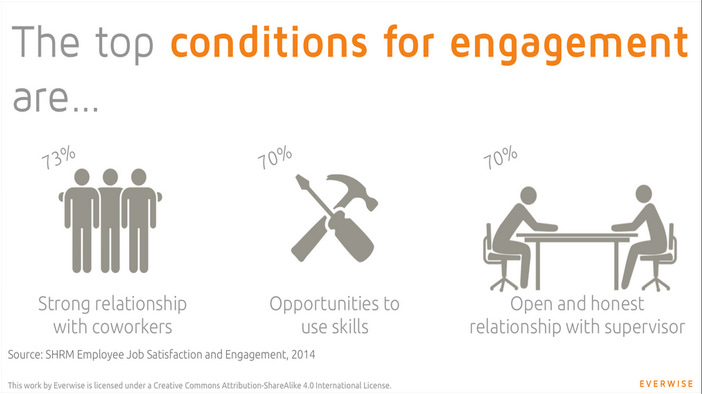
Here are 7 questions every leader should ask about how you are retaining top performing employees. In particular, make certain you ask these questions about your most productive, profitable, and personally fulfilled people, but ideally you consider how well each employee is being retained:
#1 Meaningful Work: How well is the employee's work aligned with their unique work values?
If you are using our MANAGEtoWIN Talent Assessments, then how well are you appealing to their two most intense work values, and the statements they confirmed are the best way to work with them?
When is the last time you reinforced something they did on the job as it relates to their core values?
When is the most recent time you gave them an opportunity to work on something that specifically related to their core values, and did you communicate that when discussing it with them? How did it go?
Meaningful Work is the second strand of 3strands LEADERSHIP.
#2 Strategic Plan: Yes, I am back at this again. Does each person have an employee strategic plan - a job description on steroids - so they are focused on achieving meaningful work?
Did they help write it? Are they staying up with it - goal review weekly, expectations review as needed, but no later than quarterly, and career path review quarterly?
#3 Follow-up: Are you consistently following-up with each employee?
Are they on track with their employee strategic plan? Have you followed-up and followed through, as Frank Ernesto of NDSE would say, on every commitment you have made to each employee?
When was the last time you confirmed you are meeting their expectations as a manager, as defined in their strategic plan? And confirmed they are meeting yours...
#4 Retention Interviews: Have you done an informal retention interview with each employee during the last six months?
This is an offsite coffee meeting or meal, or during a drive to a client or golf game. It is NOT a list of questions to ask and check-off, but is is a crucial check-in to confirm they are fully engaged, their expectations are being met, and they feel part of the team.
Email me if you want my list of sample questions.
#5 Value Them: How have you reinforced each employee is a valued member of your team?
Sincere Gratitude is the third strand of 3strands LEADERSHIP. It is critical that you regularly, properly, personally, and sincerely appreciate your people. Some of this is formal recognition, but much of it is how you follow up with people, encourage them SINCERELY, and compliment them indirectly in front of others.
#6 Incentive Pay: Do your employees have opportunities to earn unlimited compensation based on their performance?
Every employee should have 25% or more of their compensation based on performance. There should be no limits to their pay when they over-perform.
Years ago I was working with Microsoft Dynamics Presidents Club member companies. One of them wanted to hire their first sales person. We discussed compensation. I suggested top performing sales people earn $100,000 or more. He replied, "Oh no, we would never want a sales person to earn that much money. We are thinking more like $60,000."
I do not think their company repeated as a Presidents Club member the following year...
In contrast, at the same time another Presidents Club member was paying a young sales rep in his twenties over $400,000 for blowing his quota out of the water. Why not? The commission plan still made certain the company made its profit.
Sales people examples of performance pay are easy, but everyone should be paid on performance and rewarded generously when times are good.
#7 Proud Parent: Do you have a true story about each employee that boasts about how proud you are of them?
Why not? Let your people hear you speak highly about them and their accomplishments. Do not repeat the same story over and over again, but give them confidence you are a "proud parent."
Think about how much you like it, even when it is embarrassing, when someone you love or admire speaks well of you. Do the same.
If you do these 7 things well as a manager, then you significantly increase your ability to retain top performing employees.
Don't wait. Take Sanctuary time this weekend to answer these 7 questions and act upon your answers. You will be glad you did.
7 Hiring Questions Every Leader Should Ask
Quick stories from hiring I was NOT involved in...
"He didn't act like this in the interviews," my Client complained. Oops... He had hired "Dr. Jekyll" and got "Mr. Hyde."
Another Client hired a tech in another state without meeting him in-person. Weeks later he called the tech to say he and a sales rep would be in the area. Could they stop by and meet? "You better not come by my house. I'll call the cops. You have no right to come anywhere near here. You better not..." Oops...
The candidate was stellar during interviews. My Client warned he would run a background check on him. Is there anything the candidate wanted to alert him to that might come back in the report? "No. Nothing." The report came back that he was a sexual predator, had done jail time, had a DUI, and more. Oops... Thank God for our background check company!
Here are 7 questions every leader should ask about how you hire people, that surprisingly very few people do ask:
#1 Quality of Hire: What type of people do we want to hire?
Most leaders have not defined a standard for the quality of people they are willing to hire. Do they want only top performers, good people, average folks, or just anyone who can fill a seat to join their company? The result is they overlook warning signs of weak performance during the hiring process, and reap the pains later.
#2 Systematic Power: Do we have a clearly defined hiring system, and are we following it every time?
Most leaders have a sketchy hiring process at best, and rely on gut feelings to hire people. Too often the hiring process is rushed, and then you tend to miss warning signs that someone is not a cultural fit or lacks critical technical or soft skills.
#3 Strategic Plan: Have we fully and clearly defined the job?
Most leaders explain a job rather than provide a full written definition. One of our most popular LEADERSHIP Essentials Service is helping Clients develop employee strategic plans for each person's success. These also give you an edge in the hiring process when superstars are considering other offers.
See a sample here. Let me know if you want to discuss how it works.
#4 Promoting Opportunities: How do we promote our jobs so we are attracting people who are not looking in addition to qualified candidates?
Most companies can improve their job promotion activities. Always have open jobs on your website. Promote on LinkedIn, Facebook, and other social media sites. Do you have a system to consider and properly manage interns or recent college graduates? Do you have a network of 50 or more people you can easily contact to communicate new openings? There is more...
#5 Talent Assessments: Do we have a way to confirm the candidate's core work behaviors and values/motivators?
Anyone can hire a person, but shrewd leaders use tools to clearly confirm whether a candidate is a match for the position, get job candidates talking outside of their "first date" script, and test their skills.
Bill Bonnstetter has said, "If a job could talk, it would explain precisely what was necessary for it to achieve superior performance." The problem is jobs do not talk, so we have to do our due diligence.
If you have never tried our Talent Assessments, which most of our active Clients use before they hire anyone, then email me. I will let you experience one for free if you contact me by October 30, 2014.
#6 Background Check: Do we complete a background check on every person before they start working for us?
This is cheap insurance. NEVER hire anyone without a background check. I have lost $1.5 million on a hiring mistake that could have been avoided with a simple $125 background check. Only check people you are hiring, not all job candidates.
If you want a great online background check partner, email me. I will send you the company we use.
#7 No Emotion: Is our employee turnover too high because we are hiring the wrong people?
I have a growing number of Clients who hire me to interview their top candidates before they finalize their interview process.
I give their top candidates our full Talent Assessment plus Summary, interview the candidate, and then tell the Client whether I would hire them, interview them more, or NOT hire them.
Why go to this expense ($499 for one; $399 for a bundle of five)? Because I am not trying to fill a seat and have no emotion in the hiring process, I often catch behaviors and motivators of job candidates they miss. Every time my advice protects them from a bad hire, they save at least $10,000 if not the first year's compensation for the position.
You can order this service on our Talent Assessment page (please use Chrome or Firefox to order - we are having problems with IE).
Ask yourself these questions. Congratulations if your answers are good! But are you and your people consistently living it out? (I hope so!)
Don't wait. Take Sanctuary time this weekend to answer these 7 questions and act upon your answers. You will be glad you did.
The Flawed Rose
After high school my girlfriend, Terry, joined the Ice Follies. (I went to U.C. Berkeley.) In her second year with the show Terry earned a short solo to the music of Second Hand Rose.
She left the show later that year, but in our 37+ years of marriage I have moved from buying her 10 dozen roses her opening night in San Francisco to a single red rose. The single rose is a reminder of our young love.
Last Thursday I was driving through San Francisco and picked up a rose for Terry. Days later it drooped. I thought it was dead. I pruned it, put it back in the vase, and went to bed for the evening. It was full of life in the morning, but that afternoon was drooping again.
I pruned it again, and it revived again. (Does that remind you of some employees?) It began to bloom, but it is flawed. For some reason part of its bloom is missing. In the lower left you can see the brown leaf that is typically only behind the rose. The petals are missing so it shows.
Roses are stunning. They improve a room and brighten people's days. They have a wonderful scent. A rose reminds you of something positive.
QUESTION
What do you do when that "rose" of an employee turns out to be flawed?

- Thorns: Every employee has issues, just as roses have thorns. Period. You can overcome or avoid their thorns when you know your employees primary motivators and preferred behavioral style (our Talent Assessments). Then you can work with them intentionally to reinforce their positive traits and avoid their negative attributes.
- Flawed: Every employee is flawed like this rose. Sometimes the flaws are very clear. Other times weaknesses are hidden for a while... Leaders better engage employees when we focus on strengths and improve weaknesses to a competitive level. Do NOT try to make a weakness a strength. We achieve more with less effort, and our people are happier, when we focus on aligning job responsibilities with their strengths.
- Surprises: This rose is missing part of its bloom. This flaw was hidden from me when I bought it. Our people surprise us too. Any leader can inspire a team when profits are high, our group/company is growing, and people are getting along. GREAT leaders are prepared for surprises and overcome them because they know how their people prefer to work. They help others work together in ways that balance their individual needs, the preferences of others (coworkers, clients, vendors), and the objectives of the company. This means we have to be a 3strands LEADER who is systematically engaging our people in meaningful work as we constantly reinforce sincere gratitude for their contributions in ways they appreciate.
- Prune: This rose needs pruning to thrive. So do our employees. They are not robots or a dog who will sleep 16 hours a day and be happy. Employees need our Systematic LEADERSHIP - consistent engagement to remain focused, grow, and achieve. We have to help them feel good about pruning dead habits, wasted time, and poor behaviors so our people love what they do as much as possible.
- Replace: Sometimes the rose I give Terry lasts a very long time, but at some point it is always time to get a new one. This is not a bad thing. The rose has served its purpose and it is time to move on.
It is a similar story with our employees. At some point they need to move on to something else in life, maybe retirement, but in the meantime we have to work systematically to keep our team fully engaged.
This requires everyone to have clear, measurable goals and defined work behaviors. We always gain when we inspire people as a 3strands LEADER, including having a clearly defined hiring system to hire Dr. Jekyll, not a great actor who turns out to be Mr. Hyde.
Thriving roses. Fully engaged employees. This is our primary responsibility as leaders.
Pruning, Always Pruning
It was February 2000. A large IT vendor agreed to fund my dot com start-up with $10 million. Twenty days later we were ready to go with $2 million in the bank.
The problem was the dot com mantra was "grow fast", and I had already seen first-hand that growing fast is a delicate process and can easily turn into a disaster for a new company. However, they were paying, so we set aside what I had learned and tried to hire and grow according to the IT vendor's strategy for us.
It was not pretty. We made good progress, but also had a few rough setbacks.
One year later the IT vendor shocked us by cutting off the remainder of our funding. Things had changed at their company, they were shutting down their fund.
Again I had been given an opportunity to learn a lesson. Since then it has become clear that growth is good, but a healthy organization requires constant pruning of people, projects, and activities. Cutting away unnecessary tasks and vague objectives are critical to achieving big T.A.R.G.E.T. goals.
Since that dot com turned into a dot bomb I have dedicated myself to developing a more systematic approach to how leaders hire, manage, develop, and retain top performing employees. I am convinced that leaders and organizations who follow this systematic approach benefit immensely. They achieve a strong company culture, provide a superior experience for clients, and maximize profits.
To achieve these objectives requires constant pruning. In gardening, different plants need to be pruned at different times of the year. Here are some ways to prune in your company so you can grow beyond your past and into your potential:
- Start With Yourself. We all have bad habits. Work on better understanding yourself. Identify 1-3 bad habits you have and how to change them. Build it into your schedule. Get help from a coach, mentor, or coworker.
- Refine Your Schedule. What projects, people, or interests are taking up your time, but not producing great results? This can be a constant battle, and it creates a need for constant pruning. Respectfully and professionally start pruning your schedule.
- Evaluate Your Hiring Process. Sometimes you hire people who do not consistently perform at a high level. Zappos now pays $4,000 for a new hire to quit in their first 90 days. Why? It is cheaper to get someone to leave than have to work with a cultural misfit and act like they can be part of their winning team.
- Simplify Your Offerings. You might sell and/or support too many products or services. It's time to consider to selling and/or supporting fewer product lines. Make it worthwhile for your clients to switch to your preferred platforms AND fine tune the specific product offerings within your key solutions. For instance, do not offer 5 good managed services offerings. Instead offer 2 or 3 great ones.
- Streamline Communication. Try harder to communicate briefly via email, notes, or text. It's best to compose an email that is short and concise, even when referring to a complex subject. Instead, save those lengthy, detailed discussions for a verbal conversation. Take notes if necessary, then move on to the next task.
- Adapt Your Communication. In addition to keeping things brief, you will save time and build stronger relationships when you adapt your communication style to the preferred communication style of the other person, AND appeal to their values, not yours. This is the basis of our Talent Assessments and a major reason they are so popular.
I could go on, but then I might need to prune this blog post... :)

L.E.A.P.S. Forward
Leaders ask great questions, but are also careful listeners.
This is a skill we need to teach our employees. Our Leadership Essentials Academy has Dave's Charm School (and other team members) training to develop questioning and listening skills. However not all of you are members.
Leaders ask great questions, but are also careful listeners.
This is a skill we need to teach our employees. Our Leadership Essentials Academy has Dave's Charm School (and other team members) training to develop questioning and listening skills. However not all of you are members.
Recently I was interviewing a job candidate for a Client and he had a background in the U.S. Coast Guard. He mentioned they had an acronym in an Effective Communications course to remind him how to be a great listener - L.E.A.P.S.
He said L.E.A.P.S. was explained online and I asked him to send me the link. It is an interesting document that is very consistent with what we teach. Here is what the L.E.A.P.S. acronym stands for:
Listen to the message received carefully and attentively. Keep an open mind to what is being said and don't be quick to offer advice or solutions.
Emphasize by acknowledging the emotions that are being expressed. It is very important to receive the message without judgment about the sender or the message sent.
Ask questions in order to get more information and to clarify information you do not understand.
Paraphrase what the person has said to ensure you understand the information correctly.
Summarize by restating the situation with all the facts to clarify the role, problem or behavior.
Here is the link to the entire U.S. Coast Guard summary document about effective communications.
IMPORTANT ENCOURAGEMENT: Do not feel bad if you were not born with these skills or taught them as you were growing up.
Great questioning and active listening skills are learned, developed over time, and applied with discipline. Take the time to learn these two skills and you will be a better leader.
Meeting Ideas
I encourage you to have your team read the U.S. Coast Guard document on Effective Communications and have an open discussion about how to improve in these areas.
Learning Insights: Ask each person to share what they learned from reading the Coast Guard's recommendations.
Strengths: Ask each person to explain their strengths in the areas of asking questions and active listening. Ask the others to confirm their assessment and/or identify other strengths of the person in these areas. Ask the person how they could question and listen even better. Then ask the others if they have any suggestions for the individual to improve.
Weaknesses: Ask each person to explain their weaknesses in the areas of asking questions and active listening. Ask the others to confirm their assessment and/or identify other weaknesses of the person in these areas. Encourage everyone to speak respectfully. Ask the person to identify simple steps they could take to question and listen better. Then ask the others if they have any suggestions for the individual to improve.
Typical Scenarios: Prepare at least five typical scenarios your team faces on a regular basis where better questioning and active listening skills will help them achieve more in less time, and enjoy their work more. HAVE FUN posing the typical scenarios to the group and having them share their ideas on great questions to ask and key information to listen for in the answers.
As an alternative, you can pair people up to go through each typical scenario. After they complete one typical scenario then each pair of people shares the results with the rest of the group.
Day 126 | Why Do They Join...
When people join your company for a long-term career instead of a short-term job they often join because they believe your mission offers them meaningful work, or your vision is aligned with where they want to grow in their career, or your values are consistent with their beliefs.
Why do they stop performing well?
- Their relationship with their manager, or others, is poor.
- Their expectations (#1-3 above) are not met.
- You hired Mr. Hyde instead of Dr. Jekyll.
What can you do about it?
- Demonstrate Systematic Leadership - be consistent, but not consistently bad.
- Inspire them with Meaningful Work - work that appeals to them.
- Regularly express Sincere Gratitude for their contributions.
It is Monday. ACCOUNTABILITY TIME!
- Did you take Sanctuary time over the weekend to improve your focus?
- How did you do on your 3Strands last week?
- Have you defined your 3Strands for this week?
- By 9:00 a.m. this morning you should have 3Strands emails from each of your direct reports.
Stay on track.
Fire All of Them
Let me build on something you have heard before, but have not recently taken the time to fully consider over a cup of hot chocolate, coffee, tea or a healthy smoothie...
Here is what you need:
- A list of all your employees
- Their written 2014 goals
- Your answer to this question: If I fired every one of my employees, who would I be excited to hire back?
Then you have to ask yourself two additional questions:
- How much is it costing me monthly to keep the people I would NOT hire back enthusiastically?
- Is the problem the employee(s), or me, or both?
Take 30-60 minutes to do this exercise today or over the weekend. You will be glad you did. If you need help confirming letting someone go is the right decision, how to put them on a performance improvement plan, or creating a better environment that hires superstars and motivates people to perform their best... contact us. We can help.
It is Friday. ACCOUNTABILITY TIME!
- How did you do on your 3Strands this week?
- At the end of today or at least before 9:00 a.m. Monday take Sanctuary time and hold yourself accountable to this week's 3Strands and define your 3Strands for next week?
Stay on track.
5 Steps to Avoiding a Recruiting Nightmare Webinar
Here it is in case you missed it! Our first webinar of the year was on January 14th with Todd Billiar of VARstaffing and CEO David Russell.
To receive reminders about future webinars, subscribe at the top right.
What Irritates You Most?
A standard interview question I ask is, "What irritates you most when working with Clients?"
This can give you great insights into a job candidate, but also it is a great question to ask your employees on a regular basis. And don't let them blow the question off. Drill down to candor...
McLane Intelligent Solutions is an extremely well-led organization in Temple, Texas with a strong company culture. They are members of our LEADERSHIP Essentials Academy and I interview their top candidates as part of their hiring process after they complete our Talent Assessment Service.
Recently I was speaking with a person interviewing for a help desk position with McLane. He had served in the military for 11 years and done three tours of duty. I asked, "What irritates you most when working with Clients?"
He paused, and then replied, "I just take it in stride. They are paying and so you just... I don't take it personally. It is what it is. I help irritated people all the time."
Think about it: He did not say it, but there is a strong possibility that after all he has experienced during 11 years in the military and 3 tours, someone upset because their computer is not working is nothing by comparison. This guy has perspective, a rare trait in many people today.
Are you hiring superstars, or just good people? This is a decision you have to make, and then a discipline you have to follow consistently. My conclusion at the end of our complete interview is that this gentleman is a superstar for McLane.
I suggest you consider asking this question often.
And do not forget... TODAY IS FRIDAY! A basic part of an Accountability Culture is consistently completing your weekly 3Strands so you are making regular progress on your most important 2013 goals each week.
Do not forget to hold your people accountable too.