

Your people problems? Gone.
The 4 Management Disciplines Newsletter delivers proven ways to be your best and lead a championship team.
Every championship sports team runs proven plays.
Every Monday morning - I give you four proven plays great leaders use to solve problems in how you Hire, Manage, Develop, and Retain great people.
2 minute read. No fluff. No ads.
Trusted by over 10,000 leaders.
NOTE: David is no longer writing this newsletter. Visit www.simpleliberty.com to read his latest posts.
All Newsletters

How to put expectations in writing
Last week I explained how to better hit your TARGETs in 2018. Today is the 2nd of my 4 secrets to make next year, your best year.
A major problem in the workplace is assumptions are made between coworkers, and between bosses and their direct reports.
Last week I explained how to better hit your TARGETs in 2018. Today is the 2nd of my 4 secrets to make next year, your best year.
A major problem in the workplace is assumptions are made between coworkers, and between bosses and their direct reports.
The bad habit of making assumptions wastes time, increases conflict, and causes setbacks.
My Expectations exercise is an adaptation of a process developed about 20+ years ago by leadership consultant and author, Jud Boies, a friend of mine.
Written Expectations define how a professional relationship between individuals, individual and team, or between two teams will work.
Here are three ways writing effective Expectations and its execution is similar to baking a cake:
1) Recipe: You need a proven, easy-to-follow recipe to bake a beautiful cake that tastes amazing. The recipe replaces assumptions and guesses with a step-by-step process that define clear measurements. Similarly, my Expectations Guide has 15 examples and explains the process of writing and following-through on expectations shared between two or more people.
2) Mix & Bake: Following a sequence to get things done is often overlooked and steps are skipped in a rush to get to the final product. This results in poorly baked cake. Similarly, you must follow the process when writing and following-up on Expectations with others.
3) Enjoy: When baking a cake, you set the oven temperature and time to cook it. Otherwise the cake does not rise properly, or is under/overdone. Similarly, set a schedule to agree upon mutual Expectations with your partner/colleague/friend, and stick to it. If you do this consistently, your relationship will "rise" positively as expected.
When writing expectations, you can:
- Describe tangible things you need from the other party to be more productive. This might include properly working equipment, reports, and other items that resolve recurring problems.
- Define how you expect the other party to behave in your work relationship. Your list should be more than just negative behaviors that you expect the other person to correct. Make certain your Expectations also reinforce the behaviors you appreciate and want the person to continue to demonstrate.

The Bottom Line
Do not assume the other person knows how you want them to behave. Define the behaviors you need from them to perform your best.
There is more to learn. Download my free Expectations guide. You will not only define your goals more effectively, but achieve them faster.
Email us if you need help.
Why accept anything less than the best you can be?
P.S. Next week I will share my 3rd secret to make next year your best year. It is a great reminder that you get what you expect.
P.P.S. We now have only 4 openings left in our Certified LEADER class beginning the week of January 8th! Learn more here.

What's the ONE thing for great leadership?
Deloitte says high leadership maturity leads to 37% higher revenue.
QUESTION: How effective are your leaders?
What's the ONE Thing that develops your young or less effective leaders to "high leadership maturity?"
Deloitte says high leadership maturity leads to 37% higher revenue.
QUESTION: How effective are your leaders?
What's the ONE Thing that develops your young or less effective leaders to "high leadership maturity?"
TRAINING
Check out some of the key benefits of high leadership maturity from Deloitte:
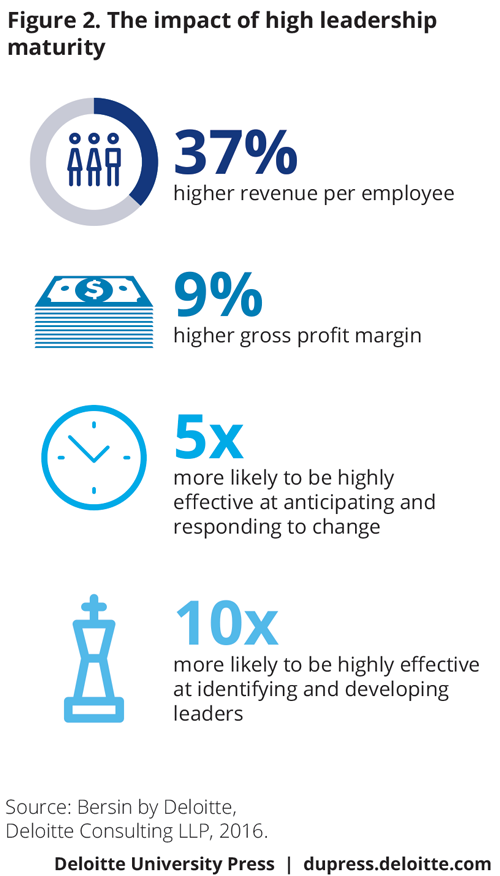
Consider the cost of doing nothing, versus the benefits of developing your leaders...
We have a unique solution for I.T. managed service providers: Our Certified LEADER program that begins the week of January 8. Learn more here. There are still a few openings, but not for long...
Poor performing employees are the result of leaders with bad habits.
Improve your leaders to increase employee productivity and engagement.

Set 2018 TARGETS now
2018 is one month away. In the next 4 weeks you can learn my 4 secrets to make next year, your best year.
Let me start with goals, which I call TARGETs.
2018 is one month away. In the next 4 weeks you can learn my 4 secrets to make next year, your best year.
Let me start with goals, which I call TARGETs.
T.A.R.G.E.T. goals (a "TARGET" or "TARGETs") are clear, measurable objectives with due dates that are pursued systematically to completion with encouragement, assistance, and accountability.
The acronym T.A.R.G.E.T. helps you write a clear, measurable goal with a due date in a sentence that everyone understands. Here is a quick overview:
T To (the preposition)
A Action verb
RG Realistic Goal to be achieved
E Effectively measure whether the goal has been achieved
T Time or date for the goal to be completed
TARGETs are consistent with the SMART method of goal writing, however, TARGETs are easier to write because the acronym TARGET defines how to write the objective in a sentence.
Here is an example of a clear, measurable TARGET:
To increase consultant utilization rates to 78 percent for the quarter.
To begin: To
Action verb: increase*
Realistic Goal: consultant utilization rates
Effective measurement: to 78 percent average
Time bound: for the quarter.
ADVICE: Drop the "To" at the beginning of the sentence after you define the TARGET. Starting a TARGET with an action verb challenges people whenever they read it. For example, the TARGET above becomes:
Increase consultant utilization rates to 78 percent for the quarter.
ADVICE: Do not write goals negatively. For instance, the TARGET above could be written as a negative: Do not allow unbillable time to exceed 22 percent average for the quarter. Instead, always develop your TARGETs to emphasize a positive contribution.
NOW LET'S MAKE IT FUN
A target in competitive archery has 10 evenly spaced concentric rings with values of 1-10, plus an "inner 10 ring" or "X ring" in the center. Striking the inner 10 ring is considering a "bullseye." Scoring values equal the number of the ring you strike. For instance, hitting the 3 ring, the third ring in from the outside, is valued at 3 points.

For our purposes we define TARGETs as:
Bullseye: Start by defining an important, clear, measurable, time-bound TARGET.
Inner Rings: List the 1-5 metrics, tasks, and/or milestones that lead to achieving the bullseye TARGET.
Outer Rings: If you want, add 1-5 metrics, tasks, and/or milestones that lead to achieving an inner ring, and ultimately the bullseye.
Here is an example:
Configure a server without errors on my own by October 30
- Gain manager-defined experience with server administrative duties quarterly
- Study four or more hours towards my certifications weekly
- Share something I learn in my certification study with my team weekly
- Achieve Microsoft MCTS: Windows 7, Configuration by end of Q2
- Achieve SonicWALL Security Administrator (CSSA) by end of Q4
- Actively participate in applicable Company-sponsored training activities
The TARGET: Configure a server without errors on my own by October 30.
Inner Ring example: Gain manager-defined experience with server administrative duties quarterly.
Outer Ring example: Study four or more hours towards my certifications weekly.
There is more to learn. Download my free TARGETs guide. You will not only define your goals more effectively, but achieve them faster.
Email us if you need help.
Why accept anything less than the best you can be?
P.S. Next week I will share my 2nd secret to make next year, your best year. It is a great reminder that you get what you expect.
P.P.S. We still have a few openings in our Certified LEADER class beginning the week of January 8th. Learn more here.

How the best stay focused
If you are flying one degree off-course you miss your target by 92 feet for every mile flown. For every 60 miles of flying you are one mile off your target.
That is just one degree off...
How do you stay on track to achieve your most important TARGETs, objectives, goals?
If you are flying one degree off-course you miss your target by 92 feet for every mile flown. For every 60 miles of flying you are one mile off your target.
That is just one degree off...
How do you stay on track to achieve your most important TARGETs, objectives, goals?
Sanctuary
Lee Iacocca led an effort that saved Chrysler Corporation from bankruptcy decades ago. One of the leadership disciplines he credited for helping achieve that success was every Sunday evening he would separate himself from the family to spend two hours in his study.

He was alone. No interruptions. No email. He held himself accountable. Being inspired by Iaccoca, at the end of each hunting season (week) we should do a simple three-step accountability process:
- Score: Did I accomplish my weekly WIN this past week?
- Help: Where do I need help, or to make adjustments to stay on track? This can be tasks, people, resources…
- Hunt: What should be my key objectives ("WIN") for the upcoming week?
Achieving TARGETs is primarily a function of (1) Focus; and (2) Time management. Therefore the best thing you can do is to have a weekly time to focus yourself. I call this time, Sanctuary, because it is without interruptions. (You have to make it that way.)
There can be daily and weekly times of Sanctuary.

Hit your stride and build into 2018
Have you ever considered that you are in a race? The longer you wait to enter the race, the farther others are ahead of you.
No comprende? Let's try it again: Professionally, you are in a race, whether you like it or not. The truth is, others are ahead of you.
Have you ever considered that you are in a race? The longer you wait to enter the race, the farther others are ahead of you.
No comprende? Let's try it again: Professionally, you are in a race, whether you like it or not. The truth is, others are ahead of you.
Reality can be depressing.
However, there is light amidst our darkness. Some of your competitors left early, before the "starter's gun." Therefore they may be taking a path that leads to a different destination, one that accomplishes less than your vision.
Or they are not headed to your destination at all.
Technically, they are ahead of you, but that may not matter.
Also, each individual or team with whom you are competing has a different combination of strengths and weaknesses than you, and your team have.
Toe-to-toe or head-to-head, you may have an advantage.
However, this is only true if you get in the game. Procrastination is quitting before you play. Are you going to play, or procrastinate?
Often the difference between a winner and an average player is the winner got started, while the average player waited too long.
2 Months To GO - What's Your Plan?
Remember all that leadership stuff you wanted to do at the beginning of 2017, and how you wanted to address the toxic areas of your company culture?
How much progress have you made?
Now with two months left in 2017, what should you do?

ONE SOLUTION: Take a "Goldilocks approach" to address any disease infecting your leadership team and company culture during November-December 2017.
#1 - Do not go too slow
Yes, you need to have knowledge before you act.
However, knowledge without action achieves nothing. Often, it is actually a setback because it leaves you vulnerable to negative impact of your organization's (or personal life) disease(s).
Gather enough information about your most critical issues so your actions are focused on healing your true diseases, rather than distracting, emotional dramas.
#2 - Do not go too fast
Yes, you need to take action.
However, action without knowledge can cause more problems.
Prioritize the issues you want to address, clearly, specifically, and with deadlines. Create clear TARGETs in a simple one-page plan.
#3 - Goldilocks speed
Balance the research you need to do to confirm the most critical issues and timelines for resolution, with a clear, all-in commitment by your entire team to change.
Start your work now so you have momentum going into 2018. This gives you the opportunity to make next year, your best year ever.
Isn't that what we all should want?
Everybody wants to win, even though we may have different definitions of a "win." Vince Lombardi said, "Winning is a habit." Life proves that lesson to be true.
Build better habits so you can be the best leader you can be, employees can have fulfilling careers, and your clients are thankful for your services.

Simple, Sticky Deadlines
What percentage of the time do you hit your deadlines?
How about your coworkers, or direct reports?
A survey once concluded 75% of the reason I.T. projects fail is missed deadlines. How about your work?
What percentage of the time do you hit your deadlines?
How about your coworkers, or direct reports?
A survey once concluded 75% of the reason I.T. projects fail is missed deadlines. How about your work?
SIMPLE SOLUTION
Step #1
Define the outcome / deliverable / task / goal... in a clear and measurable way. (My TARGET method can be downloaded here.)
Step #2
Ask each person responsible for an outcome to define the day and time of day they will deliver.
Why include time of day? To avoid assumptions. i.e. Ruth may say Friday is her deadline. Frank thinks "Friday" means 8:00 a.m. on Friday morning. Ruth means midnight on Friday... avoid the drama!
Step #3
After the conversation, confirm details and deadlines via email. (Require a response confirming receipt and agreement.)
Use attachments for lengthy copy. No long emails...
Step #4
1-2 Days before the deadline, other team members or a leader may email (paper trail) or verbally ask (soft touch) the person under the deadline:
"Is there anything you need from me to complete (the outcome) by your deadline on _________?"
You are NOT contacting them with threats, negativity, or to play "whack-a-mole."
Use a polite, respectful tone of voice, audibly or written.
Be sincere. Be brief. Be gone.
If they ask for help, then follow-through with excellence and no complaining.
Make it safe for people to ask for help.
If people need help twice in a row or more, then something is wrong with your process, expectations, and/or their skills.
Do something to help them.

Teach them how to better estimate deadlines and manage their time. Adjust their workload. If at this time they should have the knowledge, skills, and experience, then hold them to higher performance standards.
If they should be able to match the consistency of your timeliness, but cannot, then it may be time to encourage them to find work elsewhere.
Or, if there is a problem with your example - you are the role model - then come alongside them and improve your time management skills together.
LEADERSHIP Lesson: Do not tolerate late work as being typical. It negatively affects others, and results. Use Systematic Power to follow-up with Sincere Gratitude for the individual to improve timely performance and WIN.
I hope your 4Q is strong and 2018 bright!

Are you toast?
It's another morning. Whether you bless it, or curse it, today has arrived! Some people fight the day plus each person, opportunity, and nuance that comes their way. That's no way to live your life.
Let me take you on a journey from toast, to aikido principles, to better leadership.
It's another morning. Whether you bless it, or curse it, today has arrived! Some people fight the day plus each person, opportunity, and nuance that comes their way. That's no way to live your life.
Let me take you on a journey from toast, to aikido principles, to better leadership.
Toast
We can have toast in the morning two ways: With negative energy or positive energy. Let's say, "Neville" has negative energy and "Pam" has positive energy.
Neville and Pam both enjoy toast in the morning as part of their breakfast. They want to butter their toast immediately when it emerges from their toaster. This melts the butter so they can savor the warm, buttery toast to start their day.

However, today, they forgot to put out the butter the night before, or at least 30 minutes before they need to eat. Instead of soft butter to spread on their toast, the butter is hard.
Neville grumbles and chops chunks of butter, one at a time and tries to butter his toast. The hard butter flips over rather than spreads. The hard butter tears the bread. The end result looks more like a battlefield than a tasty treat.
Neville fights the negative situation. He leaves his breakfast frustrated, not looking forward to his day.
Pam takes a different approach.
She redirects the negative situation by slicing pieces of butter as thin as she can and lays them on the toast to melt the butter with the heat of the hot bread. After the butter melts a bit, then she spreads it out Goldilocks style: Not too much so it is dripping butter and unhealthy, not so little that some parts of the bread are left naked without butter, but just right, covering the toast fully and evenly.
Pam redirects the negative to create a positive. The result is a treat to enjoy, and optimism to step forward into her day.
Aikido
Rob Schenk of Intivix is a black belt in aikido. You can hear us talk about this on our No Bad Bosses podcast. You might want to consider Rob's application of aikido in leadership to redirect negative energy and increase positive results.
Similar to Pam's approach in my simple toast example, the principles of aikido are demonstrated by great leaders who do not directly block or resist an attack or negative energy.
Instead, through training, these leaders develop habits to blend into the situation rather than try to be a wall against a flood, then they instinctively assess the threat and calculate the effect of different responses they can take to control it. Lastly, they redirect the energy away from themselves and their organization.
Jesus redirected the negative energy of demons controlling two men in Matthew 8, redirecting the demons into a herd of nearby pigs. He had the power to directly confront them, but in that situation he taught others to redirect the negative energy.
Life is a constant experience of mental, emotional, spiritual, and physical attacks. Aikido principles of centered response, utilization of energy, and nonresistant redirection can be applied by leaders to each of these situations.
Instinctively you may want to strike back or take another approach to block the force of an attack. This may or may not be effective, but it always depletes your positive energy.
One problem with this approach is the Law of Natural Reciprocity. This is our natural tendency to match someone else's behavior.
Positive Reciprocity: Someone does something good to you, and you feel obligated to return the favor.
Negative Reciprocity: Someone is mean to you, and you want to "get even" because you feel hurt.
Choosing negative reciprocity often wears you out, to a certain extent.
Better Leadership
In contrast, the principles of aikido teach leaders how to respond rather than react to an attack. A leader does not strike back or otherwise attempt to block the force of the attack.
Instead, you shift slightly off the line of attack and move towards the incoming energy to unite with the attacker's power. You connect to control the direction and momentum of the attack, and then redirect the negative energy to a place where it cannot harm you.
In some ways the aikido approach is similar to using active listening to defuse an angry person. Here is a quick walk-through of active listening ("LEARN") that I wrote based on something from the U.S. National Guard:
Listen to the message received carefully and attentively. Keep an open mind to what is being said and don't be quick to offer advice or solutions.
Emotions speak louder than words. It is important to discern the other person's emotions as well as the information they are conveying without initially judging the sender or the message sent.
Ask open questions (what, why, how) to discover issues and closed questions (who, would, where) to clarify details.
Repeat back key parts to summarize what you heard, and confirm you understand the information correctly. Relate correction or issues to "Bad Cop" standard(s). Reinforce how you will help them ("Good Cop").
Next steps are confirmed, if any.
See if you can apply this to a tense situation you have had recently, or experience today. This might be an opportunity to develop a new, powerful leadership skill based on ancient wisdom and proven practices.

3 Insights from my friends in Sisters, Oregon
Our family moved back to Novato, California, just north of San Francisco on July 30th. We had tried living in Sisters, Oregon since mid-January. It turned out we were too optimistic about our ability to see our three grown children and five grandchildren from there. So... we came back rather quickly!
Our family moved back to Novato, California, just north of San Francisco on July 30th. We had tried living in Sisters, Oregon since mid-January. It turned out we were too optimistic about our ability to see our three grown children and five grandchildren from there. So... we came back rather quickly!
I miss three things about Sisters, although there are other aspects I enjoyed:
- Space - There are no traffic lights, and only one (new) roundabout in Sisters. The biggest road is in nearby Bend, and it is only two lanes each way. Traffic issues are rare, and mainly due to summer events in Sisters. There are workarounds.
- Sisters Coffee - In my opinion, Sisters Coffee is the most wonderful coffee shop on earth. It is a great meeting place for all, and can compete with any Starbucks for customer traffic, but has better coffee and treats. The fresh-cooked, Rainshadow Country Breakfast is superb, and only outclassed by the attentive, sincerely smiling, warm people who serve you.
- People - Most importantly, I made four friends in Sisters whom I hope to have for a lifetime - Jerry, Mark, Pete, and Kevin. (I had more time with Jerry and Mark.)
My friends shared their wisdom with me. I got dozens of ideas. I always felt like they gave me much more than I gave them. Some advice or sharing of stories was personal, and many combined how to make better personal and business decisions.

Let me share three key insights in hopes they spark a new perspective or habit in you.
Clarity
I asked each of these guys how to hear God more clearly in my prayers and throughout each day. Bill Hybels calls these voices or nudges, "promptings." None of them used that term, but each shared what they had learned in their journey.
Jerry shared a perspective that really stuck with me: At any given time we have three voices in our head trying to tell us what to do. The trick is discerning which is which BEFORE we take action. Here is how to recognize each of them:
The Devil
The message is evil in any way. Rebuke and remind him that he has no authority in my life.
Yourself
If selfish, then repent (humble myself before God and admit my mistake) and move away.
Holy Spirit
If the thoughts are full of grace and truth, then it's God. Whatever that voice says, you listen and obey as fast as you can.
Decisions
Once you have discerned what to do, then what? It seems easy, but too often many of us procrastinate or get distracted by the next shiny object that flutters across our path.
Pete advised, "When you receive your answer you have to act on it." He referenced an ancient text from James (1:5-6) which encourages you to ask, believe the answer, and not doubt.
The text touched me so much that I extended it to start at verse 2 and continue through the first part of verse 6. I review this regularly. Interestingly, I shared James' advice with someone last week.
Consider it pure joy, my brothers and sisters, whenever you face trials of many kinds, because you know that the testing of your faith produces perseverance. Let perseverance finish its work so that you may be mature and complete, not lacking anything. If any of you lacks wisdom, you should ask God, who gives generously to all without finding fault, and it will be given to you. But when you ask, you must believe and not doubt, because the one who doubts is like a wave of the sea, blown and tossed by the wind. (NIV)
I added the boldface to share part of the reason this teaching appeals to me. We all make mistakes. Many of us have difficulty letting go of past mistakes due to our high standards. I love the reminder that God does not find fault, but gives generously. Kevin Finkbiner of New Life Petaluma also encouraged me with this teaching last year.
There is a lot more there too.
(1) We will always face trials, not we might have difficulties
(2) When we push through trials we develop the skill of perseverance (or I prefer the word, "tenacity")
(3) Challenges might not be fun, but they are necessary for growth
(4) Eventually we may not have everything, but we can lack nothing important
(5) We can ask God for wisdom
(6) God answers prayer when we believe and not doubt, and lastly
(7) Doubts are the essence of an un-meaningful life
We must believe in something to thrive in this life.
Jerry reinforced this in another conversation when he shared that nothing good in life comes without pressure.
However, too much pressure is a pressure cooker, or broaster oven. A pressure cooker or broaster can create great food, but if you leave the food in too long it explodes.
This is a good analogy about procrastinating too long after getting an answer...
Relationships
Mark shared and demonstrated how he builds and sustains relationships. Do you do any of these regularly?
(a) Mark meets with his lovely wife, Sheila, most work afternoons about 4:00 p.m. at their home to have freshly ground Sisters Coffee, sit at opposite ends of a window seat, and share what happened in their day. They have three girls, and the last one is about to go off to college. This is a bit easier as empty nesters, but still, it all comes down to our priorities... doesn't it?
(b) Mark and I met at Sisters Coffee, 8:00 a.m., every Tuesday that we were both in town. No agenda except to deepen our friendship... even after Mark learned in March that we would not be staying in Sisters.
(c) Someone else told the story of how Mark passed a guy on the road near his mother's home who was living on public land in a trailer last winter. Something about the guy struck him as kind of odd.
The following day Mark gave him a ride and learned his story. He then returned with Judah and Bob, buddies from Westside Sisters, to use his mother's John Deere tractor and snow shovels to find the guy's vehicle, dig him out, and fix him up with some necessary supplies.
There was another time during a Giving Tree event before Christmas 2016 when Sheila, the girls, and Mark came across a homeless woman living in her small RV under a pile of snow and did the same for her. Dug her out, started her vehicle, charged her batteries, trained her on how to use the motorhome, got her some clothes, and took her to his mom's where she could shower and stay a few days.
PAUSE and think about that.
What would America, and this world be like if we all shared Mark's empathy and willingness to serve others?
Mark is not the only person who does this type of thing, and he would not boast about it. However, these two stories are good reminders that most of us could better notice people in our community who have sincere needs and give them an occasional hand up.
Mark and Pete helped us pack our truck to move back to California. It brings tears to my eyes. Jerry, Mark and two other guys helped us unload on one of the coldest days of this past winter - January 13. (I feel badly that I can't remember the other two guys' names.)
Jerry stayed outside the entire time in sub-freezing weather, unloading a fully packed 26' truck, 20' truck, a Suburban, and Toyota Sienna van. He prayed over every package as Mark, myself, Jeff our son, Ted his friend, and two friends of Jerry's worked inside or outside to get through it all. I sure miss those guys...
(d) Last example of how Mark lives his life: Mark believes in memories. He and his family enjoy Lake Shasta for a week each summer with one or more other families. They regularly do other trips together.
My favorite activity of Mark's: He, his buddy Todd, and son-in-law did a "trifecta" in early June - In the morning they snow skied on Mount Bachelor; midday they played 9 holes of golf; and to close out the afternoon, they went waterskiing on the Prineville Reservoir.
Mark reminded me that to have friends and be close to your spouse, you have to invest time with them doing fun and/or meaningful things.
Don't let the busyness of life crowd out the joy of life.
I got to know my last Sisters' friend, Kevin, just before leaving. However, I hope he joins my buddy list for years to come. He's a special guy too.
3 Voices... 3 tips for today.
I hope something here gave you inspiration to try something different in your personal and/or professional lives prior to year-end.
Be comfortable with positive change and uncomfortable with drudgery.
Choose joy, because you can.

7 Choices in less than 10 seconds
These writings are an exception to my typical style. Nevertheless, I have met many leaders who need to commit to change. These inspirations I received may help you.
These writings are an exception to my typical style. Nevertheless, I have met many leaders who need to commit to change. These inspirations I received may help you.
Here are 7 Choices you can consider in less than 10 seconds that will make you a better leader:
- Feel the progress, not the pressure.
- Choose to compliment, not to condemn.
- Apply past lessons to succeed now, not to believe the lie of never.
- Break your chains. Cross your chasm. Be the positive agent of change (you were designed to be).
- "... If any of you lacks wisdom let them ask of God, who gives to all without finding fault, and it will be given to them."
- "... but they who ask must believe and not doubt..."
- You can do it.
Month 7 of 12 is almost gone for 2017. Make a course correction now if it is needed.
Buddy-up if you need help, with me or someone else you trust.
Make the most of 2017 before this window closes.

Passion & Audibles
It's another day in the trenches... Picture this: You are on the line of scrimmage playing professional football against some incredibly large human beings.
They want to hurt you.
It's another day in the trenches... Picture this: You are on the line of scrimmage playing professional football against some incredibly large human beings.
They want to hurt you.
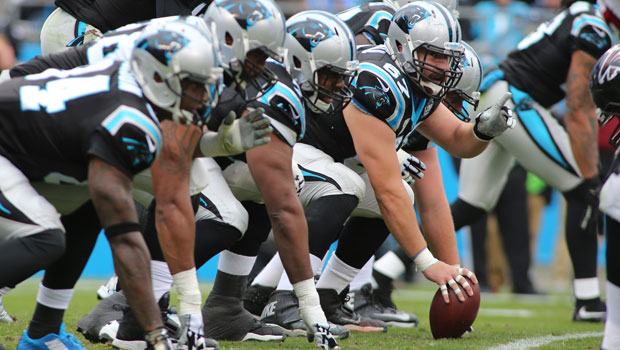
You know the play. You can visualize what you need to do, and the outcome. But something else has your attention. The play you are supposed to implement has drifted into the background of your thoughts.
Instead of focusing on what you're supposed to do, you are distracted by the sound of, or waiting for, an audible. (An audible is a change of the play at the last moment by the quarterback.)
The audible is:
The idea that just came to you...
A Client "emergency..."
An employee who needs your attention...
A family matter...
That cool new...
Do you ever have a problem with focus? Here is a simple test for how focused you are:
Do you spend 2-4 hours a day doing the one thing that will grow your organization the most? If we are candid, most will admit "no." I'm not consistently there yet, but much more often this year.
If you're answer is no, then why not? Because we get distracted with our wants, our wounds, and the words of others that beat us down, berate for help, and block our ability to focus on what is truly most important.
Yet, if we just paused and reflected, we know what to do. Forget the audible! Get back on track. No excuses. We do not have time for excuses.
If you truly want to be your best, then your best time needs to be focused on what you do best that is related to your passion.
What if you lost your passion?

Here is a simple process to rediscover your passion:
- Take a break. Get away to think.
- Consider what excites you most about what you do today. Can you identify how to do more of that? If not, get advice from people who will give you the hard truth. Not people afraid to hurt your feelings.
- If nothing you are doing today really is a PASSION, then you should know what that passion is. Identify it. Cultivate it. Develop a plan to transfer your career to it.
Then do this...
"If you think you are beaten, you are
If you think you dare not, you don't,
If you like to win, but you think you can't
It is almost certain you won't.
If you think you'll lose, you're lost
For out of the world we find,
Success begins with a fellow's will
It's all in the state of mind.
If you think you are outclassed, you are
You've got to think high to rise,
You've got to be sure of yourself before
You can ever win a prize.
Life's battles don't always go
To the stronger or faster man,
But soon or late the man who wins
Is the person WHO THINKS THEY CAN!"
Walter D. Wintle (Quotable Quote)
Life is too short to be stuck in the Doldrums. (See geographic definition, or my favorite, from The Phantom Tollbooth.)

Avoid the audibles, unless it is protecting you from risk. Don't just find your passion, cultivate it. That's where the deepest joys and greatest laughter resides.
Enjoy the journey.

Who ya gonna call?
I'm working on my next book which details my hiring system. Here is an excerpt:
Who you add to your team is critical to your success. After you get the best people then you have to manage, develop, and retain them. But you have to start with the right ingredients to get a great outcome.
I'm working on my next book which details my hiring system. Here is an excerpt:
Who you add to your team is critical to your success. After you get the best people then you have to manage, develop, and retain them. But you have to start with the right ingredients to get a great outcome.
Look at it this way: If you have the greatest invention in the world but do not have the best people to develop, sell, deliver, and support it, then other advancements will pass you by. If you are incredibly wise and an expert with unique ways to transform the world, but do not have a great team to help reach your audience, then your wisdom will probably die with you. If you have the strength to work harder than anyone else, and the persistence to overcome any obstacle, but do not have a great team to help you expand beyond your individual limitations, then you will gain nothing.
Sports Illustrated online recently told the story of the Golden State Warriors after they lost the NBA championship in 2016. They were ahead of the Cleveland Cavilers 3-1 after Game 4, but then lost three straight games and ultimately the title.
The team was deeply disappointed and quickly left Oracle Arena, except for Draymond Green. Rather than sink into depression, Green was working on a solution.

Green was texting Kevin Durant, a great player whose contract with the Oklahoma City Thunder was being negotiated.
Now, Draymond Green is not a "perfect" employee. He is a great player, but his emotions on the court often draw technical fouls.
However, Warriors Head Coach Steve Kerr works diligently with him because Draymond is a team player and performs well in critical situations. More importantly, Green is smart. He had been talking with Durant for months. This was not an emergency call to beg. He had been building the relationship with Durant in advance.
The Warriors signed Durant. This year the Warriors again were ahead three games to one against the Cleveland Cavaliers in the NBA Championship, but in 2017 they won.
The takeaway is this: It is important to Hire the Best. Do not begin a hiring process without having a goal of hiring the best possible candidate.
You need the best people on your team to win your championships.
Who are you going to call / invite to join your team?Don't miss the fact that a PLAYER on the Warriors was the catalyst for a strategic hire who enabled them to beat the Cavaliers in the 2017 NBA championship and be labelled a potential dynasty.
Employees in strong organizations constantly recruit because they want other superstars to join them.
Hiring is just one of the few critical systems your organization needs to master. I hope to give you a proven system for how to Hire the Best with my next book. Stay tuned...
------
In the meantime we would love to help you hire and interview job candidates. Our team has saved Clients millions in losses, and enabled greater revenue growth by providing unbiased advice on whether that person you want to hire is a great actor, or a true superstar.
Contact us if you want help hiring the best.
3 Questions for a Leader
Here is a simple test of your leadership skills. I suggest you not only rate yourself, but ask 3-5 people who have the strength to be candid how they would rate you. Please do not request feedback from people who tell you what you want to hear or lack the guts to tell you the truth.
Here is a simple test of your leadership skills. I suggest you not only rate yourself, but ask 3-5 people who have the strength to be candid how they would rate you. Please do not request feedback from people who tell you what you want to hear or lack the guts to tell you the truth.
There are many ways to assess your leadership skills. These just happen to be three strengths or weaknesses that I find recurring often with leaders whom I meet.
Gauge your leadership skills in three areas.
#1 - Do you ask for advice on how you can improve?
Most leaders are so busy they never check-in to confirm they are at their best. They assume they are doing the "right things" and focused on what is "most important," yet rarely is this 100% true.
In reality, everyone is making mistakes.
According to Dr. Henry Cloud in his book, Never Go Back, highly successful people realize their mistakes and develop habits and systems to avoid them, whereas average performers might acknowledge mistakes but continue to make them.
Therefore you have a choice: Continue to make mistakes, and overlook your bad habits because you are so busy, or ask people whom you trust for advice and discipline yourself to develop new, more powerful habits that overcome your bad habits.
Ask yourself these follow-up questions:
When did you most recently ask someone for candid feedback?
How many times have you asked for feedback over the past month?
How often do people give you unsolicited feedback?
#2 - Do you accept feedback or reject it?
Whether you get sincere feedback depends on how you respond to it. People whom you berate or debate will avoid being candid with you. And why should they? Your behaviors communicate you do not care about their opinions anyway.
Feedback is also referred to as "constructive criticism." Isn't that an oxymoron? (Air exhaled by a moron...) I suggest you avoid that term because it is kind of passive-aggressive. Feedback should be a balance of sincere, positive comments and insights focused on improvement. Being open to both positive feedback to build your strengths and negative feedback to address weaknesses is a very important soft skill.
Unfortunately many people lack the ability to receive feedback in a healthy way. As others start to give feedback they immediately shift to fight or flight mode. The fighters often aim listen only to debate or deny. The flighty folks might listen and then walk away muttering to themselves about how wrong the other person was.
Unfortunately, most people naturally believe they are a victim, villain, or hero, or a combination of two of these personas. Often the natural response of a:
"Victim" is to whimper away or debate the feedback as an attack.
"Villain" is to defend and not even consider the feedback. They may even twist the other person's thoughts into an opportunity to attack them.
"Hero" may be to fully consider the feedback and act upon it because they have positive self-esteem and want to build on their strengths; or they might have such a huge ego that any un-positive feedback is simply disregarded.
Each persona is different. Ask yourself these questions to determine which persona you are:
When you get feedback, how do you fully consider it?
What questions do you ask? Are they to explore the comments further, or identify flaws in the other person's conclusions?
Do you document the feedback and consider it further?
Do you thank the person sincerely for their opinion (hero), or debate to help them understand what you believe are misperceptions (fight - villain/victim), or end the conversation to leave as quickly as possible (flight - villain/victim)?
#3 - How do you follow-up on their advice?
Leadership is all about integrity, communication, and follow-up.Great leaders translate feedback into better personal habits, next generation solutions, and win-win outcomes.
Simply listening is not enough. It does not matter how sincerely you listen. If you do not act upon the feedback then your "sincerity" is pointless.
You win today by how you adapt your schedule to focus on what is truly most important while retaining your character. Feedback plays a critical part in your success. Do not underestimate it.
However, let's be candid, not all feedback is correct.Sometimes the other party is wrong, at least partially. This does not mean you need to debate. It is actually more beneficial to ask questions to fully understand how they came to their conclusions.
Sincerely exploring and considering their perceptions may lead to improvements. Ask yourself the following questions:
What have you changed with a new, powerful habit or system in response to feedback you received (you listed in #1 above)?
How have you changed the way you receive feedback, document and evaluate it, and act upon it based on recent feedback?
How are you tracking your improved behavior and/or outcomes?
Specifically what will you change now to improve your ability to proactively seek and sincerely receive feedback, and act upon it?
Give yourself up to 10 points for each of the 10 questions above to rate yourself as a leader. 100% is the maximum score. How did you do?
Albert Einstein is credited with saying, "The definition of insanity is doing the same thing over and over again." Are you partially insane? I have been. It takes discipline to be our best. Receiving, fully considering, acting upon, and measuring the results of feedback is a powerful habit to develop. It takes time to develop new habits, but the rewards are HUGE.
I encourage you to give it a try. Stop the craziness. It adds unnecessary drama to your life.
Leadership lessons from Reed Hastings and Netflix
You can make a great profit, maybe a HUGE profit. The project is legal. It is unique. Plus, the content could spill over into more revenue streams.
But... is it ethical?
You can make a great profit, maybe a HUGE profit. The project is legal. It is unique. Plus, the content could spill over into more revenue streams.
But... is it ethical?
In 2007, novelist Jay Asher published a book involving teenage suicide called 13 Reasons Why. I do not know why he thought it was a good idea, but darkness often sells in today's marketplace.
Here is the problem (from The Parent Resource Program):
More teenagers and young adults die from suicide than from cancer, heart disease, AIDS, birth defects, stroke, pneumonia, influenza, and chronic lung disease, COMBINED.
Each day in our nation, there are an average of over 5,240 suicide attempts by young people grades 7-12.
Actress Selena Gomez co-produced the Netflix series, 13 Reasons Why, based on Jay Asher's book by the same name. The focus of the series and book are 13 videos created by a seventeen year old girl to explain why she commits suicide, which she does in the last episode.
I have not read the book nor seen the series because I refuse to have full nude images of a teenage girl being raped and a teenager's bloody suicide in my brain. I still have images from the movie, The Exorcist, which I watched about 44 years ago (Not recommended). I don't need any more toxic waste in my brain.
Co-producer, Selena Gomez, blows off critics of the series in a NY Daily News article. It is disappointing that Gomez, who has been in rehab to overcome some of her life wounds, could not have the wisdom to kill the series rather than promote it. One of her comments is:
I just wanted it to come across in a way that kids would be frightened, but confused...
I have talked with leaders, parents and kids who have seen the 13 Reasons Why series. There is a growing wave of people, including many suicide prevention experts, who are upset about a television series available to young children that promotes suicide at any age.
In Central Oregon where we are visiting, people are deeply concerned about teen suicide motivated by the show - article in The Bulletin. We were told recently that two 12 year old children committed suicide in Redmond and Bend within the last two months.
Shame on Reed Hastings, Netflix CEO
In 2011 Reed Hastings was already four years into testing streaming video and changed Netflix subscriptions to separate DVD delivery and streaming subscriptions. There was a huge uproar over what people perceived as a price increase, whereas in truth he was adding a new service that had passed its market test. Part of the issue was also he was ahead of the trend.
I retained my Netflix subscription through that uproar.
This week's Harvard Business Review hails Hastings and Netflix as tied for #1 as a transformational business leader because of the revenue they generate from streaming content.
The article evaluates businesses based on three sets of metrics: (1) new growth, (2) core re-positioning, and (3) financial performance. I wonder, would they name a porn king as a transformational business leader because of phenomenal revenue growth in their new web business? I seriously doubt it, because it would be inappropriate. Yet a growing amount of original Netflix content is eerily inappropriate.
What is the more important standard for a truly "transformational business leader": ethics, growth, or a combination of both?
Wait... is this consistent with Netflix Values?
Netflix has 9 core values, each of which are defined more specifically by four statements. Here are some Netflix values that indicate why 13 Reasons Why and other objectionable content is exactly what Netflix CEO Reed Hastings wants of his people:
Passion| You care intensely about Netflix' success
Impact| You focus on great results rather than on process
Impact| You exhibit bias-to-action, and avoid analysis-paralysis
Selflessness| You seek what is best for Netflix, rather than best for yourself or your group
I regularly help companies define what I call "company culture cornerstones". They include a mission, vision, values, and accountability to live them out. Most people are aware of having a mission, vision, and values, however without accountability to live them out your company risks becoming an Enron.
I have used Netflix's values as an example. Nevertheless, there are two concerning flaws with Netflix's values that increase the risk of serious mistakes as Netflix grows:
#1- Each value statement starts with the pronoun "You," rather than "We" (my preference) or "I." "We" or "I" is a statement by an individual, or group of individuals committing themselves to behave a certain way. "You" demands others to live by your standards, which may be higher than the standards you exhibit in your behaviors.
#2- Every Netflix value is narcissistic towards Netflix, their growth and profit. None of their values commit a Netflix employee to be a good steward of the power they possess as a leading media company. None speak of integrity, ethics, empathy, serving others, values of moral character, or are outward-focused.
When it comes to Netflix values, they scream "It's all about me!" There seems to be a total, intentional, blind spot to communal responsibility. The standard is profit and growth without regard for how any negativity of their work could hurt others.
I have said for years that most of America and the secular, highly civilized world have three core values, consciously or subconsciously. Netflix sadly demonstrates them without remorse:
#1 - It's all about me
If it's good for Netflix, we do not care who it hurts.
#2 - It's not my fault
It's not Netflix's fault that teenage suicide rates are way too high in America and worldwide. It's not Netflix's fault that social media and Hollywood propagandize actors whose bodies and faces which have been edited to be thinner, younger, stronger... and who act out fake relationships no one will ever achieve.
It's not Netflix's fault that 5th graders are watching 13 Reasons Why episodes with repetitive scenes of hopelessness, a full nude rape scene of a young teen, and a blood-spurting teen suicide. Our local 5th grade classes are filled with kids who talk about the series, yet it seems many parents are not aware their kids are watching. In reality, younger kids probably are too.
#3 - It's not my problem
I was told a 12 year old Central Oregon girl committed suicide a few days after Easter this year... after watching 13 Reasons Why. But that's not Netflix's problem. It's a free country with free speech, unless of course, you have an opinion that disagrees with recognizing a third or fourth gender.
It's not Netflix's problem that people cannot appreciate the creativity of the 13 Reasons Why series without becoming depressed and killing themselves. It's not Netflix's problem that as a company they did not even provide a notice to parents about potentially objectionable content, or remind parents that the service includes parental controls.
But wait, Netflix IS selective about their content
Earlier this month, The Truth Seeker and other media reported Netflix banned the documentary, The Red Pill, from their service. Now, it's likely that Netflix simply decided not to list the movie on their platform. But it begs the question: Why? Is it too violent? Is it promoting death? It is inspiring rape? Is The Red Pill poor quality?
No. The Red Pill is an award-winning documentary on the Men's Rights Movement. I guess Netflix is more concerned about suppressing topics controversial in today's society than saving teenagers from despair, rape, and suicide. Wow... At least you can say Netflix lives out its values. It makes you wonder if Netflix can recover the next time its stock goes in the tank. Companies without ethics that are obsessed with profits do not last forever.
If you are interested, here is a Reddit post that provides a list of 18 video streaming platforms where you can watch The Red Pill instead of Netflix.
Time to cancel Netflix
I stuck by Netflix when they had their pricing debacle years ago. However, earlier this month I cancelled our Netflix account. I'm done with the company. Why support a company that puts profit above the safety of vulnerable kids and people who struggle with depression?
"Anything goes as long as you make money" is not the measure of a GREAT leader. It is the justification of a fool, and quite possibly, an evil person. I hope the Netflix team behind 13 Reasons Why is the former, not the latter.
Unfortunately keeping a Netflix subscription endorses content like 13 Reasons Why, and more dark media similar to it.
Consumer Reports offers five alternatives to Netflix. Find a company that has and lives out better values for the common good, not the selfish good. CR recommendations fail to endorse Amazon Video, which I have, or Hulu - the other two leaders. If you want DVD's, try Redbox.
What could Netflix have done differently?
First, they could re-evaluate their company values. Great leaders say "no" to immoral profits. Second, Netflix could have looked at teenage suicide rates and decided to use their power and influence to fight it, rather than exploit it.
People who contemplate suicide share one or more of a few attributes:
Second, some professionals conclude people who contemplate suicide may have a chemical imbalance. I don't believe this is 100% accurate. My understanding is the actual number of people who suffer from a chemical imbalance is less than many healthcare professionals would like us to believe. Still, it is a cause of the problem.
A 20 year old cousin of a friend of mine committed suicide this week. He was on antidepressants to help with a chemical imbalance. Too many people commit suicide when on antidepressants. I am not an expert who can join the debate as to whether suicide is a side effect of antidepressant drugs, or people who commit suicide were chemically going to make that decision anyway.
The bottom line is Netflix could have helped further the debate on the pros and cons of antidepressants. It could have reinforced solutions for life, rather than increase profits by dramatizing despair and death.
Third, my understanding is people who commit suicide want to end a story that is occurring in their life and start a new one. The intense emotional desire for change blinds them to the fact that suicide does not just close a chapter of their life story, it concludes the book of their life story.
Basically the desperation to close their current story makes them believe a fool's choice. A fool's choice is when you think there are only two bad options. In this case, a person can either stay in their unhappy situation or commit suicide, and anything is better than their current situation.
Russell Moore delves deeper into ending your story in a recent blog post. Instead of profiting from misery, Netflix could have creatively and effectively taught people how to comprehend the lie that suicide closes one chapter. They could have taught how it ends a life story, and they have other choices.
Fourth, it is common for people contemplating suicide to view themselves as victims. In life we consider ourselves a victim, villain, or hero; or a combination of two. The victim is narcissistic. No one has problems like mine. No one is as bad as me. It's all about me. It is an amazing dynamic of human emotions that a pity party can feel so good, so self-justifying, so right... when it is wrong.
The message of a victim is that others caused my problems, rather than I can take responsibility for my actions. Another victim message is, "I'm not good enough." Some therapists motivate patients to extend therapy by convincing them they are victims. The pity party sessions can be captivating.
This is wrong. Instead of encouraging people to feel like victims who can take an "easy way out" because they are not good enough, Netflix could have taught people how to overcome these feelings and better understand their worth as a human being.
Fifth, Netflix glorified suicide as a revenge strategy. Someone raped and/or otherwise abused you. You were neglected. You were bullied. Make them feel bad by killing yourself. Unfortunately that does not always happen. Even if it does, you paid too much to open the abuser's heart to their own mistakes.
Instead of encouraging suicide as a revenge story, Netflix could have exposed how this is a lie. Netflix could have empowered people, instead of encouraging them to kill themselves.
Sixth, this is a personal belief of mine: Netflix eliminated God, from 13 Reasons Why. No version of God is given. Jesus only gave one command - to love one another. Couldn't there have been at least one person in the series at least attempting to demonstrate this foundation of human meaning?
When I was 21 years old I had two best friends, in addition to my wife. One of them, Smitty, invited me to lunch one day. As we drove home I remember a moment as we crossed the Golden Gate Bridge when he asked me what I believed about God and who goes to heaven. I did not have a solid answer, and Smitty let the conversation move on to other topics. Thinking back, he was very troubled and trying to get answers.
Within one or two weeks of that lunch, Smitty committed suicide. It broke my heart. I had an emotional crater in my chest for years and still regret that none of us, his friends, perceived what he was planning.
It is so common for people contemplating suicide to question their spiritual beliefs about God and heaven. They also give hints. By leaving out God, Netflix avoided many of the reasons NOT to commit suicide such as: You are unique and valuable. God designed you. God has a plan for you. God ALWAYS loves you.
Unfortunately, Netflix had one objective in mind that massively overpowered any other: PROFIT. And people are taking notice.
If you want to hear more reactions to the series, I recommend reading articles in Family Life, Crosswalk, and the NY Post. Concerns are rising rapidly.
In Conclusion
Anyone can create trash TV with nudity and violence. It takes a truly great company, with truly great leaders, to say "no" to profitable, yet potentially dangerous content.
Decades ago I participated in cell-to-cell ministry in San Quentin State Prison and was the first volunteer director of Prison Fellowship in the San Francisco Bay Area. One inmate I met had done time for creating illegal pornography. Back then, more than just child pornography was illegal. I remember he desperately wanted to find a real job. He admitted to me that he could make a lot of money creating porn. He knew how to do it, how to sell it, but he did not want to hurt people anymore.
As I read about 13 Reasons Why and it's disturbing imagery, I could not help but recall my conversations with that inmate and wonder if media companies are exploiting people for profits. This guy took a stand. Too bad Reed Hastings did not do the same. What about now, Mr. Hastings? How many kids have to die for you to change your standards at Netflix? What if it was your child committing suicide after watching 13 Reasons Why? (I hope that does not happen.)
I understand the value of creative cinema and pushing the envelope. However, I completely disagree with the narrative, tone, and presentation of the character issues in this show. It is a sign that Netflix is headed in the wrong direction.
It is unfortunate that Netflix's leaders did not think twice before giving 13 Reasons Why the green light. If they had, perhaps a few young people might still be alive, and parents not wounded for life by the loss of a child.
What kind of leader will you be when you have to choose between easy profits and doing what is right?
Every leader has to make this choice, and some have to make it often.
United or Divided?
On Sunday, April 9th, United Express flight 3411 was about to depart from Chicago O'Hare airport, however, the flight was oversold. A passenger, Dr. David Dao, was told he had to give up his seat and refused. Law enforcement was called and he was dragged from the plane.
On Sunday, April 9th, United Express flight 3411 was about to depart from Chicago O'Hare airport, however, the flight was oversold. A passenger, Dr. David Dao, was told he had to give up his seat and refused. Law enforcement was called and he was dragged from the plane.
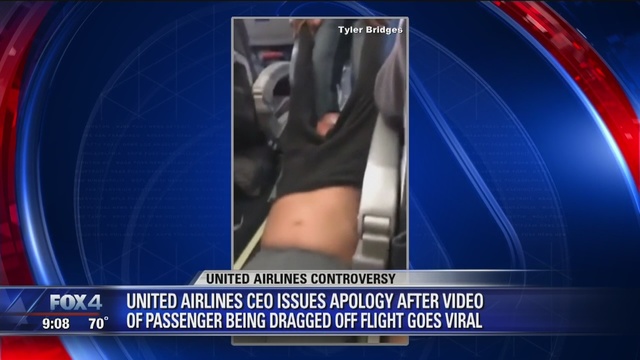
After reviewing a lot of the available information, I've got a few opinions on United Airlines, United's CEO, the police, the passengers, Dr. Dao, and the media. I will cover all of them. However, what I have to say next might shock you:
In general, United Airlines followed the proper course of action, and Dr. Dao was wrong.
Let's briefly review what happened:
United Airlines personnel boarded passengers despite the fact that Flight 3411 was oversold, apparently without first confirming volunteers to give up their seats.
It may not be the oversold situation that caused the problem. It may be that to keep other flights on schedule United needed four seats for their employees.
United asked for volunteers, offering $400 a seat. No takers.
United asked for volunteers, offering $800 a seat. No takers.
United then chose four people to give up their seats, most likely based on their United MileagePlus status. Those four people were notified.
Three passengers left the plane, disappointed but respectful of others, giving up their seats as requested by United.
Dr. Dao refused to leave the plane even though he was asked repeatedly to give up his seat.
When United's personnel could not convince Dr. Dao to leave, they followed policy and asked law enforcement for assistance.
Dr. Dao refused, even when warned by police that he would be dragged from the plane.
Law enforcement pulled Dr. Dao from his seat and dragged him from the plane because he refused to stand up. In the process, Dr. Dao's head hit an armrest and he suffered a blow to his face, causing bleeding, a concussion, and broken teeth.
Some of the other passengers were shocked. Videos were taken and later posted online.
A social media storm ensued in which many people raged at United for the incident, with some even cutting up their United mileage cards and posting pictures to Twitter.
The mainstream media further inflated the reach of the story to increase their viewers / readers, and justify the cost of their advertising.
United CEO Oscar Munoz responded at least four times about the situation. First he said that United was trying to "resolve the situation;" then described Dr. Dao as "disruptive and belligerent;" then he apologized two days later and said "no one should ever be mistreated this way."
United is now offering full refunds for every passenger on the flight. Accepting a refund may be pursuant to some restrictions.
Dr. Dao is considering a lawsuit against the airline and the city of Chicago.
At least three airport police officers have been suspended over the incident.
Now, let's consider some important questions because GREAT leaders ask the right questions.
First, is United Airlines the only airline that overbooks flights?
No. All or almost all airlines overbook their flights in anticipation of no-shows (passengers who do not show-up for their flights).
Second, why do airlines overbook flights?
Because people do not show up for their flights and airlines want to avoid flying with empty seats. To keep costs low, airlines can (a) over-book flights in the expectation that some people will not show up; (b) increase the penalty for no-shows; or (c) raise airfares. Which of the three would you prefer? The first option is the only one that does not raise your costs to fly.
Third, did United Airlines personnel follow company policy and the law?
Yes, it appears they did except in two areas:
They should have identified volunteers before boarding the plane. This is a Dept. of Transportation rule.
They could have offered the maximum reimbursement for volunteers ($1,350 per seat), which is also a DOT rule. See the same link above about flyer rights for details.
Overbooking flights is completely legal and United is within their rights to ask (and force) passengers give up their seats if a flight is overbooked.
We need to recognize that no United personnel touched Dr. Dao. Law enforcement removed him from the plane after asking him to leave and warning him of what they would do.
Based on the information above, I have a few conclusions and suggestions.
United Airlines
You may not like it, but solely blaming United Airlines for the incident is wrong. For the most part, United personnel behaved properly, respectfully, wisely, and followed procedure.
Could United Airlines have done anything different to avoid this situation? Absolutely! We don't know everything United personnel did, but it seems like they could have been a little more creative in their approach and less "by the book."
For instance, as mentioned above they could have offered the full amount for volunteer seats - $1,350. However, that may still not have worked.
They could have asked someone else to leave after Dr. Dao refused (he refused multiple times), appealing to their desire to help the doctor.
They could have simply told the passengers, "We're not leaving until someone volunteers to stay." Then they could have stood their ground until someone caved or someone called their bluff (they probably can't pull that trick for too long).
United personnel followed procedure for the most part. None of their mistakes justify Dr. Dao's behavior.
The primary mistake United personnel made was boarding people before confirming volunteers. It is much less difficult to remove people from a flight who have already agreed to do so. Demanding volunteers once people are in their plane seats can be much more challenging. United should know better.
United Airlines CEO Oscar Munoz
We can learn a lot about how NOT to behave as a leader from the jumbled responses of United CEO Oscar Munoz. Don't be surprised if he is replaced soon by their board of directors.
As a leader it can be difficult to understand what to do in a crisis. Then wait, if you can. Limit your response if you can't.
Develop a habit of asking questions to make certain you have as many facts as possible before making a decision. Reacting to a problem in which you only have one side of the story is foolish. It only gets you and your business into more trouble. Don't let the media, someone's emotional outburst, and/or your own feelings manipulate you into making a mistake.
Mr. Munoz fell prey to these common human failures. I can only imagine how the crisis unfolded itself to him. The pressure was probably intense and it was difficult to formulate a coherent response and steer his company through some rough seas.
Maybe he saw it first on social media, but most likely he first heard about it from a text or call from one of his lieutenants. Can you imagine being the CEO of a multi-billion dollar company and receiving an urgent message like this?
!! We have a problem. A flight was overbooked and United personnel had to ask police to pull a passenger off a plane. It's all over social media. It looks really bad. We're gonna get crucified. See for yourself.
If you are a leader and a crisis erupts, then do not react. Instead, consider a response process like this:
Stop
Ask questions
Confirm facts
Consider alternative responses
Delay a reasonable amount of time to formulate an empathetic decision and communication based on the facts
Consider how different recipients will respond to your explanation
Perhaps only respond to part of the situation, and promise a follow-up after more information is available
Mr. Munoz did not follow this system. He reacted, again and again. He ruined a perfectly good opportunity to stand up for his employees and make a clear change to United's policies. Unfortunately, he is now cowering in the corner after a serious media pummeling of his company.
United employees, shareholders, and law enforcement needed a strong leader. Mr. Munoz failed them.
It is a shame. I would have preferred Mr. Munoz emphasize what his people and the law enforcement folks did right rather than abandon them. I would have loved for him to fight for his people and the cops that supported them. He should focus on solutions to avoid similar situations rather than trying to buy public favor by reimbursing everyone's ticket who was on that flight, and changing his response multiple times.
I wish he had stood firm, while at the same time confirming reasonable actions that were being taken to avoid similar situations. His approach has encouraged and/or allowed the media to separate and manipulate his response into unattractive sound bites.
For instance, Mr. Munoz promised no United passenger will ever be forcibly removed from a plane again. REALLY? If you have a drunk who is trying to open a door of your plane, wouldn't you want him or her removed?
If you have someone claiming to have a bomb, wouldn't you want them removed?
If you have someone who is so sick they are projectile vomiting while your plane is still on the runway, wouldn't you want them off your plane?
I am confident everyone can come up with at least one scenario where they want Mr. Munoz to get someone off their plane. Unfortunately, he has painted his entire company into the proverbial corner of NOBODY gets kicked off.
It is interesting to note that I cannot find anywhere on www.United.com where the CEO could post a message like: "Here is what happened. Here is our apology. Here is why this happened. Here is what we are doing to avoid similar situations in the future."
The Police
Based on the information I have, the police did most everything right. Don't get me wrong, police brutality is a real issue in many cases around the country and the world. However, the airport police were only somewhat rough with Dr. Dao because he would not come with them willingly, or even stand to walk off with them.
I was raised to respect law enforcement. They are on our side, at least if you are a law-abiding citizen or foreign guest of America. When an officer pulls me over, I give the utmost respect including addressing the officer as "Sir." Even if I feel the cop is wrong, I am still respectful.
Police are human beings just like you and me, and their job can be very difficult and dangerous. When they are called on to perform a task, there are no guarantees the person they approach will respond peacefully. Remember: Police officers do get killed in the line of duty.
Does this exempt the police from treating people with respect? Absolutely not. However, it does mean they deserve our respect first and foremost. If we refuse to obey their lawful instructions, they are authorized to use necessary force to make us comply.
In this case the law enforcement personnel performed their job respectfully with Dr. Dao, clearly and repeatedly communicated the consequences of him not obeying them, and followed through as promised.
Could they have done a better job? Maybe, but Dr. Dao's injuries were his fault for not complying with the law. Have you ever had to remove a screaming passenger from a plane? It would be difficult, even if it was a relatively small, uncompliant adult. Although it is an uncomfortable situation to watch in the videos, Dr. Dao was in the wrong.
Dr. David Dao
Dr. Dao should have left the plane when United told him to give up his seat, just like the three others did. Why should he be treated differently than anyone else? He refused. He was given more opportunities to reconsider when law enforcement people boarded the plane. They asked Dr. Dao to leave, and then warned him they would drag him from the plane if necessary. He still refused.
What was he thinking?
Apparently he was stuck in a focus of only his wants. "I want..." over and over again. He gave no thought to the well-being of other passengers, the flight crew that needed to get to their destination, or the people who were planning to meet other passengers at their destination.
For Dr. Dao, it was: "It's all about me."
When asked why he refused to leave the plane, Dr. Dao responded along the lines of, "I have to work tomorrow." Well, guess what Dr. Dao? Everybody has to work tomorrow! The police are here. Get off the plane.
Would you feel comfortable with Dr. Dao as your physician after watching those videos? Not me. What type of advice would a physician give me if they believe they are above the law and are unwilling to consider the facts?
I am sincerely sorry Dr. Dao was hurt and that he had to give up his seat. Nevertheless, neither of these results justify him breaking the law.
WARNING: It would be unfortunate if any court of law rewarded Dr. Dao in a lawsuit because that decision elevates narcissism over what is best for the common good of all the people.
The Passengers
The reaction of some of the other passengers is very disturbing. Some might say their response of shock and dismay is typical of the zombie, me-first culture we live in today. Did you watch the videos? Dr. Dao screaming. A woman practically wailing, "This is wrong!" Multiple camera angles from cell phone videos.
REALLY? Lots of people sitting and watching the whole thing.
Why does this concern me? Well, if the situation bothered them so much, why didn't they give up their seat?
What would you do? If I was there, I hope I would have volunteered to give up my seat. None of them moved. None of them volunteered. Narcissism is not just embedded in the most vocal or violent of our population, it is often deeply ingrained in the judgmental folks who sit on the sidelines.
The entire scandal could have been prevented by one humble, empathetic person.
The Media
There has been a lot of hype and outrage from this incident. I hope at least we can agree on one conclusion:
People on social media and the mainstream media cannot and should not be taken at face value.
We live in an outrage culture that is often misled, unreasonable, and motivated by less obvious (hidden?) agendas. Many people who are outspoken and the media in general are too often looking for the "next big story." They rush to shove it in our faces with cries of outrage rather than doing their due diligence to gather and consider more of the information.
WHY? Because we pay attention to them, and sadly, too often they only provide information they want us to hear and leave out important facts.
I suggest you wait for more information to come to light before becoming convinced by a one-minute video taken by a mobile phone. Ask why something is happening. Ask why that person or media outlet is sharing the story. Ask if they have a bias. Keep asking and wait. Give a story a few days to materialize before getting all worked up about it.
There is a proverb in a 2,000 year old bestselling book that says: A fool shows his annoyance at once, but a wise man overlooks an insult.
I encourage us to be wise.
Was the BIG issue that a passenger had to be dragged off a plane? No, not really. The big issue is how many fools allow themselves to be manipulated by emotions in a brief cell phone video (that does not provide the whole story) rather than facts.
The bottom line
Dr. Dao was selfish and unwilling to obey law enforcement. Whether the police are right or wrong, our responsibility as individuals is to obey the law, and the police. Dr. Dao was wrong, he should have left the plane.
A lesser blame goes to United Airlines for making the mistake of boarding an oversold flight without first confirming volunteers. It's a lot easier to stop a person from getting on a plane than to get them off.
Hopefully everyone learns from this situation and similar issues are avoided in the future.
What can we learn from this mess that can help us make better decisions during a crisis? I suggest you use this incident, and the lessons learned, as a training exercise for your leadership team, if not your entire company.
Choose wisdom. Choose to be a role model. Choose behaviors that unite us for the good of the many, rather than divide us in the selfishness of the solitary.
NOTE #1: I am an A-List Southwest Airlines flyer, and a lowly Premier flyer on United. My impression is the burly, bearded, friendly guy who manages my United gate at Roberts Field in Redmond, Oregon for my 5:30 a.m. departure would never make this mistake. He asks for volunteers before an oversold flight. I know because I've volunteered.
Also, get this: This United representative - I can't remember his name - booked me on a competitor's flight and even walked down to the gate of that airline to make certain I got on the other flight. He was exceptional in his approach to serving United flyers.
One bad incident should not convince us other every other person of that company, group, or person of some heritage should be condemned.
NOTE #2: An airline pilot's wife posted a similar view to mine here. At the time of my viewing her post there were 1,437 comments, mostly rude, full of expletives, emotional "who cares about the facts" condemnations. Apparently the abusive, threatening comments were so bad that comments on that post are closed.
It is disappointing that in our narcissistic society people have lost the discipline of civility in debate. Too many people feel they have the right to bash others cruelly while requiring people with different views to leave them alone.
I hope you practice kindness, empathy, respect, and the Golden Rule in your interactions with others... even when they disagree with you, and yes, even on the internet.
You are mistaken if you disagree with me and believe you can shout down a different opinion than your own. Peaceful protest and perspective always wins in the end. Study Ghandi, Dr. Martin Luther King Jr., and others.
I do not expect this newsletter / blog post to be popular, however I was raised to hold everyone to the same standards and stand up to bullies.
The True Measure of a Leader
"The true measure of a leader is what it takes to stop him." This sounds inspiring, doesn't it?
BEWARE. This statement is a half truth that appeals to the ego or foolish well-intentions of a person with a savior mentality. This statement by itself is more of a lie than a truth.
"The true measure of a leader is what it takes to stop him." This sounds inspiring, doesn't it?
BEWARE. This statement is a half truth that appeals to the ego or foolish well-intentions of a person with a savior mentality. This statement by itself is more of a lie than a truth.
For decades people could not stop Hitler, Stalin, or Chairman Mao even though their actions killed 20, 40, and 50 million people respectively. Whether you can stop someone is not the issue. Bullies can prevail.
Just ask anyone who has been held back in business because of their gender, appearance, or any other inherent characteristic. There are plenty of other examples too.
What is the true measure of a leader? Let me give you 3 true measures of a leader:
#1 - Integrity
As you promote people without management experience into leadership positions, are they prepared to make the tough decisions that demonstrate integrity, rather than merely follow the law and/or your company policy?
It is the "gray areas" that kill relationships, opportunities, and limit your future. This "measure of a leader" applies equally to your more seasoned leaders. Everyone on your leadership team needs to be a role model for your company values, relationships, and results.
I emphasize integrity heavily in our Certified LEADER program. We are starting our next six-month Certified LEADER program next week. I encourage you to signup leaders at all stages of their career to become certified as a leader. You can register here.
#2 - Results
Every leader needs to have clear, measurable goals and achieve them on time and within budget.
People struggle to hold their leaders accountable. If your leaders do not respond promptly, do not meet deadlines, do not communicate effectively, or have other dysfunctional behaviors, then how can you expect your other employees to be the best they can be?
In our Certified LEADER program I teach, re-teach and teach again my proven system for defining clear, measurable objectives and achieving results on time.
If your managers and/or senior leaders need to achieve results more consistently, then let them work with me for six months in our Certified LEADER program. Our program pays for itself quickly as they start achieving results consistently. You can register here.
#3 - Relationships
The only common trait of the GREAT leaders in Jim Collins's book, Good to Great, was humility. The true measure of a leader is their ability to consistently behave with integrity, achieve results, and work effectively with other people.
In a past Certified LEADER class there was a seasoned manager who was very intense and not personable. Over the course of the six month program we worked together to transform him from a manager who plays "whack-a-mole," to one who or respectfully and professionally engages with this team. The results were astounding.
If you have someone on your leadership team who would like to improve their relationships skills, then signed him up for our Certified LEADER program that starts next week. I will work with him or her to develop new habits, build stronger relationships, and communicate more effectively with others. You can sign-up here.
I could continue to list many more attributes that are the "true measure of a leader," however I suggest all the others extend from these three. When you improve your skills in these three areas the positive results cascade into other habits of your professional and personal lives.
P.S. Where was this quote from? Robert Jeffress' sermon to Donald Trump and his family before Trump's inauguration as President of the United States - Washington Post article. NOTE: This column is not intended to reflect positively or negatively on President Trump.

Surprise Book Recommendation
My wife wanted me to read Chip and Joanna Gaines' book, The Magnolia Story. They got famous by their HGTV show, Fixer Upper.
I did not want to read it.
My wife wanted me to read Chip and Joanna Gaines' book, The Magnolia Story. They got famous by their HGTV show, Fixer Upper.
I did not want to read it.
I have stacks of business books I'm trying to work through. The Magnolia Story might be fun, but at the moment I need to learn, not just read for enjoyment.
However, I made "her book" a priority because my wife Terry is important to me. I just finished on Monday of this week.
To be candid, I finished the book at 11:13 p.m. and started crying. I was in my hotel room, by myself, on a successful business trip. My tears were for the mistakes I have made in life. Too many mistakes, which for that moment, crowded out my many successes.
Chip and Jo have not lived flawless lives. Their book is reasonably candid about mistakes they have made along the way. Some of them are similar to mine, however they avoided some of my big mistakes.
How about you? Made any mistakes in your life that still hurt?
Let me share four lessons from The Magnolia Story that hit me the most. There was a lot of other material in the book that made me think, but these are the biggies. These life lessons apply to everyone who wants to be an effective leader in their homes, careers, and community.
#1 - Stay Close
When the going gets tough Chip and Joanna work closer together, rather than hide the facts in hopes that things will improve or play the blame game.
(Joanna - page 84) "Chip and I started working more closely together than ever...
(Joanna - page 86) "... we seem to grow stronger the more time we spend together..."
(Chip - page 149) "When things come against us we can either turn on each other, or we can come together and turn on it."
How is your relationship with your spouse affected when times get tough?
I learned a long time ago that you find out just how good a youth sports coach is by watching them when their team is losing. Any coach looks great when they are winning. How well does the losing coach hold it together and remain an encourager and mentor?
It is the tough times where you really find out what type of leader you are. You also confirm your priorities, integrity, and depth of love for others. It is not how your spouse reacts. When a situation is headed downhill, it is how you respond.
How can you improve your relationship with your spouse when times get tough? What strengths do you have during the tough times that you can build on so your bond with your spouse gets stronger no matter what life throws at you?
These questions can also be asked in consideration of your work relationships. Replace "spouse" with "partner" or "co-worker" and ponder the answers.
#2 - Find Balance
As irritating as it may be at times, humans are designed to often choose spouses with opposite behaviors and motivators. Joanna had the following revelation after one of Chip's mistakes that we all need to comprehend:
(Joanna - page 73) "I have a naturally conservative nature, and Chip and I were supposed to balance each other out, not concede to each other's strengths and weaknesses."
Balance in a partnership requires respect, open communication, trust, and a confidence that you are safe explaining a mistake. Although Chip makes a lot of business decisions on his own, my sense is their best decisions are made together.
If one or both partners play "whack a mole" when the other makes a mistake, then communication breaks down. Chip and Joanna keep the conversations flowing.
Where can you improve communication with your spouse?
What strengths can you recognize and encourage?
Again, these questions can also be asked in consideration of your work relationships.
#3 - Good Stewardship
Joanna and Chip try to be careful money managers, although their approach is quite different. Joanna is very risk adverse, whereas Chip is comfortable with what he believes is reasonable risk. The bottom-line is they both are willing to work hard and smart to earn what they gain.
(Chip - page 98) "My parents didn't teach me the value of a dollar - and of hard work too."
(Chip - page 99) "One thing my dad would preach to us when it came to money was, 'I'll provide your needs, but you have to take care your wants.'"
Husband-and-wife need to be equally committed to achieve financial goals. The standards for spending and saving need to be the same. Financial boundaries, reporting, and budget discussions need to occur at least monthly, if not more often. Money is the number one cause of divorce. Therefore it requires more attention than it typically gets in a marriage.
What are 1-3 improvements you and your spouse can agree to improve the way you manage finances so that stress is lowered, and long-term financial security is attained and retained?
Where are your collective strengths in finances today, and how can you build upon them?
Consider two similar questions in regards to your work relationships.
#4 - No Regrets
There are two voices in our heads. The one screaming at us is evil or a fool who encourages destructive behavior. The one softly speaking to us is wisdom. Couples who make important decisions together typically have better listening skills and consider the soft voice. This leads to less regrets.
(Joanna - page 148) "I didn't want to look back at this experience and regret how I handled it."
It is okay to make mistakes, even though some are foolish. Repeating mistakes is what really hurts. According to Dr. Henry Cloud's book, Never Go Back, the difference between successful and average people is that successful people do not repeat mistakes.
What mistakes are you and your spouse repeating, and what new habits can you put in place to stop this tragedy?
Where are you and your spouse strongest at avoiding mistakes? How can you expand this capability to strengthen your marriage and protect your family?
I guess you figured out that I recommend you read Chip and Joanna Gaines's book, The Magnolia Story.
It was fun, but more than that, it was a learning experience.
Thank you Chip and Joanna! May you be blessed in all you do, and protected from the dangers success often creates.
Are You Staring at the Tent Again?
You need to get back into the center ring where you belong.

"There's nothing wrong with enjoying looking at the surface of the ocean itself, except that when you finally see what goes on underwater, you realize that you've been missing the whole point of the ocean. Staying on the surface all the time is like going to the circus and staring at the outside of the tent." - Dave Barry
Too many leaders think they are center ring in the circus when actually they are standing outside of where they should be, and staring at the outside of the tent.
Leaders were similarly delusional in the movie, The Matrix. In that story computers had taken over the world. People thought they lived here...

When in reality, they lived here...

WHAT IS YOUR LEADERSHIP REALITY?
- Could you be a better leader?
- Could your employees achieve more?
- Is your employee turnover too high and engagement too low?
- Do you struggle with delegation?
- Do you struggle with follow-up?
- ...?
If you were candid, are you struggling to stay focused on the ONE THING that could drive your organization 3X-100X farther than all the firefighting you are doing?
How about a tune-up? You train your people. Why not you? Here are three options from MANAGEtoWIN:
Certified LEADER
You and/or others at your company may have leadership attributes, but what you really need are managers with leadership SKILLS. To compete in today's crowded marketplace you must move beyond being an "okay" manager to becoming a powerfully effective leader.
- 6 months of coaching & training to help you develop new leadership habits to overcome your less productive behaviors
- 12 one-on-one coaching sessions with me
- 12 Group online training sessions
- A Certification test, which when passed, confirms you are a Certified Leader
Ideal for top performers promoted to management who need leadership training, plus owners and seasoned leaders in any area of your business. We have had leaders participate who have 20 years' experience.
Our next Certified LEADER program kicks off the week of April 17. Learn more and reserve your seat here.
LEADERSHIP Essentials Academy
We have not done an Academy since 2014. Now you get new content. Just for leaders and owners. 1.5 days packed with ways to "sharpen your axe" as President Lincoln said, so you can accelerate your career and company growth.
Where do you need help?
- Setting and/or more consistently following-up on clear, measurable goals
- Making difficult decisions faster, yet more wisely
- Strengthening your company culture so more people take ownership
- Better engaging every employee so they are their best, and enjoying work more
- Improving your focus on what is truly move important - stop firefighting
Limited to just a few leaders to be 1:1 with me. We are thinking of having this training in San Francisco, or just north in Marin County in September 2017.
Which days work best for you? Email us your preferred dates, and how many people you would like to attend. (Should we catch an SF Giants game one night?)
ReFOCUS - ReVOLUTION - ReWARDS
Leaders got it, or they don't. When you drive or fly, you use maps. When you drive a business or fly a business opportunity like a rocket ship of rapid growth you need a plan. Actually, you need three plans.
ReFOCUS | Life plan - How to FOCUS better on your priorities before your time runs out.
ReVOLUTION | Business Plan - What can you do better than anyone else? How to systematically do that over and over again ("volution") to produce extraordinary results.
ReWARD | Exit Strategy - You will exit your business at some point. How to better guard ("ward") your resources so your exit is not a fire-sale, but an abundance.
Do you have these plans? Are you following them?
If not, then prepare for 2018 with me in early October in San Francisco, or just north in Marin County. Which days in October would work best for you? Email us your preference and how many people you would like to attend.
Maybe we should do this workshop in Maui...
"As iron sharpens iron, one leader sharpens another." (Adapted from Proverbs 26:16)
Pass Your Batons to Win
It was the 2008 Summer Olympics in Beijing. The American men's 400-meter relay team was in contention for the gold medal. Superstar sprinter Tyson Gay reached back to grab the baton on the final handoff in their preliminary race, "and there was nothing."
The American women's 400-meter relay teams also misconnected on the final handoff in their preliminary race, mirroring the men's shocking defeat. For the first time in Summer Games history, the U.S. left an Olympics 0-for-6 in the sprint races: both men's and women's 100s, 200s and 400 relays. (ESPN)

Have you ever "passed someone the baton" and your "race" was not the winner you expected?
Translation: Have you ever delegated responsibility to someone and the results were less than you expected?
Delegation. The dreaded "D" word.
Stunning setbacks can be a motivator for GREAT Leaders to review and improve their process for delegating work.
Delegation takes Systematic Power, the first strand of 3strands LEADERSHIP. Delegating work is a system, not just a quick directive with assumptions from a superior. Effective delegation is based on a process of transferring responsibilities between capable team members to achieve mutually agreed upon results by following your organization's best practices.
And... best practices take practice and systems, or your baton drops.
Take a moment to assess where there may be a baton drop in your delegating. Are you delegating enough? Are you delegating effectively? Or are you avoiding delegating because it's just easier to do something yourself? (Bad choice)
Here are the 7 steps of effective delegation I teach in our Certified LEADER course:
- The mutual objective
- The problem
- The team
- Authority & expectations
- Resources required
- Communication
- Deadlines
You are the delegator. The person or people receiving the task are the delegatee.
Step #1 of 7: The Mutual Objective
- Is the objective clearly defined, measurable, and have due dates?
- Have you helped the delegatee understand that receiving the task is not the end goal, but rather they are a steward of the responsibility, so a greater goal is achieved?
- Have you engaged the "second brain" - the heart of the delegatee so the work is meaningful to them?
- Are you reinforcing the mutual objective often?
Step #2 of 7: The Problem
- Is everyone clear about the problem that is trying to be solved before and during the work that has been delegated?
- Is the cost of not solving the problem clear?
- Are the benefits of solving the problem defined?
- Are the process and/or new habits to put in place to avoid the problem in the future defined, or mutually sought?
Step #3 of 7: The Team
- Does each delegatee realistically have the time to do it well?
- Did you encourage the delegatee by explaining the reason why they were chosen?
- Have you explained how the delegatee will benefit from completing the task with excellence?
- What training do delegatees need to complete the task well?
Step #4 of 7: Authority & Expectations
- Does the delegatee have authority that matches their responsibilities?
- Who is the team leader if there is more than one delegatee?
- Are any approval processes clear, and in-writing?
- Are behavioral expectations between you and the delegatee clear, and preferably in-writing?
Step #5 of 7: Resources Required
- What subject matter experts or other people are available to support the delegatee?
- Where can the delegatee work and/or do they need help securing meeting locations?
- Does the delegatee have all the equipment and materials necessary to complete the task?
- Have the funding, outside services, other necessary activities been secured?
Step #6 of 7: Communication
- Is there a clearly defined follow-up schedule when the delegatee will communicate status to you?
- Have you defined a schedule when you will touch base with the delegatee, especially if they miss their deadline to update you on the status?
- What is the schedule to inform others?
- Is the platform in place to track their progress, whether ConnectWise, SharePoint, Dropbox...?
Step #7 of 7: Deadlines
- Are there due dates / milestones with clear deliverables?
- How are the dates being tracked?
- Are the milestones in the best order of priority?
- Have you defined what happens when a deadline is missed, and should that occur, are you prepared to ask questions, be respectful, and then act decisively?
This may seem like a lot, but once you get it in place it flows easily. Learn how to delegate effectively. Put the Systematic Power of process in place. Test, refine, improve your delegation systems. Teach them and grow.
Risking Your Comeback
One of my favorite movies is Hoosiers. The movie told a story that took place in 1951 in the rural southeast Indiana town of Hickory. Norman Dale drove into town to replace a revered high school basketball coach who had died. He was hired by Cletus Summers, the principal and a longtime friend, to coach the team and teach classes.

Earlier in life Dale had been a champion collegiate coach until he punched one of his players. That got him barred from coaching college ball. For many years he had hidden in the Navy. Now he had been honorably discharged.
The coaching position in Hickory was a last chance for Norman Dale, who is played by Gene Hackman.
How about you? Have you made some mistakes?
Have you made a BIG mistake?
It may surprise you, but my experience is most people have made at least one BIG mistake.
For those of us who recover and rebuild, by grace our legacy is typically not the mistake. Instead, we are judged by how we apply what we've learned to more positively impact the lives of others.
The journey is long. The battles can be ongoing. At least for a time...
In Hoosiers, Coach Dale had to battle the disbelief of a teacher who was the guardian of the town's best high school basketball player, Jimmy Chitwood. Jimmy had decided not to play due to grief over the death of the prior coach. He refused to even speak a word to the new coach, even when Dale patiently tried to talk with him.
Coach Dale also had the burden of establishing boundaries and discipline for a basketball team of unruly high school boys. The situation is further complicated by the fact it initially only has five players after two quit. They didn't care to behave and show the coach respect. A father brings one of them back, which brings the team to six players.
It was a small town. The high school only had 161 students. However, basketball was their passion. A number of the men in the community felt firmly established as armchair coaches of the high school boys' basketball team.
As Coach Dale tried to get his team in sync, they question his every thought, word, and action.
Even the student body chanted to have Jimmy Chitwood return to the team rather than cheer the players who were doing their best to represent the school.
It was Norman Dale's last chance.
If he failed, then he would never get another opportunity to coach the game he loved.
He had the knowledge, experience, and skill to be a championship coach. But his BIG mistake had detoured him into a tiny Indiana town that did not like him.
So what did he do?
He had the grit to stick to what he knew was right, admitted his mistake of the past when it came up, and kept pushing forward day by day. He invested his life in the boys on that team.
If the story stopped there, it would be logical. However it did not.
Hoosiers lets you see the humility of a tough warrior. Without saying it specifically, Norman Dale was thankful for the grace his friend, Cletus, had shown him. He extends grace to others. You can see it by how he treats others. He decided that someone needed to help a man who had fallen into the deep pit of alcohol.
The opportunity comes about when Cletus, acting as an assistant coach, had chest pains after an angry Coach Dale got ejected from another of their early season games.
Dale needed a replacement assistant coach. He decided to invite knowledgeable local former star basketball player Wilbur "Shooter" Flatch. Shooter was the father of one of the players, Everett. He was also the town drunk. Even Everett was disgusted with him and would have nothing to do with his father.
Coach Dale put boundaries on Shooter, just like he did with the boys, although different. Shooter had to be sober, on time, and dressed in a suit to coach with him.
Yet the team still struggled.
Coach Dale bet it all. He was teaching the young men basketball. More than that, he taught them integrity, reminded them of the value of hard work, and tried to give a hand up to a man who was in a deeper pit than himself.
Yet all appeared lost. He started to lose his grip on the opportunity.
After just a few games the armchair coaches of the town called an emergency meeting to vote on whether Dale should be dismissed. It looked bleak, but the coach held his ground. He said he was proud of the boys on the team and he would not change anything he had done.
As the vote was being counted Jimmy walked in and announced he figures it's time for him to start playing ball. The crowd erupted in cheers. However, Jimmy had one boundary: He would play only if Coach Dale stayed. If the coach left, then he would not play.
Coach Dale won the vote.
Remember the importance of boundaries.
Did the team start winning? Did Shooter stay sober? Did Shooter and his son reconcile? What happened to the other relationships in town?
You have to watch the movie.
I SUGGEST 3 LEARNING OPPORTUNITIES
First, a hero cannot do everything or save everyone.
Are you trying to do too much today?
Second, our lives are blessed when we extend the grace we have received to others.
Sometimes it is our turn to help. A kind word. A listening ear. A smile. Sometimes more.
Choose carefully. Once you choose help someone or a cause, then set boundaries. Hold tight. Stay true to the grace you are extending and the boundaries you establish.
The person you try to help may not make it all the way up on to their feet. Your role may be just to get them out of the pit.
Consider the risk to your opportunity, your life, and the people depending on you. Gamble only what you are willing to lose.
Norman Dale was willing to lose it all because he believed he was doing the right thing.
There is the story I heard years ago of a well-off couple who went on a mission trip. They were so touched by the needs of the people that they gave, and gave, and gave... until they had no more. But it wasn't enough. The poor were still poor, but now the couple had joined them in poverty.
It is rare that is the best decision.
Good intentions cannot be the only criteria behind your decision to risk what you have to help others. Balance your heart with sincere consideration of how a loss would affect people who depend on you, such as your family or employees.
Grace can be extended in small doses and still improve the lives of others.
Practice grace with boundaries.
Third, last week I encouraged you to embrace 2017 as your comeback year. This begs the question: What's the one thing you will do this year that will make everything else easier?
You cannot be a hero to everyone or do everything.
However, there is one thing you can do, and do with excellence!
Identify that one thing and do something. You will be glad you did.
Start with humility and grace.
If you have the time, watch the movie Hoosiers.
It's a fun story. Unfortunately it is not true. The real story of a small Indiana town's high school basketball team actually has some special gems of its own. Click here to learn what really happened.
It's Your Comeback Year
Shortly after 2017 began, Tom Brady, a fossil by NFL quarterback standards, led the New England Patriots to victory in an overtime Super Bowl after trailing the Atlanta Falcons 28-3 midway through the third quarter.
After the game Brady explained, "We all brought each other back. We never felt out of it."
He is not just a great athlete, but demonstrates attributes of true leadership.
Last Friday night I watched a small town basketball game with a packed house in Central Oregon. The Sisters High School boys' team faced rival Madras in the first round of the playoffs. At 39-29 the Madras team was up by 10 points with about 6.5 minutes to go in the fourth quarter, and then their coach made a fatal mistake.
He had his team stall. Apparently in Oregon high school basketball there is no shot clock, so the Madras team drained over a minute from the clock just passing the ball around.
To be candid, although none of our kids attend high school, I was angry at the lack of integrity displayed by the Madras coach to teach his players a stall tactic with so much time left in the game.
It is also a dangerous strategy because it changes the whole momentum of how your team is playing the game.
By the way, is it a sin to boo a team that behaves that way? Or their coach? (I leave that up to you.)
What happened? The Sisters team rallied and won 46-39 (without overtime).
Now, that was a fun evening...
It is a comeback year.
People everywhere, except on the losing side, love a comeback.
HOW ABOUT YOU?
Everyone has an area of their life that is important, but they are failing at it. They are not meeting their own standards and/or progressing towards their dream.
You feel it is impossible to change.
You need a comeback.
What should you do?
First, ADMIT YOU HAVE A PROBLEM.
No, this is not Alcoholics Anonymous, although you could be addicted to denial at least in this one area.
What is your dream? Or if not a dream, what is a goal that is very meaningful for you to achieve that you have not been able to make progress on?
Let me put it another way:
What is the one thing you could do that would make everything else in your life better? (This is the core challenge of the book, The ONE Thing. A great book.)
Stop your denial. (Other things are more important. I can't do it. It's too hard...)
Stop procrastinating. (I don't have time. My other stuff is more important. I have to get this other stuff done first.)
Stop blaming others or circumstances. (My boss, or spouse, wants me to do other stuff. I have no money. I don't know enough...)
Denial is a slow death.
Second, COMMIT TO CHANGE.
Make a decision to be your best, not just good, or even great. You want to be YOUR BEST.
We are our best when we overcome heavy odds against us.
We are our best when we kindle the warrior within us to do extraordinary things.
There is a Spirit within you or beside you, just waiting for your invitation to join your battle.
It is the suffering and the story is what makes the game of life engaging, enjoyable, and fulfilling. Don't accept where you are in life. You are destined for more.
What makes a great leader?
Someone who fearlessly overcomes a challenge.
Did you catch that?
One challenge.
Not two, five or a dozen.
Consider the stories of great movies such as Gladiator and Braveheart. In ancient times the battle lines were formed with hundreds or thousands of soldiers on each side, yet to survive each warrior had to focus on winning against one foe at a time.
They could not get overwhelmed by the army facing them, or even the 2-6 opposing soldiers nearby.
There is one menacing thing holding you back. What is it for 2017?
To be your best, you must identify the one thing that will transform your current reality into your dreams.
Time is running out.
Third, YOU NEED A PLAN.
Define a simple plan to achieve your quest. There are three components:
#1 - A clear, measurable goal with a deadline
#2 - Identify what time of day you do your best work.
#3 - Set aside that time in your schedule to achieve your goal.
Should you be persistent?
No.
"WHAT?" you ask incredulously.
A persistent person keeps trying. That is not good enough.
To be great, you must be tenacious.
A tenacious person applies what they learn to avoid mistakes and accelerate their progress while never giving up.
#1 - A clear, measurable goal with a deadline
Here is the core of my method for writing clear, measurable goals:
Goals should be written in a clear, measurable way by following the acronym "T.A.R.G.E.T.™" from the books, The Company Culture Challenge and Success With People.
Start with the preposition "To" and follow it with an "Action verb." Next add a "Realistic Goal" area or focus. Then add an "Effective measure of success" and close it with the "Time for the goal to be completed."
T To (the preposition)
A Action verb
RG Realistic Goal to be achieved
E Effectively measure whether the goal has been achieved
T Time or date for the goal to be completed
The due dates are important. One sales guru, T.C. Michalak, likes to say, "A goal without a timeline is not a goal - it's a wish." Each goal must have a realistic completion date with your work finished on schedule.
Here is an example of a clear, measurable goal written in the T.A.R.G.E.T. format:
To increase consultant utilization rates to 78 percent for the quarter.
To begin: To
Action verb: increase*
Realistic Goal: consultant utilization rates
Effective measurement: to 78 percent average
Time bound: for the quarter.
NOTE: If you want to make the goal statement a bit more direct then drop the first preposition "To." Then this goal becomes:
Increase consultant utilization rates to 78 percent for the quarter.
#2 - Identify what time of day you do your best work.
What time of day do you do your best work?
That is the time of day to work on your most important goal.
Another consideration is where you do this work. You must be someplace where you will not be interrupted by people or electronics (TV, email, instant messaging, phones...).
Be realistic. When do you do your best work? How can you work without interruption?
#3 - Set aside that time in your schedule to achieve your goal.
Block out time in your schedule daily or weekly to achieve this goal.
Make certain it is the time of day when your best work.
Communicate. Explain what you are doing to other people who currently expect to be able to interact with you at that time. Ask them to respect that time and only interrupt you if the world is ending.
They will interrupt you anyway. Respectfully, calmly be firm about meeting with them later if the issue can wait. Unplug if necessary to block them out.
NOTE: Maybe the time you chose is the wrong time of day. If the schedule you set aside is not working, then reassess your schedule and try a different one.
Do NOT give up.
Today is passing fast. Yesterday is a memory, or worse, forgotten. The longer you wait, the more you rely on a miracle.
It's YOUR comeback year.
You do not have to become a billionaire, on the cover of magazines, or loved by everyone.
You just have to overcome one thing.
If you are candid, it might be the one thing in your life that will catapult you past silence into hearing the voice of God.
Do it now. It's your comeback year.
It might be you have spread yourself too thin at work for years. There is one thing above everything else that plays to your strengths and will launch you into a new stratosphere of opportunity.
Do it now. It's your comeback year.
It might be your relationship with your spouse. Would a weekly date night improve things?
I have a new friend, Mark, who enjoys a cup of coffee with his wife, Sheila, each day about 3:00 p.m. They just catch up. What would that type of communication do for your relationship?
How about scheduling a weekly, biweekly, or at least monthly family business meeting with your spouse? Finances are the #1 cause of divorce. A cycle of financial discussions might replace the demons of doubt with the candid confidence of your future together.
Do it now. It's your comeback year.
You decide the goal. Just do something!
If you need help getting started, or along the way, let me know. I love working with people who want to be their best. You can schedule a conversation with me here.
I hope our paths cross this year and I can encourage you in your journey.