
Your people problems? Gone.
The 4 Management Disciplines Newsletter delivers proven ways to be your best and lead a championship team.
Every championship sports team runs proven plays.
Every Monday morning - I give you four proven plays great leaders use to solve problems in how you Hire, Manage, Develop, and Retain great people.
2 minute read. No fluff. No ads.
Trusted by over 10,000 leaders.
NOTE: David is no longer writing this newsletter. Visit www.simpleliberty.com to read his latest posts.
All Newsletters

7 Choices in less than 10 seconds
These writings are an exception to my typical style. Nevertheless, I have met many leaders who need to commit to change. These inspirations I received may help you.
These writings are an exception to my typical style. Nevertheless, I have met many leaders who need to commit to change. These inspirations I received may help you.
Here are 7 Choices you can consider in less than 10 seconds that will make you a better leader:
- Feel the progress, not the pressure.
- Choose to compliment, not to condemn.
- Apply past lessons to succeed now, not to believe the lie of never.
- Break your chains. Cross your chasm. Be the positive agent of change (you were designed to be).
- "... If any of you lacks wisdom let them ask of God, who gives to all without finding fault, and it will be given to them."
- "... but they who ask must believe and not doubt..."
- You can do it.
Month 7 of 12 is almost gone for 2017. Make a course correction now if it is needed.
Buddy-up if you need help, with me or someone else you trust.
Make the most of 2017 before this window closes.
3 Questions for a Leader
Here is a simple test of your leadership skills. I suggest you not only rate yourself, but ask 3-5 people who have the strength to be candid how they would rate you. Please do not request feedback from people who tell you what you want to hear or lack the guts to tell you the truth.
Here is a simple test of your leadership skills. I suggest you not only rate yourself, but ask 3-5 people who have the strength to be candid how they would rate you. Please do not request feedback from people who tell you what you want to hear or lack the guts to tell you the truth.
There are many ways to assess your leadership skills. These just happen to be three strengths or weaknesses that I find recurring often with leaders whom I meet.
Gauge your leadership skills in three areas.
#1 - Do you ask for advice on how you can improve?
Most leaders are so busy they never check-in to confirm they are at their best. They assume they are doing the "right things" and focused on what is "most important," yet rarely is this 100% true.
In reality, everyone is making mistakes.
According to Dr. Henry Cloud in his book, Never Go Back, highly successful people realize their mistakes and develop habits and systems to avoid them, whereas average performers might acknowledge mistakes but continue to make them.
Therefore you have a choice: Continue to make mistakes, and overlook your bad habits because you are so busy, or ask people whom you trust for advice and discipline yourself to develop new, more powerful habits that overcome your bad habits.
Ask yourself these follow-up questions:
When did you most recently ask someone for candid feedback?
How many times have you asked for feedback over the past month?
How often do people give you unsolicited feedback?
#2 - Do you accept feedback or reject it?
Whether you get sincere feedback depends on how you respond to it. People whom you berate or debate will avoid being candid with you. And why should they? Your behaviors communicate you do not care about their opinions anyway.
Feedback is also referred to as "constructive criticism." Isn't that an oxymoron? (Air exhaled by a moron...) I suggest you avoid that term because it is kind of passive-aggressive. Feedback should be a balance of sincere, positive comments and insights focused on improvement. Being open to both positive feedback to build your strengths and negative feedback to address weaknesses is a very important soft skill.
Unfortunately many people lack the ability to receive feedback in a healthy way. As others start to give feedback they immediately shift to fight or flight mode. The fighters often aim listen only to debate or deny. The flighty folks might listen and then walk away muttering to themselves about how wrong the other person was.
Unfortunately, most people naturally believe they are a victim, villain, or hero, or a combination of two of these personas. Often the natural response of a:
"Victim" is to whimper away or debate the feedback as an attack.
"Villain" is to defend and not even consider the feedback. They may even twist the other person's thoughts into an opportunity to attack them.
"Hero" may be to fully consider the feedback and act upon it because they have positive self-esteem and want to build on their strengths; or they might have such a huge ego that any un-positive feedback is simply disregarded.
Each persona is different. Ask yourself these questions to determine which persona you are:
When you get feedback, how do you fully consider it?
What questions do you ask? Are they to explore the comments further, or identify flaws in the other person's conclusions?
Do you document the feedback and consider it further?
Do you thank the person sincerely for their opinion (hero), or debate to help them understand what you believe are misperceptions (fight - villain/victim), or end the conversation to leave as quickly as possible (flight - villain/victim)?
#3 - How do you follow-up on their advice?
Leadership is all about integrity, communication, and follow-up.Great leaders translate feedback into better personal habits, next generation solutions, and win-win outcomes.
Simply listening is not enough. It does not matter how sincerely you listen. If you do not act upon the feedback then your "sincerity" is pointless.
You win today by how you adapt your schedule to focus on what is truly most important while retaining your character. Feedback plays a critical part in your success. Do not underestimate it.
However, let's be candid, not all feedback is correct.Sometimes the other party is wrong, at least partially. This does not mean you need to debate. It is actually more beneficial to ask questions to fully understand how they came to their conclusions.
Sincerely exploring and considering their perceptions may lead to improvements. Ask yourself the following questions:
What have you changed with a new, powerful habit or system in response to feedback you received (you listed in #1 above)?
How have you changed the way you receive feedback, document and evaluate it, and act upon it based on recent feedback?
How are you tracking your improved behavior and/or outcomes?
Specifically what will you change now to improve your ability to proactively seek and sincerely receive feedback, and act upon it?
Give yourself up to 10 points for each of the 10 questions above to rate yourself as a leader. 100% is the maximum score. How did you do?
Albert Einstein is credited with saying, "The definition of insanity is doing the same thing over and over again." Are you partially insane? I have been. It takes discipline to be our best. Receiving, fully considering, acting upon, and measuring the results of feedback is a powerful habit to develop. It takes time to develop new habits, but the rewards are HUGE.
I encourage you to give it a try. Stop the craziness. It adds unnecessary drama to your life.
Leadership lessons from Reed Hastings and Netflix
You can make a great profit, maybe a HUGE profit. The project is legal. It is unique. Plus, the content could spill over into more revenue streams.
But... is it ethical?
You can make a great profit, maybe a HUGE profit. The project is legal. It is unique. Plus, the content could spill over into more revenue streams.
But... is it ethical?
In 2007, novelist Jay Asher published a book involving teenage suicide called 13 Reasons Why. I do not know why he thought it was a good idea, but darkness often sells in today's marketplace.
Here is the problem (from The Parent Resource Program):
More teenagers and young adults die from suicide than from cancer, heart disease, AIDS, birth defects, stroke, pneumonia, influenza, and chronic lung disease, COMBINED.
Each day in our nation, there are an average of over 5,240 suicide attempts by young people grades 7-12.
Actress Selena Gomez co-produced the Netflix series, 13 Reasons Why, based on Jay Asher's book by the same name. The focus of the series and book are 13 videos created by a seventeen year old girl to explain why she commits suicide, which she does in the last episode.
I have not read the book nor seen the series because I refuse to have full nude images of a teenage girl being raped and a teenager's bloody suicide in my brain. I still have images from the movie, The Exorcist, which I watched about 44 years ago (Not recommended). I don't need any more toxic waste in my brain.
Co-producer, Selena Gomez, blows off critics of the series in a NY Daily News article. It is disappointing that Gomez, who has been in rehab to overcome some of her life wounds, could not have the wisdom to kill the series rather than promote it. One of her comments is:
I just wanted it to come across in a way that kids would be frightened, but confused...
I have talked with leaders, parents and kids who have seen the 13 Reasons Why series. There is a growing wave of people, including many suicide prevention experts, who are upset about a television series available to young children that promotes suicide at any age.
In Central Oregon where we are visiting, people are deeply concerned about teen suicide motivated by the show - article in The Bulletin. We were told recently that two 12 year old children committed suicide in Redmond and Bend within the last two months.
Shame on Reed Hastings, Netflix CEO
In 2011 Reed Hastings was already four years into testing streaming video and changed Netflix subscriptions to separate DVD delivery and streaming subscriptions. There was a huge uproar over what people perceived as a price increase, whereas in truth he was adding a new service that had passed its market test. Part of the issue was also he was ahead of the trend.
I retained my Netflix subscription through that uproar.
This week's Harvard Business Review hails Hastings and Netflix as tied for #1 as a transformational business leader because of the revenue they generate from streaming content.
The article evaluates businesses based on three sets of metrics: (1) new growth, (2) core re-positioning, and (3) financial performance. I wonder, would they name a porn king as a transformational business leader because of phenomenal revenue growth in their new web business? I seriously doubt it, because it would be inappropriate. Yet a growing amount of original Netflix content is eerily inappropriate.
What is the more important standard for a truly "transformational business leader": ethics, growth, or a combination of both?
Wait... is this consistent with Netflix Values?
Netflix has 9 core values, each of which are defined more specifically by four statements. Here are some Netflix values that indicate why 13 Reasons Why and other objectionable content is exactly what Netflix CEO Reed Hastings wants of his people:
Passion| You care intensely about Netflix' success
Impact| You focus on great results rather than on process
Impact| You exhibit bias-to-action, and avoid analysis-paralysis
Selflessness| You seek what is best for Netflix, rather than best for yourself or your group
I regularly help companies define what I call "company culture cornerstones". They include a mission, vision, values, and accountability to live them out. Most people are aware of having a mission, vision, and values, however without accountability to live them out your company risks becoming an Enron.
I have used Netflix's values as an example. Nevertheless, there are two concerning flaws with Netflix's values that increase the risk of serious mistakes as Netflix grows:
#1- Each value statement starts with the pronoun "You," rather than "We" (my preference) or "I." "We" or "I" is a statement by an individual, or group of individuals committing themselves to behave a certain way. "You" demands others to live by your standards, which may be higher than the standards you exhibit in your behaviors.
#2- Every Netflix value is narcissistic towards Netflix, their growth and profit. None of their values commit a Netflix employee to be a good steward of the power they possess as a leading media company. None speak of integrity, ethics, empathy, serving others, values of moral character, or are outward-focused.
When it comes to Netflix values, they scream "It's all about me!" There seems to be a total, intentional, blind spot to communal responsibility. The standard is profit and growth without regard for how any negativity of their work could hurt others.
I have said for years that most of America and the secular, highly civilized world have three core values, consciously or subconsciously. Netflix sadly demonstrates them without remorse:
#1 - It's all about me
If it's good for Netflix, we do not care who it hurts.
#2 - It's not my fault
It's not Netflix's fault that teenage suicide rates are way too high in America and worldwide. It's not Netflix's fault that social media and Hollywood propagandize actors whose bodies and faces which have been edited to be thinner, younger, stronger... and who act out fake relationships no one will ever achieve.
It's not Netflix's fault that 5th graders are watching 13 Reasons Why episodes with repetitive scenes of hopelessness, a full nude rape scene of a young teen, and a blood-spurting teen suicide. Our local 5th grade classes are filled with kids who talk about the series, yet it seems many parents are not aware their kids are watching. In reality, younger kids probably are too.
#3 - It's not my problem
I was told a 12 year old Central Oregon girl committed suicide a few days after Easter this year... after watching 13 Reasons Why. But that's not Netflix's problem. It's a free country with free speech, unless of course, you have an opinion that disagrees with recognizing a third or fourth gender.
It's not Netflix's problem that people cannot appreciate the creativity of the 13 Reasons Why series without becoming depressed and killing themselves. It's not Netflix's problem that as a company they did not even provide a notice to parents about potentially objectionable content, or remind parents that the service includes parental controls.
But wait, Netflix IS selective about their content
Earlier this month, The Truth Seeker and other media reported Netflix banned the documentary, The Red Pill, from their service. Now, it's likely that Netflix simply decided not to list the movie on their platform. But it begs the question: Why? Is it too violent? Is it promoting death? It is inspiring rape? Is The Red Pill poor quality?
No. The Red Pill is an award-winning documentary on the Men's Rights Movement. I guess Netflix is more concerned about suppressing topics controversial in today's society than saving teenagers from despair, rape, and suicide. Wow... At least you can say Netflix lives out its values. It makes you wonder if Netflix can recover the next time its stock goes in the tank. Companies without ethics that are obsessed with profits do not last forever.
If you are interested, here is a Reddit post that provides a list of 18 video streaming platforms where you can watch The Red Pill instead of Netflix.
Time to cancel Netflix
I stuck by Netflix when they had their pricing debacle years ago. However, earlier this month I cancelled our Netflix account. I'm done with the company. Why support a company that puts profit above the safety of vulnerable kids and people who struggle with depression?
"Anything goes as long as you make money" is not the measure of a GREAT leader. It is the justification of a fool, and quite possibly, an evil person. I hope the Netflix team behind 13 Reasons Why is the former, not the latter.
Unfortunately keeping a Netflix subscription endorses content like 13 Reasons Why, and more dark media similar to it.
Consumer Reports offers five alternatives to Netflix. Find a company that has and lives out better values for the common good, not the selfish good. CR recommendations fail to endorse Amazon Video, which I have, or Hulu - the other two leaders. If you want DVD's, try Redbox.
What could Netflix have done differently?
First, they could re-evaluate their company values. Great leaders say "no" to immoral profits. Second, Netflix could have looked at teenage suicide rates and decided to use their power and influence to fight it, rather than exploit it.
People who contemplate suicide share one or more of a few attributes:
Second, some professionals conclude people who contemplate suicide may have a chemical imbalance. I don't believe this is 100% accurate. My understanding is the actual number of people who suffer from a chemical imbalance is less than many healthcare professionals would like us to believe. Still, it is a cause of the problem.
A 20 year old cousin of a friend of mine committed suicide this week. He was on antidepressants to help with a chemical imbalance. Too many people commit suicide when on antidepressants. I am not an expert who can join the debate as to whether suicide is a side effect of antidepressant drugs, or people who commit suicide were chemically going to make that decision anyway.
The bottom line is Netflix could have helped further the debate on the pros and cons of antidepressants. It could have reinforced solutions for life, rather than increase profits by dramatizing despair and death.
Third, my understanding is people who commit suicide want to end a story that is occurring in their life and start a new one. The intense emotional desire for change blinds them to the fact that suicide does not just close a chapter of their life story, it concludes the book of their life story.
Basically the desperation to close their current story makes them believe a fool's choice. A fool's choice is when you think there are only two bad options. In this case, a person can either stay in their unhappy situation or commit suicide, and anything is better than their current situation.
Russell Moore delves deeper into ending your story in a recent blog post. Instead of profiting from misery, Netflix could have creatively and effectively taught people how to comprehend the lie that suicide closes one chapter. They could have taught how it ends a life story, and they have other choices.
Fourth, it is common for people contemplating suicide to view themselves as victims. In life we consider ourselves a victim, villain, or hero; or a combination of two. The victim is narcissistic. No one has problems like mine. No one is as bad as me. It's all about me. It is an amazing dynamic of human emotions that a pity party can feel so good, so self-justifying, so right... when it is wrong.
The message of a victim is that others caused my problems, rather than I can take responsibility for my actions. Another victim message is, "I'm not good enough." Some therapists motivate patients to extend therapy by convincing them they are victims. The pity party sessions can be captivating.
This is wrong. Instead of encouraging people to feel like victims who can take an "easy way out" because they are not good enough, Netflix could have taught people how to overcome these feelings and better understand their worth as a human being.
Fifth, Netflix glorified suicide as a revenge strategy. Someone raped and/or otherwise abused you. You were neglected. You were bullied. Make them feel bad by killing yourself. Unfortunately that does not always happen. Even if it does, you paid too much to open the abuser's heart to their own mistakes.
Instead of encouraging suicide as a revenge story, Netflix could have exposed how this is a lie. Netflix could have empowered people, instead of encouraging them to kill themselves.
Sixth, this is a personal belief of mine: Netflix eliminated God, from 13 Reasons Why. No version of God is given. Jesus only gave one command - to love one another. Couldn't there have been at least one person in the series at least attempting to demonstrate this foundation of human meaning?
When I was 21 years old I had two best friends, in addition to my wife. One of them, Smitty, invited me to lunch one day. As we drove home I remember a moment as we crossed the Golden Gate Bridge when he asked me what I believed about God and who goes to heaven. I did not have a solid answer, and Smitty let the conversation move on to other topics. Thinking back, he was very troubled and trying to get answers.
Within one or two weeks of that lunch, Smitty committed suicide. It broke my heart. I had an emotional crater in my chest for years and still regret that none of us, his friends, perceived what he was planning.
It is so common for people contemplating suicide to question their spiritual beliefs about God and heaven. They also give hints. By leaving out God, Netflix avoided many of the reasons NOT to commit suicide such as: You are unique and valuable. God designed you. God has a plan for you. God ALWAYS loves you.
Unfortunately, Netflix had one objective in mind that massively overpowered any other: PROFIT. And people are taking notice.
If you want to hear more reactions to the series, I recommend reading articles in Family Life, Crosswalk, and the NY Post. Concerns are rising rapidly.
In Conclusion
Anyone can create trash TV with nudity and violence. It takes a truly great company, with truly great leaders, to say "no" to profitable, yet potentially dangerous content.
Decades ago I participated in cell-to-cell ministry in San Quentin State Prison and was the first volunteer director of Prison Fellowship in the San Francisco Bay Area. One inmate I met had done time for creating illegal pornography. Back then, more than just child pornography was illegal. I remember he desperately wanted to find a real job. He admitted to me that he could make a lot of money creating porn. He knew how to do it, how to sell it, but he did not want to hurt people anymore.
As I read about 13 Reasons Why and it's disturbing imagery, I could not help but recall my conversations with that inmate and wonder if media companies are exploiting people for profits. This guy took a stand. Too bad Reed Hastings did not do the same. What about now, Mr. Hastings? How many kids have to die for you to change your standards at Netflix? What if it was your child committing suicide after watching 13 Reasons Why? (I hope that does not happen.)
I understand the value of creative cinema and pushing the envelope. However, I completely disagree with the narrative, tone, and presentation of the character issues in this show. It is a sign that Netflix is headed in the wrong direction.
It is unfortunate that Netflix's leaders did not think twice before giving 13 Reasons Why the green light. If they had, perhaps a few young people might still be alive, and parents not wounded for life by the loss of a child.
What kind of leader will you be when you have to choose between easy profits and doing what is right?
Every leader has to make this choice, and some have to make it often.
United or Divided?
On Sunday, April 9th, United Express flight 3411 was about to depart from Chicago O'Hare airport, however, the flight was oversold. A passenger, Dr. David Dao, was told he had to give up his seat and refused. Law enforcement was called and he was dragged from the plane.
On Sunday, April 9th, United Express flight 3411 was about to depart from Chicago O'Hare airport, however, the flight was oversold. A passenger, Dr. David Dao, was told he had to give up his seat and refused. Law enforcement was called and he was dragged from the plane.
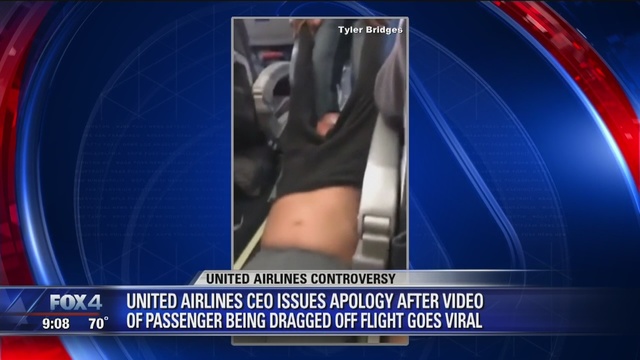
After reviewing a lot of the available information, I've got a few opinions on United Airlines, United's CEO, the police, the passengers, Dr. Dao, and the media. I will cover all of them. However, what I have to say next might shock you:
In general, United Airlines followed the proper course of action, and Dr. Dao was wrong.
Let's briefly review what happened:
United Airlines personnel boarded passengers despite the fact that Flight 3411 was oversold, apparently without first confirming volunteers to give up their seats.
It may not be the oversold situation that caused the problem. It may be that to keep other flights on schedule United needed four seats for their employees.
United asked for volunteers, offering $400 a seat. No takers.
United asked for volunteers, offering $800 a seat. No takers.
United then chose four people to give up their seats, most likely based on their United MileagePlus status. Those four people were notified.
Three passengers left the plane, disappointed but respectful of others, giving up their seats as requested by United.
Dr. Dao refused to leave the plane even though he was asked repeatedly to give up his seat.
When United's personnel could not convince Dr. Dao to leave, they followed policy and asked law enforcement for assistance.
Dr. Dao refused, even when warned by police that he would be dragged from the plane.
Law enforcement pulled Dr. Dao from his seat and dragged him from the plane because he refused to stand up. In the process, Dr. Dao's head hit an armrest and he suffered a blow to his face, causing bleeding, a concussion, and broken teeth.
Some of the other passengers were shocked. Videos were taken and later posted online.
A social media storm ensued in which many people raged at United for the incident, with some even cutting up their United mileage cards and posting pictures to Twitter.
The mainstream media further inflated the reach of the story to increase their viewers / readers, and justify the cost of their advertising.
United CEO Oscar Munoz responded at least four times about the situation. First he said that United was trying to "resolve the situation;" then described Dr. Dao as "disruptive and belligerent;" then he apologized two days later and said "no one should ever be mistreated this way."
United is now offering full refunds for every passenger on the flight. Accepting a refund may be pursuant to some restrictions.
Dr. Dao is considering a lawsuit against the airline and the city of Chicago.
At least three airport police officers have been suspended over the incident.
Now, let's consider some important questions because GREAT leaders ask the right questions.
First, is United Airlines the only airline that overbooks flights?
No. All or almost all airlines overbook their flights in anticipation of no-shows (passengers who do not show-up for their flights).
Second, why do airlines overbook flights?
Because people do not show up for their flights and airlines want to avoid flying with empty seats. To keep costs low, airlines can (a) over-book flights in the expectation that some people will not show up; (b) increase the penalty for no-shows; or (c) raise airfares. Which of the three would you prefer? The first option is the only one that does not raise your costs to fly.
Third, did United Airlines personnel follow company policy and the law?
Yes, it appears they did except in two areas:
They should have identified volunteers before boarding the plane. This is a Dept. of Transportation rule.
They could have offered the maximum reimbursement for volunteers ($1,350 per seat), which is also a DOT rule. See the same link above about flyer rights for details.
Overbooking flights is completely legal and United is within their rights to ask (and force) passengers give up their seats if a flight is overbooked.
We need to recognize that no United personnel touched Dr. Dao. Law enforcement removed him from the plane after asking him to leave and warning him of what they would do.
Based on the information above, I have a few conclusions and suggestions.
United Airlines
You may not like it, but solely blaming United Airlines for the incident is wrong. For the most part, United personnel behaved properly, respectfully, wisely, and followed procedure.
Could United Airlines have done anything different to avoid this situation? Absolutely! We don't know everything United personnel did, but it seems like they could have been a little more creative in their approach and less "by the book."
For instance, as mentioned above they could have offered the full amount for volunteer seats - $1,350. However, that may still not have worked.
They could have asked someone else to leave after Dr. Dao refused (he refused multiple times), appealing to their desire to help the doctor.
They could have simply told the passengers, "We're not leaving until someone volunteers to stay." Then they could have stood their ground until someone caved or someone called their bluff (they probably can't pull that trick for too long).
United personnel followed procedure for the most part. None of their mistakes justify Dr. Dao's behavior.
The primary mistake United personnel made was boarding people before confirming volunteers. It is much less difficult to remove people from a flight who have already agreed to do so. Demanding volunteers once people are in their plane seats can be much more challenging. United should know better.
United Airlines CEO Oscar Munoz
We can learn a lot about how NOT to behave as a leader from the jumbled responses of United CEO Oscar Munoz. Don't be surprised if he is replaced soon by their board of directors.
As a leader it can be difficult to understand what to do in a crisis. Then wait, if you can. Limit your response if you can't.
Develop a habit of asking questions to make certain you have as many facts as possible before making a decision. Reacting to a problem in which you only have one side of the story is foolish. It only gets you and your business into more trouble. Don't let the media, someone's emotional outburst, and/or your own feelings manipulate you into making a mistake.
Mr. Munoz fell prey to these common human failures. I can only imagine how the crisis unfolded itself to him. The pressure was probably intense and it was difficult to formulate a coherent response and steer his company through some rough seas.
Maybe he saw it first on social media, but most likely he first heard about it from a text or call from one of his lieutenants. Can you imagine being the CEO of a multi-billion dollar company and receiving an urgent message like this?
!! We have a problem. A flight was overbooked and United personnel had to ask police to pull a passenger off a plane. It's all over social media. It looks really bad. We're gonna get crucified. See for yourself.
If you are a leader and a crisis erupts, then do not react. Instead, consider a response process like this:
Stop
Ask questions
Confirm facts
Consider alternative responses
Delay a reasonable amount of time to formulate an empathetic decision and communication based on the facts
Consider how different recipients will respond to your explanation
Perhaps only respond to part of the situation, and promise a follow-up after more information is available
Mr. Munoz did not follow this system. He reacted, again and again. He ruined a perfectly good opportunity to stand up for his employees and make a clear change to United's policies. Unfortunately, he is now cowering in the corner after a serious media pummeling of his company.
United employees, shareholders, and law enforcement needed a strong leader. Mr. Munoz failed them.
It is a shame. I would have preferred Mr. Munoz emphasize what his people and the law enforcement folks did right rather than abandon them. I would have loved for him to fight for his people and the cops that supported them. He should focus on solutions to avoid similar situations rather than trying to buy public favor by reimbursing everyone's ticket who was on that flight, and changing his response multiple times.
I wish he had stood firm, while at the same time confirming reasonable actions that were being taken to avoid similar situations. His approach has encouraged and/or allowed the media to separate and manipulate his response into unattractive sound bites.
For instance, Mr. Munoz promised no United passenger will ever be forcibly removed from a plane again. REALLY? If you have a drunk who is trying to open a door of your plane, wouldn't you want him or her removed?
If you have someone claiming to have a bomb, wouldn't you want them removed?
If you have someone who is so sick they are projectile vomiting while your plane is still on the runway, wouldn't you want them off your plane?
I am confident everyone can come up with at least one scenario where they want Mr. Munoz to get someone off their plane. Unfortunately, he has painted his entire company into the proverbial corner of NOBODY gets kicked off.
It is interesting to note that I cannot find anywhere on www.United.com where the CEO could post a message like: "Here is what happened. Here is our apology. Here is why this happened. Here is what we are doing to avoid similar situations in the future."
The Police
Based on the information I have, the police did most everything right. Don't get me wrong, police brutality is a real issue in many cases around the country and the world. However, the airport police were only somewhat rough with Dr. Dao because he would not come with them willingly, or even stand to walk off with them.
I was raised to respect law enforcement. They are on our side, at least if you are a law-abiding citizen or foreign guest of America. When an officer pulls me over, I give the utmost respect including addressing the officer as "Sir." Even if I feel the cop is wrong, I am still respectful.
Police are human beings just like you and me, and their job can be very difficult and dangerous. When they are called on to perform a task, there are no guarantees the person they approach will respond peacefully. Remember: Police officers do get killed in the line of duty.
Does this exempt the police from treating people with respect? Absolutely not. However, it does mean they deserve our respect first and foremost. If we refuse to obey their lawful instructions, they are authorized to use necessary force to make us comply.
In this case the law enforcement personnel performed their job respectfully with Dr. Dao, clearly and repeatedly communicated the consequences of him not obeying them, and followed through as promised.
Could they have done a better job? Maybe, but Dr. Dao's injuries were his fault for not complying with the law. Have you ever had to remove a screaming passenger from a plane? It would be difficult, even if it was a relatively small, uncompliant adult. Although it is an uncomfortable situation to watch in the videos, Dr. Dao was in the wrong.
Dr. David Dao
Dr. Dao should have left the plane when United told him to give up his seat, just like the three others did. Why should he be treated differently than anyone else? He refused. He was given more opportunities to reconsider when law enforcement people boarded the plane. They asked Dr. Dao to leave, and then warned him they would drag him from the plane if necessary. He still refused.
What was he thinking?
Apparently he was stuck in a focus of only his wants. "I want..." over and over again. He gave no thought to the well-being of other passengers, the flight crew that needed to get to their destination, or the people who were planning to meet other passengers at their destination.
For Dr. Dao, it was: "It's all about me."
When asked why he refused to leave the plane, Dr. Dao responded along the lines of, "I have to work tomorrow." Well, guess what Dr. Dao? Everybody has to work tomorrow! The police are here. Get off the plane.
Would you feel comfortable with Dr. Dao as your physician after watching those videos? Not me. What type of advice would a physician give me if they believe they are above the law and are unwilling to consider the facts?
I am sincerely sorry Dr. Dao was hurt and that he had to give up his seat. Nevertheless, neither of these results justify him breaking the law.
WARNING: It would be unfortunate if any court of law rewarded Dr. Dao in a lawsuit because that decision elevates narcissism over what is best for the common good of all the people.
The Passengers
The reaction of some of the other passengers is very disturbing. Some might say their response of shock and dismay is typical of the zombie, me-first culture we live in today. Did you watch the videos? Dr. Dao screaming. A woman practically wailing, "This is wrong!" Multiple camera angles from cell phone videos.
REALLY? Lots of people sitting and watching the whole thing.
Why does this concern me? Well, if the situation bothered them so much, why didn't they give up their seat?
What would you do? If I was there, I hope I would have volunteered to give up my seat. None of them moved. None of them volunteered. Narcissism is not just embedded in the most vocal or violent of our population, it is often deeply ingrained in the judgmental folks who sit on the sidelines.
The entire scandal could have been prevented by one humble, empathetic person.
The Media
There has been a lot of hype and outrage from this incident. I hope at least we can agree on one conclusion:
People on social media and the mainstream media cannot and should not be taken at face value.
We live in an outrage culture that is often misled, unreasonable, and motivated by less obvious (hidden?) agendas. Many people who are outspoken and the media in general are too often looking for the "next big story." They rush to shove it in our faces with cries of outrage rather than doing their due diligence to gather and consider more of the information.
WHY? Because we pay attention to them, and sadly, too often they only provide information they want us to hear and leave out important facts.
I suggest you wait for more information to come to light before becoming convinced by a one-minute video taken by a mobile phone. Ask why something is happening. Ask why that person or media outlet is sharing the story. Ask if they have a bias. Keep asking and wait. Give a story a few days to materialize before getting all worked up about it.
There is a proverb in a 2,000 year old bestselling book that says: A fool shows his annoyance at once, but a wise man overlooks an insult.
I encourage us to be wise.
Was the BIG issue that a passenger had to be dragged off a plane? No, not really. The big issue is how many fools allow themselves to be manipulated by emotions in a brief cell phone video (that does not provide the whole story) rather than facts.
The bottom line
Dr. Dao was selfish and unwilling to obey law enforcement. Whether the police are right or wrong, our responsibility as individuals is to obey the law, and the police. Dr. Dao was wrong, he should have left the plane.
A lesser blame goes to United Airlines for making the mistake of boarding an oversold flight without first confirming volunteers. It's a lot easier to stop a person from getting on a plane than to get them off.
Hopefully everyone learns from this situation and similar issues are avoided in the future.
What can we learn from this mess that can help us make better decisions during a crisis? I suggest you use this incident, and the lessons learned, as a training exercise for your leadership team, if not your entire company.
Choose wisdom. Choose to be a role model. Choose behaviors that unite us for the good of the many, rather than divide us in the selfishness of the solitary.
NOTE #1: I am an A-List Southwest Airlines flyer, and a lowly Premier flyer on United. My impression is the burly, bearded, friendly guy who manages my United gate at Roberts Field in Redmond, Oregon for my 5:30 a.m. departure would never make this mistake. He asks for volunteers before an oversold flight. I know because I've volunteered.
Also, get this: This United representative - I can't remember his name - booked me on a competitor's flight and even walked down to the gate of that airline to make certain I got on the other flight. He was exceptional in his approach to serving United flyers.
One bad incident should not convince us other every other person of that company, group, or person of some heritage should be condemned.
NOTE #2: An airline pilot's wife posted a similar view to mine here. At the time of my viewing her post there were 1,437 comments, mostly rude, full of expletives, emotional "who cares about the facts" condemnations. Apparently the abusive, threatening comments were so bad that comments on that post are closed.
It is disappointing that in our narcissistic society people have lost the discipline of civility in debate. Too many people feel they have the right to bash others cruelly while requiring people with different views to leave them alone.
I hope you practice kindness, empathy, respect, and the Golden Rule in your interactions with others... even when they disagree with you, and yes, even on the internet.
You are mistaken if you disagree with me and believe you can shout down a different opinion than your own. Peaceful protest and perspective always wins in the end. Study Ghandi, Dr. Martin Luther King Jr., and others.
I do not expect this newsletter / blog post to be popular, however I was raised to hold everyone to the same standards and stand up to bullies.
The True Measure of a Leader
"The true measure of a leader is what it takes to stop him." This sounds inspiring, doesn't it?
BEWARE. This statement is a half truth that appeals to the ego or foolish well-intentions of a person with a savior mentality. This statement by itself is more of a lie than a truth.
"The true measure of a leader is what it takes to stop him." This sounds inspiring, doesn't it?
BEWARE. This statement is a half truth that appeals to the ego or foolish well-intentions of a person with a savior mentality. This statement by itself is more of a lie than a truth.
For decades people could not stop Hitler, Stalin, or Chairman Mao even though their actions killed 20, 40, and 50 million people respectively. Whether you can stop someone is not the issue. Bullies can prevail.
Just ask anyone who has been held back in business because of their gender, appearance, or any other inherent characteristic. There are plenty of other examples too.
What is the true measure of a leader? Let me give you 3 true measures of a leader:
#1 - Integrity
As you promote people without management experience into leadership positions, are they prepared to make the tough decisions that demonstrate integrity, rather than merely follow the law and/or your company policy?
It is the "gray areas" that kill relationships, opportunities, and limit your future. This "measure of a leader" applies equally to your more seasoned leaders. Everyone on your leadership team needs to be a role model for your company values, relationships, and results.
I emphasize integrity heavily in our Certified LEADER program. We are starting our next six-month Certified LEADER program next week. I encourage you to signup leaders at all stages of their career to become certified as a leader. You can register here.
#2 - Results
Every leader needs to have clear, measurable goals and achieve them on time and within budget.
People struggle to hold their leaders accountable. If your leaders do not respond promptly, do not meet deadlines, do not communicate effectively, or have other dysfunctional behaviors, then how can you expect your other employees to be the best they can be?
In our Certified LEADER program I teach, re-teach and teach again my proven system for defining clear, measurable objectives and achieving results on time.
If your managers and/or senior leaders need to achieve results more consistently, then let them work with me for six months in our Certified LEADER program. Our program pays for itself quickly as they start achieving results consistently. You can register here.
#3 - Relationships
The only common trait of the GREAT leaders in Jim Collins's book, Good to Great, was humility. The true measure of a leader is their ability to consistently behave with integrity, achieve results, and work effectively with other people.
In a past Certified LEADER class there was a seasoned manager who was very intense and not personable. Over the course of the six month program we worked together to transform him from a manager who plays "whack-a-mole," to one who or respectfully and professionally engages with this team. The results were astounding.
If you have someone on your leadership team who would like to improve their relationships skills, then signed him up for our Certified LEADER program that starts next week. I will work with him or her to develop new habits, build stronger relationships, and communicate more effectively with others. You can sign-up here.
I could continue to list many more attributes that are the "true measure of a leader," however I suggest all the others extend from these three. When you improve your skills in these three areas the positive results cascade into other habits of your professional and personal lives.
P.S. Where was this quote from? Robert Jeffress' sermon to Donald Trump and his family before Trump's inauguration as President of the United States - Washington Post article. NOTE: This column is not intended to reflect positively or negatively on President Trump.

Surprise Book Recommendation
My wife wanted me to read Chip and Joanna Gaines' book, The Magnolia Story. They got famous by their HGTV show, Fixer Upper.
I did not want to read it.
My wife wanted me to read Chip and Joanna Gaines' book, The Magnolia Story. They got famous by their HGTV show, Fixer Upper.
I did not want to read it.
I have stacks of business books I'm trying to work through. The Magnolia Story might be fun, but at the moment I need to learn, not just read for enjoyment.
However, I made "her book" a priority because my wife Terry is important to me. I just finished on Monday of this week.
To be candid, I finished the book at 11:13 p.m. and started crying. I was in my hotel room, by myself, on a successful business trip. My tears were for the mistakes I have made in life. Too many mistakes, which for that moment, crowded out my many successes.
Chip and Jo have not lived flawless lives. Their book is reasonably candid about mistakes they have made along the way. Some of them are similar to mine, however they avoided some of my big mistakes.
How about you? Made any mistakes in your life that still hurt?
Let me share four lessons from The Magnolia Story that hit me the most. There was a lot of other material in the book that made me think, but these are the biggies. These life lessons apply to everyone who wants to be an effective leader in their homes, careers, and community.
#1 - Stay Close
When the going gets tough Chip and Joanna work closer together, rather than hide the facts in hopes that things will improve or play the blame game.
(Joanna - page 84) "Chip and I started working more closely together than ever...
(Joanna - page 86) "... we seem to grow stronger the more time we spend together..."
(Chip - page 149) "When things come against us we can either turn on each other, or we can come together and turn on it."
How is your relationship with your spouse affected when times get tough?
I learned a long time ago that you find out just how good a youth sports coach is by watching them when their team is losing. Any coach looks great when they are winning. How well does the losing coach hold it together and remain an encourager and mentor?
It is the tough times where you really find out what type of leader you are. You also confirm your priorities, integrity, and depth of love for others. It is not how your spouse reacts. When a situation is headed downhill, it is how you respond.
How can you improve your relationship with your spouse when times get tough? What strengths do you have during the tough times that you can build on so your bond with your spouse gets stronger no matter what life throws at you?
These questions can also be asked in consideration of your work relationships. Replace "spouse" with "partner" or "co-worker" and ponder the answers.
#2 - Find Balance
As irritating as it may be at times, humans are designed to often choose spouses with opposite behaviors and motivators. Joanna had the following revelation after one of Chip's mistakes that we all need to comprehend:
(Joanna - page 73) "I have a naturally conservative nature, and Chip and I were supposed to balance each other out, not concede to each other's strengths and weaknesses."
Balance in a partnership requires respect, open communication, trust, and a confidence that you are safe explaining a mistake. Although Chip makes a lot of business decisions on his own, my sense is their best decisions are made together.
If one or both partners play "whack a mole" when the other makes a mistake, then communication breaks down. Chip and Joanna keep the conversations flowing.
Where can you improve communication with your spouse?
What strengths can you recognize and encourage?
Again, these questions can also be asked in consideration of your work relationships.
#3 - Good Stewardship
Joanna and Chip try to be careful money managers, although their approach is quite different. Joanna is very risk adverse, whereas Chip is comfortable with what he believes is reasonable risk. The bottom-line is they both are willing to work hard and smart to earn what they gain.
(Chip - page 98) "My parents didn't teach me the value of a dollar - and of hard work too."
(Chip - page 99) "One thing my dad would preach to us when it came to money was, 'I'll provide your needs, but you have to take care your wants.'"
Husband-and-wife need to be equally committed to achieve financial goals. The standards for spending and saving need to be the same. Financial boundaries, reporting, and budget discussions need to occur at least monthly, if not more often. Money is the number one cause of divorce. Therefore it requires more attention than it typically gets in a marriage.
What are 1-3 improvements you and your spouse can agree to improve the way you manage finances so that stress is lowered, and long-term financial security is attained and retained?
Where are your collective strengths in finances today, and how can you build upon them?
Consider two similar questions in regards to your work relationships.
#4 - No Regrets
There are two voices in our heads. The one screaming at us is evil or a fool who encourages destructive behavior. The one softly speaking to us is wisdom. Couples who make important decisions together typically have better listening skills and consider the soft voice. This leads to less regrets.
(Joanna - page 148) "I didn't want to look back at this experience and regret how I handled it."
It is okay to make mistakes, even though some are foolish. Repeating mistakes is what really hurts. According to Dr. Henry Cloud's book, Never Go Back, the difference between successful and average people is that successful people do not repeat mistakes.
What mistakes are you and your spouse repeating, and what new habits can you put in place to stop this tragedy?
Where are you and your spouse strongest at avoiding mistakes? How can you expand this capability to strengthen your marriage and protect your family?
I guess you figured out that I recommend you read Chip and Joanna Gaines's book, The Magnolia Story.
It was fun, but more than that, it was a learning experience.
Thank you Chip and Joanna! May you be blessed in all you do, and protected from the dangers success often creates.
Are You Staring at the Tent Again?
You need to get back into the center ring where you belong.

"There's nothing wrong with enjoying looking at the surface of the ocean itself, except that when you finally see what goes on underwater, you realize that you've been missing the whole point of the ocean. Staying on the surface all the time is like going to the circus and staring at the outside of the tent." - Dave Barry
Too many leaders think they are center ring in the circus when actually they are standing outside of where they should be, and staring at the outside of the tent.
Leaders were similarly delusional in the movie, The Matrix. In that story computers had taken over the world. People thought they lived here...

When in reality, they lived here...

WHAT IS YOUR LEADERSHIP REALITY?
- Could you be a better leader?
- Could your employees achieve more?
- Is your employee turnover too high and engagement too low?
- Do you struggle with delegation?
- Do you struggle with follow-up?
- ...?
If you were candid, are you struggling to stay focused on the ONE THING that could drive your organization 3X-100X farther than all the firefighting you are doing?
How about a tune-up? You train your people. Why not you? Here are three options from MANAGEtoWIN:
Certified LEADER
You and/or others at your company may have leadership attributes, but what you really need are managers with leadership SKILLS. To compete in today's crowded marketplace you must move beyond being an "okay" manager to becoming a powerfully effective leader.
- 6 months of coaching & training to help you develop new leadership habits to overcome your less productive behaviors
- 12 one-on-one coaching sessions with me
- 12 Group online training sessions
- A Certification test, which when passed, confirms you are a Certified Leader
Ideal for top performers promoted to management who need leadership training, plus owners and seasoned leaders in any area of your business. We have had leaders participate who have 20 years' experience.
Our next Certified LEADER program kicks off the week of April 17. Learn more and reserve your seat here.
LEADERSHIP Essentials Academy
We have not done an Academy since 2014. Now you get new content. Just for leaders and owners. 1.5 days packed with ways to "sharpen your axe" as President Lincoln said, so you can accelerate your career and company growth.
Where do you need help?
- Setting and/or more consistently following-up on clear, measurable goals
- Making difficult decisions faster, yet more wisely
- Strengthening your company culture so more people take ownership
- Better engaging every employee so they are their best, and enjoying work more
- Improving your focus on what is truly move important - stop firefighting
Limited to just a few leaders to be 1:1 with me. We are thinking of having this training in San Francisco, or just north in Marin County in September 2017.
Which days work best for you? Email us your preferred dates, and how many people you would like to attend. (Should we catch an SF Giants game one night?)
ReFOCUS - ReVOLUTION - ReWARDS
Leaders got it, or they don't. When you drive or fly, you use maps. When you drive a business or fly a business opportunity like a rocket ship of rapid growth you need a plan. Actually, you need three plans.
ReFOCUS | Life plan - How to FOCUS better on your priorities before your time runs out.
ReVOLUTION | Business Plan - What can you do better than anyone else? How to systematically do that over and over again ("volution") to produce extraordinary results.
ReWARD | Exit Strategy - You will exit your business at some point. How to better guard ("ward") your resources so your exit is not a fire-sale, but an abundance.
Do you have these plans? Are you following them?
If not, then prepare for 2018 with me in early October in San Francisco, or just north in Marin County. Which days in October would work best for you? Email us your preference and how many people you would like to attend.
Maybe we should do this workshop in Maui...
"As iron sharpens iron, one leader sharpens another." (Adapted from Proverbs 26:16)
Pass Your Batons to Win
It was the 2008 Summer Olympics in Beijing. The American men's 400-meter relay team was in contention for the gold medal. Superstar sprinter Tyson Gay reached back to grab the baton on the final handoff in their preliminary race, "and there was nothing."
The American women's 400-meter relay teams also misconnected on the final handoff in their preliminary race, mirroring the men's shocking defeat. For the first time in Summer Games history, the U.S. left an Olympics 0-for-6 in the sprint races: both men's and women's 100s, 200s and 400 relays. (ESPN)

Have you ever "passed someone the baton" and your "race" was not the winner you expected?
Translation: Have you ever delegated responsibility to someone and the results were less than you expected?
Delegation. The dreaded "D" word.
Stunning setbacks can be a motivator for GREAT Leaders to review and improve their process for delegating work.
Delegation takes Systematic Power, the first strand of 3strands LEADERSHIP. Delegating work is a system, not just a quick directive with assumptions from a superior. Effective delegation is based on a process of transferring responsibilities between capable team members to achieve mutually agreed upon results by following your organization's best practices.
And... best practices take practice and systems, or your baton drops.
Take a moment to assess where there may be a baton drop in your delegating. Are you delegating enough? Are you delegating effectively? Or are you avoiding delegating because it's just easier to do something yourself? (Bad choice)
Here are the 7 steps of effective delegation I teach in our Certified LEADER course:
- The mutual objective
- The problem
- The team
- Authority & expectations
- Resources required
- Communication
- Deadlines
You are the delegator. The person or people receiving the task are the delegatee.
Step #1 of 7: The Mutual Objective
- Is the objective clearly defined, measurable, and have due dates?
- Have you helped the delegatee understand that receiving the task is not the end goal, but rather they are a steward of the responsibility, so a greater goal is achieved?
- Have you engaged the "second brain" - the heart of the delegatee so the work is meaningful to them?
- Are you reinforcing the mutual objective often?
Step #2 of 7: The Problem
- Is everyone clear about the problem that is trying to be solved before and during the work that has been delegated?
- Is the cost of not solving the problem clear?
- Are the benefits of solving the problem defined?
- Are the process and/or new habits to put in place to avoid the problem in the future defined, or mutually sought?
Step #3 of 7: The Team
- Does each delegatee realistically have the time to do it well?
- Did you encourage the delegatee by explaining the reason why they were chosen?
- Have you explained how the delegatee will benefit from completing the task with excellence?
- What training do delegatees need to complete the task well?
Step #4 of 7: Authority & Expectations
- Does the delegatee have authority that matches their responsibilities?
- Who is the team leader if there is more than one delegatee?
- Are any approval processes clear, and in-writing?
- Are behavioral expectations between you and the delegatee clear, and preferably in-writing?
Step #5 of 7: Resources Required
- What subject matter experts or other people are available to support the delegatee?
- Where can the delegatee work and/or do they need help securing meeting locations?
- Does the delegatee have all the equipment and materials necessary to complete the task?
- Have the funding, outside services, other necessary activities been secured?
Step #6 of 7: Communication
- Is there a clearly defined follow-up schedule when the delegatee will communicate status to you?
- Have you defined a schedule when you will touch base with the delegatee, especially if they miss their deadline to update you on the status?
- What is the schedule to inform others?
- Is the platform in place to track their progress, whether ConnectWise, SharePoint, Dropbox...?
Step #7 of 7: Deadlines
- Are there due dates / milestones with clear deliverables?
- How are the dates being tracked?
- Are the milestones in the best order of priority?
- Have you defined what happens when a deadline is missed, and should that occur, are you prepared to ask questions, be respectful, and then act decisively?
This may seem like a lot, but once you get it in place it flows easily. Learn how to delegate effectively. Put the Systematic Power of process in place. Test, refine, improve your delegation systems. Teach them and grow.
Risking Your Comeback
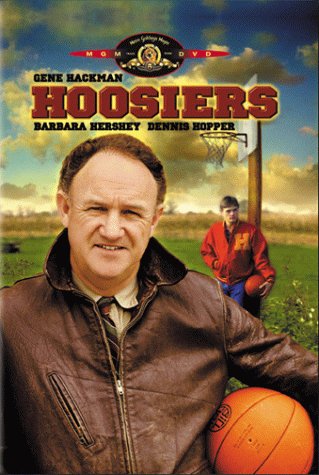
One of my favorite movies is Hoosiers. The movie told a story that took place in 1951 in the rural southeast Indiana town of Hickory. Norman Dale drove into town to replace a revered high school basketball coach who had died. He was hired by Cletus Summers, the principal and a longtime friend, to coach the team and teach classes.
Earlier in life Dale had been a champion collegiate coach until he punched one of his players. That got him barred from coaching college ball. For many years he had hidden in the Navy. Now he had been honorably discharged.
The coaching position in Hickory was a last chance for Norman Dale, who is played by Gene Hackman.
How about you? Have you made some mistakes?
Have you made a BIG mistake?
It may surprise you, but my experience is most people have made at least one BIG mistake.
For those of us who recover and rebuild, by grace our legacy is typically not the mistake. Instead, we are judged by how we apply what we've learned to more positively impact the lives of others.
The journey is long. The battles can be ongoing. At least for a time...
In Hoosiers, Coach Dale had to battle the disbelief of a teacher who was the guardian of the town's best high school basketball player, Jimmy Chitwood. Jimmy had decided not to play due to grief over the death of the prior coach. He refused to even speak a word to the new coach, even when Dale patiently tried to talk with him.
Coach Dale also had the burden of establishing boundaries and discipline for a basketball team of unruly high school boys. The situation is further complicated by the fact it initially only has five players after two quit. They didn't care to behave and show the coach respect. A father brings one of them back, which brings the team to six players.
It was a small town. The high school only had 161 students. However, basketball was their passion. A number of the men in the community felt firmly established as armchair coaches of the high school boys' basketball team.
As Coach Dale tried to get his team in sync, they question his every thought, word, and action.
Even the student body chanted to have Jimmy Chitwood return to the team rather than cheer the players who were doing their best to represent the school.
It was Norman Dale's last chance.
If he failed, then he would never get another opportunity to coach the game he loved.
He had the knowledge, experience, and skill to be a championship coach. But his BIG mistake had detoured him into a tiny Indiana town that did not like him.
So what did he do?
He had the grit to stick to what he knew was right, admitted his mistake of the past when it came up, and kept pushing forward day by day. He invested his life in the boys on that team.
If the story stopped there, it would be logical. However it did not.
Hoosiers lets you see the humility of a tough warrior. Without saying it specifically, Norman Dale was thankful for the grace his friend, Cletus, had shown him. He extends grace to others. You can see it by how he treats others. He decided that someone needed to help a man who had fallen into the deep pit of alcohol.
The opportunity comes about when Cletus, acting as an assistant coach, had chest pains after an angry Coach Dale got ejected from another of their early season games.
Dale needed a replacement assistant coach. He decided to invite knowledgeable local former star basketball player Wilbur "Shooter" Flatch. Shooter was the father of one of the players, Everett. He was also the town drunk. Even Everett was disgusted with him and would have nothing to do with his father.
Coach Dale put boundaries on Shooter, just like he did with the boys, although different. Shooter had to be sober, on time, and dressed in a suit to coach with him.
Yet the team still struggled.
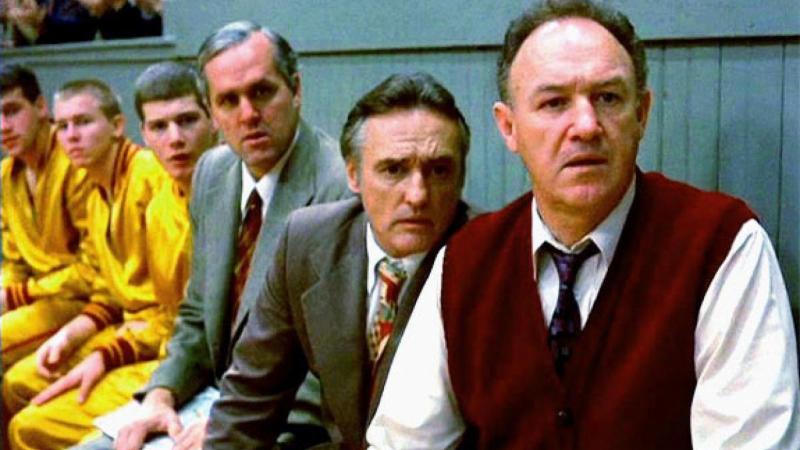
Coach Dale bet it all. He was teaching the young men basketball. More than that, he taught them integrity, reminded them of the value of hard work, and tried to give a hand up to a man who was in a deeper pit than himself.
Yet all appeared lost. He started to lose his grip on the opportunity.
After just a few games the armchair coaches of the town called an emergency meeting to vote on whether Dale should be dismissed. It looked bleak, but the coach held his ground. He said he was proud of the boys on the team and he would not change anything he had done.
As the vote was being counted Jimmy walked in and announced he figures it's time for him to start playing ball. The crowd erupted in cheers. However, Jimmy had one boundary: He would play only if Coach Dale stayed. If the coach left, then he would not play.
Coach Dale won the vote.
Remember the importance of boundaries.
Did the team start winning? Did Shooter stay sober? Did Shooter and his son reconcile? What happened to the other relationships in town?
You have to watch the movie.
I SUGGEST 3 LEARNING OPPORTUNITIES
First, a hero cannot do everything or save everyone.
Are you trying to do too much today?
Second, our lives are blessed when we extend the grace we have received to others.
Sometimes it is our turn to help. A kind word. A listening ear. A smile. Sometimes more.
Choose carefully. Once you choose help someone or a cause, then set boundaries. Hold tight. Stay true to the grace you are extending and the boundaries you establish.
The person you try to help may not make it all the way up on to their feet. Your role may be just to get them out of the pit.
Consider the risk to your opportunity, your life, and the people depending on you. Gamble only what you are willing to lose.
Norman Dale was willing to lose it all because he believed he was doing the right thing.
There is the story I heard years ago of a well-off couple who went on a mission trip. They were so touched by the needs of the people that they gave, and gave, and gave... until they had no more. But it wasn't enough. The poor were still poor, but now the couple had joined them in poverty.
It is rare that is the best decision.
Good intentions cannot be the only criteria behind your decision to risk what you have to help others. Balance your heart with sincere consideration of how a loss would affect people who depend on you, such as your family or employees.
Grace can be extended in small doses and still improve the lives of others.
Practice grace with boundaries.
Third, last week I encouraged you to embrace 2017 as your comeback year. This begs the question: What's the one thing you will do this year that will make everything else easier?
You cannot be a hero to everyone or do everything.
However, there is one thing you can do, and do with excellence!
Identify that one thing and do something. You will be glad you did.
Start with humility and grace.
If you have the time, watch the movie Hoosiers.
It's a fun story. Unfortunately it is not true. The real story of a small Indiana town's high school basketball team actually has some special gems of its own. Click here to learn what really happened.
It's Your Comeback Year
Shortly after 2017 began, Tom Brady, a fossil by NFL quarterback standards, led the New England Patriots to victory in an overtime Super Bowl after trailing the Atlanta Falcons 28-3 midway through the third quarter.
After the game Brady explained, "We all brought each other back. We never felt out of it."
He is not just a great athlete, but demonstrates attributes of true leadership.
Last Friday night I watched a small town basketball game with a packed house in Central Oregon. The Sisters High School boys' team faced rival Madras in the first round of the playoffs. At 39-29 the Madras team was up by 10 points with about 6.5 minutes to go in the fourth quarter, and then their coach made a fatal mistake.
He had his team stall. Apparently in Oregon high school basketball there is no shot clock, so the Madras team drained over a minute from the clock just passing the ball around.
To be candid, although none of our kids attend high school, I was angry at the lack of integrity displayed by the Madras coach to teach his players a stall tactic with so much time left in the game.
It is also a dangerous strategy because it changes the whole momentum of how your team is playing the game.
By the way, is it a sin to boo a team that behaves that way? Or their coach? (I leave that up to you.)
What happened? The Sisters team rallied and won 46-39 (without overtime).
Now, that was a fun evening...
It is a comeback year.
People everywhere, except on the losing side, love a comeback.
HOW ABOUT YOU?
Everyone has an area of their life that is important, but they are failing at it. They are not meeting their own standards and/or progressing towards their dream.
You feel it is impossible to change.
You need a comeback.
What should you do?
First, ADMIT YOU HAVE A PROBLEM.
No, this is not Alcoholics Anonymous, although you could be addicted to denial at least in this one area.
What is your dream? Or if not a dream, what is a goal that is very meaningful for you to achieve that you have not been able to make progress on?
Let me put it another way:
What is the one thing you could do that would make everything else in your life better? (This is the core challenge of the book, The ONE Thing. A great book.)
Stop your denial. (Other things are more important. I can't do it. It's too hard...)
Stop procrastinating. (I don't have time. My other stuff is more important. I have to get this other stuff done first.)
Stop blaming others or circumstances. (My boss, or spouse, wants me to do other stuff. I have no money. I don't know enough...)
Denial is a slow death.
Second, COMMIT TO CHANGE.
Make a decision to be your best, not just good, or even great. You want to be YOUR BEST.
We are our best when we overcome heavy odds against us.
We are our best when we kindle the warrior within us to do extraordinary things.
There is a Spirit within you or beside you, just waiting for your invitation to join your battle.
It is the suffering and the story is what makes the game of life engaging, enjoyable, and fulfilling. Don't accept where you are in life. You are destined for more.
What makes a great leader?
Someone who fearlessly overcomes a challenge.
Did you catch that?
One challenge.
Not two, five or a dozen.
Consider the stories of great movies such as Gladiator and Braveheart. In ancient times the battle lines were formed with hundreds or thousands of soldiers on each side, yet to survive each warrior had to focus on winning against one foe at a time.
They could not get overwhelmed by the army facing them, or even the 2-6 opposing soldiers nearby.
There is one menacing thing holding you back. What is it for 2017?
To be your best, you must identify the one thing that will transform your current reality into your dreams.
Time is running out.
Third, YOU NEED A PLAN.
Define a simple plan to achieve your quest. There are three components:
#1 - A clear, measurable goal with a deadline
#2 - Identify what time of day you do your best work.
#3 - Set aside that time in your schedule to achieve your goal.
Should you be persistent?
No.
"WHAT?" you ask incredulously.
A persistent person keeps trying. That is not good enough.
To be great, you must be tenacious.
A tenacious person applies what they learn to avoid mistakes and accelerate their progress while never giving up.
#1 - A clear, measurable goal with a deadline
Here is the core of my method for writing clear, measurable goals:
Goals should be written in a clear, measurable way by following the acronym "T.A.R.G.E.T.™" from the books, The Company Culture Challenge and Success With People.
Start with the preposition "To" and follow it with an "Action verb." Next add a "Realistic Goal" area or focus. Then add an "Effective measure of success" and close it with the "Time for the goal to be completed."
T To (the preposition)
A Action verb
RG Realistic Goal to be achieved
E Effectively measure whether the goal has been achieved
T Time or date for the goal to be completed
The due dates are important. One sales guru, T.C. Michalak, likes to say, "A goal without a timeline is not a goal - it's a wish." Each goal must have a realistic completion date with your work finished on schedule.
Here is an example of a clear, measurable goal written in the T.A.R.G.E.T. format:
To increase consultant utilization rates to 78 percent for the quarter.
To begin: To
Action verb: increase*
Realistic Goal: consultant utilization rates
Effective measurement: to 78 percent average
Time bound: for the quarter.
NOTE: If you want to make the goal statement a bit more direct then drop the first preposition "To." Then this goal becomes:
Increase consultant utilization rates to 78 percent for the quarter.
#2 - Identify what time of day you do your best work.
What time of day do you do your best work?
That is the time of day to work on your most important goal.
Another consideration is where you do this work. You must be someplace where you will not be interrupted by people or electronics (TV, email, instant messaging, phones...).
Be realistic. When do you do your best work? How can you work without interruption?
#3 - Set aside that time in your schedule to achieve your goal.
Block out time in your schedule daily or weekly to achieve this goal.
Make certain it is the time of day when your best work.
Communicate. Explain what you are doing to other people who currently expect to be able to interact with you at that time. Ask them to respect that time and only interrupt you if the world is ending.
They will interrupt you anyway. Respectfully, calmly be firm about meeting with them later if the issue can wait. Unplug if necessary to block them out.
NOTE: Maybe the time you chose is the wrong time of day. If the schedule you set aside is not working, then reassess your schedule and try a different one.
Do NOT give up.
Today is passing fast. Yesterday is a memory, or worse, forgotten. The longer you wait, the more you rely on a miracle.
It's YOUR comeback year.
You do not have to become a billionaire, on the cover of magazines, or loved by everyone.
You just have to overcome one thing.
If you are candid, it might be the one thing in your life that will catapult you past silence into hearing the voice of God.
Do it now. It's your comeback year.
It might be you have spread yourself too thin at work for years. There is one thing above everything else that plays to your strengths and will launch you into a new stratosphere of opportunity.
Do it now. It's your comeback year.
It might be your relationship with your spouse. Would a weekly date night improve things?
I have a new friend, Mark, who enjoys a cup of coffee with his wife, Sheila, each day about 3:00 p.m. They just catch up. What would that type of communication do for your relationship?
How about scheduling a weekly, biweekly, or at least monthly family business meeting with your spouse? Finances are the #1 cause of divorce. A cycle of financial discussions might replace the demons of doubt with the candid confidence of your future together.
Do it now. It's your comeback year.
You decide the goal. Just do something!
If you need help getting started, or along the way, let me know. I love working with people who want to be their best. You can schedule a conversation with me here.
I hope our paths cross this year and I can encourage you in your journey.
The Coat Is Big On You
PONDER THIS OVER THE WEEKEND: One way to be a great leader
My friend, Jerry, accepted a new job years ago leading an organization. A woman walked up to him after he did his first talk in front of about 100 members of the team, and said,
"The coat is big on you, but you'll grow into it."
Jerry accepted her encouragement and continued to grow for years to come. He is a strong, servant leader today. That woman has returned to Jerry to say the coat fits him a lot better.
How big is your "coat?" (Coat = your responsibilities, professional or personal)
How well does it fit?
Are you the young child wearing an older sibling's clothes thinking you are better than you are?
Are you worried you will never grow into the "coat" you are currently wearing?
Are you wearing the wrong "coat," but are afraid to change?
How can you be a better leader?
For most leaders there is only one way to reach the destinations you have defined in life:
WHERE: Choose your destination.
HOW: Define how you will get there.
WHEN: Daily or weekly check your map, and adjust your rudder.
RISK: Don't get tempted into following a fatal sunset, a half-truth rabbit trail, a shortcut.
On Thursday and Friday, January 12-13 of this year we moved from just north of San Francisco, California to Sisters, in Central Oregon, about 20 miles northwest of Bend. We split the journey in two, first driving to Redding, California on Thursday. We arrived after midnight, got some sleep, and finished the drive through snowy, icy roads the next day, Friday, the 13th.
That Friday was the end of the worst series of snowstorms Central Oregon has experienced since 1992. The temperature was in the 20's as we arrived on schedule at 4:00 p.m.
Jerry got three of his faith brothers there at the same time - Mark, Spencer, and Chris. They, along with our son Jeff, his friend Ted, and me, unloaded our 26' moving truck, 20' moving truck, plus our Chevy Suburban and Toyota Sienna that were stuffed to the gills.
Jerry was outside the entire time in the cold. He was in the trucks and at the cars. Two others grabbed stuff from him and carried each item across about 20' of ice and snow to the front door. Four others, including me, worked inside our new home carrying things to the different rooms.
Jerry helped us although his house was partially flooded due to snow damage. Some of his walls were literally bulging out with water. His wife, Lois, made a dinner for us to eat the next night and put it in our new home's refrigerator. She even hung a Happy Birthday sign from the ceiling for our youngest child, whose birthday was that day.
Can you imagine how I felt as four men I did not know worked tirelessly to help us? I had only met Jerry once. We had never met the others.
How do you think we felt in response to Lois' kindness? She didn't just stand around, either. She helped my wife, Terry, begin to unpack. Her warm, beautiful smile and encouragement went a long way to boost our tired spirits.
I cannot describe the joy I felt. It just hit me in my heart and overflowed warmth throughout my soul about an hour or two into the unloading process. We were where we were supposed to be.
Why? Because of the people (Mark, Spencer, Chris, Jeff, Ted, Lois, and Jerry).
After the last item was brought into our house Jerry told our son, Jeff, "You know, I touched everything your parents own." He was not boasting. He was hinting, and being encouraging.
Jerry is a leader. Think of how you serve your people. How do you communicate brotherly love in memorable ways to the men and women in your organization?
Are you a SYSTEMATIC, consistent role model for the behaviors you want them to have? Do you make certain each of your people are engaged in work they find MEANINGFUL? How often do you communicate the SINCERE GRATITUDE you have for each of your people, in ways they prefer?
Jerry worked a system to get our stuff unloaded and in the house. He had each member of our team working towards a common goal that was meaningful to us. He constantly complimented and encouraged us in sub-freezing weather.
We may not live in Sisters long, or maybe we will. However, I will always remember the kindness of Mark, Spencer, Chris, Jeff, Ted, and Jerry. As long as I'm in Sisters, I will welcome the opportunities I have to get to know Jerry better.
Why? He is clearly trying to live what he believes. He is a leader who is intentionally trying to bless others. No one is perfect, as in flawless, but Jerry seems perfect as in "complete" in his approach to serve people.
P.S. I met with Jerry three days ago for our weekly coffee. He told me the story of telling Jeff that he had touched everything we own. Then he shared the reason why touching all of our possessions was important to him:
Everything he touched he prayed over, asking God to bless us with prosperity, community, and peace.
Again, Jerry did not share this with me to boast. He did it to encourage me.
WHAT ABOUT YOU? (And me.)
How are you going to encourage someone today? "How can I motivate my employees?" - I get asked this often. One behavior that always helps is sincere encouragement.
Will they remember it? If not, why not?
I hope our paths cross this year and I can encourage you in your journey.
P.P.S. Jerry Kaplan is the pastor of the Sisters campus of Westside Church.
Not the plan
At 8:58 p.m. on Wednesday, October 20, 2016 I got a call on my mobile phone from Amanda, our oldest son Luke's wife.
She never calls me.
She had just gotten a call that Luke had been in a terrible car accident. She was on her way to the scene now. She did not know what condition he was in, but felt I should know.
That's a call you do not want to get. But I'd rather get the call, than not know.
Luke is in his 10th year with the Los Angeles City Fire Department. He was driving to his home in Central California after a training day. He was within a few miles of home when a guy ran a stop sign and "T-boned" him

A "T-bone" is when two cars collide and form a "T." This guy was driving a Dodge Grand Caravan. Luke is alive today because the impact point on his Saturn caught enough of the frame of his car that comes down at the front of the driver's door. If the other driver had hit Luke's car one foot more in the center of his driver's door, then Luke might have been killed. (Yes, that is an actual photo of the wreck above.)
That evening Luke had no memory of the accident. As a matter of fact, he did not even know what day it was. He still has no memory of the accident, but has been able to assemble the facts of what happened through skid marks, the location of the wreck, and other facts.
We are extremely thankful that Luke did not have any broken bones or internal bleeding. He has a nasty scar on his left temple, and has had other injuries that have kept him from returning to work. However, he is alive and hopefully, will mostly heal.
This wasn't the plan Luke had that night.
Our plans can be compared to rock climbing. Each move is planned. Each grip carefully grabbed. Every pinion methodically hammered in... yet the unexpected happens.
What can you do when you have a plan, but something totally unforeseen occurs? Something where certain parts of your life can never be experienced again, and maybe you have to fight to hold on to what is left?
When "it wasn't the plan" occurs, DISRUPTION occurs.
EXAMPLE #1: Perhaps you planned for significant growth in 2016 but it did not happen.
DISRUPTION: Other plans are put on hold. The question is, what will you do differently in 2017 so the mistakes of 2016 and earlier are less likely to be repeated?
EXAMPLE #2: A top employee quits to work for another company. He or she felt unappreciated in your organization or the other firm offers more growth.
DISRUPTION: You have to find a replacement, which takes time, money, and risk (that your hiring decision will be correct - the new person you hire can perform at a similar level.) What will you do differently as a leader to keep your employees more fully engaged and employed at your company longer?
EXAMPLE #3: You lose a major Client or funding "commitment."
DISRUPTION: You have to plan and methodically replace that revenue or funding. If you scramble, you may make mistakes that cause more problems. What will you do differently to make certain Clients stay with you, or funding commitments are REAL commitments?
EXAMPLE #4: You get that call similar to the one I got about Luke, but maybe it is worse news. Or maybe, just maybe, it's unexpectedly bad news about your health or someone hurts you physically.
My brother, Phil, was a strong, 6' 1" 205 pound electrician in excellent health. At 49 years old he suddenly did not feel well and there seemed to be something in his chest or gut. He went to the doctor. He had leukemia. No warning. He gallantly fought a 13 year battle with the disease and died on February 13, 2014.
WHAT'S MY POINT?
You'll never see disruption before it occurs. You only get to live this year once. Do not live 2017 like you lived 2016. Do it better.
Most people cannot comprehend this message. They understand the words, but fail to comprehend the meaning.
Make changes on your own. Hire a coach. Work with a spiritual mentor. Do it better.
Don't be a poster child for the theory of insanity: "The definition of insanity is doing something over and over again and expecting a different result." (Sometimes attributed to Albert Einstein, but apparently he was not the first to say it, or maybe never said it.)
How should you plan for 2017? Start by committing to not waste the year. Commit to be better. Do you need another example of why this is important? Then try this… Scroll down the Hope Heals | About Us webpage to watch their video.
The truth is you do not know what tomorrow will bring forth. Too often we hear someone boasting about what they will achieve or encouraging others to embrace the meaning of achieving some lofty goal for a new year.
Oftentimes those goals are fun to achieve. Even meaningful. Then again, other times they are only a diversion. A goal can be another lost year down Selfish Street or Distraction Drive.
Before you go driving down your 2017 road, first look in your rearview mirror. What did you leave behind last year that was under your control?
- A relationship?
- Your health?
- A meaningful goal that got crowded out by less important activities?
Or did something happen to you, or someone you appreciate, that was out of your / their control? Do not try to vindicate yourself this year.
If you sincerely want a better year, then you have to be intentional and disciplined. You have to apply what you can learn from last year, rather than just race ahead.
Tenacity is applying what you learned and then keep trying. Persistence is just to keep trying. Notice the difference? Choose to be tenacious.
Do not allow others to scream their selfish needs into your calendar and crowd out your meaningful life any more.
When you spend money, it is gone forever. You traded it for a momentary pleasure. In contrast, when you wisely invest money it goes to work for you.
Stop spending time foolishly. You will never be this age again.
Decide how to invest your time in 2017 in ways that enable you to focus on what is truly most important. While you can.
P.S. Thank you Katherine and Jay Wolf for reminding us that Hope Heals!
Uniters Wash Their Hands
Let me paraphrase an old teaching. Then I can apply it specifically to leadership:
Wash your hands, you fools, and purify your hearts, you leaders with double standards...
The phrase, “wash your hands,” jumped off the page at me late last week. I had to pause and let it sink in.
When faced with “dirty hands” – a problem - “Bad Bosses” too often procrastinate, avoid the issue, blame someone else, and/or take shortcuts.
UNITERS must make a different choice, and develop better habits.
Everyone can be a leader who seeks to UNITE people. However, this requires us to “wash our hands” by ethically engaging our team to resolve problems in ways that make the issue unlikely to return.
Working with and/or directing others to resolve problems is more short-term work, but less long-term pain. My theme this month is being a UNITER, not a Divider.
Which type of person, or leader, are you? The first takes intentional effort. The latter comes naturally to everyone in varying degrees.
Washing hands is not my problem. (My Dad was a cleanliness freak and a great guy.) Wash your hands, you fools, and purify your hearts, you leaders with double standards...
The next command, however, is deeper. Purify your heart is an ongoing issue because I am not flawless. My thoughts are not always the best. I make mistakes.
I am struck by the need to first “purify” our hearts rather than judge others. When we do not hold ourselves accountable first, then we typically go straight to double standards. That is not a UNITER discipline.
For instance, remember that person who was… Racing up the freeway and following your car so close that they were almost in your back seat? Why was that jerk in such a hurry? It was stressful and made you mad.
BUT, what about your behavior days before that when you were in a hurry driving?
Remember that person who was… late delivering on their commitment to get you something? That really messes you up! How could they do that? Don’t they have any integrity?
BUT, what about the deadline you missed recently, asked for an extension, and got it? (Was that from the same person?)
Remember that boss, other employee, peer who is not treating you the way you want. It can hurt your feelings, or maybe even make you mad. Why do they have to be such a jerk? Or so lazy? Or whatever…?
BUT, what about when your tone of voice recently was sharp, condescending, or otherwise unpleasant? When did you last say something negative about someone else in your workplace, and/or fail to compliment someone?
Your lack of appreciation triggered natural reciprocity. This is the natural tendency to match someone else’s behavior. (We teach this in our Workplace Drama course of Dave’s Charm School.)
This is just three examples. I bet you have more.
Wash your hands, you fools, and purify your hearts, you leaders with double standards...
What could this ancient exhortation mean for leaders today? I suggest one application is the following: Commit to be a humble person of integrity who is a consistent role model for your company values and standards. This is a UNITER.
Here are 7 steps to “wash your hands:”
1. Submit
When making decisions, discern if the true sense of your heart, emotions you feel, the words you will speak, and the actions you will take, fully demonstrate your company values and standards. Submit your desires to, and unite others through the higher purpose of your organization.
2. Resist
Know the triggers to your bad habits. Do not be tempted into emotion or shortcuts. Recognize when something motivates you to react in a selfish way. Stop. Breathe. Respond by choosing a healthier path. Resist the reaction. Choose the higher ground. Unite by intentionally responding, not instinctively reacting.
3. Accept
Take full responsibility for your portion of mistakes. (Don't accept blame on behalf of others.) Work to develop new, more powerful habits to avoid those mistakes in the future. Accept your part in the problem, at times without requiring others to do the same. Unite by reconciling with a positive spirit.
4. Apologize
Don't be afraid to express sincere sorrow for your mistakes. Remove the burden of guilt from your heart... and your legacy. Apologize respectfully so you can move forward with greater freedom. Unite by building bridges.
5. Be humble
Avoid double standards. Hold yourself accountable to your company values and standards first. Do it even when others are not. Consider the life wounds of the other party, the facts, and the solution more than the comparatively brief impact of the problem or the pain of their disrespect. Unite with humility.
6. Encourage
Enforce and/or encourage accountability with employees / coworkers. Do this by reminding people of your company values, standards, and the expectations of others. Remind yourself and others that, "This is the way we behave in our family." Ask questions and be open to ideas with integrity. Be firm on what boundaries cannot be crossed. Unite with encouragement and your example.
7. Be Thankful
Express sincere gratitude for your blessings and what you want to encourage in others. It may be something small. Do not let a person's mistakes block their positive traits from your consideration. Unite with sincere gratitude.
Wash your hands often. It removes possible disease. It also is a visual reminder of a higher calling to cleanse ourselves of our weaknesses first, develop the strengths of others second, and always be actively uniting our people in meaningful work.
Be a Uniter, not a Divider
We are at a time in the history of the world when we need leaders who are uniters, not dividers.
DIVIDER EXAMPLE: The toxic American presidential campaign of 2016. This was an example of extreme narcissism by both candidates and voters. Yet, as leaders, we must not be tempted to point fingers at others and dividing people by playing the “Blame Game.”
UNITER EXAMPLE: Nelson Mandela. No one is perfect, but Mandela could have easily chosen to be a divider. Yet he consciously and intentionally chose to unite people.
Mandela, similar to President Ronald Reagan, achieved a lot with a smile and finding areas of commonality, yet during their leadership peaks there were multitudes of dividers working against them.
I would like to be that type of leader, a uniter. Wouldn't you?
Get real. Accept the fact that you are a role model. This occurs intentionally or unintentionally, no matter what you job title is.
Good role models, or bad role models. You have to make a conscious choice. Otherwise you fall into the trap of being an example of more bad habits than you would prefer.
As we approach 2017, I implore you to develop new habits to improve your ability to demonstrate more integrity in all that you do, not just when you feel like it.
Choose to be a uniter, not a divider.
How can you strengthen your best habits or learn new ones to be more of a uniter?
One proven method: Leaders who change the world around them for good take daily or weekly Sanctuary time to confirm they are still on course to achieve their life's purpose. This can be 10 to 15 minutes once a week.
Sanctuary can be a longer weekly retreat with meditation, prayer, and assessment of how well you are living out your dreams.
Brief daily reflection is helpful.
Some leaders pause for 2 minutes every couple of hours as a quick self-check.
Without considering the road you have traveled, how can you expect to most efficiently, effectively, and safely get to your destination?
What type of role model are you?
If you daily or weekly assess what you are sensing in your heart, the emotions you feel, the words you speak, and the actions you take, then you are wise. Most likely you are at peace, are productive, humble, and fulfilled in your work.
Is that the way you feel?
Self-accountability comes before holding others accountable.
WHAT ABOUT OTHERS?
The wisest man who ever lived advised that we must first improve ourselves before we focus significant effort to judge others.
I encourage you to develop the leadership habit and discipline of a Reality Check in weekly Sanctuary. This is for your growth and personal fulfillment. Here is a simple process to pilot Sanctuary in your professional and/or personal life:
#1 - Choose a day and time where you can be alone without distractions weekly for your in-depth Sanctuary time. No email, instant messaging, texting, or phone interruptions.
#2 - Commit to a period of weekly Sanctuary time that is realistic. You may want to start with as little as 10-15 minutes. Or maybe 30-60 minutes. The important thing is to be realistic and consistent. You are developing a new habit.
#3 - Define your agenda. In general, you are focusing on…
- How well did I complete my key priorities for last week?
- What issues or questions do I need to resolve?
- What do I need to get done this week to stay on track to achieve my annual goals?
- When do I need to schedule time in my calendar to achieve this week's priorities?
#4 - I suggest defining a Weekly W.I.N. (What's Important Now) in your Sanctuary time:
- 1-3 tasks to complete weekly that relate to achieving your annual goals.
- Schedule time in your calendar Monday-Wednesday to complete your Weekly WIN. This way if you have to "fight a fire," then you can catch up on Thursday or Friday and still be on track.
- Review your WIN at the start of each work day for self-accountability.
- Your Weekly WIN is NOT a to-do list that lives on forever.
Develop this habit, and then teach it to your team. Require them to meet with you weekly. Your meeting agenda can be as simple as #3 above.
WHAT ABOUT THE DIVIDERS?
In brief, they are all around us and always will be. The primary problem is that people are instinctively selfish.
Selfishness increases due to the media, social media, manipulation by others, addictions, and how the pains of our life experience affect our reactive responses.
Dictionary.com defines a narcissist as “a person who is overly self-involved, and often vain and selfish.”
You can choose to be different. Start with a decision to be your best.
The Biggest Lie
Lying may be top of mind after this year’s political season, however telling lies, and believing them, is a daily habit rather than only something that occurs every four years or with political candidates.
Everyone lies.
Before you become offended, let’s start with my definition of a lie:
A lie is any conclusion or statement that is not entirely truthful.
The word “entirely” is important, but let me return to that in a moment.
What are the biggest lies? The ones we tell to ourselves, and believe.
For example, someone says something bad about someone you don’t like. You instinctively believe them because it validates your previous conclusion. However, only part of the statement was true. The rest was exaggerated, misquoted, or mistaken.
This happens too with good information. Why do so many people buy lottery tickets? Because they tell themselves they can win, and believe it. They turn a blind eye and deaf ear to the truth. Do you think they build billion dollar casinos because the gamblers win?
Gamblers are suckers because they are liars.
The biggest lies are the lies we tell ourselves, and believe. They can be optimistic or pessimistic. But we all do it every day. Some of us do it most every hour.
So… why does this happen, and what can we do about it?
Here is what life and Lord have taught me thus far about lies:
#1 – Lies include a seed of truth
Every lie is based on a seed of truth. A part, sometimes a very small part, of any lie is true or consistent with truth. However then your ability to evaluate it gets distorted based on your life’s wounds, selfish desires, biased opinions, and/or sincere beliefs.
You do not have to listen to politicians for examples of how far truth can be stretched. Just listen to yourself.
Most people exaggerate the happiness or problems in their life. The potential of that next sale. Their abilities. Their marriage and relationships. How their wrongful behavior is right. We leave out details that might conflict with the conclusion we want to have. We make assumptions based on a small fact, or worse, an opinion.
We lie to ourselves to get what we want, or to make it through the day.
However, lies are not always intentional. They can be a habit, and based on good intentions… which can also be a lie. Yet too often our conclusions are twisted by our life experience, incomplete information, and poor habits for evaluating truth claims.
You can look back thousands of years to the first recorded story of a lie. It was based on a seed of truth.
There was a beautiful garden. A man and a woman lived there in complete joy, love, and relationship with each other and their God. The historical text records only one thing they were told not to do: To eat fruit from the tree of the knowledge of good and evil, for then they would die.
An evil being in the form of a serpent challenged the man and the woman to eat the fruit. He tempted them by twisting a small truth. The serpent seductively said that eating the fruit would make them more like God. This was true, but there were also other consequences. Just considering one fact can sound appealing.
The serpent left out the many reasons they should not eat the forbidden fruit.
They loved God. God was their role model and even walked with them in the garden during the cool of the day. The serpent made them think God must have made a mistake, or they had misunderstood. To be more like Him would be good, not bad. And of course, the fruit looked good to eat. So the woman and the man ate it.
Bummer.
Just because something you read, hear, or feel has some truth to it, does not mean it is true.
#2 – Lies appeal to what we want, or are willing to believe
A lie includes a seed of truth, but our readiness and willingness to embrace the lie depends on how it appeals to our life’s wounds, selfish desires, biased opinions, and/or sincere beliefs.
A blatant example of lies that manipulated first one man and then others is Adolf Hitler. He believed his own lies, and the resulting propaganda caused the deaths of an estimated 20 million people.
Each bold declaration of Hitler’s messaging manipulations were based on tidbits of truth that were distorted into words and actions of shame. Truths intentionally twisted into evil.
Hitler defined what is known as a big lie. For him it was a propaganda technique. The first record Hitler’s mention of this technique was when he dictated his 1925 book Mein Kampf. He recommended the use of a lie so "colossal" that no one would believe that someone "could have the impudence to distort the truth so infamously."
Joseph Goebbels, Hitler’s Propaganda Minister, is quoted as saying:
If you tell a lie big enough and keep repeating it, people will eventually come to believe it.
Although no written record can be found of him making that statement, Goebbels certainly did this in his life. (The accuracy of the quote is unknown according to Wikiquote.)
If you notice, the “big lie” must first be embraced by the speaker, the person doing the lying. The person first has to accept the lie, or at least a belief the lie is better than the truth, and then the damage begins.
Similarly, justifications for human slavery have shreds of facts, but are twisted truth to take advantage of others.
It is scary what we can do to ourselves and even the most defenseless among us.
#3 - Everyone lies
The truth is, everyone lies to themselves. My experience is people lie to themselves first, and at times to others second.
Do you think you only lie to yourself? Or is that a lie? It can be rather complicated...
The problem is the soil, water and nutrients that enable that seed of truth to grow is distorted by each individual's life experience. We have areas of pain and shame in our past. We have other memories of joy and hope.
Lies can be negative. Lies can be positive. It depends on which part of your life story a lie involves. Both are equally destructive.
Too often we allow the emotions of our past experiences to retard or illogically extend the growth of a seed of truth into beliefs that are not 100 percent accurate. Unfortunately the lies we tell ourselves hurt us, and often others.
#4 – Lies are shortcuts
Lies are sinister tricks where you attempt to get somewhere faster than you should.
For instance, the “big lie” of Hitler is not the greatest lie.
The greatest lie is not when someone tells you what you want to hear, they are not telling the truth, you instinctively know what they are saying or doing is wrong yet…
You repeat what they said to yourself, and believe it.
I have made this mistake more than once. However one time almost destroyed me. Someone told me what I wanted to hear, so I agreed to his plan. The result was my biggest business failure. (My fault for believing him, more than his fault for not telling the truth.)
Shortcuts rarely work, and are even less likely to sustain any momentary success they achieve.
Testing ideas. Piloting processes. These steps are not shortcuts that wisely lessen the time to achieve an objective.
In contrast, a lie jumps you forward without taking prudent steps to confirm truth with others and/or abandons the prompting to say “no.”
#5 - The foundation of lies
Selfishness. James, the half-brother of Jesus remarked in his letter to others (4:1-2):
What causes fights and quarrels among you? Don’t they come from your desires that battle within you? You desire but do not have, so you kill. You covet but you cannot get what you want, so you quarrel and fight…
James wrote this about 2,000 years ago. It is still true today, if not more so. We live in an intensely narcissistic society. It’s all about me.
Your intentions may be sincere and good… to you. Or they may be wrong and you know it. But you want something so badly that you justify the lie.
How to STOP LYING
#1 - Accept this fact: You lie to yourself. You cannot stop your addiction to lying until you take responsibility for your lying habit.
Learn to sense when you are triggered to believe a partial truth or a blatant lie. Catching how you lie to yourself will enable to do it less often, or possibly barely at all.
#2 - You recognize a trigger, then what? Simply pause and breathe. Slow your thoughts and challenge your initial conclusions. Look for bias to optimism or pessimism.
#3 - One test I ask myself is based on my life statement. I ask myself if my conclusion, and pending words and/or actions meet this standard:
Every sense of my heart, every emotion I feel, every word I speak, and every action I take glorifies my Lord and Redeemer, Jesus Christ.
Remove my faith commitment if that makes you more comfortable. (To leave it out when I share my life statement would mean I was lying to you!)
Try pausing, even momentarily, when triggered to lie or believe a lie. Ask yourself:
Does “every sense of my heart, every emotion I feel, every word I are about to speak, and every action” I am about to take meets my standards?
Slowing yourself this way, or using this habit as a means to hold yourself accountable, may help you avoid pain. You may stop lies before they do damage.
Again, I am far from perfect in this area, but I am trying. I was raised to believe good intentions count, and you never stop trying.
#4 - Listen for a prompting. A sense of whether “it” is right or wrong. Pause when you sense concern.
My experience is the voice of truth speaks softly, whereas the seduction of a poor decision shouts loudly. Evil threatens you: “DO IT NOW! IF YOU DON’T BELIEVE (the lie) THEN YOU LOSE!” My experience is you always get another chance.
Sometimes you need to move quickly. Depending on your behavioral style, you may rush decisions or delay them. Too much in either direction can be unhealthy. Take what I call “Goldilocks Time” to discern your next steps. Not too quick, but not too long. Just “the right” amount of time.
Often times you actually have more time to think than you believe you do, or you can make the right decision in less time than you expect.
Questions and sincere active listening uncover important details that affect your ultimate perception.
The voice of truth gives you a choice.
The selfish or evil force pressures you not to think.
#5 - Own your mistakes. Apologize sincerely. Watch for similar triggers in the future. Learn and grow.
Dr. Henry Cloud in his book, Never Go Back, concludes the most successful people do not repeat mistakes.
Lying to yourself is a mistake. Work on stopping those lies, and you will enjoy life more. Keep trying.
In conclusion…
Happy Thanksgiving!
I hope you are able to focus on what you love most this holiday season. There is always something to be thankful for.
A good conversation with James Kernan
This past Thursday I interviewed James Kernan (@JKernan) as he presented his 12 steps to a successful sales organization. James is the CEO of Kernan Consulting, a technology consulting company based out of the greater Omaha area.
Did you know James built a $384K IT reseller into $12M+ in three years? That was after as VP of Sales he helped grow another IT reseller from $8M to $32M. Not impressive enough? Well, then he drove sales at another IT reseller from $30M to $315M.
I think you will enjoy this discussion and identify at least one way to increase your sales. James has a lot of great experience, info, and advice for all types of business owners.
And... don't miss my discuss with Stuart Crawford of Ulistic on company culture this Tuesday at 11:00 a.m. PST. Register here.
Kill the Snakes
Think of being in the front of a roller coaster, at the top of the ride, and you notice for the first time a snake wrapped around your leg.
What do you do? Wait to kill the snake until the ride is over?
Ross Perot once said, “If you see a snake, just kill it - don't appoint a committee on snakes.”
I was reminded of this quote recently when several MSP owners deferred work to improve the leadership skills of a total of 9 managers/leaders in their organization.
Procrastination. Why? No time.
But coaching leaders to develop new skills and overcome weaknesses is only 1-2 hours a week.
Investing that time creates 2-4 hours of free time a week for the manager. (A simple 2-to-1 ROI on the time investment.)
What’s the opportunity cost of this decision? A minimum of $10,000 a month (probably much more) for each manager who is not their best. Why does one manager’s weakness cost $10,000 a month minimum? Because not only is the manager not generating as much revenue as they could, lowering costs effectively and/or missing opportunities… BUT every person reporting to them is also failing to generate maximum revenue / profits, lowering costs, and/or creating new opportunities.
I respect each owner / executive who made this decision, but I cannot agree with it. I think they are better leaders than this decision indicates.
GREAT Leaders make the hard decisions. Sometimes you have to take a limited hit or relatively small expense (money or time) to correct a wrong, fix a weakness, or fill a knowledge gap.
You do this because the ROI on the investment easily outweighs the cost of the hard decision.
You see a snake. You do not have time to kill it. You let it slither around your office because it is not killing anyone yet, just distracting them.
A sluggard avoids making difficult decisions. GREAT Leaders, according to Dr. Henry Cloud in his book NEVER Go Back, make the hard decisions because they refuse to repeat mistakes.
How about you? Are you procrastinating, or do you have the guts to kill the snake?
Need a Lifeline? 4 Leadership Tips
Bill Hybels did one of the best leadership talks of the year this past Sunday. His version is faith-based and you can listen to it here or on the iTunes podcasts of Willow Creek Church.
Let me give you my secular version / summary so you can grasp why I feel his teaching is so relevant in September 2016. (Bill says it much better, but some of you prefer that I limit my use of the "G-word" and related verbiage.)
Bill talks about four lifelines:
1. Hold on to God’s promises
Don't run away yet. This is powerful, but I promised a secular version. My advice is when times are tough, when you are (finally?) ready to make that tough decision, when someone leaves you or a client abandons you after your organization has "died" for them, remember truth.
This too shall pass. There are more opportunities. Life has better times ahead, if you are willing to have a focus on Sincere Gratitude (3rd strand of 3strands LEADERSHIP).
2. Gather information.
When you need a lifeline... It seems that everything is crashing or you are under attack. You are faced with a Fool's Choice (my August 18 newsletter / blog), and you do not want to make it. You feel pressure. There is a sense of urgency to decide.
What should you do? Pause and gather information. New information will open-up new decision possibilities.
3. Increase physical and spiritual disciplines.
When we are under pressure we often stop exercising our body, mind and spirit. There does not seem to be time. The fires are raging and we need to fight them.
That is a lie. You must "feed" yourself - your body, mind, and spirit to emerge victorious from the attacks, pressure, and emotion. Otherwise your systems are too weak to emerge from that battle... and the next one... and the next one.

4. Swim or Grab a Plank.
This is my favorite part of Bill's talk. His point is often we get within 200 yards of our goal and we either give up, or wait for someone else to "do it" for us. WHY?
Great leadership is a series of sprints. When it seems like you are running a marathon instead, then pause for the three steps above, and then TAKE FULL RESPONSIBILITY for achieving the results you are seeking. Make it happen. If you are on course, you will reach your destination.
I love Bill's talk and hope you listen to it. If not, consider these four nuggets over a great cup of java or tea. Then get back in the fight... there's a lot of life left to enjoy.
Are You Making a Fool's Choice?
For decades millions of Americans have lamented the Republican and Democratic candidates in our presidential election forced us to choose between the lesser of two bad options. This is a classic Fool’s Choice.
A Fool’s Choice is when we mistakenly think there are only two options, when in reality there are more.
For decades millions of Americans have lamented the Republican and Democratic candidates in our presidential election forced us to choose between the lesser of two bad options. This is a classic Fool’s Choice.
A Fool’s Choice is when we mistakenly think there are only two options, when in reality there are more.
In 2016 the Republican and Democratic nominees have hit a new low. Both Hillary Clinton and Donald Trump individually are terrible candidates for a number of reasons, but my primary concern is that they both lack character.
President Abraham Lincoln once said, “Reputation is the shadow. Character is the tree.”
DO NOT BE FOOLED.
Leaders have a responsibility as citizens to vote in our elections. We must participate in the democratic process whether the candidates are ideal, average, or below average.
If you do not vote, then do not complain about the outcomes.
You are unwilling to participate, therefore you have to take what you get. As a role model, if enough others follow your example then you can look forward to the day when you will no longer be allowed to vote. Study history for that lesson.
Therefore GREAT leaders must vote in every election.
Anyone can demonstrate good character when the choices before them are simple and offer a greater reward for being a person of integrity. The true test of a person’s character is when they are amidst hardship or faced with temptation.
Politics is full of hardship and temptation.
As leaders during the most confusing American presidential election of the last 100 years, if not ever, here are some thoughts for you to consider:
#1 – Sincere Gratitude
Be thankful we live in a country that allows us to participate in in electing the people who govern our nation, and issues that affect our lives.
If you lack an appreciation for this fundamental right of all Americans, and many other nations, then this is a good place to start. Even today in many nations you can be imprisoned or killed for complaining about government leaders. Freedom and the right to vote are incredible blessings.
#2 – Role Model
Whether you like it or not, you are role model for others. Therefore leaders must set an example of how to behave like responsible citizens, which includes:
Be educated about the issues
Make decisions based on facts, not emotion or partial truths
Be fair
Be respectful of other people's views when different
Become as involved in the political process as you feel called to be
The minimum involvement is to vote AFTER educating yourself on the candidates and issues.
#3 – Choose
This presidential election we have five U.S. 2016 presidential nominees (alphabetically by last name, party name) that are on the ballots in at least 20 states. Another option is a protest vote by entering a serious write-in candidate if you prefer.
Darrell Castle, Constitution
Hillary Clinton, Democratic
Gary Johnson, Libertarian
Jill Stein, Green
Donald Trump, Republican
Keep in mind there are other issues and offices you must understand and vote on also.
And remember, voting for a candidate outside the Republican / Democratic nominees may then increase the power of your most hated main party nominee to get elected.
#4 – Wisdom
Have the discernment to understand all media outlets have a bias.
Online commentary is even worse. As you consider information about any candidate or issue, try to "peel back the onion" and get beyond the "symptoms" to discern the facts, or true "disease" / real information to consider.
Our nation and the world in general is in a very fragile state.
Your careful, discerning participation in the democratic process of your country is needed.
#5 - The Team is MORE IMPORTANT than the Candidate
This varies by candidate, but the majority of impact of any candidate who is elected President of the United States will be the people who are appointed to their Cabinet, Supreme Court, and senior government leadership positions.
For instance, Donald Trump may sound foolish at times, but it is highly likely that he knows how to surround himself with at least some brilliant people and let them make the final decisions. Otherwise he would not be a billionaire today.
In contrast, the history of Hillary Clinton's approach seems to be more of a leader who makes most if not all of the decisions, and her minions are simply responsible for implementing and/or protecting her mandates.
I do not know enough about the other candidates to comment on their approach.
My encouragement is for you to PLEASE consider which candidate will surround themselves with more people of integrity and wisdom.
These people, not the candidate, will make most of the tough decisions that need to be made and/or be primarily responsible for defining and implementing new laws. Ideally these men and women are leaders who will enable America to experience a revival of its soul. Their decisions will either miraculously stop our freefall into narcissism, unsustainable government growth, spending, and debt… or accelerate our downward spiral.
I could go on, but let me conclude by emphasizing two key points:
#1 - Leaders have to make difficult decisions.
One of the decisions American leaders have to make this year is who will get their vote for President. Do not underestimate the power of your individual vote. Do not neglect the responsibility to vote.
The wisest teacher who ever lived advised leaders to be, “…as shrewd as snakes and as innocent as doves.” I encourage you to find a similar balance on your ballot choices in November 2016.
#2 – Look deep, be wise
Look beyond your distaste for each candidate. To have that alone guide your decision would be a mistake because you are making a choice based on simply a symptom or the surface of the situation. Go deeper and consider not only their background as a leader, but who they will put into influential government positions.
Their team will either protect you and enable you to prosper, or take away your liberties.
If you are unwilling or hesitant to carefully decide on a presidential candidate, are you procrastinating making the hard decisions necessary to grow your business.
If so, let’s talk. Email us some dates/times that work best for you, or meet me at XChange next week.
Of character, or a character?
Are you a person of character, or are you a character? The first is good. The second is inconsistent with great leadership.
Last week I gave you a character test to encourage you to consider the attributes of a leader with good character. Two weeks ago I encouraged you to reflect on this conclusion from my life's journey, written in a way that mimics a statement from the movie, Monsters University:
Good character
is the true measure of a leader.
If you're not someone of good character,
then what type of leader are you?
Do you have a person in your organization who could demonstrate better character? Or do a lot of people in your organization who need a character makeover?
Is one of those people who need to more consistently demonstrate good character the person staring back at you in the mirror this morning?
At MANAGEtoWIN, we believe character counts. It is so important that I wrote an entire course on it in Dave's Charm School, our soft skills training program.
Today I promised to provide ways for you and your team to develop good character. First, let's define what good character is:
- Dictionary.com: #1 - The aggregate of features and traits that form the individual nature of some person or thing.
- Related to personality, but personality is primarily inborn
- An aggregate of all behaviors, not just one
- Based on our virtues, beliefs and values
- Good character is intentional (a choice)
- Good character requires us to make difficult choices
- All Character is learned
The good news is the final point: All character is learned. Therefore anyone who wants to improve themselves, can develop better habits of good character. (You have to want to change.)
Here are 7 ways for anyone to develop better habits of good character. The goal is for integrity to be an easier choice than a shortcut or other bad decision.
#1 - Others
Everyone's character habits are consciously and subconsciously developed based on the behaviors of the people with whom you work, and spend time with personally.
LESSON: Only work and hang out with people of good character.
#2 - Role Model
A leader has to be a role model for good character at all times, not just some of the time. There cannot be any double standards, one for other people and another for the leader. For example, there cannot be laws that a common citizen has to follow, but a rich person or a politician can break.
LESSON: Lead intentionally. Work diligently to demonstrate good character in every word you speak and action you take.
#3 - Baseline
Take 30 minutes to one hour to assess the facts about the character you have demonstrated in 2016 through your words and actions. Do a simple "Ben Franklin" list. Title the left column, "Poor," in the right column, "Good." List words or actions where you have demonstrated poor character in the left column, and the ones that demonstrated your good character in the right column.
LESSON: Now you have a baseline for where your character is today. Develop a simple plan to improve your character based on these weaknesses and strengths. Start by doing one simple thing differently today.
#4 - Serve
People of good character are humble. Identify one leader who consistently demonstrates good character. (They are not flawless, but they are a person of integrity, who is sincere, and humble.) You may not even know them. Find a way to sincerely serve that person and their cause. This will help you learn from them, and possibly develop a friendship based on mutual interests.
LESSON: Sincerely serving develops character.
#5 - Pause
Often words and actions of poor character occur quickly based on fear. Pause to think about what you are going to say or do before responding or taking action. Consider how others would respond to your behavior if it was reported on the front page of your local newspaper tomorrow morning. Consider what your spouse, best friend, and/or advisors would say if they witnessed what you are about to do.
LESSON: Pause to consider the character you are about to demonstrate before speaking or taking action. At all times leaders must be role models. A pause or longer delay is often reasonable to more fully consider the ramifications of your behavior.
#6 - Judgment
Spend very little time judging the character of others. Focus on developing and sustaining your own integrity. This will help you avoid bad decisions, unethical people, and risky decisions. Self-accountability that balances positive reinforcement of your good decisions with encouragement to improve when mistakes are made increases your awareness of situations that put your character at risk.
LESSON: Judgmental people are poor role models. People of good character are inspiring and set encouraging standards for others to join. Strengthening your own character has a much higher ROI than spending excessive time negatively judging others.
#7 - Accountability
There are many ways to hold yourself accountable to demonstrating good character more consistently. Here's a simple list of five attributes of good character you can use as a test before responding verbally or taking action to situation:
Humility - is my behavior humble?
Integrity - is my decision moral?
Energy - do my actions increase the energy of others?
Inspiration - do I inspire others to achieve more?
Wisdom - will my decisions seem wise in the future?
LESSON: Focus on holding yourself accountable to demonstrating good character, and as much as possible, limiting work and personal relationships to people of integrity. This significantly improves your ability to be a role model of good character, and leave a legacy that is personally fulfilling.
Do you find it ironic that I am discussing character amidst the American presidential political season? This is totally by coincidence. However soon I may discuss how good leaders should respond to the character of The Donald and Queen Hillary.
As we close out the seventh month of 2016, I sincerely hope you are having a great year.