
Your people problems? Gone.
The 4 Management Disciplines Newsletter delivers proven ways to be your best and lead a championship team.
Every championship sports team runs proven plays.
Every Monday morning - I give you four proven plays great leaders use to solve problems in how you Hire, Manage, Develop, and Retain great people.
2 minute read. No fluff. No ads.
Trusted by over 10,000 leaders.
NOTE: David is no longer writing this newsletter. Visit www.simpleliberty.com to read his latest posts.
All Newsletters
The answer to the question - how to rally the troops?
Last week I discussed the importance of rallying your entire company around a single purpose.
My example was from the book, The Power of Habit. It was October 1987 when Paul O'Neill spoke at his first "meet and greet" with major shareholders, government leaders, and the press, as the newly hired CEO of Alcoa Corporation.
O'Neill shocked everyone by talking about worker safety. The result was many people sold Alcoa stock because they thought O'Neill's concerns regarding worker safety was nuts. They wanted him to focus on the obvious: Profits, market share, inventory management...
As the book reports, "Within a year of O'Neill's speech, Alcoa's profits would hit a record high. By the time O'Neill retired in 2000, the company's annual net income was five times larger than before he arrived, and its market capitalization had risen by $27 billion..."
WHAT IS THE QUESTION?
The question I have been asked most often since last week is, as a managed service provider what should be the focus of my company so we can have the success Alcoa did under Paul O'Neill?

Let me explain by telling you a brief story...
A wife and husband started a computer repair / retail company in the 1990's. It had its ups and downs over the years, but survived. In 2010 they shifted to focusing on offering managed services. In 2013 they heard someone speak on company culture and creating a work environment where employees are self-motivated to do their best.
The couple discussed their business. It had grown, but it was still dysfunctional. Most days were a fire drill. Strategic activities were constantly postponed to make time for the daily tactics that enabled survival and minimum profit targets.
They discussed trying something different. What would that look like, how much time would it take, and what would be the result? The answers to these questions were... they did not know.
So they went back to the speaker and engaged him as a consultant. Over the course of a year they implemented changes:
- They defined their company culture in ways that was meaningful to every employee and they could explain to others.
- They worked with employees to define their roles so everyone was clear on their responsibilities, focused on what they do best, and motivated by a plan for their individual success.
- They worked with employees to fully define and deliver the perfect work environment for success in their role.
- They defined what their Clients believed to be their perfect client experience when being served by their organization. Then they put the systems in place to deliver it consistently.
- They trained and re-trained and trained again their people on their company culture, soft skills important to working effectively together, and how to provide a superior client experience.
- They implemented simple, systematic pay-for-performance and recognition throughout their organization, and communicated metrics related to achievement regularly.
- Through all of this they identified and eliminated unnecessary costs and inefficient processes while continuously improving priorities and extending more authority to every employee.
The company starting growing much more rapidly while the couple was able to take more time off to enjoy their family and personal interests.
WHAT IS THE ANSWER?
Do you want to know what their "worker safety-like" focus was that rallied employees to be self-motivated to do their best?
It was, "No Surprises" as Rivercity Solutions has as their company vision, or "Make Downtime Obsolete", as Alvarez Technology Group has as their company mission. Their focus was to eliminate calls to their service team outside of normal business hours. Take a moment to consider how when you fully focus on this result it positively affects everything you do in a managed services business.
Please note, this story is a combination of truths learned through my work with hundreds of companies, not an actual couple.
Leaders, every day you wait to become your best is a setback for your career and financial independence, but your inability to maximize profits and growth hurts your employees and families even more.
Do you want to have a better company and be a better leader? We can help you develop NEW habits to overpower your less productive ones. Contact us if you would like to talk through what you want to achieve.
Purpose... before it's too late
Did you see the movie, Unbroken? I encourage you to see it now, or when released on DVD.
I am reminded today of the importance of rallying your entire company around a purpose.
As told in the book, The Power of Habit, it was October 1987 when Paul O'Neill spoke at his first "meet and greet" with major shareholders, government leaders, and the press, as the newly hired CEO of Alcoa Corporation.
O'Neill shocked everyone by talking about worker safety. The result was many people sold Alcoa stock because they thought O'Neill's concerns regarding worker safety was nuts. They wanted him to focus on the obvious: Profits, market share, inventory management...
As the book reports, "Within a year of O'Neill's speech, Alcoa's profits would hit a record high. By the time O'Neill retired in 2000, the company's annual net income was five times larger than before he arrived, and its market capitalization had risen by $27 billion..."
How did he do it?
Sincere Gratitude (3rd strand of 3strands LEADERSHIP): He identified an overlooked aspect of the organization that demonstrated the company did not appreciate its workers. He realized this was hurting every aspect of the company's performance.
He sincerely believed that having almost one accident a week per plant was not just injuring or killing workers, it was killing the company. It was wrong for many reasons. The problem: Bad habits
Systematic Power (1st strand of 3strands LEADERSHIP): He then attacked the one bad habit (any behavior that caused worker injury) and stayed focused on driving efficient implementation of new habits to overcome the bad one.
"I knew I had to transform Alcoa," O'Neill told me. "But you can't order people to change. That's not how the brain works. So I decided I was going to start by focusing on one thing. If I could start disrupting the habits around one thing it would spread throughout the entire company."
NOTICE he made a decision because that is how the brain works. How many times do you decide to adapt how you work with someone because of the way their brain works? (We teach this with our Talent Assessments.)
Meaningful Work (2nd strand of 3strands LEADERSHIP): O'Neill's focus on worker safety was saving lives and demonstrating that for the first time in the company's recent history their top executive actually cared about the workers.
His consistency and relentless focus to replace bad habits with new, healthy "keystone habits" transferred the responsibility of worker motivation from management to the workers themselves. They became self-motivated, and with good reason.
QUESTION FOR YOU: What is one bad habit in your organization that is hurting your employees' ability to love their work, or your Clients' ability to be THRILLED with your services?
2014 is gone. You do not get to live it again. January 2o15 is now gone. How long are you going to wait to really play to win?
Your waiting is hurting your employees more than you know. It is one thing to procrastinate because you are comfortable, but why hold back your employees' ability to love their work and earn more?
If you are unwilling to be your best for yourself, why not for them?
Do you need help to develop NEW habits to overpower some less productive ones? Contact us if you would like to talk through what you want to achieve.
The crownless must be king
My frail, 86 year old mother sent me this recently:
"All that is gold does not glitter,
Not all those who wander are lost;
The old that is strong does not wither,
Deep roots are not reached by the frost.
From the ashes a fire shall be woken,
A light from the shadows shall spring;
Renewed shall be blade that was broken,
The crownless again shall be king."
- J.R.R. Tolkien
1. "...All that is gold does not glitter..."
Stay focused. Just because 2015 is starting off strong, does not mean it will end that way. Focus on strengthening your leadership and company culture systems to improve profitability and competitiveness.
2. "...Not all those who wander are lost..."
Schedule specific time to think of new ideas and better ways to do things. Early risers should do this late in the day and late nighters early in the morning. Why? Because when you are tired your mind is more open. Also, be prepared to write down ideas that occur when exercising, showering... (I use my phone.)
3. "...The old that is strong does not wither..."
Do not abandon, but rather improve and strengthen the foundation of your proven leadership, service delivery and sales systems because they never lose their ability to positively impact your organization.
4. "...Deep roots are not reached by the frost..."
Deep roots provide stability in storms, reach water in drought, and nourish growth during the good times. Invest money and time to strengthen your leadership and company culture systems so your Clients think only your company can meet their needs, and your employees have no desire to risk a new job elsewhere.
5. "...From the ashes a fire shall be woken..."
I spoke with a leader recently who had a partner that embezzled $1.3 million from him. He has recovered and is now ready to invest to build a stronger, more profitable organization. You can overcome any challenge. There is time, and there are new opportunities.
6. "...A light from the shadows shall spring..."
There are times in your business journey when you need help from consultants who have "been there, done that." Engage the light so you can become the light.
7. "...Renewed shall be blade that was broken..."
First you have to decide to replace your bad habits with new, more powerful ones. Then you have to do the work. The result is you are more powerful than ever. Do not procrastinate. You need your best "blade" to achieve the dreams you were designed to live.
8. "...The crownless again shall be king."
You hire top performers who are used to being winners. Now you have to provide them a self-motivating work environment where they can be leaders with other leaders. Your success depends on how well you enable your "crownless" to be queens and kings within your organization. Then they take full responsibility to achieve results!
Thanks, Mom.
TODAY IS A GREAT DAY for leaders who live intentionally.
Challenges come and go. You can overcome anything if you invest to improve your leadership and company culture systems so your people are prepared for battle and your clients are too loyal to leave.
Do you need help to develop NEW habits to overpower some less productive ones? Contact us if you would like to talk through what you want to achieve.
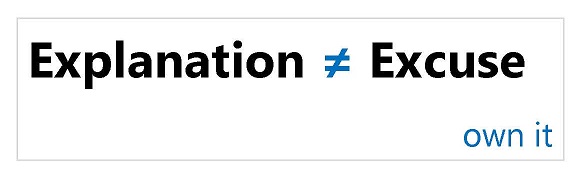
Explanation, not excuse
In January I completed my first MANAGEtoWIN TriMetrix DNA assessment that blends three sciences - skills, motivators, and behaviors - into one report.
The results blew me away. I LOVE what it wrote about how to work with me. (Not all is positive by the way...) We will be introducing them soon.
Bill Bonnstetter of TTI made a great point recently. He said,
The best way to improve your decisions is to better understand your biases that are leading to your decisions.
We teach our Clients how to better understand themselves. Those people who embrace the insights that we share with them become better leaders. BUT what is the most common tripping point for people who try to apply what they learn on their own?
They use their new knowledge as an excuse rather than an explanation.
"Oh, I'm a High D so you need to do this right away..."
"You know I'm a High I so I'm not good with details..."
"Moving quickly makes me uncomfortable as a High S..."
"I'm a realist, not a pessimist. As a High C I just need more..."
And that's just the behaviors. The game can be played with your values on the job too, on purpose or without thinking. The bottom line is an explanation that helps you know yourself better is not an excuse to do anything you want.
 THE PURPOSE of our work with you to become a better leader involves:
- Understanding yourself better.
- Identifying how to build on your strengths and delegate weaknesses.
- Adapting your behaviors to respect the DIFFERENT behaviors and work motivators of others... do not just make an excuse and walk over them and/or justify unproductive communication and demands.
At the moment, 2015 looks like an opportunity to increase your sales by 50% or more. Make the most of it by owning every sense of your heart, every emotion you feel, every word you say, and every action you take. As the U.S. Marines have said, be all you can be. It is possible.
Do you need help to develop NEW habits to overpower some less productive ones? Contact us if you would like to talk through what you want to achieve.
A Reading List for 2015
I've been asked a number of times about what books I read, what resources I value, and which people I follow for leadership and business advice. Recently I put together a list and I thought I should share it with you.
These are just a few of the books that I appreciate. Topics range from business to personal-growth, and I don't expect all of them to be for everyone. Here they are, in no particular order:
- The Power of Habit: Why We Do What We Do in Life and Business
- Just Listen
- Rework
- David and Goliath: Underdogs, Misfits, and the Art of Battling Giants
- Great by Choice: Uncertainty, Chaos, and Luck--Why Some Thrive Despite Them All
- The Practical Drucker: Applying the Wisdom of the World's Greatest Management Thinker*
- The Company Culture Challenge (shameless plug!)
- The Customer Service Revolution: Overthrow Conventional Business, Inspire Employees, and Change the World*
- The Hope Quotient: Measure It. Raise It. You'll Never Be The Same.
- Mastering The Management Buckets: 20 Critical Competencies For Leading Your Business or Nonprofit
- Your Brain at Work: Strategies For Overcoming Distraction, Regaining Focus, And Working Smarter All Day Long
- Liespotting: Proven Techniques to Detect Deception
- The Boys in the Boat: Nine Americans and Their Epic Quest for Gold at the 1936 Berlin Olympics*
- Theodore Rex
- The Rise of Theodore Roosevelt
- John Adams
- An Unfinished Life: John F. Kennedy, 1917 – 1963
- NIV Life Application Study Bible (Costco regularly stocks a leather covered version of this – I like the notes on every page for context)
- Wild at Heart Revised & Updated: Discovering the Secret of a Man's Soul
- Never Go Back: 10 Things You'll Never Do Again
- Who Is This Man? The Unpredictable Impact of the Inescapable Jesus
As I said, I don't imagine that everyone will appreciate these as much as I have. However, I do believe that everyone can find something within each of these books that they can appreciate in their own way.
In 2014 you said 2015
Nike has this great slogan, "Yesterday you said tomorrow." Of course you have to follow that with Nike's "Just Do It" and it begs the question: You may have had a good year in 2014, but could it have been better?

What got pushed to the back burner last year as you worked in your business fighting fires? Too often the answer is, "I really wanted to..." and rarely, "I'm so glad I got this done." Perhaps you wanted to:
- Work on your company culture
- Not just set clear, measurable goals, but actually follow-up on them
- Improve communication, productivity... between your people ANDy our clients!
Your woulda-shoulda-coulda list of ways you wanted to work on your business might be different, but one thing is for sure: Whatever you postponed in 2014 is still a problem in 2015 AND it involves people.
WHAT SHOULD YOU DO?
Slow down this month and meet with someone who has been where you want to be. Find a person who has no emotional bias in the decisions you have to make and have a discussion that includes:
- Reflect on what you did well last year. How do you multiply this success for more rapid expansion in 2015?
- Identify the three key things you wanted to do last year, but did not, to better engage every employee in your organization. How much did that cost you in sales and profit? This year, how much additional sales / profit could we achieve by making these changes NOW (not this instant, but as quickly as possible to do a great job)? A suggestion: I just do it. Schedule it in your calendar now. Or, delegate/outsource it to someone else inside your organization or outside it.
- Identify the three key things you wanted to do last year, but did not, to improve the experience each Client has with your company. How much did that cost you in sales and profit? This year, how much additional sales / profit could you achieve by making these changes NOW (not this instant, but as quickly as possible to do a great job)? Again, just do it. Schedule it on your calendar now or delegate it.
Do not try to be a Lone Ranger. Even he had Tonto by his side to help out. Contact us if you would like to talk through what you want to achieve.
CAUTION: If this year was "Groundhog Day" for you - you entered the year with regrets similar to when you started 2014... then talk with someone you trust and have a candid conversation. Do NOT waste another year.
Produce Killer Lunch-n-Learns Webinar
Many MSPs would like to hold more events to attract the right prospects and keep existing clients happy; however, they're not sure how to get people to attend their events. Does this sound like you? If so...
Watch the webinar below in which Stuart Crawford, Founder of Ulistic, will explain how he produces events that consistently grow the business of his clients.
A well-produced event motivates existing clients to buy more, and convinces prospects that they need to do business with you! As we've said, this is a webinar that can't be missed, especially if you want to learn how to:
- Produce more quality events
- Motivate large numbers of decision-makers to attend
- Secure all of the vendor dollars available to you
During the 30-45 minutes, learn how Stuart Crawford and his innovative marketing team at Ulistic produces events that drive new business for companies like yours! More specifically, we'll discuss how to produce a lunch-n-learn event, wherein you're able to provide true business value to clients and prospects while keeping technology as the secondary focus.
Why not your business?
Too many leaders are stuck "fighting fires" instead of forcing themselves to simplify.
This does not have to be a lifelong struggle. We can develop a discipline of simplicity. Here are two videos to make my point:
Why not rally your people around a simple ownership culture foundation: Everyone takes 100% responsibility for Client happiness (and coworker relationships)... and there are no excuses.
A client of John Rizzo gives us a simple way to get everyone in your organization on the same page. (Daniel Marcos shared this recently). Watch the 4-minute video to be inspired.
I suggest this simple message be formatted as:
100-zero
Consider how you can encourage your people to fully embrace a 100-zero culture / ownership culture. This is not a one-time, helicopter drop training, but rather an ongoing coaching / mentoring discipline throughout your organization.
Secondly, another simple message: Why can't your company be unique? I hear this all the time. It is a lie. Any organization can be totally unique by the solutions you provide, the way you deliver those solutions, or both.
Consider this 2-minute video from Starbucks. If they can reinvent coffee, why can't you create an incredible client experience at your company?
Simplicity.
Embrace it. Develop habits around it. Never stop training it and providing a role model of simplicity. Positive change and growth then occurs on its own. This is the core of our 3strands LEADERSHIP principles and LEADERSHIP Essentials services.
Do what is really important
Most leaders share a common struggle: Finding time to do what they are truly called to do in life because they are so busy.
Hanukkah, Christmas... the holidays is a time of giving. You have been given an incredible gift to live an adventure only you can experience. The gift you have this season is...
Time for self-accountability.
"No!" you say. I have family commitments. Cleaning up the house for visitors and a thousand other excuses.
You have the gift of choice.
You choose how to spend your time each day therefore only you choose whether you are living your dreams or not.
"No!" you say. I have to do this. I have to do that... Really?
About 15 years ago my brother felt something odd in his body and went to the doctor. The odd feeling was a mass of dead white blood cells. He had leukemia.
GET REAL. Do you need to wait for a doctor to say you have cancer to focus on what is truly important? Or an accident to take the life of someone special to finally make it a priority to spend time with people you love?
I suggest you choose to set aside 3 times of Sanctuary for one hour each by January 4, 2015. The goal is to confirm you are living your dreams, using your talents to the fullest, impacting the lives of others as much as you can... and laughing every day with people you love.
Here is one possible agenda, but the main thing is to THINK:
1. WAKE-UP CALL: If I did not have to work, what would I be doing right now with my life? What would I be creating instead of all that "stuff" filling up my calendar now?
NOTE: This might be developing a unique product/service, writing a book, travel, time with friends or loved ones...
2. DISCIPLINE: How can I change my calendar commitments so I can spend at least 4 hours weekly working on my dreams? Maybe I should work longer 4 days a week so I can spend one full day a week just on my dream. Pilot a program in January 2015.
WARNING: You might want to schedule the one day early in the week. Otherwise it may get crowded out. If your Dream Day is Friday, then go off-site.
3. SCHEDULE: Schedule the time in your calendar. Get approval from your boss and spouse... or is that the same person? Communicate to others that you are only to be interrupted for emergencies.
4. RESEARCH: Do your research. Wisdom is gained from many counselors. Invest part of your dream time to consider what others have learned and/or discuss ideas with people who will be totally candid.
5. PILOT: Develop your dream in very small pieces, then test and refine each piece before moving to the next step.
6. JOY: Have fun! One critical attitude you must have to enjoy this process is to constantly remind yourself how thankful you are for specific people in your life, your health, any resources you have, the freedom you have in your country to pursue your dreams, your faith...
7. OPTION: Here are some optional challenge questions to consider no matter what your dreams are. Some of these are inspired by reading some notes of Brian Buffini, but I am not quoting him directly.
- Who and what am I courageously loving, living, and fighting for? This core of life should not be constantly set aside by the busyness of life's lessor demands of our time.
- Leadership starts with better managing myself. Where are my strengths and weaknesses? How can I adjust?
- My example to others is not the main thing, it is the only thing as a leader. Possibly the biggest hurdle to being a great leader is that I have to be THE example ALL THE TIME.
- I want an ownership culture where all of my people take full responsibility for meeting or exceeding expectations with everyone. This means I must focus on influencing, not controlling. How am I doing?
- Every day is significant, but excuses keep me where I am. What habits do I need to change to force daily progress towards better living my dreams?
- My positive habits are more important than my intentions and willpower. Only through improving my habits can I live my dreams. What do I need to do to improve?
- Last but not least, when I know my "why" then I can figure out any "how" and overcome any "what if."
Please accept my sincere gratitude for your encouragement, and my prayer that you are very blessed this Hanukkah, Christmas holiday season and beyond.
Year-end list
I am inspired by Sea Level Ops sending out a ConnectWise Year-End list. My list has a different focus.
First of all, what are my core objectives as a leader? They might be:
#1 Assess my performance
- How well have I achieved my goals?
- Have I consistently followed-up to manage my direct reports?
- What have I done this year that significantly improved our culture?
- How well have we recognized each person in ways they prefer?
- What is the best thing I did to help someone this year?
#2 Retain everyone on my team who is performing well
- Work with them to achieve their 2014 strategic plan
- Ask them to draft, then together confirm their 2015 strategic plan
- Confirm how they will grow - sign them up for something they want to learn, like our Certified LEADER program
- Recognize them in ways they prefer, and
- Confirm why they are doing meaningful work, and what would be most meaningful for them to do in 2015
#3 Assess the performance of my employees
- Close out each employee's 2014 goals
- Confirm my people met my behavioral expectations for them
- Confirm I met each direct report's behavioral expectations for me
- Complete an annual performance review for each employee
- Identify the most meaningful activity each employee did.
#4 Assess our Client Experience
- Survey our Clients to confirm their satisfaction
- Assess satisfaction at each step of a simple Client Experience Cycle
- Consider what we have improved this year
- Survey my people to confirm their concerns about Clients
- Determine "what gaps to fill" to not repeat mistakes.
#5 Assess our New Business Development
- Compare our sales performance against goals. No excuses.
- Consider sales coaching or outsourcing sales management to a professional sales organization like The Leren Group
- Define how to improve the key weaknesses of each team member
- Define how to expand the key strengths of each team member
- Define Good - Better - GREAT sales goals for 2015
#6 Assess our core Red Ocean / Blue Ocean Strategy
- Fully comprehend our Red Ocean business
- Fully comprehend our Blue Ocean business, if any
- Lay out a schedule to pilot more Blue Ocean opportunities
- Draft a plan to jettison businesses we cannot be #1
- Decide on an outside resource to help us move more Blue Ocean.
#7 Prioritize actions to take
- Set clear, measurable goals for the organization
- Assess and meet with every team member to confirm engagement
- Complete everyone's BOLD NEW 2015 employee strategic plan
- Define quarterly activities to excite and refresh my team
- Schedule personal time to relax, refresh, and re-dream.
QUESTION: You weed a garden, and then what do you do? You stand back to assess your work.
Why not MAKE THE TIME to fully assess your 2014 so you can make 2015 your best year ever?
Now are you mad?
Do you wish your company was growing faster or more profitably?
Too often I talk with leaders whose companies are stuck. Their sales or profits grew, but fell back to prior levels. They are in a rut and... surprisingly they have accepted it.
Does that shock you? It shouldn't. A pity party accepting less than your dreams - and your TRUE CAPABILITIES is often comfortable. It is an almost evil temptation that is allowed to fester into a major mistake that steals years of your positive impact on the world around you.
You need to get mad about it. "Mad," as in enraged; greatly provoked or irritated; angry. (Dictionary.com) I am NOT recommending you lash out at others, but rather you are what I call "turning point mad" - you are unwilling to accept the status quo and will make the tough decisions necessary to create your new reality.
I often get hired by leaders who are frustrated. They are sick and tired of dealing with the same employee drama over and over again, and want to discover a better way to grow their business. I help with leadership systems, company culture, and business focus. Email me if you want to discuss your challenges.
Watch this clip from one of the weirdest movies ever made, Network. I do not recommend the movie, but the clip about a newscaster encouraging others to refuse to accept the lie that we must accept mediocrity and evil might remind you of your true potential. He wants people to say, "I'm mad as hell and I'm not going to stand for it any more!"
How about you?
The reasons you are stuck vary, but only YOU can make a decision to get unstuck. Here are 7 questions that might help you embrace your next bold move :
#1 My Dreams - 5-10 Years ago, where did I dream my company would be today?
Very few people dream of just maintaining their sales at current levels indefinitely. Maybe you have been stuck for 25 years. I know people who are there today and will never grow. You do not have to be like them.
What was your dream? Where are you today in relation to that dream?
Do not think of all the excuses why you are not there. Just remember the dream and decide to dream again.
Now are you mad enough to not stand for "it" anymore?
#2 The Cost - How long have I been stuck at this level and what has it cost me?
Let's say your company grew to "X" and then grew beyond that, but returned to "X." Maybe your revenue or profits, or whatever you focus on, has gone up and down, but you are stuck in the range of "X."
How much additional profit would you have had each of the past 5-10 years if you had grown to 2X, 3X... or 10X?
What have you lost? You will lose that much and more if you continue to accept your current company's state of affairs.
Now are you mad enough to not stand for "it" anymore?
#3 New Dream - What should my dream be today?
You need to start anew today. The past is past and cannot be relived, BUT where do you want to grow now?
This takes work, but not necessarily a long time. I engage one or more outside experts to help me see "beyond the trees." Working on my own would only have me run fast and hard... but circle back again to where I am.
Get someone to help you define your next bold moves. Involve your team. Run ideas past your spouse, and appropriate close friends, and trusted advisors. But often you need an outside catalyst who has "been there, done that." Your opportunities are still HUGE. You just have to get the full picture of your paradise and then...
Now are you mad enough to not stand for "it" anymore?
#4 My Weaknesses - What are my 3 most significant weaknesses and how have they delayed my dreams?
Do not use this time to beat yourself up. The key is to discern reality. We all have weaknesses and make foolish decisions. You need to comprehend your mistakes and make a decision to NEVER GO BACK to them. (Read Henry Cloud's book, Never Go Back, if you want a broader perspective on this.)
List your 3 biggest weaknesses. Then list 1-3 major failures as a result of each weakness and realistically what each failure cost then, and if appropriate, on an ongoing basis.
Possibly ask others to confirm your assessment. Be open to their opinion. You may not agree with their conclusions, but your actions made them feel that way. Take ownership for your actions so you can delegate out your weaknesses or overpower them with new systems / habits.
Now are you mad enough to not stand for "it" anymore?
#5 My Strengths - What are my most significant strengths?
This is not an ego trip, but an engine check. List your 3 most powerful strengths that can help you achieve your career dreams.
List 1-3 ways each strength can help you achieve your dreams. What specific results can you expect from each strength? Realistically how much additional profit is available to you today, tomorrow, and in the future when you effectively focus on your strengths?
If you asked others for input on your weaknesses, simultaneously discuss your strengths. They may be partially correct, but embellishing to compensate for some really negative feedback. Do not believe them if they compliment you for traits you do not have. Just politely ask questions, carefully consider their thoughts, and thank them for their candor.
Now are you mad enough to not stand for "it" anymore?
#6 New Plan - What is my new plan, my new dream, the prize that REALLY excites me?
Your new plan needs these attributes:
- Simple - one page.
- Applies lessons learned to make your next years your best years.
- Focused on how your company will uniquely add value.
- Systematically removes or overcomes your weaknesses.
- Systematically builds on your strengths.
- Has clear, simple metrics to achieve on a schedule.
- Commits to accountability
Consider what you could have achieved up until now if you followed this type of plan...
Now are you mad enough to not stand for "it" anymore?
#7 New Accountability - How will I hold myself accountable to achieve my new dream?
You should be afraid of falling back into your old ways. Therefore have the wisdom to define and commit to accountability in your new plan. In brief:
- Self accountability must be daily, with longer review weekly and quarterly in "Sanctuary."
- Further define your dream and how to achieve it with your team, and throughout your organization. Build mutual accountability throughout your organization - NOT just at the management level. Build an ownership culture where a part-time employee can respectfully question the behavior of the CEO if it might not match your values and pursuit of your dream.
- Get inspiration, focus, systems, and accountability from a consultant or coach who has been there, done that. Chet Holmes International says 75% of Fortune 500 CEO's (the top dogs) have an outside expert to guide them in their business. If those smart, incredibly wealthy people need an outside expert, then you should have one in your budget too.
- If comfortable to your spouse, then define how you will submit to their accountability in a mutually respectful, encouraging way - and follow through on it!
In some ways this is so simple. We make our lives complicated and trap ourselves in no growth activities...
Now are you made enough to not stand for "it" anymore?
Don't wait. Take Sanctuary time this weekend to answer these 7 questions and act upon your answers. Why be stuck NOT pursuing your dreams when you have the freedom to live the life you want?
Expose the Actors! Hiring and recruiting webinar with Todd Billiar of VAR Staffing
Have you wished you had interviewed a job candidate better? Here is your chance to learn our inside tips along with those of Todd Billiar, super recruiter. In the long run, every new hire costs you 1X-2X their annual compensation even if you fire them after six months. Your primary gamble is the interview process. Interview like a pro to expose great actors and convince superstars to join your team. Interview un-systematically and it costs you a minimum of $10,000.
Check out this webinar to hear two experts explain how they make certain the people they hire will be long-term, top performing employees.
Check out all our videos on Vimeo and download the files/PPT for this webinar on Dropbox.
7 Questions About Retention
Today completes a journey through 7 questions on each of the key areas of leadership: Hiring, management, development, and retention of top performers.
The 7 questions in each of these areas is meant to be an opportunity for self or group accountability. Why?
- Only when your employees are fully engaged can your clients consistently have great experiences being served by your company.
- When leaders are spending too much time replacing staff then you are wasting time, losing money, and missing opportunities.
- In regards to retention, studies have concluded the cost of losing an employee is 1X-3X their annual compensation when you take into account the full impact of the loss.
I encourage you to ask questions during our free webinar on interviewing job candidates at 3PM Tuesday, December 2. Register here.
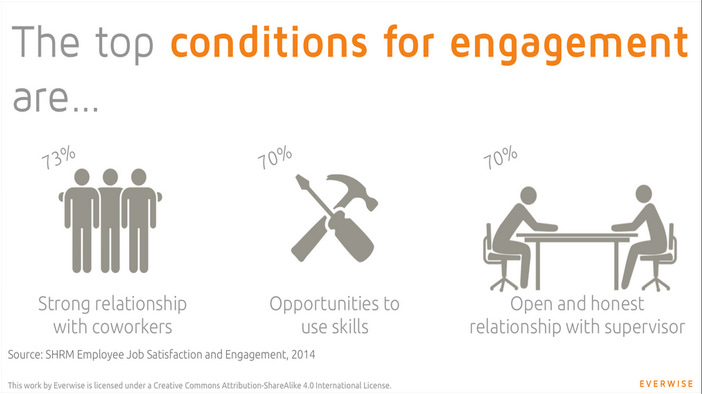
Here are 7 questions every leader should ask about how you are retaining top performing employees. In particular, make certain you ask these questions about your most productive, profitable, and personally fulfilled people, but ideally you consider how well each employee is being retained:
#1 Meaningful Work: How well is the employee's work aligned with their unique work values?
If you are using our MANAGEtoWIN Talent Assessments, then how well are you appealing to their two most intense work values, and the statements they confirmed are the best way to work with them?
When is the last time you reinforced something they did on the job as it relates to their core values?
When is the most recent time you gave them an opportunity to work on something that specifically related to their core values, and did you communicate that when discussing it with them? How did it go?
Meaningful Work is the second strand of 3strands LEADERSHIP.
#2 Strategic Plan: Yes, I am back at this again. Does each person have an employee strategic plan - a job description on steroids - so they are focused on achieving meaningful work?
Did they help write it? Are they staying up with it - goal review weekly, expectations review as needed, but no later than quarterly, and career path review quarterly?
#3 Follow-up: Are you consistently following-up with each employee?
Are they on track with their employee strategic plan? Have you followed-up and followed through, as Frank Ernesto of NDSE would say, on every commitment you have made to each employee?
When was the last time you confirmed you are meeting their expectations as a manager, as defined in their strategic plan? And confirmed they are meeting yours...
#4 Retention Interviews: Have you done an informal retention interview with each employee during the last six months?
This is an offsite coffee meeting or meal, or during a drive to a client or golf game. It is NOT a list of questions to ask and check-off, but is is a crucial check-in to confirm they are fully engaged, their expectations are being met, and they feel part of the team.
Email me if you want my list of sample questions.
#5 Value Them: How have you reinforced each employee is a valued member of your team?
Sincere Gratitude is the third strand of 3strands LEADERSHIP. It is critical that you regularly, properly, personally, and sincerely appreciate your people. Some of this is formal recognition, but much of it is how you follow up with people, encourage them SINCERELY, and compliment them indirectly in front of others.
#6 Incentive Pay: Do your employees have opportunities to earn unlimited compensation based on their performance?
Every employee should have 25% or more of their compensation based on performance. There should be no limits to their pay when they over-perform.
Years ago I was working with Microsoft Dynamics Presidents Club member companies. One of them wanted to hire their first sales person. We discussed compensation. I suggested top performing sales people earn $100,000 or more. He replied, "Oh no, we would never want a sales person to earn that much money. We are thinking more like $60,000."
I do not think their company repeated as a Presidents Club member the following year...
In contrast, at the same time another Presidents Club member was paying a young sales rep in his twenties over $400,000 for blowing his quota out of the water. Why not? The commission plan still made certain the company made its profit.
Sales people examples of performance pay are easy, but everyone should be paid on performance and rewarded generously when times are good.
#7 Proud Parent: Do you have a true story about each employee that boasts about how proud you are of them?
Why not? Let your people hear you speak highly about them and their accomplishments. Do not repeat the same story over and over again, but give them confidence you are a "proud parent."
Think about how much you like it, even when it is embarrassing, when someone you love or admire speaks well of you. Do the same.
If you do these 7 things well as a manager, then you significantly increase your ability to retain top performing employees.
Don't wait. Take Sanctuary time this weekend to answer these 7 questions and act upon your answers. You will be glad you did.
7 Questions About Your Employees' Future
It is very important that every one of your employees have a career path with quarterly learning activities that are being completed on schedule.
- Employees who understand their future in an organization take more responsibility to achieve results.
- People who understand their future in your organization stay longer and are more productive.
- Better educated employees achieve more.
Do you have people who are certified technically or in sales, and now have been promoted into management? Would you like them to be trained, coached, and CERTIFIED as a leader? Contact us. We are introducing a 3strands LEADER Certification program soon. I will send you information on the program for feedback.
Here are 7 questions every leader should ask about how you are developing people to be more productive, profitable, and personally fulfilled in the work they do as part of your company:
#1 Are your people completing training and being certified by a third party that you trust so they can do their jobs effectively?
Do you feel like you are running an adult daycare program instead of your real business? Certified learning of technical skills, sales ability, and soon from MANAGEtoWIN - systematic leadership, have a lot of benefits:
- Vendor certification improves vendor relationships, your skills to sell and implement their solutions, and gain more vendor funding to increase business.
- Certification is often meaningful to your employees.
- Certification is often meaningful to your clients.
#2 Do you have a career ladder so employees understand how they can grow in your organization?
Understanding the specific knowledge, skills and experience for each position in your company is important to fully engage employees. They need to see their options for their future. We have a great career ladder format that most of our Clients can update to apply in their organization in two hours or less. This is a great investment of your time.
The alternative is employees have different knowledge, skills, and experience in job roles yet are paid the same, performance expectations are often the same... and everyone is frustrated.
#3 Does each employee have a 1-3 year career path?
Each employee should have clear, measurable professional development goals for the current year in their employee strategic plan. Follow-up to make certain they complete the current year's objectives on schedule.
They should also define 1-2 years of additional learning they would like to complete. Typically this is one learning experience a quarter. We recommend you review this quarterly with them so it can be updated based on changes in your business, technology, or for other reasons.
#4 Do your people have a mentor who is NOT their boss?
Mentoring is a great engagement tool, and it benefits both the mentor and mentee. Too much to cover here, but I encourage you to consider piloting a mentor program sometime in the future.
Mentoring increases skills, keeps employees fully engaged, provides an outlet for discussion of sensitive questions, and encourages everyone to grow.
#5 Are your employees being regularly coached by their manager and/or an outside coach?
Managers should be effective coaches who help each team member achieve meaningful goals and a career path in their employee strategic plan. At times an outside coach can help individual employees or groups grow to a new level of knowledge, skill, and experience. This is for a season, not a lifetime. If you engage an outside coach, I encourage you to define the key objectives of the engagement in the beginning and stay on track to achieve them in a reasonable amount of time. Then disengage.
Yes, there are people who believe coaching is ongoing. Maybe, but that is not our approach and so I cannot recommend it. We believe the ongoing coach is a contractor.
#6 Are you holding employees accountable to completing the learning activities in their current year's goals on schedule with excellence?
If not, then your inconsistency is encouraging employees to perform at a lower level and/or leave your company.
3strands LEADERs follow-up systematically - with Systematic Power, the first strand of our "rope" that helps us climb the cliffs of our goals. If this is not clear to you, or you struggle in this area, then email me for a conversation. I am happy to help you consider a new direction.
#7 Do we recognize and/or celebrate when a member of our team becomes better through our investment in their professional development?
Achievement should be appropriately recognized in ways each employee prefers. Learning is an important achievement. Do not let it be accomplished in the dark, unrecognized, unappreciated, and taken for granted.
Learning takes work. Say "Thank you" or "Congratulations" in appropriate ways when employees help you build a stronger business through expanding their knowledge, improving their skills, and gaining more experience as part of their journey to become top performers who are doing work that is personally fulfilling to them.
If you do these 7 things well as a manager, then you are competitively superior as a leader in the area of professional development.
Don't wait. Take Sanctuary time this weekend to answer these 7 questions and act upon your answers. You will be glad you did.
7 Hiring Questions Every Leader Should Ask
Quick stories from hiring I was NOT involved in...
"He didn't act like this in the interviews," my Client complained. Oops... He had hired "Dr. Jekyll" and got "Mr. Hyde."
Another Client hired a tech in another state without meeting him in-person. Weeks later he called the tech to say he and a sales rep would be in the area. Could they stop by and meet? "You better not come by my house. I'll call the cops. You have no right to come anywhere near here. You better not..." Oops...
The candidate was stellar during interviews. My Client warned he would run a background check on him. Is there anything the candidate wanted to alert him to that might come back in the report? "No. Nothing." The report came back that he was a sexual predator, had done jail time, had a DUI, and more. Oops... Thank God for our background check company!
Here are 7 questions every leader should ask about how you hire people, that surprisingly very few people do ask:
#1 Quality of Hire: What type of people do we want to hire?
Most leaders have not defined a standard for the quality of people they are willing to hire. Do they want only top performers, good people, average folks, or just anyone who can fill a seat to join their company? The result is they overlook warning signs of weak performance during the hiring process, and reap the pains later.
#2 Systematic Power: Do we have a clearly defined hiring system, and are we following it every time?
Most leaders have a sketchy hiring process at best, and rely on gut feelings to hire people. Too often the hiring process is rushed, and then you tend to miss warning signs that someone is not a cultural fit or lacks critical technical or soft skills.
#3 Strategic Plan: Have we fully and clearly defined the job?
Most leaders explain a job rather than provide a full written definition. One of our most popular LEADERSHIP Essentials Service is helping Clients develop employee strategic plans for each person's success. These also give you an edge in the hiring process when superstars are considering other offers.
See a sample here. Let me know if you want to discuss how it works.
#4 Promoting Opportunities: How do we promote our jobs so we are attracting people who are not looking in addition to qualified candidates?
Most companies can improve their job promotion activities. Always have open jobs on your website. Promote on LinkedIn, Facebook, and other social media sites. Do you have a system to consider and properly manage interns or recent college graduates? Do you have a network of 50 or more people you can easily contact to communicate new openings? There is more...
#5 Talent Assessments: Do we have a way to confirm the candidate's core work behaviors and values/motivators?
Anyone can hire a person, but shrewd leaders use tools to clearly confirm whether a candidate is a match for the position, get job candidates talking outside of their "first date" script, and test their skills.
Bill Bonnstetter has said, "If a job could talk, it would explain precisely what was necessary for it to achieve superior performance." The problem is jobs do not talk, so we have to do our due diligence.
If you have never tried our Talent Assessments, which most of our active Clients use before they hire anyone, then email me. I will let you experience one for free if you contact me by October 30, 2014.
#6 Background Check: Do we complete a background check on every person before they start working for us?
This is cheap insurance. NEVER hire anyone without a background check. I have lost $1.5 million on a hiring mistake that could have been avoided with a simple $125 background check. Only check people you are hiring, not all job candidates.
If you want a great online background check partner, email me. I will send you the company we use.
#7 No Emotion: Is our employee turnover too high because we are hiring the wrong people?
I have a growing number of Clients who hire me to interview their top candidates before they finalize their interview process.
I give their top candidates our full Talent Assessment plus Summary, interview the candidate, and then tell the Client whether I would hire them, interview them more, or NOT hire them.
Why go to this expense ($499 for one; $399 for a bundle of five)? Because I am not trying to fill a seat and have no emotion in the hiring process, I often catch behaviors and motivators of job candidates they miss. Every time my advice protects them from a bad hire, they save at least $10,000 if not the first year's compensation for the position.
You can order this service on our Talent Assessment page (please use Chrome or Firefox to order - we are having problems with IE).
Ask yourself these questions. Congratulations if your answers are good! But are you and your people consistently living it out? (I hope so!)
Don't wait. Take Sanctuary time this weekend to answer these 7 questions and act upon your answers. You will be glad you did.
7 Questions Every Leader Should Ask
Lee Iaccoca led Chrysler from bankruptcy to profitability and a future. One activity he credited in his book, IACCOCA, for this success was the practice of what I call "Sanctuary."
Each Sunday evening Iaccoca would remove himself from the family to sit in his study for two hours to review (1) How well did I do on my list of important activities this past week; and (2) What do I need to get done this week to keep Chrysler moving forward?
Sanctuary time is uninterrupted time to THINK. No email. No phone calls. No texting or instant messages. No interruptions.
Here are 7 questions every leader should ask in Sanctuary as you close out 2014 and move into 2015:
#1 Foundation: The foundation of great decisions is my process for receiving and processing information against my core beliefs. What are my core beliefs and how can I change my decision-making process to improve my performance from today forward?
#2 Bad Habits: Everyone has bad habits and they never go away. What are my 1-3 worst habits and how do they hurt my career, financials, and personal life?
#3 New Habits: Bad habits stay with us, but they can be overpowered by new behaviors. What new habits / routines can I put in place to overcome my bad habits?
#4 Relationships: Even if I have strong relationships, there is one that could be better. What is one personal relationship that I want to improve?
- Who
- How
- When (Define a scheduled plan of 7 activities or less to be a better friend and create memories. Should this plan be recurring?)
#5 Spending: Money is freedom, yet prudence today expands opportunities tomorrow. Where am I spending money personally that is negatively affecting my life and/or retirement, and when + how am I going to stop?
#6 Financial: Even the most successful companies need to regularly evaluate what they are getting in return for the money they spend. Where is my company spending money that is not justified by the ROI - the financial and/or time return on the investment - and when + how am I going to stop?
#7 Threat: For most people, death is unplanned as is a terrible injury or illness. If today I had a terrible injury or found out that I have a terminal illness... What is my bucket list, with a schedule?
Even making one change per question can yield substantial results. Once you get these issues in order, then you can move on to the next 7 challenges.
P.S. You should seek the counsel of at least one person you trust before implementing your answers.
Don't wait. Take Sanctuary time this weekend to answer these 7 questions and act upon your answers. You will be glad you did.
The Flawed Rose
After high school my girlfriend, Terry, joined the Ice Follies. (I went to U.C. Berkeley.) In her second year with the show Terry earned a short solo to the music of Second Hand Rose.
She left the show later that year, but in our 37+ years of marriage I have moved from buying her 10 dozen roses her opening night in San Francisco to a single red rose. The single rose is a reminder of our young love.
Last Thursday I was driving through San Francisco and picked up a rose for Terry. Days later it drooped. I thought it was dead. I pruned it, put it back in the vase, and went to bed for the evening. It was full of life in the morning, but that afternoon was drooping again.
I pruned it again, and it revived again. (Does that remind you of some employees?) It began to bloom, but it is flawed. For some reason part of its bloom is missing. In the lower left you can see the brown leaf that is typically only behind the rose. The petals are missing so it shows.
Roses are stunning. They improve a room and brighten people's days. They have a wonderful scent. A rose reminds you of something positive.
QUESTION
What do you do when that "rose" of an employee turns out to be flawed?

- Thorns: Every employee has issues, just as roses have thorns. Period. You can overcome or avoid their thorns when you know your employees primary motivators and preferred behavioral style (our Talent Assessments). Then you can work with them intentionally to reinforce their positive traits and avoid their negative attributes.
- Flawed: Every employee is flawed like this rose. Sometimes the flaws are very clear. Other times weaknesses are hidden for a while... Leaders better engage employees when we focus on strengths and improve weaknesses to a competitive level. Do NOT try to make a weakness a strength. We achieve more with less effort, and our people are happier, when we focus on aligning job responsibilities with their strengths.
- Surprises: This rose is missing part of its bloom. This flaw was hidden from me when I bought it. Our people surprise us too. Any leader can inspire a team when profits are high, our group/company is growing, and people are getting along. GREAT leaders are prepared for surprises and overcome them because they know how their people prefer to work. They help others work together in ways that balance their individual needs, the preferences of others (coworkers, clients, vendors), and the objectives of the company. This means we have to be a 3strands LEADER who is systematically engaging our people in meaningful work as we constantly reinforce sincere gratitude for their contributions in ways they appreciate.
- Prune: This rose needs pruning to thrive. So do our employees. They are not robots or a dog who will sleep 16 hours a day and be happy. Employees need our Systematic LEADERSHIP - consistent engagement to remain focused, grow, and achieve. We have to help them feel good about pruning dead habits, wasted time, and poor behaviors so our people love what they do as much as possible.
- Replace: Sometimes the rose I give Terry lasts a very long time, but at some point it is always time to get a new one. This is not a bad thing. The rose has served its purpose and it is time to move on.
It is a similar story with our employees. At some point they need to move on to something else in life, maybe retirement, but in the meantime we have to work systematically to keep our team fully engaged.
This requires everyone to have clear, measurable goals and defined work behaviors. We always gain when we inspire people as a 3strands LEADER, including having a clearly defined hiring system to hire Dr. Jekyll, not a great actor who turns out to be Mr. Hyde.
Thriving roses. Fully engaged employees. This is our primary responsibility as leaders.
Starved for time? Diet tips here
Everyone who contacts me needs more time in their day. Here are some tips that are helping me.
Prepare. Each week I define up to three key objectives and schedule time to complete them during Monday-Wednesday. I call these the 3strands of my "rope" to climb to the next crevice of my life's mountain. My 3Strands are derived from my clear, measurable, annual T.A.R.G.E.T. goals that I set at the beginning of this year. Each 3Strands list is defined every week sometime between late afternoon Friday and 6:00 a.m. Monday. During this time, I commit to no interruptions - it is my Sanctuary time. I focus on what is most important to achieve my goals.
I commit to completing my 3Strands Monday-Wednesday because if I wait until Thursday-Friday then they do not get done. If I have to shift my focus to other priorities early in the week then I can still complete my 3strands on Thursday-Friday.
Why do I set a maximum of three? Because 3 is realistic. It's not a long laundry list of things I would like to do. My 3Strands are tasks I intend to complete this week. I stop at 3 in order to focus my time on the activities that matter most.
Say "No." This is so simple to say, but challenging to do. The longer you are in business, even if you are not successful, the more requests there are for your time. You do not have to be rude. A simple "no" will suffice. Most of the time when you decline something right away you will save yourself the time and energy of having to say no later.
But, there are some great opportunities out there, right? Yes, there are. However, if you do not have time for an opportunity you must learn to decline, and engage at a later date. I write down ideas and organize them in lists on Word documents or iPhone notes. I also create folders on my laptop to save articles, websites, documents... anything that relates to the idea. I quickly save ideas for later, and save myself plenty of time in doing so.
If I come across a great idea or opportunity that cannot wait, I schedule it for later. "Later" could be tomorrow, or it could be in 1-2 weeks. Then I work diligently to complete my priorities so I am available to engage with the new opportunity.
Daily Task Management. I review my calendar daily to optimize my time. With all my responsibilities it is crucial for me to monitor my daily activities and move things around to free-up time, or shift a responsibility to a following day. Does it have to be daily? Only if you want to achieve maximum productivity. Self-accountability is critical to success. At the end of every day I review my calendar to confirm my productivity. This is an example of the Systematic Leadership strand of my 3strands LEADERSHIP system.
What if I do not complete the scheduled tasks on my calendar for a certain day? Welcome to reality. Occasionally that will happen. Complete as much as you can each day with excellence. Then move those uncompleted items to new dates.
What if there are no openings in my calendar? Try to keep one day as a meeting-free day. Do not schedule anything except project work without interaction with others. Ideally 25-50% of the day should be unscheduled. You can shift important work that got delayed due to "firefighting" to Friday. I guarantee the time will be well spent.
Start doing these three things well and it will positively affect everything else you do as a leader.
Coping With Change
I want to build on last week's encouragement to prune your business and discuss some of the nuances involved with making changes. Former Great Britain Labour Prime Minister Tony Blair has been credited as saying something like, "Every decision is dividing". Are you contemplating making some tough choices that could be dividing? The six tips I gave last week could bring about some tough choices:
- Start With Yourself. Stop a bad habit.
- Refine Your Schedule. Respectfully say "no" more often.
- Evaluate Your Hiring Process. Improve your hiring system.
- Simplify Your Offerings. Sell fewer solutions to make more.
- Streamline Communication. Write less, communicate verbally.
- Adapt Your Communication. Mirror the other person's style.
Tony Blair's comment could also be interpreted like this: Every plan has a cost. This comes up often in budgeting meetings where all the numbers are laid out and it's painfully obvious that every choice you make to invest in something is a choice to not invest in something else. Sometimes you need to focus on the little things that you have been unwilling to address. Sometimes you need to make big changes (and prune away that big branch). Whether big or small, as a leader you have to prepare well in order to manage any objections to your proposed changes. Do not be a sluggard and shy away from making difficult decisions.
In discussing some pruning with my team this week, I was reminded of a clip from the movie Dave. It's one of my favorite movies. In the clip, notice how as Dave makes progress on his goal he quips, "This is good, we're doing good!" Remember to encourage yourself and others as you prune. Your changes will be better received with encouragement and a positive attitude.
When you do decide to make changes, consider the natural coping mechanisms people have that need to be overcome. These are the activities we do to avoid short-term pain, but the result is we lose long-term gains. We do foolish things like:
- Hire to fill a seat, which rarely works even when the person's skills meet your job requirements. Instead, work through more candidates to identify a superstar or a great candidate who is a strong match with your culture. That person will perform better and last longer.
- Buy stuff because it helps us feel in control. Some people then return the stuff because they cannot afford it, but at least they had that momentary endorphin rush. Instead, delay any purchase for one day or one week, and get the opinion of others to fully confirm the ROI of the investment before buying.
- Travel to industry events instead of manage our business. Some industry events are fine, but is attending 1-2 a month really necessary? Try to limit industry event travel to occasions where you return with specific, measurable activities you can take to improve your business and assess the results (ROI on the event).
- Attempt to manage a sales team even though it is not our strength, or we hate it. A better idea is to outsource sales management (call Roy) to a professional who can do it better at less cost!
- Work too much while our family wonders where we are. Instead, enjoy the relationships with those closest to you. There is no such thing as limited "quality time." Every moment with them is an opportunity for quality time.
- End a relationship with a difficult client. Why wait? Instead, do it now - handle it respectfully and professionally, but end the distraction and losses.
You have to proactively make tough decisions and then with equal resolve pursue your plan to conclusion.
Pruning, Always Pruning
It was February 2000. A large IT vendor agreed to fund my dot com start-up with $10 million. Twenty days later we were ready to go with $2 million in the bank.
The problem was the dot com mantra was "grow fast", and I had already seen first-hand that growing fast is a delicate process and can easily turn into a disaster for a new company. However, they were paying, so we set aside what I had learned and tried to hire and grow according to the IT vendor's strategy for us.
It was not pretty. We made good progress, but also had a few rough setbacks.
One year later the IT vendor shocked us by cutting off the remainder of our funding. Things had changed at their company, they were shutting down their fund.
Again I had been given an opportunity to learn a lesson. Since then it has become clear that growth is good, but a healthy organization requires constant pruning of people, projects, and activities. Cutting away unnecessary tasks and vague objectives are critical to achieving big T.A.R.G.E.T. goals.
Since that dot com turned into a dot bomb I have dedicated myself to developing a more systematic approach to how leaders hire, manage, develop, and retain top performing employees. I am convinced that leaders and organizations who follow this systematic approach benefit immensely. They achieve a strong company culture, provide a superior experience for clients, and maximize profits.
To achieve these objectives requires constant pruning. In gardening, different plants need to be pruned at different times of the year. Here are some ways to prune in your company so you can grow beyond your past and into your potential:
- Start With Yourself. We all have bad habits. Work on better understanding yourself. Identify 1-3 bad habits you have and how to change them. Build it into your schedule. Get help from a coach, mentor, or coworker.
- Refine Your Schedule. What projects, people, or interests are taking up your time, but not producing great results? This can be a constant battle, and it creates a need for constant pruning. Respectfully and professionally start pruning your schedule.
- Evaluate Your Hiring Process. Sometimes you hire people who do not consistently perform at a high level. Zappos now pays $4,000 for a new hire to quit in their first 90 days. Why? It is cheaper to get someone to leave than have to work with a cultural misfit and act like they can be part of their winning team.
- Simplify Your Offerings. You might sell and/or support too many products or services. It's time to consider to selling and/or supporting fewer product lines. Make it worthwhile for your clients to switch to your preferred platforms AND fine tune the specific product offerings within your key solutions. For instance, do not offer 5 good managed services offerings. Instead offer 2 or 3 great ones.
- Streamline Communication. Try harder to communicate briefly via email, notes, or text. It's best to compose an email that is short and concise, even when referring to a complex subject. Instead, save those lengthy, detailed discussions for a verbal conversation. Take notes if necessary, then move on to the next task.
- Adapt Your Communication. In addition to keeping things brief, you will save time and build stronger relationships when you adapt your communication style to the preferred communication style of the other person, AND appeal to their values, not yours. This is the basis of our Talent Assessments and a major reason they are so popular.
I could go on, but then I might need to prune this blog post... :)