
Your people problems? Gone.
The 4 Management Disciplines Newsletter delivers proven ways to be your best and lead a championship team.
Every championship sports team runs proven plays.
Every Monday morning - I give you four proven plays great leaders use to solve problems in how you Hire, Manage, Develop, and Retain great people.
2 minute read. No fluff. No ads.
Trusted by over 10,000 leaders.
NOTE: David is no longer writing this newsletter. Visit www.simpleliberty.com to read his latest posts.
All Newsletters
Ultimate Competitive Edge
First, consider these conclusions from Gallup...
64% of managers and executives are NOT engaged
(consider the cash drain from the employees that report to them)
and
When you develop the leadership skills of your managers then you DOUBLE the # of engaged employees on their team.
Run the numbers and consider (1) the % of productivity per manager in your company, (2) the % of productivity per employee (how well they perform vs. how well they could perform if they worked smarter and/or harder), and (3) multiply that times the additional profit, revenue, cost savings, opportunities gained, etc. that will occur when they become their best.
The amount you calculate is the potential upside you can monthly as your MANAGERS hire, manage, develop, and retain top performing employees better.
Your estimates are probably low. The upside is much higher. We have only 3 spots left in our Certified LEADER program. Let me improve your managers. Sign-up on our website or download the brochure.
What about the Ultimate Competitive Edge? Here it is:
1. A strong company culture, reinforced weekly, if not daily. Most of you know this already, but only a few of you do this weekly or daily.
2. 3strands Leadership - every owner, executive, manager, and team leader is operating a peak capacity AND LOVING IT! Is this true at your company?
3. Build Relationships - the person must be more important than the transaction. Starting at the first contact with a sales prospect and following through to every interaction with people in your company. EVERY time an employee, client, vendor, person in your community, spouse or family member of an employee... ANYONE interacts with your company, it is relational first, not transactional. Some of you do this instinctively, others have no idea what this looks like. That's why we created our Charm School training :). There is ALWAYS room for improvement!
No managed services / I.T. solution provider consistently does all three well. Some are pretty good, and others are terrible - yet the odd thing about human behavior is many of us are more comfortable losing money because of our bad habits than improving them.
I have been there, done that. I fight every day to not go back. I am committed to developing leaders and applying leadership systems - first myself, and then others. I build relationships naturally. It is what I love best about my career.
This is the ultimate competitive edge. You can embrace it and invest in it, or lose to it.
Why? Because the ultimate competitive edge forces existing clients and sales prospects to BELIEVE they must seek your advice before making a significant technology investment. If they believe this about your competitors but not you, then you start the sales race "in a bad lane" and the odds of you winning the race are less favorable.
Why not improve now?
When YOUR Game Stands Tall
Don't forget to sign-up your managers (and you?) for our Certified LEADER program that kicks off the week of April 6. Email me for comments from companies who have their managers in the program.
I watched the movie, When The Game Stands Tall, recently with my young kids. This is a story about football coach Bob Ladouceur (played by Jim Caviezel), who took the De La Salle High School Spartans from obscurity to a 151-game winning streak that shattered all records for any American sport.
I recommend it highly, not only for you but that you consider it for a team event and discussion. Here is why:
1 - Meaningful Work: "Winning a lot of games is doable. Teaching the kids there's more to life, that's hard." - Coach Ladouceur
Lots of people can build a company and make a lot of money. Selfish jerks do it every day. Lost people do too. Until you focus on WHY you do your work - WHY it is meaningful to you personally and a life changing effort, then you are incomplete. Your success is momentary and one day you will feel empty. Instead, focus on how you can change lives TODAY for your work and personal life will thrive.
2 - Perfect Effort: "We're not asking you to be perfect on every play. What we're asking of you and what you should be asking of each other is to give a perfect effort from snap to whistle." - Coach Ladouceur
We leaders must be role models of people who give 100% effort in everything we do. This "perfect" emphasizes "complete" effort. It is the 100-zero effort we have discussed before. Every moment of our work day we must model this to our employees. Only then can we require it of them.
3 - Define You: "...Don't let a game define who you are. Let your lives do that." - Assistant Coach Terry Eidson
De La Salle loses, yet Coach Eidson (correct spelling) makes a critical point: When you as a leader fail, how do you respond in a 100/zero way so you demonstrate a setback does not define you or your company? How are you teaching your people to say "I can do this" at their darkest moments? How are you responding to their mistakes?
Mistakes do not define a 3strands LEADER. Mistakes refine us. We welcome them as a rock climber does a new cliff to climb.
4 - Goals Always: "Our goal is to give the perfect effort on every play." - Coach Ladouceur
Every member of the De La Salle Football Team has goals at the start of the season. They announce them to the team. They report into the team how they are progressing towards achieving them until they do achieve them. They are clear on what means "success" to them individually, and how that contributes to team wins.
If Coach Ladouceur can do this with young men in high school, they why can't you and your managers consistently pursue goals in your adult daycare center of a business? (This is a habit issue. We can help. Sign-up for our Certified LEADER program today!)
5 - Team Effort: "It's not about the record. It's about the team." - former player Cam Colvin
How are you modeling a team effort? How well do you delegate? How often do you train? How consistently do you follow-up? How often do you keep your commitments? How SINCERELY do you encourage EVERY employee?
Or... are you trapped in bad habits that lead you to gossip, focus on the negative instead of the positive, and hurt relationships with people on your team rather than build them up? Get real about your habits so you can improve. Everyone can improve.
6 - Responsibility: "It's not about the game, it's about when you go out into the world that you are someone others can depend on." - Coach Ladouceur
Are we modeling and teaching our people how to be leaders others can depend on? HOW? I guarantee if you develop your people's ability to be trustworthy, fully responsible team players who others know they can count on no matter what... that you business will thrive. And you will be satisfied in your soul.
7 - Commitment: "Our tradition begins with a commitment. There is a qualitative value we place on that word - commitment. If I had to choose just one lesson a student would learn from participating; it would be learning how to make a commitment." - Coach Ladouceur (see What is a Spartan)
Do not confuse hard work and long hours with commitment. Leaders must demonstrate commitment means to work SMART first, for the team second, and hard third. Is this what you are demonstrating... or are you stuck on #3?
This movie has a lot of great content for discussion. I encourage you to see it and consider what you might want to discuss with your team. Here are some quick links to consider:
What is a Spartan
40 Leadership Lessons...
7 Business Lessons...
Invest the time and effort to make your game stand tall. Work to develop leadership habits that replace your bad boss habits. You will achieve this goal when you make the commitment to improve, engage others to help, and have accountability.
We help entrepreneurial leaders develop NEW habits to overpower their less productive ones. Contact me if you would like to become the leader you were designed to be and more positively impact the lives of others.
The answer to the question - how to rally the troops?
Last week I discussed the importance of rallying your entire company around a single purpose.
My example was from the book, The Power of Habit. It was October 1987 when Paul O'Neill spoke at his first "meet and greet" with major shareholders, government leaders, and the press, as the newly hired CEO of Alcoa Corporation.
O'Neill shocked everyone by talking about worker safety. The result was many people sold Alcoa stock because they thought O'Neill's concerns regarding worker safety was nuts. They wanted him to focus on the obvious: Profits, market share, inventory management...
As the book reports, "Within a year of O'Neill's speech, Alcoa's profits would hit a record high. By the time O'Neill retired in 2000, the company's annual net income was five times larger than before he arrived, and its market capitalization had risen by $27 billion..."
WHAT IS THE QUESTION?
The question I have been asked most often since last week is, as a managed service provider what should be the focus of my company so we can have the success Alcoa did under Paul O'Neill?

Let me explain by telling you a brief story...
A wife and husband started a computer repair / retail company in the 1990's. It had its ups and downs over the years, but survived. In 2010 they shifted to focusing on offering managed services. In 2013 they heard someone speak on company culture and creating a work environment where employees are self-motivated to do their best.
The couple discussed their business. It had grown, but it was still dysfunctional. Most days were a fire drill. Strategic activities were constantly postponed to make time for the daily tactics that enabled survival and minimum profit targets.
They discussed trying something different. What would that look like, how much time would it take, and what would be the result? The answers to these questions were... they did not know.
So they went back to the speaker and engaged him as a consultant. Over the course of a year they implemented changes:
- They defined their company culture in ways that was meaningful to every employee and they could explain to others.
- They worked with employees to define their roles so everyone was clear on their responsibilities, focused on what they do best, and motivated by a plan for their individual success.
- They worked with employees to fully define and deliver the perfect work environment for success in their role.
- They defined what their Clients believed to be their perfect client experience when being served by their organization. Then they put the systems in place to deliver it consistently.
- They trained and re-trained and trained again their people on their company culture, soft skills important to working effectively together, and how to provide a superior client experience.
- They implemented simple, systematic pay-for-performance and recognition throughout their organization, and communicated metrics related to achievement regularly.
- Through all of this they identified and eliminated unnecessary costs and inefficient processes while continuously improving priorities and extending more authority to every employee.
The company starting growing much more rapidly while the couple was able to take more time off to enjoy their family and personal interests.
WHAT IS THE ANSWER?
Do you want to know what their "worker safety-like" focus was that rallied employees to be self-motivated to do their best?
It was, "No Surprises" as Rivercity Solutions has as their company vision, or "Make Downtime Obsolete", as Alvarez Technology Group has as their company mission. Their focus was to eliminate calls to their service team outside of normal business hours. Take a moment to consider how when you fully focus on this result it positively affects everything you do in a managed services business.
Please note, this story is a combination of truths learned through my work with hundreds of companies, not an actual couple.
Leaders, every day you wait to become your best is a setback for your career and financial independence, but your inability to maximize profits and growth hurts your employees and families even more.
Do you want to have a better company and be a better leader? We can help you develop NEW habits to overpower your less productive ones. Contact us if you would like to talk through what you want to achieve.
A Reading List for 2015
I've been asked a number of times about what books I read, what resources I value, and which people I follow for leadership and business advice. Recently I put together a list and I thought I should share it with you.
These are just a few of the books that I appreciate. Topics range from business to personal-growth, and I don't expect all of them to be for everyone. Here they are, in no particular order:
- The Power of Habit: Why We Do What We Do in Life and Business
- Just Listen
- Rework
- David and Goliath: Underdogs, Misfits, and the Art of Battling Giants
- Great by Choice: Uncertainty, Chaos, and Luck--Why Some Thrive Despite Them All
- The Practical Drucker: Applying the Wisdom of the World's Greatest Management Thinker*
- The Company Culture Challenge (shameless plug!)
- The Customer Service Revolution: Overthrow Conventional Business, Inspire Employees, and Change the World*
- The Hope Quotient: Measure It. Raise It. You'll Never Be The Same.
- Mastering The Management Buckets: 20 Critical Competencies For Leading Your Business or Nonprofit
- Your Brain at Work: Strategies For Overcoming Distraction, Regaining Focus, And Working Smarter All Day Long
- Liespotting: Proven Techniques to Detect Deception
- The Boys in the Boat: Nine Americans and Their Epic Quest for Gold at the 1936 Berlin Olympics*
- Theodore Rex
- The Rise of Theodore Roosevelt
- John Adams
- An Unfinished Life: John F. Kennedy, 1917 – 1963
- NIV Life Application Study Bible (Costco regularly stocks a leather covered version of this – I like the notes on every page for context)
- Wild at Heart Revised & Updated: Discovering the Secret of a Man's Soul
- Never Go Back: 10 Things You'll Never Do Again
- Who Is This Man? The Unpredictable Impact of the Inescapable Jesus
As I said, I don't imagine that everyone will appreciate these as much as I have. However, I do believe that everyone can find something within each of these books that they can appreciate in their own way.
Do what is really important
Most leaders share a common struggle: Finding time to do what they are truly called to do in life because they are so busy.
Hanukkah, Christmas... the holidays is a time of giving. You have been given an incredible gift to live an adventure only you can experience. The gift you have this season is...
Time for self-accountability.
"No!" you say. I have family commitments. Cleaning up the house for visitors and a thousand other excuses.
You have the gift of choice.
You choose how to spend your time each day therefore only you choose whether you are living your dreams or not.
"No!" you say. I have to do this. I have to do that... Really?
About 15 years ago my brother felt something odd in his body and went to the doctor. The odd feeling was a mass of dead white blood cells. He had leukemia.
GET REAL. Do you need to wait for a doctor to say you have cancer to focus on what is truly important? Or an accident to take the life of someone special to finally make it a priority to spend time with people you love?
I suggest you choose to set aside 3 times of Sanctuary for one hour each by January 4, 2015. The goal is to confirm you are living your dreams, using your talents to the fullest, impacting the lives of others as much as you can... and laughing every day with people you love.
Here is one possible agenda, but the main thing is to THINK:
1. WAKE-UP CALL: If I did not have to work, what would I be doing right now with my life? What would I be creating instead of all that "stuff" filling up my calendar now?
NOTE: This might be developing a unique product/service, writing a book, travel, time with friends or loved ones...
2. DISCIPLINE: How can I change my calendar commitments so I can spend at least 4 hours weekly working on my dreams? Maybe I should work longer 4 days a week so I can spend one full day a week just on my dream. Pilot a program in January 2015.
WARNING: You might want to schedule the one day early in the week. Otherwise it may get crowded out. If your Dream Day is Friday, then go off-site.
3. SCHEDULE: Schedule the time in your calendar. Get approval from your boss and spouse... or is that the same person? Communicate to others that you are only to be interrupted for emergencies.
4. RESEARCH: Do your research. Wisdom is gained from many counselors. Invest part of your dream time to consider what others have learned and/or discuss ideas with people who will be totally candid.
5. PILOT: Develop your dream in very small pieces, then test and refine each piece before moving to the next step.
6. JOY: Have fun! One critical attitude you must have to enjoy this process is to constantly remind yourself how thankful you are for specific people in your life, your health, any resources you have, the freedom you have in your country to pursue your dreams, your faith...
7. OPTION: Here are some optional challenge questions to consider no matter what your dreams are. Some of these are inspired by reading some notes of Brian Buffini, but I am not quoting him directly.
- Who and what am I courageously loving, living, and fighting for? This core of life should not be constantly set aside by the busyness of life's lessor demands of our time.
- Leadership starts with better managing myself. Where are my strengths and weaknesses? How can I adjust?
- My example to others is not the main thing, it is the only thing as a leader. Possibly the biggest hurdle to being a great leader is that I have to be THE example ALL THE TIME.
- I want an ownership culture where all of my people take full responsibility for meeting or exceeding expectations with everyone. This means I must focus on influencing, not controlling. How am I doing?
- Every day is significant, but excuses keep me where I am. What habits do I need to change to force daily progress towards better living my dreams?
- My positive habits are more important than my intentions and willpower. Only through improving my habits can I live my dreams. What do I need to do to improve?
- Last but not least, when I know my "why" then I can figure out any "how" and overcome any "what if."
Please accept my sincere gratitude for your encouragement, and my prayer that you are very blessed this Hanukkah, Christmas holiday season and beyond.
Pruning, Always Pruning
It was February 2000. A large IT vendor agreed to fund my dot com start-up with $10 million. Twenty days later we were ready to go with $2 million in the bank.
The problem was the dot com mantra was "grow fast", and I had already seen first-hand that growing fast is a delicate process and can easily turn into a disaster for a new company. However, they were paying, so we set aside what I had learned and tried to hire and grow according to the IT vendor's strategy for us.
It was not pretty. We made good progress, but also had a few rough setbacks.
One year later the IT vendor shocked us by cutting off the remainder of our funding. Things had changed at their company, they were shutting down their fund.
Again I had been given an opportunity to learn a lesson. Since then it has become clear that growth is good, but a healthy organization requires constant pruning of people, projects, and activities. Cutting away unnecessary tasks and vague objectives are critical to achieving big T.A.R.G.E.T. goals.
Since that dot com turned into a dot bomb I have dedicated myself to developing a more systematic approach to how leaders hire, manage, develop, and retain top performing employees. I am convinced that leaders and organizations who follow this systematic approach benefit immensely. They achieve a strong company culture, provide a superior experience for clients, and maximize profits.
To achieve these objectives requires constant pruning. In gardening, different plants need to be pruned at different times of the year. Here are some ways to prune in your company so you can grow beyond your past and into your potential:
- Start With Yourself. We all have bad habits. Work on better understanding yourself. Identify 1-3 bad habits you have and how to change them. Build it into your schedule. Get help from a coach, mentor, or coworker.
- Refine Your Schedule. What projects, people, or interests are taking up your time, but not producing great results? This can be a constant battle, and it creates a need for constant pruning. Respectfully and professionally start pruning your schedule.
- Evaluate Your Hiring Process. Sometimes you hire people who do not consistently perform at a high level. Zappos now pays $4,000 for a new hire to quit in their first 90 days. Why? It is cheaper to get someone to leave than have to work with a cultural misfit and act like they can be part of their winning team.
- Simplify Your Offerings. You might sell and/or support too many products or services. It's time to consider to selling and/or supporting fewer product lines. Make it worthwhile for your clients to switch to your preferred platforms AND fine tune the specific product offerings within your key solutions. For instance, do not offer 5 good managed services offerings. Instead offer 2 or 3 great ones.
- Streamline Communication. Try harder to communicate briefly via email, notes, or text. It's best to compose an email that is short and concise, even when referring to a complex subject. Instead, save those lengthy, detailed discussions for a verbal conversation. Take notes if necessary, then move on to the next task.
- Adapt Your Communication. In addition to keeping things brief, you will save time and build stronger relationships when you adapt your communication style to the preferred communication style of the other person, AND appeal to their values, not yours. This is the basis of our Talent Assessments and a major reason they are so popular.
I could go on, but then I might need to prune this blog post... :)
Bad Bosses & Suicide
The world lost a wonderful man, Robin Williams, this past week due to an apparent suicide. Anyone who has seen Robin perform has experienced the joy of deep, healthy laughter.
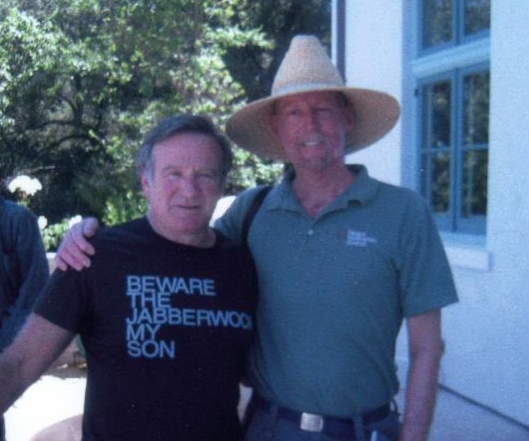
I had an added benefit: 46 Years ago Robin was my brother Phil's best friend. Robin was over at our house often for 3-4 years. Phil stayed in touch with Robin until Phil's death from cancer in February 2013. Above is a photo of them in 2011. Phil and Robin remained friends throughout the years because they just laughed together and enjoyed each other's company.
I cannot count the times that I laughed so hard that I cried. In retrospect Phil did a great job of keeping the banter going with Robin, but even he at times was laughing too hard to continue. However, Robin also had a quiet, very sincere side to him. He was not "on" all the time. He was a great guy.
Unfortunately Robin got sad this week and made a bad decision. It is really a bummer. Although I was not close to Robin, he was always nice to me whenever our paths crossed. He also came to my brother's funeral last year... and made us all laugh. He talked to me about how much he appreciated Phil's friendship.
I encourage you to celebrate Robin's life this week. Experience one of his movies or shows to laugh hard, or appreciate his brilliant dramatic acting, and be deeply thankful.
"Bad Bosses" and suicide have some things in common:
Both are selfish. Suicide is a selfish decision, although I believe most of the time the selfishness is unintentional. You just get so tired and depressed that you forget about everything you love, and you just want an easy way out. Bad Bosses are the same - taking the easy way out rather than working to develop new habits so they become the leaders they are designed to be.
Lifetime impact. Suicide hurts those you leave behind. That is not the intention of most people making this mistake, but it is the truth. Bad Bosses hurt people too, even if it is unintentional, and those hurts can negatively affect people for years or a lifetime.
It is a choice. When it comes down to it, suicide and our decision to just retain our Bad Boss habits are a choice. Too often we are deceived into believing it is just easier and thus is acceptable. It is not.
I have nothing but love and sorrow for Robin and his family, and others who have made the mistake of suicide. I am not judging them. They just made a mistake and need our grace.
The rest of us should not miss this opportunity to be challenged again: What is the cost of our Bad Boss habits? What can we start doing differently TODAY, even if it is just in one area, to be the leader we are designed to be?
It is Friday. ACCOUNTABILITY TIME!
- How are you doing on your 3strands this week?
- Is the work remaining to complete this week's 3strands scheduled in your calendar so you can work uninterrupted?
- Have you scheduled your Sanctuary time later today or over the weekend for personal accountability and focus?
Stay on track.
Holacracy: Fad or Truth?
According to Vox and other media, "holacracy" is the latest management trend to sweep the tech industry.
What is it? According to the article,, "Holacracy is management by committee with an emphasis on experimentation. The CEO formally relinquishes authority to a constitution and re-organizes everyone into decentralized teams that choose their own roles roles and goals."
Is it a fad that will fade? Is it enduring truth that demands our attention because its potential is too big to ignore? Should you immediately drop everything and leap on the holacracy bandwagon - if you can pronounce the word...?
Yes, it is a fad.
Yes, it has some truth, but so do the best lies.
No, you should not drop everything to pursue holacracy.
The truth is that most if not all of the positive aspects of holacracy are just reworded leadership systems of an Ownership Culture.
Yes, immediately and continually invest in developing an ownership culture where employees are passionate about their work and gain personal meaning from taking responsibility for achieving results.
In brief, an ownership culture achieves all the benefits of holacracy where employee:
- Authority matches their responsibilities
- Ideas are encouraged, explored, and piloted
- Opinions are considered for major decisions
- Roles are clearly defined and measured
- Accountability comes from peers, not just managers
This is how Nucor Steel, Amazon, Netflix, Nordstrom, The Ritz-Carlton, and many other companies have grown and keep growing.
There is always work to do to improve your company culture, but pilot ideas that may come from reading about fads like holacracy rather than abandon what is true to gamble on its entire premise.
My concern is not just wasting time. Holacracy could encourage some employees' entitlement mentality. It is potentially a socialistic fantasy for large companies to attempt to overcome bureaucracy that could fail miserably. Zappos can afford to play with holacracy for a period of time. Most small companies do not have that luxury.
Look at holacracy. Learn from it. Just do not drink the Kool-Aid...
BE a 3STRANDS LEADER
Systematic Leadership; inspiring others in Meaningful Work; and consistently expressing Sincere Gratitude to people around you.
My suggestion is simple. Read the article. Then think about or discuss as a group:
Here is a quick test:
- I supplied a list of holacracy benefits above. Use mine or create your own.
- Go through the list item-by-item. Where are we strong and where are we weak?
- What can we do to make our strengths even stronger within an ownership culture?
- What can we do to make our weaknesses competitive, not the best, within an ownership culture?
- What would require us to move to a holocracy? Why?
- Do we need to schedule a conversation with Dave?
Converts or Disciples
One test of an Ownership Culture is whether your employees are converts or disciples.
Convert: Listens and might believe what is taught, but they are not passionate about those beliefs or make decisions based on them. Activity takes the place of taking responsibility for doing their best and having a passion for doing what is right.
Employees become converts to your company when they accept your job offer.
Disciple: Passionate about achieving results, goes the second mile, leaves things better than they found them, and does what is best for their company.
Disciples are followers who develop the behaviors and beliefs of their teacher and people in their group. This means to mature a convert into a disciple means you have to consistently set a good example, patiently teach, give them authority to achieve results, and surround them with other top performers.
Disciples change the world and their thrill is the experience of serving a cause greater than themselves.
Converts think they change the world, but make little lasting impact, but they want the full rewards for their activities.
REMINDER: An Ownership Culture is an organization of excellence, NOT a company that has a few superstar employees or pockets of excellence. We achieve this by helping "converts" develop to their full potential as "disciples."
Do you have a strong enough culture for your converts to develop into disciples?
Remember, your company culture is the only thing your competitors cannot steal or copy. It is defined by employee behavior.
Here is a quick test:
- What are the three biggest problems you have with employees - including everyone in leadership?
- What is the monthly and annual cost of each one of those problems?
- How much time would it take for you to resolve each problem - one your own versus working with a third party who has expertise working with companies like yours?
- Schedule these changes. If you are not willing to work on them NOW (that's my High D speaking), then what is the cost of waiting?
- Can you really afford to wait?
Transparency
I was working with a client recently and their employees felt the company was making tons of money. It was profitable, but not making the massive sums of profit fantasied by the disgruntled employees.
At another client there was discontent because employees felt some senior people were not working as long as they were. These people, a mix of owners and senior employees, would leave work early to indulge in their favorite sport.
The list goes on, but your concern should be perception becomes reality in a mind that gets all mixed up and permanently set, like concrete, when an organization lacks the transparency of an Ownership Culture.
In the first instance, the employees needed to have more of their company's finances discussed with them. I am NOT advocating an open book company, but there are key financial metrics that are important. Their misunderstanding also pointed out they need personal financial training too. (We are creating a course on this as part of our Charm School. It will be available by the end of August.)
In the second situation, the client needed to take a few actions: (1) Allow everyone flextime, explain it, and better track it; (2) Within the laws of their state, post the hours everyone worked, including the owners. The employees did not remember the owners started earlier than them and worked in the evenings and weekends. Showing hours worked by all employees educates people on the facts, and adds accountability between peers.
Transparency removes bad feelings based on misunderstood facts and gossip.
Can you identify one area of your company, or your work behaviors, where transparency would help you build a stronger Ownership Culture?
It is Friday. ACCOUNTABILITY TIME!
- How are you doing on your 3strands this week?
- Is the work remaining to complete this week's 3strands scheduled in your calendar so you can work uninterrupted?
- Have you scheduled your Sanctuary time later today or over the weekend for personal accountability and focus?
Stay on track.
Original vs. Copy
Your competitors can copy your services, pricing, sales website, marketing programs... they can even "copy" you by recruiting your employees.
BUT their copy of the best attributes of your company will never match the original if you have a strong Ownership Culture.
Why can't they beat you at your own game IF you are investing in your leadership skills and sustaining an Ownership Culture?
- An original Ownership Culture has a foundation of meaningful work that lives within every one of your employees, starting with you. It is not a task list.
- Every copy is less than the original because the copiers do not comprehend the depth of the original vision.
- Employees own every aspect of success for an original, whereas they rent themselves as contract labor to complete the tasks of a copy.
- An original is a first generation of passion that uniquely seeks to improve the world whereas a copy is always playing catch-up.
- A copy tries to be significant whereas an original looks beyond something cool to pursue a vision of something extraordinary.
Is your business an original or a copy? Are you doing everything you can to build your foundational culture? These are some thoughts for a life-changing weekend.
It is Friday. ACCOUNTABILITY TIME!
- How are you doing on your 3strands this week?
- Is the work remaining to complete this week's 3strands scheduled in your calendar so you can work uninterrupted?
- Have you scheduled your Sanctuary time later today or over the weekend for personal accountability and focus?
Stay on track.
Ownership Insights
Yesterday I did a webinar on how to Upgrade to an Ownership Culture. Click here to download the video, audio and/or presentation screens (140715 Ownership Culture files).
Employees in an Ownership Culture take responsibility for your company being its best. Do all of your employees do that?
Employees in an Ownership Culture are paid incentives, not bonuses. Are your people being rewarded and recognized consistently in ways they prefer?
Employees in an Ownership Culture understand how to generate wealth for your company and are fully committed to create profits every day. Are your people fully committed to profitability every day?
You can work on your culture on your own, but you have tried to make time to do this for years and for most of you the results are less than you would like. (There are lots of good ideas in my talk.)
I suggest you consider our Ownership Culture program. (We still have some openings in this program that kicks off the week of August 4.) You will see an ROI on our program in 3-6 months. Let's talk about how your company can be better.
Back in April I spoke twice for CCB, a recognized and respected national reseller to nonprofits that is now rapidly expanding its work with business clients. My talk was on the power of a leader. This talk was posted this week if you are interested.
PLEASE NOTE: An Ownership Culture is an organization of excellence, NOT a company that has a few superstar employees or pockets of excellence.
The profitability, client loyalty, growth rates, and FUN factor of an Ownership Culture are much higher than a typical entrepreneurial company.
So why do you spend so much time on "other stuff" rather than strengthening your culture?
Your company culture is the only thing your competitors cannot steal or copy. It is the foundation and crown jewel of your organization.
If you want to take your company to the next level then:
- Consider the free insights in my talks above.
- Think about what you need to have a stronger company culture.
- GET REAL. If your culture is not what you want and you have been in business for 5-10-15-20+ years, you need help to do a "business makeover" to an Ownership Culture. Let us help, or try working with someone else.
Ownership Culture Challenge Webinar
Your company culture is NOT defined by your mission statement, vision, and values - three of your four company culture cornerstones.
It is NOT defined by your goals, KPI's or whatever you want to call them.
Your culture is NOT even defined by your employees.
Today's key tip: Your company culture is defined by how clearly you communicate what you believe and then by what you tolerate.
Too often these are very different companies... the one you want, and unfortunately the one you have today (totally or partially).
Is this a deja vu moment where you realize how many years you have been proving Einstein's theory of insanity (doing the same thing over and over, but expecting a different result)?
What should you do?
If you find this challenge amusing - to consider what you tolerate more than what you believe - then take an hour to contemplate it and write out your thoughts. Maybe you will come up with some good ideas.
If, on the other hand, this challenge makes you exclaim, "Oh, ________! I know we tolerate too much BUT...." and you want to finally do something about it... then register for and attend our Upgrade Your Ownership Culture webinar next Tuesday.
Then you will definitely get some ideas to consider. It's free, Dr. Einstein... :)
I will be joined by Roy vanNorstrand of The Leren Group. We will share ways to move away from an entitlement mentality to an Ownership Culture. This webinar will last 30-45 minutes. Space is limited. Register now.
Title: Upgrade to an Ownership Culture
Date: Tuesday, July 15, 2014
Time: 11:00 AM - 11:45 AM PDT
It is Friday. ACCOUNTABILITY TIME!
- How are you doing on your 3strands this week?
- Is the work remaining to complete this week's 3strands scheduled in your calendar so you can work uninterrupted?
- Have you scheduled your Sanctuary time later today or over the weekend for personal accountability and focus?
Stay on track.
Upgrade to an Ownership Culture
Join us for a Webinar on July 15
Space is limited.
Reserve your Webinar seat now at:
https://www1.gotomeeting.com/register/650865601
Do you need more employees to think and act like an owner at your company?
This webinar explains how to have an Ownership Culture at your organization where every employee thinks like an owner and takes responsibility for achieving maximum profitability.
David Russell of MANAGEtoWIN and Roy vanNorstrand of The Leren Group will share how you can do this on your own, or through the MANAGEtoWIN Ownership Culture program that GUARANTEES RESULTS.
Is there too much of an entitlement attitude with some of your employees? Do you feel your employees could be more productive? Do you know costs could be cut, but you need employees to drive the changes? Do you want higher sales, but just cannot seem to get employees to share your drive to get there?
Would you better achieve these objectives if your employees thought like owners... like you do? If yes, then do not miss this webinar.
Russell will focus on the Ownership Culture whereas vanNorstand will provides insights on how to drive sales while increasing ownership accountability. This webinar will last about 30-45 minutes. Space is limited. Register now.
Title: Upgrade to an Ownership Culture
Date: Tuesday, July 15th, 2014
Time: 11:00 AM - 11:45 AM PDT
After registering you will receive a confirmation email containing information about joining the Webinar.
I look forward to having you join us!
Self-Control Test
I was looking at some notes I had from reading a Bill Johnson book, and one jumped out for you today:
"Self-control is the ability to say yes to your one thing so completely that you have nothing left to give to less important matters."
Ouch! (You might want to read this advice again. Arnie Bellini of ConnectWise focused an IT Nation on similar advice a few years ago.)
For instance, if your "one thing" is to build your monthly recurring revenue, then how well are you focused on that?
Only you can choose your "one thing." That is the starting point, but once it is defined then making it a priority amidst other priorities, Client needs, employee challenges, etc. is the real work.
I suggest a simple process to consider this in the Meeting Notes.
WARNING: Procrastinating on pursuing your "one thing" is lost profits and opportunities you will never have again.
If you need help getting focused, consider some of our services. We can help.
Here is one way to approach the result of the leadership "test" above:
- Define your one most important objective.
- Evaluate how well you are pursuing and achieving this objective.
- If your progress is not as good as you would like, then GET HELP NOW.
- List everything that is taking your time.
- Identify activities that can be cut back, delegated to others, or stopped.
- Schedule time in your calendar daily/weekly to achieve your "one thing."
- Implement a plan including 3strands weekly focus with accountability from one or more others.
History Determines Destiny...Or Not
Christine Caine of The A21 Campaign was speaking recently at Willow Creek and she said:
Do not allow your history to determine your destiny.
Although her reference point is that people who have been abused can heal and rise above past pain to have a fulfilling life, it is also a great reminder for leaders.
Your success may have gotten you this far, but are your current leadership skills scalable to grow your organization to the next level?
When I think of our Clients who are growing rapidly, all of them are investing in systems to improve employee engagement, service delivery, sales, and their client experience.
Why? Because systems scale.
Having all final decision-making authority in one person does not scale and disengages employees. ("Well, it's Susan's company...") In contrast, good systems extend decision-making to others and increase employee ownership for results.
Your history as a leader may be a bumpy road to date, an incredible success, or includes too much failure. No matter what that history is, you can invest today to define, pursue and achieve a destiny that is very meaningful (and profitable).
If you need help, our LEADERSHIP Essentials and All-In LEADERSHIP programs are an ideal way for you to improve your Systematic Leadership in less time and with processes we have proven to work over the past 11 years.
Have a meeting with your leadership team, or you can do this alone as part of your weekly Sanctuary time, to consider where you have traveled and what destination you truly want to reach.
This can be a long exercise or a relatively short one.
- List the key achievements and failures of your career to date. You can also include a similar list for your personal life, or incorporate the two to remind yourself how they relate.
- Define one thing that would be a meaningful destination for the next leg of your leadership journey.
- Define and date the key steps to reach that destination.
- Think about it. Pray about it. Ask people for their opinion.
- GO FOR IT.
Let me know if you need help.
Have fun!
L.E.A.P.S. Forward
Leaders ask great questions, but are also careful listeners.
This is a skill we need to teach our employees. Our Leadership Essentials Academy has Dave's Charm School (and other team members) training to develop questioning and listening skills. However not all of you are members.
Leaders ask great questions, but are also careful listeners.
This is a skill we need to teach our employees. Our Leadership Essentials Academy has Dave's Charm School (and other team members) training to develop questioning and listening skills. However not all of you are members.
Recently I was interviewing a job candidate for a Client and he had a background in the U.S. Coast Guard. He mentioned they had an acronym in an Effective Communications course to remind him how to be a great listener - L.E.A.P.S.
He said L.E.A.P.S. was explained online and I asked him to send me the link. It is an interesting document that is very consistent with what we teach. Here is what the L.E.A.P.S. acronym stands for:
Listen to the message received carefully and attentively. Keep an open mind to what is being said and don't be quick to offer advice or solutions.
Emphasize by acknowledging the emotions that are being expressed. It is very important to receive the message without judgment about the sender or the message sent.
Ask questions in order to get more information and to clarify information you do not understand.
Paraphrase what the person has said to ensure you understand the information correctly.
Summarize by restating the situation with all the facts to clarify the role, problem or behavior.
Here is the link to the entire U.S. Coast Guard summary document about effective communications.
IMPORTANT ENCOURAGEMENT: Do not feel bad if you were not born with these skills or taught them as you were growing up.
Great questioning and active listening skills are learned, developed over time, and applied with discipline. Take the time to learn these two skills and you will be a better leader.
Meeting Ideas
I encourage you to have your team read the U.S. Coast Guard document on Effective Communications and have an open discussion about how to improve in these areas.
Learning Insights: Ask each person to share what they learned from reading the Coast Guard's recommendations.
Strengths: Ask each person to explain their strengths in the areas of asking questions and active listening. Ask the others to confirm their assessment and/or identify other strengths of the person in these areas. Ask the person how they could question and listen even better. Then ask the others if they have any suggestions for the individual to improve.
Weaknesses: Ask each person to explain their weaknesses in the areas of asking questions and active listening. Ask the others to confirm their assessment and/or identify other weaknesses of the person in these areas. Encourage everyone to speak respectfully. Ask the person to identify simple steps they could take to question and listen better. Then ask the others if they have any suggestions for the individual to improve.
Typical Scenarios: Prepare at least five typical scenarios your team faces on a regular basis where better questioning and active listening skills will help them achieve more in less time, and enjoy their work more. HAVE FUN posing the typical scenarios to the group and having them share their ideas on great questions to ask and key information to listen for in the answers.
As an alternative, you can pair people up to go through each typical scenario. After they complete one typical scenario then each pair of people shares the results with the rest of the group.
Irreplaceable
As a teacher of leadership, I strive to always pass along lessons I have learned personally and professionally. Each of these newsletters communicates something that has been learned through pain, enjoyed as success, or perspectives I have found thought-provoking.
This morning at 5:07 a.m. on 05/07/2014... there must be something meaningful in that "coincidence"... I am changing the focus of today's newsletter because last night I saw the movie premier of Irreplaceable. In a word, it was overwhelming.
The movie focused on how society worldwide is devaluing sex, which in turn devalues family, which then devalues marriage, which leads to devaluing being a parent, which ends up devaluing, or destroying children.
Why this cascading devaluation? We are sold lies that appeal to our natural desire for self-gratification. (My conclusion, not the movie's.)
Let's apply this to leadership of your business, which is often very similar to being a parent. I mean, don't you feel like you are running an adult daycare center at times?
- When we devalue the relationships we have in our workplace, then success and enjoyment are momentary rather than lasting. We allow busyness to replace purpose instead of having meaningful work drive all that we do.
- This leads devaluing company culture so employees have different experiences working for us and the majority feel negatively about their managers and/or our organizations. We become a band of individuals instead of a spirited team striving to achieve common goals.
- This cascades into devaluing 1:1 management of people who report to us. We opt for "managing with a long leash," hiring people who can operate without our involvement, or the opposite, micro-management focused only on what they do wrong rather than encouraging accountability while reinforcing what they do right. We encourage individual self-governance with varying standards instead of responsibly engaging in caring, professional 1:1 relationships with consistent values.
- This devalues leadership into self-serving activities rather than systematic efforts that help our people become the fulfilled top performers they were designed to be. Lost leaders consciously or unconsciously act as though "It's all about me, baby!" We churn through employees instead of being inspiring, nurturing and protecting leaders.
- Lastly, this then devalues individual employees into commodities who only have value if they meet the leader's needs for self-indulgence. Make me look good. Do the work without my guidance. Do a great job without training. No accountability, just inconsistent bursts of condemnation.
We engage employees in moments of time based on conflicting standards rather than systematically leading them to achieve their dreams, and ours.
You are not irreplaceable, yet as leaders we should strive to be remembered as people of character who our employees and peers will miss when we move on to our next challenge.
3strands LEADERSHIP helps you be the leader you were designed to be.
BE a 3STRANDS LEADER
Systematic Leadership, inspiring others in Meaningful Work, and consistently expressing Sincere Gratitude to people around you.
Just take 30-60 minutes and consider points 1-5 above.
- Strengths: What are you doing right? How can you do more of this? How can you systematically focus more of your time on your strengths?
- Weaknesses: What mistakes are you making? How can you apply your strengths to overcome a weakness? Where do you need someone else's accountability, guidance, or to delegate away a weakness? How can you systematically remove each weakness?
- People - YES: What needs to be done to more fully engage your employees? Top performers do not stay with weak leaders. Do not assume your superstars are happy. Improve your systems for full engagement.
- People - NO: Do you have people who are not performing? Work with them to define a 90 day Success Plan. Strive with them 1:1 daily and weekly to achieve their plan as they develop new habits.
Or maybe they just will not work out, or are a cancer that are negatively affecting the performance of others.
Work with me or someone else to give them a great opportunity to prove what they can do. If they cannot meet your standards, then let them move on to other opportunities.
Let me know how it goes.Day 128 | Common Trait - Jim Collins
QUICK... when Jim Collins did his Good to Great study of 1,435 companies there were only 11 that qualified as "Great." What was the one common qualification of every leader of a "Great" company?
Humility.
How consistently do you demonstrate humility? One simple definition of humility I recently heard is putting others first by giving up what you think you deserve.
I encourage you to consider one way you could better demonstrate humility and test yourself this week. Why settle for "good" when you are designed to be GREAT?
It is Monday. ACCOUNTABILITY TIME!
- Did you take Sanctuary time over the weekend to improve your focus?
- How did you do on your 3Strands last week?
- Have you defined your 3Strands for this week?
- By 9:00 a.m. this morning you should have 3Strands emails from each of your direct reports.
Stay on track.
3 vs. 1
Many years ago a friend of mine was asked to become the chairman of the board for a non-profit company in my local community.
This organization was having serious trouble. The board meetings were long affairs, often lasting until one or two o'clock in the morning as the top executive fought it out with the board members and everyone had to have their say. It was unproductive and contrary to the values of the organization.
To start his initial meeting as chairman, my friend said: "I have two rules on how these meetings will proceed. First, each meeting will end at 11:00 p.m., even if someone is mid-sentence. Therefore please keep your comments brief and try not to repeat what others have already said. Second, if you have something negative to say, you must first say three sincere, positive things."
He then enforced those rules. The situation turned around rapidly.

Notice my friend had carefully considered the situation and then focused on the positive. Human nature leads many people to build themselves up by putting others down. Being negative does not get results long-term.
If you think you are a "realist," then you might actually be a skeptic or pessimist with "the gift of correction." This creates some potential problems that are hard, but not impossible to overcome:
- It is easier for you to correct people than compliment them. Following my friend's advice can help you better reinforce the behaviors you want to see in your people.
- You have difficulty admitting you are wrong. Yes, you may be right a high percentage of the time, but if you cannot recognize and fully embrace the areas where others are correct and find commonality then you are throwing up barriers to working most productively with others.
- SINCERE compliments are important, but consistency in positively engaging people - i.e. thanking them specifically for the little things they do rather than occasionally in general makes a big difference.
How do you develop a habit of better complimenting people? See the Meeting Ideas below for additional ideas.
BE a 3STRANDS LEADER
Systematic Leadership, inspiring others in Meaningful Work, and consistently expressing Sincere Gratitude to people around you.
The 3-to-1 communication style with other people can be very engaging, if done sincerely and not strictly.
Let's be candid, it would be irritating to be complimented three times before a correction each time you talk with someone, but here are some ideas to consider if compliments are challenging for you:
- Shut Up: Develop a habit of thinking before you speak. If you react without thinking you will correct someone. If you pause and think, you can direct your thoughts to something sincere and specific to compliment. Often times the compliment can lead to asking questings and finding that another approach to a problem may be better.
- Ask: Do not tell them what is wrong, ask them. For instance, "I liked the way you closed that service ticket with the client. One of our values is to exceed expectations. I am wondering, would it help close the experience on that ticket better if we (not an accusatory "you") also sent a follow-up email confirming the work that was done and thanking them for their support through the process?"
- Choose Your Battles: Let some stuff go, just not the important activities.
- Good Cop, Bad Cop: Make your company values, policies, Always/Never Standards, etc. the "bad cop." Encourage people to meet these standards rather than your opinion. You are the "good cop," who wants only the best for them, your team and clients. (The best for people, rather than focus on what is best for "the company," which is impersonal.)
- Gratitude: Too often "realists" are not thankful enough for what they have. Instead they wallow in not getting their high ideals met. (Sometimes they are not meeting their own standards or following their own advice.)
Consider what might happen if you developed the 3rd Strand of 3Strands LEADERSHIP, Sincere Gratitude, and it led your thoughts rather than follow weakly if not at all.
You may need to say or write statements of gratitude like dictums to reprogram your brain. For instance, "I am thankful for the way (employee name) does (something specific they do). I am thankful for (Client's name) because they..."
The behavior of being a "realist" can be positive if it is balanced and follows a skill of sincerely, positively reinforcing people. Communication lacking sincere positive reinforcement is toxic. Try changing for one day. Just one full day.
Add a comment and let me know how it goes.