
Your people problems? Gone.
The 4 Management Disciplines Newsletter delivers proven ways to be your best and lead a championship team.
Every championship sports team runs proven plays.
Every Monday morning - I give you four proven plays great leaders use to solve problems in how you Hire, Manage, Develop, and Retain great people.
2 minute read. No fluff. No ads.
Trusted by over 10,000 leaders.
NOTE: David is no longer writing this newsletter. Visit www.simpleliberty.com to read his latest posts.
All Newsletters
Trim your vines
This past weekend I did a "honey do" project of clearing dead vines off part of our fencing.
As leaders, are you clearing the dead vines from your organization throughout the year, as needed? They choke out profits like crazy...
 This is a picture of the vines before I cleared them out. They were actually much worse than it looks.
Leadership "Dead Vine" Examples
1. Sanctuary
If you are allowing other activities to crowd-out your ability to have a quiet time weekly (preferably daily), then you are less focused on your most important priorities each week. Clear out the "dead vines" crowding your schedule and your freedom will allow you to better achieve your growth objectives.
2. People
All of your employees have some value, or you would not have hired them in the first place. However, some might not be performing at an optimum level, or worse. You may even have one (or more) that are toxic. You will waste hundreds of thousands of dollars hoping for miracle behavioral change in a poor performing or toxic employee. I have never seen it happen in a toxic employee. This is particularly true after you have tried to work with them to improve and they have failed.
The #1 hated job of a manager is to fire anyone... even someone who is toxic. However if we do not remove toxins and growing viruses from our body (company) then we die, or exist in a severely weakened state. Respectfully, empathetically, quickly, and properly terminate employees when it is clear they are hurting your organization. These "dead vines" choke out productive workers, and in some cases, motivate some of your good team members to leave.
NOTE: Letting a poor performing employee go is often the best thing for them too!
3. Process
When you know a process is weak or broken, work with your team to schedule its improvement. Do not procrastinate. Do not put it on the to-do list that lives forever. Schedule/delegate the work now, or put it in the "fridge" (better analogy than a "parking lot") with a specific date to schedule its repair. Set a reminder to check your fridge on time and bring it out to be "cooked" and fuel your growth. Missing or poor processes allow your people to get tangled up unnecessarily. Clear them out.
4. Habits
We all have habits that are unproductive. The challenge for most of us is not acknowledging them, but defining and committing to a step-by-step action plan with accountability to overpower a bad habit with a new one. If you are not working on overcoming a bad habit then you are allowing at least one to thrive. It is stealing time, money, health, relationships, everything from you. Bad habits are dead vines crowding out your ability to live your dreams. Focus. Clear them out one-by-one. Get help if you need it.
5. Relationships
Most people do not have many, if any, deep, caring friendships. When we die, the ONLY true asset we have is our relationships. If this is a challenge for you there are options, but you have to comprehend your relational habits and overcome fears. There are church and secular adventure groups. Nonprofits involved in causes that are meaningful to you. Exercise clubs of all varieties. (One of our developers is a CrossFit fanatic BECAUSE it is a group activity.) Get rid of the dead vines (unhealthy relationships) and work on building deeper relationships before it is too late.
TIP: If you want to build a relationship with someone, then serve them. If they are the leader of a nonprofit, then serve the nonprofit. It may take some time, but your service creates the opportunity for a healthy relationship to sprout, grow, and mature.
Do what makes more profits. Profit more from what you do.
We help leaders like you succeed more profitably and joyfully. We provide coaching, consulting, tools to better understand the strengths and motivators of your team, plus inspiring keynotes / workshops for your conferences, customer events, and internal gatherings. Contact us if you would like to learn more.
The 4 Biggest Financial Failures of MSPs
Every year we watch managed service providers succeed and fail. Leaders often drive their team to new heights, or stumble to new lows. Unfortunately, failing executives often equate busy-ness with high productivity or profitability and forget the core basics of money.
Because there is such a need for CFO expertise, we are launching a Virtual CFO service ("vCFO"). Email me if you want to learn more.
To help you today better understand where your profits are leaking out of your organization, we reached out to Brian Hoppe, former CFO of McLane Intelligent Solutions. Brian has spent years at MSPs managing operations and improving financial health.
Here are his 4 Biggest MSP Financial Failures (they apply to almost any industry) - each one could be costing you thousands in unnecessary waste, inefficiencies, and risk:
#1 - Ignoring the Metrics
Either you master the metrics, or they master you. Your business is speaking to you every day, if not every hour. If you are not willing to listen, then you miss out on huge opportunities for improvement.
Are you tracking the right metrics daily - weekly - monthly? Do you clearly and correctly assess your services gross margin? Are you tracking a 2-3X billing and 5-10X sales model to achieve maximum product, project, and managed services contract profitability? Are your revenue and CoGS in the right buckets? Is your chart of accounts set up correctly? Are you tracking sales so you catch issues early, before you lose opportunities?
We know many MSP's whose systems track many of the metrics they need, but lack the discipline to monitor them. The result is poor financial performance. Not sure what metrics to track or how to find them? Another MSP we know doesn't have all the metrics they need, but is implementing systems to generate them. They are following a plan to get where they need to be within the next 3-6 months and you can too.
#2 - Lurking in "Tomorrowland"
You tell yourself, "We're not profitable now, or as profitable as we would like, but if we can just add more revenue then we will be." That's foolish.
We see this happen too often. One MSP we know is always thinking about tomorrow and never focused on today! As a result, they have not fixed their metric and margin issues for years and remain in a financial abyss. More revenue is great, but it does not solve your problem. Even if you can increase revenue despite your margin issues, you have the same problems, they are just bigger.
On the other hand, we know of another MSP who engaged a virtual CFO, reversed their fortunes within a year, and built a six-figure cash reserve.
Which company do you want to be?
#3 - Easy Sales Compensation
Too often sales people, particularly if they are long-term employees, are paid too much salary rather than being challenged by a more heavily weighted performance-based plan.
Do you have a monthly quota for each sales person? Is it realistic? Are you managing it with them daily and weekly? Are you compensating behaviors that lead to sales, or just the sales? Are you paying based on the gross or net? Where is each type of compensation appropriate? Are you targeting a 5-10X sales model for compensation to automatically drive profitability?
Managing a sales team can be like adult daycare or coaching an Olympic athletic team. It depends on your strategy and the people you hire. Make sure you have the right people on the bus, your sales strategy is clear, your plan is effective, and you have someone in place to drive the details plus help each individual meet or exceed their targets.
#4 - No Budget = Limited Profits
It is amazing how many managed service providers operate without a clearly defined budget based on numbers from the previous period, with clear projections and targets. Without this basic discipline there is limited upside you can achieve because every review of finances is a best guess rather than a focus on the facts that bring the most money possible to your bottom line.
Budgeting is one of the most important things you can do. What would it take for you to put together a budget for the next 3-12 months? Do you know the right questions to ask? Is your budget based on real numbers, or hope? Does your budget fluctuate monthly based on historical information? Do you know what your returns should be? Are you looking through the windshield rather than the rear view mirror?
Do you want more? Join us for a 30-45 minute webinar on Tuesday, August 11th at 10:00 a.m. PST / 11 MST / noon CST / 1pm EST. I am interviewing Brian Hoppe to get more of his perspective on these costly financial failures. Click here to register.
Finally, this is not a complete list of every financial mistake you can make, just the most common ones. Contact us if you would like to learn more about how you can improve the financial health and operational efficiency of your business, or our upcoming vCFO services.
Five leaders, five ideas
There was a Harvard Business Review article recently that analyzed interviews with 5 incredibly successful coaches of the past in search of common ways to win in very competitive situations.
The coaches:
Sir Alex Ferguson, legendary coach of Manchester United football
Joe Girardi, New York Yankees Manager - 500 game winner
Bela Karolyi, coached gymnasts to 9 Olympic golds
Bill Parcells, turned around 3 NFL teams
Bill Walsh, SF 49er Coach - 3 Super Bowl wins
My conclusions differ a bit from the writer.
Habits
Decisions often have to be made quickly and our instant responses or reactions to situations define our leadership impact. Often there is limited time or no time to think.
This is why my consulting and coaching work incorporates habit development. Joe Girardi said you cannot think too much. "The key is preparation... The data has to become instinctual. You can't think about it in the middle of a pitch."
Adaptation
We teach this very effectively with our Talent Assessments. The key is to adapt your behavior, especially your communication style, to the preferred style of the employee, Client, or other person whom you are engaging.
Your extremely effective behavior or communication with one person can be a disaster with another. Know your people. Teach your team to understand and respect their differences, and adapt to each others' preferred behaviors to improve productivity and fulfillment.
Bela Karolyi gave this insight: "Find out what part of their mind is clicking, what part of their character is responding to you, and what's the one thing you have to avoid."
Consider Coach Karolyi's advice, and then be more intentional rather than just behave instinctively most of the time.
Encouragement
Even superstars can have their feelings hurt. Sir Alex Ferguson coached, "Few people get better with criticism; most respond to encouragement instead. So I tried to give encouragement when I could. For a player - for any human being - there is nothing better than hearing 'Well done.' Those are the two best words ever invested. You don't need to use superlatives."
This applies to your weakest team member AND your strongest. Your team is only as good as the person who appears to be contributing the least, and you can only extend your strengths as far as your superstars are willing to engage with others.
The key here is to be sincere. Do not embellish, stretch the truth, or say something that is a lie. Brief, honest, heart-felt appreciation is an example of Sincere Gratitude, the third strand of 3strands LEADERSHIP.
Candor
Yes, being direct, honest, and sincere is good, but if your natural communication style is judgment rather than encouragement then you are tearing people AND TEAMS down rather then building them up.
Bill Walsh advised, "It sounds just great to say that you are going to be honest and direct. But insensitive, hammer-like shots that are delivered in the name of honesty and openness usually do the greatest damage to people. The damage ends up reverberating throughout the entire organization..."
Applying Coach Walsh's advice comes back to your habits and ability to adapt to the preferred behaviors of others. Candor communicated well is a requirement for strong relationships.
Belief
Too many of us have a childhood memory or lifelong message ingrained in our soul that we "are not good enough." Choose a different message. Believe in your people.
Develop 3strands LEADER habits to come alongside them instead of come down on them. Adapt to their behavioral preferences to build a stronger bond with them. Sincerely encourage others based on specific contributions they have made. Be open and caring about others.
I hope your July is closing strong. August and September are great times to work on leadership, company culture, and client experience. Work ON your business, not FOR your business. Don't miss these windows of opportunity before the 4Q rush! NOW is the time to develop your company's ability to grow.
Sucker!
Please forgive me for sending another thought this week, but my calling is to (1) Help you avoid my mistakes; and (2) Teach you the systems I have learned and created to be an effective leader.
I learned something this morning and just can't wait to share it. Please do not tune-out if you are offended by the "G" or "J" word. This incredibly important insight can be applied as a principle of life devoid of any belief in a higher power, or as an act of faith in a kumquat if you so desire.
QUESTION: How many times have you been suckered into something that seemed so good, but it did not work out? And maybe cost you dearly...
Do you want to stop being a sucker? Do you want to have the discipline to overcome temptation when "the stars seemed to be aligned in your favor" or "God seems to be leading you a certain way"?
For instance, I know a conservative, analytical businessman who has been incredibly successful. He was part of a management team that grew a company to over 4,000 employees and hundreds of millions in revenue. Earlier this year he felt led by God to take a leadership role at another company even though he was comfortably retired. Everything seemed to line-up... until he joined the company and found out quickly it was a mistake. He left in less than two weeks.
These things happen to all of us. I have made too many mistakes this way to count, and they have been VERY painful. Consider this insight to help you develop habits that limit how often you get suckered into something that "seems right," but often there is a quiet voice in you saying, "RUN AWAY!".
Steve Carter at Willow Creek provides daily advice via email in their Rivals series. (The weekend message series via podcast is great too!) His commentary today hit me hard as he talked about how David was given an opportunity to kill King Saul, but chose not to do it. DO NOT MISS this...
Steve says, "...The circumstances even suggested that God had delivered Saul into David's hands. But David chose to let Saul go, knowing his own life would continue to be at risk..." David's devotion to and trust in God led him to choose to sacrifice what appeared to be a quick win. Instead he chose to stay true to his principles (faith in God).
Consider just some of the facts that would lead most of us to kill someone who was trying to kill us:
- David was annointed to be king years earlier.
- Saul had been trying to kill David for years, and hunting him right at that moment.
- David now had Saul alone, 1:1, without Saul's army to protect him. Saul did not even know David was there. Not only that, but Saul was going to the bathroom, which is not exactly a strong fighting position...
3strands LEADERs have the difficult task of developing the habits and discipline to choose to live by their principles and/or faith, rather than choose a shortcut. Shortcuts almost always fail, and when they fail, shortcuts cost money, waste time, and often hurt important relationships.
I hope this insight from Steve Carter inspired you as much as it did me. Stop being a sucker. Just because something looks or sounds good does NOT mean it is the best decision. Stay true to what you believe, and your life will be more prosperous long-term than you ever imagined.
The Thrill Ride to Nowhere
Space Mountain is a favorite at Disneyland. Opened on May 27, 1977, it was the second roller coaster opened at Disneyland in Anaheim, California (there are three other Disneyland parks in Paris, Tokyo, and Hong Kong). Everyone appreciates a good roller coaster. The experience is the pinnacle of excitement at theme parks. But that's where the experience should stay.
Unfortunately, I've worked with a number of leaders who did not realize that their leadership style was like a constant roller coaster ride for their employees. It can be very chaotic! Have you considered how your leadership style could be stunting the growth of your company?
Consider this analogy:
It's time! You are at Disneyland. You make your way to Space Mountain. AWESOME! This is going to be great. You rush to get in line ahead of others. You wait anxiously as the line works its way to the front. There are lights going off and on all around you. The screams of people on the ride and the sound of the roller coaster cars echo through the hallways. You look ahead to see how much longer you have to wait.
Finally you can see the loading zone and the ride attendants (ahem. I mean Cast Members). You hope you don't lose your cell phone or your glasses resting on your head (I did that). You block out the body odor and bratty kids to focus on the pending ride. You start to feel a bit nervous, but you reassure yourself that the ride will be great!
After you sit down in your roller coaster car, the ride starts. You let the click-click-click of the chain pulling you up reinforce your anticipation of FUN! The jerkiness of the ride adds to your anticipation. You are not in control. It gets darker around you.
Then you race to the darkest reaches of outer space and seem to bounce back-and-forth between earth and oblivion. You can barely see a thing, lights everywhere, you do not know where you are going, although you see shadows of others on their journey around you. You leave your stomach somewhere back on turn 6 or 7...And then it is over. The ride slows down and gently brings you back to the launch pad for you to exit, and new fools to take your seats. You exhale. You remember the thrill. You smile, hopefully.
You feel good, although maybe a bit dizzy or queasy. You banter with your friends and/or family about the parts of the ride you found most fun, and laugh with them about their experience.
How many years have you taken your employees, and your pocketbook, on the same up and down ride in your business... only to end up where you started again?
You started the year (got on the ride) thinking you knew where you were going. It seemed like a BETTER place... but there were twists and turns, times of impatience or joy, some thrills and at other times queasiness. In the end, you were back at the beginning. You lost that year, or those years. I have done that WAY TOO OFTEN. The big question is how do you avoid it?
Why not be a better leader BEFORE you do anything else so the next year of your career or business is not a theme park ride that drops you off where you started (or worse), but actually gets you somewhere meaningful?
I suggest you work with me 1:1 in our Certified LEADER program that starts next week, or our LEADERSHIP Essentials Service.
The one thing 3Strands leaders do
As we approach our third semester of Certified LEADER training where I train people who have never been mentored on leadership how to hire, manage, develop, and retain great people as a 3strands LEADER... I am struck by this question:
What is the one thing a 3strands LEADER does that average leaders do not? What is the one behavior that cannot be bought somewhere else or provided by another person - it has to be the leader who delivers it?
Stay with me now... Consider two examples. First, think of a marriage. What is the one thing that holds the marriage together?
Love. True love motivates every other blessing of the union. Everything else you have in a marriage, such as cooking, cleaning, paying bills, etc. can be purchased and the quality of the service is about the same as you get from a spouse. However, you cannot buy true love that adores you, forgives you, and continues to hope with you no matter how long the "tough times" last.
Second, there is one leader who has more followers than any other in history. It does not matter whether you agree with his teachings or how people apply their logo to their personal lives or business, and then violate the core essence of what he taught. The bottom line is this guy blows away the competition every time.
Did he achieve this greatness through force, by threatening people, or achieving great wealth? No. He taught many things, but when it came down to how people will recognize leaders who fully comprehend his wisdom he said, "... love one another. By this, people will know you are my students, if you love one another."
So again, it is love. True love cannot be bought. It can only be given. The impact of sincere love is everlasting, in friendship, marriage, and in business (love properly expressed at work).
Does this mean love is the #1 behavior of a 3strands LEADER? Not necessarily.
You can be the most loving leader ever and fail miserably at hiring, managing, developing, and retaining great people on your team. Love is great and proper "love" is part of the third strand of 3strands LEADERs - Sincere Gratitude, but it is not the top requirement.
GREAT people, who are truly 3strands LEADERs have one behavior in common: They consistently demonstrate good character. Here are 7 aspects of good character based on our Dave's Charm School training on it:
- Integrity - 3strands LEADERs take their responsibility of being a role model for others seriously, and thus make decisions with a degree of caution so they do not violate their standards.
- Follow-up - 3strands LEADERs consistently follow-up and follow-through as promised.
- Wisdom - Did you know that all character is learned? 3strands LEADERS are active learners who carefully evaluate information and apply what is consistent with their life standards.
- Humilty - 3strands LEADERs may be confident, but they are not egotistical. They balance a healthy self-esteem with a good understanding of their weaknesses to serve others.
- Energy - 3strands LEADERs demonstrate good character by doing whatever it takes, within reason, to achieve top results. They work 50-60 hours weekly with great energy and focus.
- Inspiration - 3strands LEADERs with good character inspire others to be their best and enjoy what they do.
- Courage - 3strands LEADERs have the courage to make the difficult decisions. We all get tempted. Sensing and acting upon promptings of warning is a powerful habit to develop.
Why did I write a training on Character as part of the soft skills program, Dave's Charm School? Because your employees need it. By the way, this month only we have a special price for Charm School for Ingram Micro Community members, contact us for details.
In closing, please focus on your character when making decisions. Long term this creates the most opportunities for meaningful work and joy.
Go for the highest ROI with your leadership team
I was recently asked, "How do I know when I've overloaded my managers?" The challenge is not overloading them. The burden is the discipline of setting clear, easily measurable objectives and following up. Especially how you follow-up.
Follow-up is a critical habit I help service managers, owners, sales leaders, controllers, and other leaders develop in our Certified LEADER program. The next group starts the week of July 6 and finishes at year-end so your leaders close 2015 stronger, and are in top form for 2016. (Click here for the brochure or sign-up on our website before its too late. Save 10% as an Intronis partner - use coupon CL-Intronis1).

Too often executives wait too long to improve the skills and results of a service manager, sales manager, controller, or other company leader. The results on your bottom line are devastating. What are the key criteria of top performing leaders you want on your team so your managers are achieving the highest possible ROI?
- Talent Match: The core behaviors and motivators of the individual must match the position. We confirm this with our Talent Assessments. It is VERY difficult to be highly effective in all the key responsibilities of a role if the person is not a match.
- Passion: Is the person a 9-5er? Not a match. We need leaders who wisely meet the needs of the position while not over-working themselves into burnout and/or poor personal lives.
- Relationships: How well does the person get along with coworkers and behave with Clients? There must be a time limit for resolution and/or improvement when there are behavioral issues.
- Performance: Is the person achieving the goals you set together with them? If not, then for how long? It is important to recognize low performance within a week and immediately start to work more with them to improve. If lackluster results extend to one month or one quarter then you probably have to replace them. In rare cases you might extend the time frame for improvement by 1-3 months, but the burden of follow-up and accountability remains on YOU. It starts with identifying their early failure before it grows into major pain and cost; then stay on top of it, be consistent, and give them plenty of opportunity to succeed.
- Trust: Last, but arguably first, is do you trust this person 100% to always do their best and represent your company in ways that are consistent with your company culture cornerstones (mission, vision, and values, with accountability). Trust issues must be resolved quickly and fully because often you have only seen the "tip of the iceberg" when you have a concern.
What is the ROI of a leader performing at their best who is a match with the job, passionate about their work, good with people, meeting or exceeding goals, and is totally trustworthy... Compared to someone who fails to meet one or more of those standards? HUGE. $100,000 minimum a year, often millions.
Disagree? Contact us and let's talk about your managers who are not performing. They might be a candidate for habit and skill improvement in our Certified LEADER program. For example, today I recommended a manager be replaced and the person on the call with me is not even a Client. We were just discussing his options.
Go for the highest ROI with your leadership team. It is crucial to the long-term success of your organization.
Learn from my worst mistakes - #2
My mandate is to help people learn from my PAST mistakes. Let me share #2 of 2 of my biggest mistakes: Not quitting. That's right, there was a time when I should have cut my losses.
I do much better in this area now, but... let me give you an example of one of my first BIG "not quitting" mistake. It was the Fall of 1983. I had just produced my first national trade show in the computer industry, The National Software Show in San Francisco.
Attendance was light. It was not profitable. I had an offer to buy the company for $300,000. At this price all bills were paid and I had lost only my time. I was 26 years old... need I say more?
I convinced family members and friends to invest about $60-70,000 and kept the company going. A year later the company failed. It was a financial wreck personally and professionally. Yet it did not have to happen.
I was an unrealistic optimist. By the way, pessimists feel all optimists are unrealistic, but history shows this is not true. Both optimists and pessimists can be unrealistic.
Lesson Learned: There is always another opportunity.
If you have a business that has stalled, then you have two choices:
1. Get IN: Identify the problem and fix it within a defined time frame.
2. Get OUT: Merge, sell or close it down. Take what you learned and apply it elsewhere.
I am NOT saying you should always quit. Sometimes you have to stick it out, but if you do, then define a date by which the situation has improved. If you miss that date then you have to move on.
What if you have problems with your business partner? Do your best, but do not stress out about it. Get help. Listen to counsel. Be the best partner you can be, and then relax. Whatever happens will create a new opportunity for you - with your existing business partner, or something else.
What if your marriage is not meeting your expectations? Then be a better spouse, get help, listen to counsel, and give it time. Marriages affect others... like KIDS. All marriages go through seasons where it is challenging, but most can emerge better. (Of course do NOT stay in a marriage if you are being abused.)
What's one reason people (like me, a High D) do not quit? Selfishness. I do not want to lose. I am afraid of being out of control. I... I... I have been working on the "I" thing for some time now. How about you? If you are stuck, then as Father Thomas Brindley once told me, "You have to do things differently, or you have to do something different."
Get out of the fast lane and think about that one. Get some advice from people who only have your best interests at heart. How can you think differently, come up with a lean process of change, and try to rekindle the dream?
Learn from my worst mistakes - #1
My mandate is to help people learn from my PAST mistakes, even though some of those temptations continue...
Let me share #1 of 2 of my biggest mistakes: Keeping information or decisions hidden.
Let me give you an example: It was the Spring of 2001 and my dot-com company had lost its funding. Someone had joined my company who was going to turn it around. I just had to trust him... I committed to personally guarantee company debt without involving my wife in the decision. The company tanked. My personal guarantee cost our family well over a hundred thousand dollars.
What do we call this behavior? WIMPY
Lesson Learned: If I am unwilling (afraid?) to discuss an issue with one or more of my trusted advisors and/or people who will be affected by my decision, then I actually already know that I am wrong. Always.
Let me give you some examples that may apply in your life:
1. You quote a price without confirming your estimate of hours or profitability with your service team, buyers, and/or controller.
2. Your behavior is contrary to your personal values or faith, but you refuse to discuss it. This is particularly challenging when you make the mistake of emailing, texting, or voicemailing your communication. This kind of sets your "oops" in stone...
3. You over promise because you are afraid of the other person's response if you fail to meet their expectations.
4. You make excuses when you know you are wrong.
5. You tell half-truths (withhold incriminating information) when trying to "sell" someone else on your idea / decision, or when you are rationalizing a decision already made.
6. You fail to inform people who will be affected by your decision in-advance of your thoughts or even the decision.
7. You justify your behavior and/or decision because your intentions or end-goal are basically good.
Simple Truth: When you are right it is easy to bring full information into the light.
When we are wrong then full disclosure to appropriate people is uncomfortable at best, and scary at worst.
Our BIGGEST FEAR when tempted to hide information should be the consequences of a bad decision. Relationships get hurt, our future is set back, and we lose valuable time. This is much worse than the relatively minor discomfort of bringing everything into the light.
I made a choice to no longer be wimpy. Although it can be painful, I work diligently to bring everything appropriately into the light with the people who will be affected to make decisions together.
It hurt recently to hear my new friend, Jens Hoj, who is one of the founders of Krave Jerky, tell of risking everything they had to start the company. He said he made the decision with his wife, because without her approval, he NEVER would have gone ahead. They recently sold the company to Hershey for a reported $250 million. (I could only think of what a fool I had been to not make all of my major financial decisions with my wife. I envied his total integrity and repeated my commitment to myself to never go back to that mistake again.)
Avoid the pain. Call your fear what you want. I encourage you to NEVER GO BACK to hiding information and/or mistakes. Life is too short to make mistakes that can be avoided.
Let's be leaders, not wimps.
3 Powerful Tips to Resolve Conflict
I just finished production of our Charm School library to train soft skills to your help desk, systems engineers, sales people, operations folks... EVERYONE needs better soft skills.
Use coupon code DavesDone for a 50% discount - LIMITED TIME OFFER. Visit www.MANAGEtoWIN.com/CharmSchool to learn more.
The final course I created is on conflict. WOW! Apply what you learn in this one session and you will increase your profits by 10-100X the cost of the entire library. Here are some quick highlights:
1. Inflammatory Thinking: When someone "pulls one of your triggers" to move into fight or flight mode, your mind instinctively shifts into inflammatory thinking. This is blame-based thinking that blocks your ability to solve problems. This is one reason why people get stuck in conflict.
2. Emotional Flooding: If you allow your inflammatory thinking to continue it causes emotional flooding. Your heartbeat increases, breathing gets shorter and more rapid, your stress level intensifies in seconds, and your urgency to do something NOW screams at you to take action.
One author, Anna Maravelas, concludes this triggers a Cycle of Contempt. Everything you focus on defends your actions and blames the other party. Problem-solving is gone. It actually shortens your life according to certain studies. Your entire focus is on winning and/or defending yourself rather than resolution.
I think in the future a better term for me that describes this cycle is a Cycle of Self-Focus.
3. So what's the alternative? Maravelas suggests you have to choose a Cycle of Courage. In a Cycle of Courage the primary objective is saving the relationship or a shared objective (other authors/experts) rather than win / serve self as your primary goal.
Moving forward I might call this a Cycle of Relationship-Focus. I am growing to prefer the Self vs. Relationship terms more than Contempt-Courage, but go with what you want.
The bottom line is almost all conflict is due to failed systems and processes - such as weak leadership - rather than incompetent people... and I suggest, our bad habits.
I cannot cover everything that is in the No Drama training on conflict here. You can improve your conflict resolution skills by being more aware of when someone hits your triggers and you start emotionally flooding. If you catch it, then you can refocus all your energies on preserving / improving the relationship more than protecting yourself. This helps you avoid more conflict, and resolve drama when it occurs much more effectively.
If you feel your team could demonstrate better soft skills - don't miss our Charm School library while the sale lasts! Remember to use coupon code DavesDone to save 50% before the sale is over.
We help entrepreneurial leaders develop NEW habits to overpower their less productive ones. Our work often extends into company culture and employee training to "make price irrelevant." Contact me if you would like to become the leader you were designed to be and more positively impact the lives of others.
Ultimate Competitive Edge
First, consider these conclusions from Gallup...
64% of managers and executives are NOT engaged
(consider the cash drain from the employees that report to them)
and
When you develop the leadership skills of your managers then you DOUBLE the # of engaged employees on their team.
Run the numbers and consider (1) the % of productivity per manager in your company, (2) the % of productivity per employee (how well they perform vs. how well they could perform if they worked smarter and/or harder), and (3) multiply that times the additional profit, revenue, cost savings, opportunities gained, etc. that will occur when they become their best.
The amount you calculate is the potential upside you can monthly as your MANAGERS hire, manage, develop, and retain top performing employees better.
Your estimates are probably low. The upside is much higher. We have only 3 spots left in our Certified LEADER program. Let me improve your managers. Sign-up on our website or download the brochure.
What about the Ultimate Competitive Edge? Here it is:
1. A strong company culture, reinforced weekly, if not daily. Most of you know this already, but only a few of you do this weekly or daily.
2. 3strands Leadership - every owner, executive, manager, and team leader is operating a peak capacity AND LOVING IT! Is this true at your company?
3. Build Relationships - the person must be more important than the transaction. Starting at the first contact with a sales prospect and following through to every interaction with people in your company. EVERY time an employee, client, vendor, person in your community, spouse or family member of an employee... ANYONE interacts with your company, it is relational first, not transactional. Some of you do this instinctively, others have no idea what this looks like. That's why we created our Charm School training :). There is ALWAYS room for improvement!
No managed services / I.T. solution provider consistently does all three well. Some are pretty good, and others are terrible - yet the odd thing about human behavior is many of us are more comfortable losing money because of our bad habits than improving them.
I have been there, done that. I fight every day to not go back. I am committed to developing leaders and applying leadership systems - first myself, and then others. I build relationships naturally. It is what I love best about my career.
This is the ultimate competitive edge. You can embrace it and invest in it, or lose to it.
Why? Because the ultimate competitive edge forces existing clients and sales prospects to BELIEVE they must seek your advice before making a significant technology investment. If they believe this about your competitors but not you, then you start the sales race "in a bad lane" and the odds of you winning the race are less favorable.
Why not improve now?
The ROI of Developing True Leadership Skills Webinar
In today’s competitive business environment, you can’t underestimate the value of leadership skills. Real leaders with the expertise and know-how to motivate, lead and set a course for profitable growth are in high demand.
This webinar was sponsored by Autotask!
Learn the key points covered in the MANAGEtoWIN Certified Leader program, including how to:
- Identify and address common organizational challenges
- Resolve issues in a cost-effective and productive manner
- Create positive business outcomes and reach your company's goals
You’ll also hear how using leadership dashboards can help you keep track of what’s working, what isn’t and what you need to do to grow and succeed all at a-glance in real-time.
Growing companies cannot afford to miss this webinar.
Check out our Certified Leader program to learn why your most important career asset is your leadership skills. To compete in today's crowded marketplace you must move beyond being an "okay" manager to becoming a powerfully effective leader.
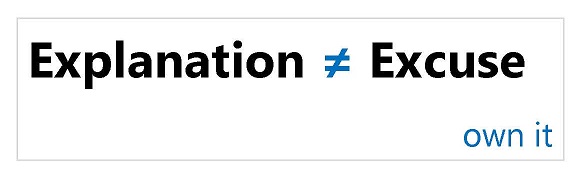
Explanation, not excuse
In January I completed my first MANAGEtoWIN TriMetrix DNA assessment that blends three sciences - skills, motivators, and behaviors - into one report.
The results blew me away. I LOVE what it wrote about how to work with me. (Not all is positive by the way...) We will be introducing them soon.
Bill Bonnstetter of TTI made a great point recently. He said,
The best way to improve your decisions is to better understand your biases that are leading to your decisions.
We teach our Clients how to better understand themselves. Those people who embrace the insights that we share with them become better leaders. BUT what is the most common tripping point for people who try to apply what they learn on their own?
They use their new knowledge as an excuse rather than an explanation.
"Oh, I'm a High D so you need to do this right away..."
"You know I'm a High I so I'm not good with details..."
"Moving quickly makes me uncomfortable as a High S..."
"I'm a realist, not a pessimist. As a High C I just need more..."
And that's just the behaviors. The game can be played with your values on the job too, on purpose or without thinking. The bottom line is an explanation that helps you know yourself better is not an excuse to do anything you want.
 THE PURPOSE of our work with you to become a better leader involves:
- Understanding yourself better.
- Identifying how to build on your strengths and delegate weaknesses.
- Adapting your behaviors to respect the DIFFERENT behaviors and work motivators of others... do not just make an excuse and walk over them and/or justify unproductive communication and demands.
At the moment, 2015 looks like an opportunity to increase your sales by 50% or more. Make the most of it by owning every sense of your heart, every emotion you feel, every word you say, and every action you take. As the U.S. Marines have said, be all you can be. It is possible.
Do you need help to develop NEW habits to overpower some less productive ones? Contact us if you would like to talk through what you want to achieve.
Why not your business?
Too many leaders are stuck "fighting fires" instead of forcing themselves to simplify.
This does not have to be a lifelong struggle. We can develop a discipline of simplicity. Here are two videos to make my point:
Why not rally your people around a simple ownership culture foundation: Everyone takes 100% responsibility for Client happiness (and coworker relationships)... and there are no excuses.
A client of John Rizzo gives us a simple way to get everyone in your organization on the same page. (Daniel Marcos shared this recently). Watch the 4-minute video to be inspired.
I suggest this simple message be formatted as:
100-zero
Consider how you can encourage your people to fully embrace a 100-zero culture / ownership culture. This is not a one-time, helicopter drop training, but rather an ongoing coaching / mentoring discipline throughout your organization.
Secondly, another simple message: Why can't your company be unique? I hear this all the time. It is a lie. Any organization can be totally unique by the solutions you provide, the way you deliver those solutions, or both.
Consider this 2-minute video from Starbucks. If they can reinvent coffee, why can't you create an incredible client experience at your company?
Simplicity.
Embrace it. Develop habits around it. Never stop training it and providing a role model of simplicity. Positive change and growth then occurs on its own. This is the core of our 3strands LEADERSHIP principles and LEADERSHIP Essentials services.
Year-end list
I am inspired by Sea Level Ops sending out a ConnectWise Year-End list. My list has a different focus.
First of all, what are my core objectives as a leader? They might be:
#1 Assess my performance
- How well have I achieved my goals?
- Have I consistently followed-up to manage my direct reports?
- What have I done this year that significantly improved our culture?
- How well have we recognized each person in ways they prefer?
- What is the best thing I did to help someone this year?
#2 Retain everyone on my team who is performing well
- Work with them to achieve their 2014 strategic plan
- Ask them to draft, then together confirm their 2015 strategic plan
- Confirm how they will grow - sign them up for something they want to learn, like our Certified LEADER program
- Recognize them in ways they prefer, and
- Confirm why they are doing meaningful work, and what would be most meaningful for them to do in 2015
#3 Assess the performance of my employees
- Close out each employee's 2014 goals
- Confirm my people met my behavioral expectations for them
- Confirm I met each direct report's behavioral expectations for me
- Complete an annual performance review for each employee
- Identify the most meaningful activity each employee did.
#4 Assess our Client Experience
- Survey our Clients to confirm their satisfaction
- Assess satisfaction at each step of a simple Client Experience Cycle
- Consider what we have improved this year
- Survey my people to confirm their concerns about Clients
- Determine "what gaps to fill" to not repeat mistakes.
#5 Assess our New Business Development
- Compare our sales performance against goals. No excuses.
- Consider sales coaching or outsourcing sales management to a professional sales organization like The Leren Group
- Define how to improve the key weaknesses of each team member
- Define how to expand the key strengths of each team member
- Define Good - Better - GREAT sales goals for 2015
#6 Assess our core Red Ocean / Blue Ocean Strategy
- Fully comprehend our Red Ocean business
- Fully comprehend our Blue Ocean business, if any
- Lay out a schedule to pilot more Blue Ocean opportunities
- Draft a plan to jettison businesses we cannot be #1
- Decide on an outside resource to help us move more Blue Ocean.
#7 Prioritize actions to take
- Set clear, measurable goals for the organization
- Assess and meet with every team member to confirm engagement
- Complete everyone's BOLD NEW 2015 employee strategic plan
- Define quarterly activities to excite and refresh my team
- Schedule personal time to relax, refresh, and re-dream.
QUESTION: You weed a garden, and then what do you do? You stand back to assess your work.
Why not MAKE THE TIME to fully assess your 2014 so you can make 2015 your best year ever?
Now are you mad?
Do you wish your company was growing faster or more profitably?
Too often I talk with leaders whose companies are stuck. Their sales or profits grew, but fell back to prior levels. They are in a rut and... surprisingly they have accepted it.
Does that shock you? It shouldn't. A pity party accepting less than your dreams - and your TRUE CAPABILITIES is often comfortable. It is an almost evil temptation that is allowed to fester into a major mistake that steals years of your positive impact on the world around you.
You need to get mad about it. "Mad," as in enraged; greatly provoked or irritated; angry. (Dictionary.com) I am NOT recommending you lash out at others, but rather you are what I call "turning point mad" - you are unwilling to accept the status quo and will make the tough decisions necessary to create your new reality.
I often get hired by leaders who are frustrated. They are sick and tired of dealing with the same employee drama over and over again, and want to discover a better way to grow their business. I help with leadership systems, company culture, and business focus. Email me if you want to discuss your challenges.
Watch this clip from one of the weirdest movies ever made, Network. I do not recommend the movie, but the clip about a newscaster encouraging others to refuse to accept the lie that we must accept mediocrity and evil might remind you of your true potential. He wants people to say, "I'm mad as hell and I'm not going to stand for it any more!"
How about you?
The reasons you are stuck vary, but only YOU can make a decision to get unstuck. Here are 7 questions that might help you embrace your next bold move :
#1 My Dreams - 5-10 Years ago, where did I dream my company would be today?
Very few people dream of just maintaining their sales at current levels indefinitely. Maybe you have been stuck for 25 years. I know people who are there today and will never grow. You do not have to be like them.
What was your dream? Where are you today in relation to that dream?
Do not think of all the excuses why you are not there. Just remember the dream and decide to dream again.
Now are you mad enough to not stand for "it" anymore?
#2 The Cost - How long have I been stuck at this level and what has it cost me?
Let's say your company grew to "X" and then grew beyond that, but returned to "X." Maybe your revenue or profits, or whatever you focus on, has gone up and down, but you are stuck in the range of "X."
How much additional profit would you have had each of the past 5-10 years if you had grown to 2X, 3X... or 10X?
What have you lost? You will lose that much and more if you continue to accept your current company's state of affairs.
Now are you mad enough to not stand for "it" anymore?
#3 New Dream - What should my dream be today?
You need to start anew today. The past is past and cannot be relived, BUT where do you want to grow now?
This takes work, but not necessarily a long time. I engage one or more outside experts to help me see "beyond the trees." Working on my own would only have me run fast and hard... but circle back again to where I am.
Get someone to help you define your next bold moves. Involve your team. Run ideas past your spouse, and appropriate close friends, and trusted advisors. But often you need an outside catalyst who has "been there, done that." Your opportunities are still HUGE. You just have to get the full picture of your paradise and then...
Now are you mad enough to not stand for "it" anymore?
#4 My Weaknesses - What are my 3 most significant weaknesses and how have they delayed my dreams?
Do not use this time to beat yourself up. The key is to discern reality. We all have weaknesses and make foolish decisions. You need to comprehend your mistakes and make a decision to NEVER GO BACK to them. (Read Henry Cloud's book, Never Go Back, if you want a broader perspective on this.)
List your 3 biggest weaknesses. Then list 1-3 major failures as a result of each weakness and realistically what each failure cost then, and if appropriate, on an ongoing basis.
Possibly ask others to confirm your assessment. Be open to their opinion. You may not agree with their conclusions, but your actions made them feel that way. Take ownership for your actions so you can delegate out your weaknesses or overpower them with new systems / habits.
Now are you mad enough to not stand for "it" anymore?
#5 My Strengths - What are my most significant strengths?
This is not an ego trip, but an engine check. List your 3 most powerful strengths that can help you achieve your career dreams.
List 1-3 ways each strength can help you achieve your dreams. What specific results can you expect from each strength? Realistically how much additional profit is available to you today, tomorrow, and in the future when you effectively focus on your strengths?
If you asked others for input on your weaknesses, simultaneously discuss your strengths. They may be partially correct, but embellishing to compensate for some really negative feedback. Do not believe them if they compliment you for traits you do not have. Just politely ask questions, carefully consider their thoughts, and thank them for their candor.
Now are you mad enough to not stand for "it" anymore?
#6 New Plan - What is my new plan, my new dream, the prize that REALLY excites me?
Your new plan needs these attributes:
- Simple - one page.
- Applies lessons learned to make your next years your best years.
- Focused on how your company will uniquely add value.
- Systematically removes or overcomes your weaknesses.
- Systematically builds on your strengths.
- Has clear, simple metrics to achieve on a schedule.
- Commits to accountability
Consider what you could have achieved up until now if you followed this type of plan...
Now are you mad enough to not stand for "it" anymore?
#7 New Accountability - How will I hold myself accountable to achieve my new dream?
You should be afraid of falling back into your old ways. Therefore have the wisdom to define and commit to accountability in your new plan. In brief:
- Self accountability must be daily, with longer review weekly and quarterly in "Sanctuary."
- Further define your dream and how to achieve it with your team, and throughout your organization. Build mutual accountability throughout your organization - NOT just at the management level. Build an ownership culture where a part-time employee can respectfully question the behavior of the CEO if it might not match your values and pursuit of your dream.
- Get inspiration, focus, systems, and accountability from a consultant or coach who has been there, done that. Chet Holmes International says 75% of Fortune 500 CEO's (the top dogs) have an outside expert to guide them in their business. If those smart, incredibly wealthy people need an outside expert, then you should have one in your budget too.
- If comfortable to your spouse, then define how you will submit to their accountability in a mutually respectful, encouraging way - and follow through on it!
In some ways this is so simple. We make our lives complicated and trap ourselves in no growth activities...
Now are you made enough to not stand for "it" anymore?
Don't wait. Take Sanctuary time this weekend to answer these 7 questions and act upon your answers. Why be stuck NOT pursuing your dreams when you have the freedom to live the life you want?
7 Questions About Your Employees' Future
It is very important that every one of your employees have a career path with quarterly learning activities that are being completed on schedule.
- Employees who understand their future in an organization take more responsibility to achieve results.
- People who understand their future in your organization stay longer and are more productive.
- Better educated employees achieve more.
Do you have people who are certified technically or in sales, and now have been promoted into management? Would you like them to be trained, coached, and CERTIFIED as a leader? Contact us. We are introducing a 3strands LEADER Certification program soon. I will send you information on the program for feedback.
Here are 7 questions every leader should ask about how you are developing people to be more productive, profitable, and personally fulfilled in the work they do as part of your company:
#1 Are your people completing training and being certified by a third party that you trust so they can do their jobs effectively?
Do you feel like you are running an adult daycare program instead of your real business? Certified learning of technical skills, sales ability, and soon from MANAGEtoWIN - systematic leadership, have a lot of benefits:
- Vendor certification improves vendor relationships, your skills to sell and implement their solutions, and gain more vendor funding to increase business.
- Certification is often meaningful to your employees.
- Certification is often meaningful to your clients.
#2 Do you have a career ladder so employees understand how they can grow in your organization?
Understanding the specific knowledge, skills and experience for each position in your company is important to fully engage employees. They need to see their options for their future. We have a great career ladder format that most of our Clients can update to apply in their organization in two hours or less. This is a great investment of your time.
The alternative is employees have different knowledge, skills, and experience in job roles yet are paid the same, performance expectations are often the same... and everyone is frustrated.
#3 Does each employee have a 1-3 year career path?
Each employee should have clear, measurable professional development goals for the current year in their employee strategic plan. Follow-up to make certain they complete the current year's objectives on schedule.
They should also define 1-2 years of additional learning they would like to complete. Typically this is one learning experience a quarter. We recommend you review this quarterly with them so it can be updated based on changes in your business, technology, or for other reasons.
#4 Do your people have a mentor who is NOT their boss?
Mentoring is a great engagement tool, and it benefits both the mentor and mentee. Too much to cover here, but I encourage you to consider piloting a mentor program sometime in the future.
Mentoring increases skills, keeps employees fully engaged, provides an outlet for discussion of sensitive questions, and encourages everyone to grow.
#5 Are your employees being regularly coached by their manager and/or an outside coach?
Managers should be effective coaches who help each team member achieve meaningful goals and a career path in their employee strategic plan. At times an outside coach can help individual employees or groups grow to a new level of knowledge, skill, and experience. This is for a season, not a lifetime. If you engage an outside coach, I encourage you to define the key objectives of the engagement in the beginning and stay on track to achieve them in a reasonable amount of time. Then disengage.
Yes, there are people who believe coaching is ongoing. Maybe, but that is not our approach and so I cannot recommend it. We believe the ongoing coach is a contractor.
#6 Are you holding employees accountable to completing the learning activities in their current year's goals on schedule with excellence?
If not, then your inconsistency is encouraging employees to perform at a lower level and/or leave your company.
3strands LEADERs follow-up systematically - with Systematic Power, the first strand of our "rope" that helps us climb the cliffs of our goals. If this is not clear to you, or you struggle in this area, then email me for a conversation. I am happy to help you consider a new direction.
#7 Do we recognize and/or celebrate when a member of our team becomes better through our investment in their professional development?
Achievement should be appropriately recognized in ways each employee prefers. Learning is an important achievement. Do not let it be accomplished in the dark, unrecognized, unappreciated, and taken for granted.
Learning takes work. Say "Thank you" or "Congratulations" in appropriate ways when employees help you build a stronger business through expanding their knowledge, improving their skills, and gaining more experience as part of their journey to become top performers who are doing work that is personally fulfilling to them.
If you do these 7 things well as a manager, then you are competitively superior as a leader in the area of professional development.
Don't wait. Take Sanctuary time this weekend to answer these 7 questions and act upon your answers. You will be glad you did.
7 Questions Every Leader Should Ask
Lee Iaccoca led Chrysler from bankruptcy to profitability and a future. One activity he credited in his book, IACCOCA, for this success was the practice of what I call "Sanctuary."
Each Sunday evening Iaccoca would remove himself from the family to sit in his study for two hours to review (1) How well did I do on my list of important activities this past week; and (2) What do I need to get done this week to keep Chrysler moving forward?
Sanctuary time is uninterrupted time to THINK. No email. No phone calls. No texting or instant messages. No interruptions.
Here are 7 questions every leader should ask in Sanctuary as you close out 2014 and move into 2015:
#1 Foundation: The foundation of great decisions is my process for receiving and processing information against my core beliefs. What are my core beliefs and how can I change my decision-making process to improve my performance from today forward?
#2 Bad Habits: Everyone has bad habits and they never go away. What are my 1-3 worst habits and how do they hurt my career, financials, and personal life?
#3 New Habits: Bad habits stay with us, but they can be overpowered by new behaviors. What new habits / routines can I put in place to overcome my bad habits?
#4 Relationships: Even if I have strong relationships, there is one that could be better. What is one personal relationship that I want to improve?
- Who
- How
- When (Define a scheduled plan of 7 activities or less to be a better friend and create memories. Should this plan be recurring?)
#5 Spending: Money is freedom, yet prudence today expands opportunities tomorrow. Where am I spending money personally that is negatively affecting my life and/or retirement, and when + how am I going to stop?
#6 Financial: Even the most successful companies need to regularly evaluate what they are getting in return for the money they spend. Where is my company spending money that is not justified by the ROI - the financial and/or time return on the investment - and when + how am I going to stop?
#7 Threat: For most people, death is unplanned as is a terrible injury or illness. If today I had a terrible injury or found out that I have a terminal illness... What is my bucket list, with a schedule?
Even making one change per question can yield substantial results. Once you get these issues in order, then you can move on to the next 7 challenges.
P.S. You should seek the counsel of at least one person you trust before implementing your answers.
Don't wait. Take Sanctuary time this weekend to answer these 7 questions and act upon your answers. You will be glad you did.
The Flawed Rose
After high school my girlfriend, Terry, joined the Ice Follies. (I went to U.C. Berkeley.) In her second year with the show Terry earned a short solo to the music of Second Hand Rose.
She left the show later that year, but in our 37+ years of marriage I have moved from buying her 10 dozen roses her opening night in San Francisco to a single red rose. The single rose is a reminder of our young love.
Last Thursday I was driving through San Francisco and picked up a rose for Terry. Days later it drooped. I thought it was dead. I pruned it, put it back in the vase, and went to bed for the evening. It was full of life in the morning, but that afternoon was drooping again.
I pruned it again, and it revived again. (Does that remind you of some employees?) It began to bloom, but it is flawed. For some reason part of its bloom is missing. In the lower left you can see the brown leaf that is typically only behind the rose. The petals are missing so it shows.
Roses are stunning. They improve a room and brighten people's days. They have a wonderful scent. A rose reminds you of something positive.
QUESTION
What do you do when that "rose" of an employee turns out to be flawed?

- Thorns: Every employee has issues, just as roses have thorns. Period. You can overcome or avoid their thorns when you know your employees primary motivators and preferred behavioral style (our Talent Assessments). Then you can work with them intentionally to reinforce their positive traits and avoid their negative attributes.
- Flawed: Every employee is flawed like this rose. Sometimes the flaws are very clear. Other times weaknesses are hidden for a while... Leaders better engage employees when we focus on strengths and improve weaknesses to a competitive level. Do NOT try to make a weakness a strength. We achieve more with less effort, and our people are happier, when we focus on aligning job responsibilities with their strengths.
- Surprises: This rose is missing part of its bloom. This flaw was hidden from me when I bought it. Our people surprise us too. Any leader can inspire a team when profits are high, our group/company is growing, and people are getting along. GREAT leaders are prepared for surprises and overcome them because they know how their people prefer to work. They help others work together in ways that balance their individual needs, the preferences of others (coworkers, clients, vendors), and the objectives of the company. This means we have to be a 3strands LEADER who is systematically engaging our people in meaningful work as we constantly reinforce sincere gratitude for their contributions in ways they appreciate.
- Prune: This rose needs pruning to thrive. So do our employees. They are not robots or a dog who will sleep 16 hours a day and be happy. Employees need our Systematic LEADERSHIP - consistent engagement to remain focused, grow, and achieve. We have to help them feel good about pruning dead habits, wasted time, and poor behaviors so our people love what they do as much as possible.
- Replace: Sometimes the rose I give Terry lasts a very long time, but at some point it is always time to get a new one. This is not a bad thing. The rose has served its purpose and it is time to move on.
It is a similar story with our employees. At some point they need to move on to something else in life, maybe retirement, but in the meantime we have to work systematically to keep our team fully engaged.
This requires everyone to have clear, measurable goals and defined work behaviors. We always gain when we inspire people as a 3strands LEADER, including having a clearly defined hiring system to hire Dr. Jekyll, not a great actor who turns out to be Mr. Hyde.
Thriving roses. Fully engaged employees. This is our primary responsibility as leaders.
Coping With Change
I want to build on last week's encouragement to prune your business and discuss some of the nuances involved with making changes. Former Great Britain Labour Prime Minister Tony Blair has been credited as saying something like, "Every decision is dividing". Are you contemplating making some tough choices that could be dividing? The six tips I gave last week could bring about some tough choices:
- Start With Yourself. Stop a bad habit.
- Refine Your Schedule. Respectfully say "no" more often.
- Evaluate Your Hiring Process. Improve your hiring system.
- Simplify Your Offerings. Sell fewer solutions to make more.
- Streamline Communication. Write less, communicate verbally.
- Adapt Your Communication. Mirror the other person's style.
Tony Blair's comment could also be interpreted like this: Every plan has a cost. This comes up often in budgeting meetings where all the numbers are laid out and it's painfully obvious that every choice you make to invest in something is a choice to not invest in something else. Sometimes you need to focus on the little things that you have been unwilling to address. Sometimes you need to make big changes (and prune away that big branch). Whether big or small, as a leader you have to prepare well in order to manage any objections to your proposed changes. Do not be a sluggard and shy away from making difficult decisions.
In discussing some pruning with my team this week, I was reminded of a clip from the movie Dave. It's one of my favorite movies. In the clip, notice how as Dave makes progress on his goal he quips, "This is good, we're doing good!" Remember to encourage yourself and others as you prune. Your changes will be better received with encouragement and a positive attitude.
When you do decide to make changes, consider the natural coping mechanisms people have that need to be overcome. These are the activities we do to avoid short-term pain, but the result is we lose long-term gains. We do foolish things like:
- Hire to fill a seat, which rarely works even when the person's skills meet your job requirements. Instead, work through more candidates to identify a superstar or a great candidate who is a strong match with your culture. That person will perform better and last longer.
- Buy stuff because it helps us feel in control. Some people then return the stuff because they cannot afford it, but at least they had that momentary endorphin rush. Instead, delay any purchase for one day or one week, and get the opinion of others to fully confirm the ROI of the investment before buying.
- Travel to industry events instead of manage our business. Some industry events are fine, but is attending 1-2 a month really necessary? Try to limit industry event travel to occasions where you return with specific, measurable activities you can take to improve your business and assess the results (ROI on the event).
- Attempt to manage a sales team even though it is not our strength, or we hate it. A better idea is to outsource sales management (call Roy) to a professional who can do it better at less cost!
- Work too much while our family wonders where we are. Instead, enjoy the relationships with those closest to you. There is no such thing as limited "quality time." Every moment with them is an opportunity for quality time.
- End a relationship with a difficult client. Why wait? Instead, do it now - handle it respectfully and professionally, but end the distraction and losses.
You have to proactively make tough decisions and then with equal resolve pursue your plan to conclusion.